The key to teaching CQD purification isn't just showing students a protocol—it's connecting the selected unit operation to the specific impurity that must be removed. For carbon quantum dot synthesis, dialysis with a semi-permeable membrane excels at stripping out residual small-molecule precursors and salts. Column chromatography, on the other hand, is the tool of choice when you need to separate a polydisperse population of CQDs into fractions with distinct emission colors or surface polarities. Both methods are routinely conducted after a preliminary centrifugation step that removes large, insoluble aggregates.
Effective training in CQD purification hinges on a simple rule: match the separation technique to the impurity’s size and chemistry. Use dialysis for desalting and small-molecule removal, and column chromatography when surface property differences allow fractionation. In either case, the real lesson lies in watching how mass transfer, partitioning, and fluid dynamics govern the outcome.
Why Purification Defines the Training Value
The Hidden Complexity in a Simple Nanodot
Carbon quantum dots are synthesized through bottom-up routes that leave behind a soup of unreacted precursors, oligomeric by-products, and salts. Without rigorous purification, what students measure optically or electrochemically is not the CQDs alone but a composite signal dominated by fluorescent impurities.
The purification step therefore isn’t a mere clean-up—it’s where the material’s true identity is established. Training must frame purification as a gateway to reproducible nanoscience, not as a chore.
The Two Families of Impurities You Must Address
Every CQD crude solution contains at least two impurity classes.
- Dissolved small molecules and ions: These include residual citric acid, urea, inorganic salts, and low-molecular-weight fluorescent molecules.
- Polydisperse nanoparticle populations: Even after large aggregates are removed, the solution often holds CQDs with varying sizes, surface oxidation states, and functional groups.
A single separation technique is rarely sufficient. Educational modules succeed when they force students to analyze the impurity profile first and then select the appropriate unit operation.
Selecting the Right Unit Operation
When Dialysis Is the Definitive Answer
Dialysis uses a semi-permeable membrane with a defined molecular weight cut-off to retain CQDs while allowing small molecules and ions to diffuse into a surrounding solvent, usually water. This method is ideal when the primary contaminants are residual salts or small fluorescent molecules with a hydrodynamic diameter well below that of the dots.
The driving force is a concentration gradient, so mass transfer principles become immediately visible. Students see that the rate of impurity removal depends on temperature, stirring rate, and the frequency of water replacement. In practice, training protocols often heat the dialysis bath to around 70°C and maintain continuous stirring with fresh water changes every few hours. This accelerates diffusion and prevents the local build-up of contaminants at the membrane surface.
When Column Chromatography Unlocks Dot-by-Dot Separation
Column chromatography separates CQDs based on their differential interaction between a stationary phase (typically silica gel) and a mobile phase. Because carbon quantum dots with different surface polarities and sizes experience different partition dynamics, they elute at distinct times. This makes chromatography the go-to choice when the goal is to isolate fractions of different emission colors or to separate oxidized from less oxidized dots.
In student training, manual glass columns packed with silica gel are still a gold standard. A gradient of organic solvents—often starting with dichloromethane and moving to ethyl acetate—is used to progressively pull down increasingly polar CQD populations. Students can literally watch the colored bands separate, turning an abstract concept (differential migration) into a vivid, memorable lesson.
The Non-Negotiable Pre-Step: Centrifugation
Neither dialysis nor column chromatography should be performed before a centrifugation step at around 9,000–10,000 r/min. This removes large carbonaceous aggregates and unreacted solid precursors that would otherwise clog membrane pores or irreversibly foul the chromatography column. In a teaching lab, this step also introduces the Stokes settling velocity and the principle of centrifugal force, tying back to core chemical engineering fundamentals.
Conducting the Purification for Maximum Learning
Lab-Scale Best Practices That Reinforce Fundamentals
At the bench scale, manual operations are a virtue because they expose every mechanistic detail. For dialysis, students should actively monitor the external water’s conductivity as a proxy for salt removal and calculate the time constant of the process. Varying the string length, membrane type, or temperature and measuring the impact turns a simple soak into a mass-transfer experiment.
For column chromatography, students should be encouraged to collect multiple fractions and measure their UV-Vis absorbance and photoluminescence spectra throughout. By plotting emission wavelength against elution volume, they directly observe the correlation between surface polarity and optical properties. This transforms chromatography from a black-box separation into an analytical tool.
Bridging to Pilot-Plant Operations
For advanced chemical engineering or biotechnology training, these manual steps are scaled up. Dialysis is replaced by tangential-flow ultrafiltration (TFF) units, where pressure-driven flow sweeps across the membrane, reducing fouling and enabling continuous processing. Instead of a hand-packed column, students train on automated liquid chromatography systems with UV-detectors, gradient programmers, and fraction collectors.
This progression from a beaker-and-bag setup to a pilot-scale skid teaches hydrodynamics, pressure drop, membrane permeability, and throughput optimization. The supplementary pilot-plant references emphasize how continuous-flow centrifuges and microfiltration units transform a batch lab process into an industrially relevant downstream processing chain. The core separation principle remains the same; the operational constraints change entirely.
Understanding the Trade-offs
No purification method is universally superior. Dialysis is simple and aqueous-based, making it gentle on the CQDs and easy to implement in any teaching lab. However, it is time-intensive (often 24–48 hours) and consumes large volumes of water. If the membrane is not regularly cleaned or water is not changed frequently, the process stalls due to negligible concentration difference.
Column chromatography delivers sharp separations but relies on organic solvents that raise safety and disposal concerns. Overloading the column or packing it unevenly leads to band broadening and poor resolution. Students must also recognize that the surface interactions can permanently alter the CQD’s chemistry—for instance, acidic silanol groups on silica can protonate surface amines, subtly shifting the emission.
Centrifugation at high r/min may induce aggregation of smaller dots or co-sedimentate partially passivated particles, leading to sample loss. Thus, the training narrative must move away from “the perfect protocol” and toward an engineering conversation about purity versus yield, speed versus resolution, and safety versus separation power.
Making the Right Choice for Your Training Goal
The purification strategy you select and how you conduct it should reflect the specific competency you want students to build.
- If your primary focus is separation fundamentals: Center the lab on bench-scale dialysis and manual column chromatography. Have students model the mass-transfer coefficient in dialysis and plot a resolution curve from their chromatographic fractions.
- If your primary focus is industrial bioprocessing readiness: Replace the dialysis bag with a pilot-scale TFF membrane skid and the manual column with an automated chromatography system. Emphasize cleaning-in-place protocols, sensor calibration, and process data trending.
- If your primary focus is nanomaterial characterization: Purify a crude CQD synthesis using both dialysis and column chromatography in series. Then, compare the photoluminescence quantum yields, FTIR spectra, and TEM images of the dialyzed sample versus the individually eluted fractions. This vividly demonstrates how purification determines measured material properties.
The purification of carbon quantum dots is never a one-size-fits-all recipe. By making impurity-driven selection and operational trade-offs the center of the training exercise, you equip students not just to run a protocol, but to think like separation engineers and materials scientists.
Summary Table:
| Unit Operation | Separation Mechanism | Target Impurity | Key Training Parameters |
|---|---|---|---|
| Centrifugation | Density & size (centrifugal force) | Large insoluble aggregates | Speed (9,000–10,000 r/min), Stokes settling velocity |
| Dialysis | Size & diffusion (concentration gradient) | Residual salts, small molecules | Membrane MWCO, temperature (70°C), stirring rate |
| Column Chromatography | Surface polarity & size (partitioning) | Polydisperse CQDs (color fractions) | Mobile phase gradient (e.g., DCM to EtOAc), flow rate |
Elevate Your Chemical Engineering & Biotech Training
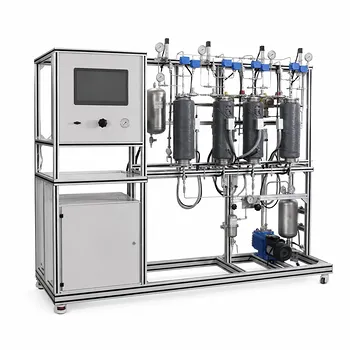
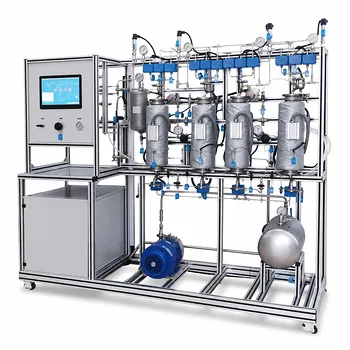
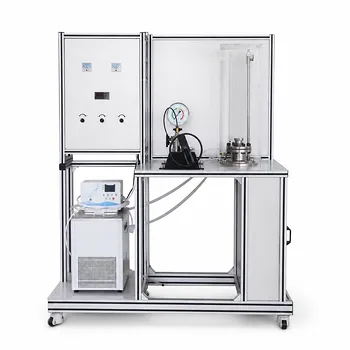
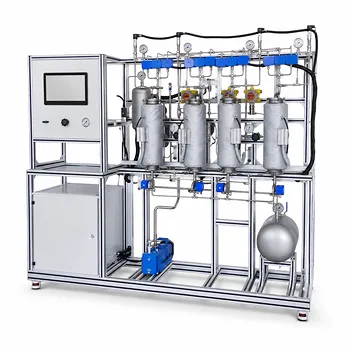
Transitioning from bench-scale concepts to industrial-scale reality requires the right educational tools. LABPARK provides state-of-the-art Educational and Vocational Unit Operations Pilot Plants in chemical engineering, bioprocess & biotech, and environmental & water treatment for universities, research institutes, and enterprises.
Whether you are training students on manual laboratory dialysis or teaching advanced automated pilot-scale ultrafiltration and chromatography, our systems bridge the gap between classroom theory and industrial practice.
Contact LABPARK today to discover how our custom-designed pilot plants can enhance your lab's training capabilities and research efficiency!
Related Products
- Bench Scale Carbon Dioxide Capture Educational Unit Operations Pilot Plant
- Carbon Dioxide Capture and Utilization Educational Pilot Plant for Unit Operations
- Carbon Dioxide PVT Curve Determination Educational Unit Operations Pilot Plant
- Carbon Dioxide Hydrogen Methanol Synthesis Educational Unit Operations Pilot Plant
- Ion Exchange Water Purification Educational Pilot Plant for Engineering Unit Operations
People Also Ask
- What unit operations are critical for CCUS training pilot plants? Build hands-on engineering expertise.
- What are the differences between post- and pre-combustion carbon capture training pilot plants?
- How can pilot plants show tail gas vs flue gas CO2 capture differences? Key educational insights.
- How do temperature variations affect CO2 transport models in pilot plants? Model vs Reality
- How does operating pressure influence the transition between absorption and desorption in a CO2 pilot plant?