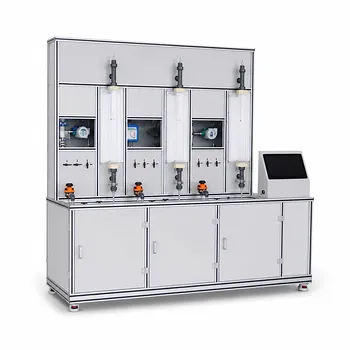
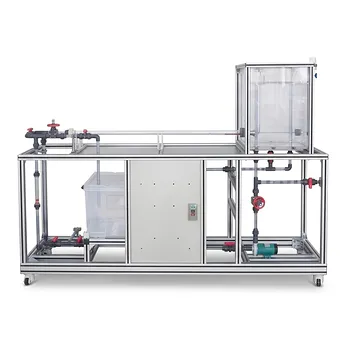
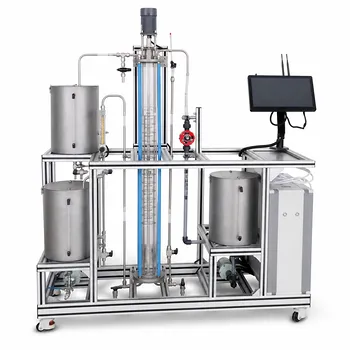
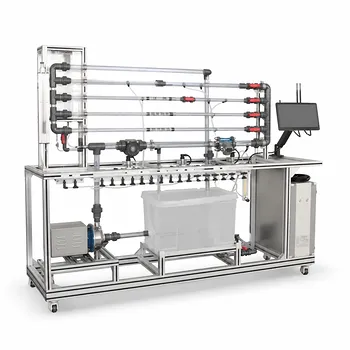
For a chemical engineering unit operations pilot plant, the temperature sensor decision begins with two questions: what range must I cover, and what precision do I need? In the vast majority of pilot‑scale distillation, extraction, and bioprocessing units, platinum RTDs (Pt100) offer unbeatable stability from ‑200 °C to +650 °C. For catalytic reactors, cracking units, or any process regularly exceeding 650 °C, thermocouples—from base‑metal Type K up to 1300 °C to noble‑metal Type S or tungsten‑rhenium alloys for extreme conditions—are mandatory. When your pilot plant handles hydrogen‑rich reducing atmospheres above 870 °C, only tungsten‑rhenium thermocouples can survive reliably.
The choice between an RTD and a thermocouple is dictated by temperature window, chemical environment, and accuracy requirements. RTDs are the default for precision, stability, and noise immunity in sub‑650 °C pilot operations; thermocouples become essential once process temperatures push higher, and exotic alloy thermocouples are non‑negotiable in aggressive reducing or vacuum environments.
The Core Decision Factors
Temperature Range Dictates the Playing Field
Each sensor family has an inherent thermal ceiling. Platinum RTDs operate most accurately from ‑200 °C to +650 °C. Beyond that point, their stability erodes and the element suffers drift.
Base‑metal thermocouples (Type K) are reliable from cryogenic levels up to 1300 °C, while noble‑metal Type S (platinum‑rhodium) reaches 1600 °C. For the highest demands, tungsten‑rhenium (WRe) thermocouples extend useful measurement beyond 2300 °C.
Accuracy and Stability for Long‑Run Experiments
Pilot plants often run continuous processes for days or weeks, making sensor drift a silent data killer. RTDs provide superior long‑term stability and a near‑linear output, ideal for precise heat exchangers, distillation columns, and biological reactors where every tenth of a degree matters.
Thermocouples offer faster response but are inherently noisier. They require cold‑junction compensation and produce a non‑linear millivolt signal that must be linearized by the transmitter.
When the Chemistry Attacks: Environmental Aggressiveness
High‑temperature processes often involve corrosive gases, hydrogen, or vacuum. Base‑metal thermocouples like Type K oxidize or suffer “green‑rot” in reducing atmospheres. The primary reference establishes a hard boundary: when hydrogen concentration exceeds 5 % above 870 °C, or when operating in inert gases or vacuum, tungsten‑rhenium thermocouples must be selected. Noble‑metal Type S thermocouples can also be degraded by metallic vapors and reducing conditions.
For moderate corrosive liquids, the protection tube material (stainless steel, quartz, or alumina ceramic) safeguards both RTDs and thermocouples. Choose stainless steel up to 1000 °C, quartz to 1200 °C, and alumina ceramic above 1900 °C.
Sensor Types at a Glance
Platinum RTDs (Pt100) – The Precision Workhorse
Range ‑200 °C to +650 °C. Perfect for accurate control loops where drift must be minimized. The linear output simplifies transmitter integration and reduces calibration overhead. Ideal for bioprocessing, solvent recovery, and multi‑purpose pilot reactors under mild conditions.
Base‑Metal Thermocouples (Type K) – The High‑Temperature Stalwart
Range ** °C to ~1300 °C**. Widely used for combustion, gasification, and catalytic reaction monitoring. Economical and robust, but prone to calibration drift in oxidizing and reducing cycles. Use in applications above 500 °C where an RTD’s accuracy would degrade.
Noble‑Metal Thermocouples (Type S, R, B)
Range up to 1600 °C. Excellent oxidation resistance, but sensitive to metallic vapors and reducing atmospheres. Suitable for clean, high‑temperature environments such as muffle furnaces and certain pyrolysis studies.
Tungsten‑Rhenium (WRe) Thermocouples – The Extreme Duty Sensor
Range 870 °C to 2300 °C. The only choice for high‑temperature vacuum, hydrogen‑rich (>5 % H₂), and inert gas atmospheres. Required for pilot processes like thermal cracking, plasma reactors, and advanced materials synthesis.
Beyond the Element: Protection and Signal Integrity
Thermowells and Protection Tubes
The sensor element must be isolated from the process fluid. Stainless steel sheaths work up to 1000 °C for general fluid flow. For highly corrosive media or above 1200 °C, quartz or alumina ceramic tubes protect the sensor from chemical attack and thermal shock. Selecting the correct thermowell material is as critical as choosing the sensor type itself.
Transmitter Compatibility
Integrate every sensor with a transmitter that outputs a noise‑immune 4‑20 mA or 1‑5 V signal to the control room. RTDs connect directly; thermocouples require transmitters with built‑in cold‑junction compensation and linearization. This step ensures measurement integrity across the long cable runs typical of a pilot plant.
Understanding the Trade‑offs and Pitfalls
Even the best sensor choice involves compromise that directly affects pilot plant results:
- Response Time: Thermocouples, with their tiny measuring junctions, respond faster than the larger mass of an RTD. In a fast exothermic reaction, a thermocouple may catch a temperature excursion seconds earlier, but at the cost of more signal noise.
- Mechanical Robustness: Thermocouples resist vibration and mechanical shock far better than an RTD, whose fine wire element can fracture. In a pilot plant with frequent reconfiguration, this durability matters.
- Drift and Calibration: RTDs maintain calibration over thousands of hours; thermocouples alloy with process gases and drift. If extended campaigns are typical, an RTD’s stability often outweighs its higher initial cost.
- Accuracy Class Blind Spots: If a reactor must hold ±7 °C over a 0‑1000 °C span, the allowable error is ±0.7 %. A 1.0‑class instrument (±1.0 % error) will not meet that tolerance—a 0.5‑class sensor‑transmitter loop must be selected. Always calculate required loop accuracy and match the sensor’s tolerance accordingly.
- Cost Reality: Base‑metal thermocouples are cheaper than precision RTDs, but for a typical pilot plant budget, the difference is small compared to the cost of a failed sensor invalidating an entire experimental run.
Making the Right Choice for Your Pilot Plant
Your configuration depends on the specific unit operation you are bringing online. Use these goal‑driven guidelines to decide:
- If your primary focus is precise, low‑to‑medium temperature control (distillation, enzymatic reactors): Choose a Pt100 RTD with a 0.5‑class or better transmitter. Its long‑term stability will reduce recalibration downtime and protect your data integrity.
- If your primary focus is monitoring combustion, gasification, or catalytic cracking up to 1300 °C: Deploy standard Type K thermocouples, but specify high‑quality mineral‑insulated construction and expect periodic calibration checks.
- If your primary focus is a process above 870 °C in hydrogen‑rich, inert, or vacuum environments: You have no choice—use tungsten‑rhenium (WRe) thermocouples with ceramic protection tubes to survive the aggressive atmosphere.
- If your primary focus is ultra‑fast response to temperature spikes: A thermocouple with an exposed or grounded junction will react significantly faster than any RTD, but you must accept noisier signals and plan for more frequent drift checks.
Treat the environment first, then the temperature range, and finally the precision—your pilot plant will yield results you can trust.
Summary Table:
| Sensor Type | Temperature Range | Best For | Key Advantage |
|---|---|---|---|
| Platinum RTD (Pt100) | -200°C to +650°C | Distillation, bioprocessing | High precision & stability |
| Base-Metal (Type K) | Up to 1300°C | Combustion, catalytic reactors | Robust & fast response |
| Noble-Metal (Type S) | Up to 1600°C | Pyrolysis, muffle furnaces | High-temp oxidation resistance |
| Tungsten-Rhenium (WRe) | 870°C to 2300°C | Thermal cracking, plasma | Survives hydrogen & vacuum |
Configure Your Next Pilot Plant with LABPARK
Getting temperature measurements right is vital for successful scale-up. LABPARK provides premium Educational and Vocational Unit Operations Pilot Plants in chemical engineering, bioprocess & biotech, and environmental & water treatment for universities, research institutes, and enterprises. We ensure your systems are equipped with the exact sensor technology you need for reliable, drift-free research data.
Ready to optimize your pilot operations? Contact us today to collaborate with our engineering experts!
Related Products
- Residence Time Distribution and Reactor Flow Characteristics Determination Educational Pilot Plant
- Tubular Reactor Flow Characteristics Determination Educational Unit Operations Pilot Plant
- Two Phase Flow Pattern Velocity Resistance Measurement Educational Pilot Plant
- Fluid Reynolds Number Demonstration Educational Unit Operations Pilot Plant
- Three-Tube Heat Transfer Educational Pilot Plant for Unit Operations Training
People Also Ask
- Why is temperature regulation via a cooling jacket a critical feature in CSTR pilot plants used for laboratory training?
- How does steady-state multiplicity affect the operation and safety of exothermic reactions within a CSTR pilot plant? - Guide
- What parameters to monitor transitioning from Batch to CSTR? Master Pilot Plant Setup
- What role do customizable reactor pilot plants play in evaluating heat and catalyst performance? Scale-up Guide
- How Does Backmixing Affect 1st vs 2nd-Order Reaction Conversions in Pilot Plants?