Magnesium distorts gravimetric silica results by overreporting the final residue weight. When a scale sample containing magnesium silicate is treated with hydrofluoric and sulfuric acid, the magnesium present converts to magnesium sulfate (MgSO₄), a compound significantly heavier than the original magnesium oxide (MgO). Because silica is measured as the weight lost during this acid treatment, the extra mass from the sulfate makes the residue appear heavier, causing the silica loss to be underestimated. The accurate silica value is restored by separately quantifying the MgO content and mathematically compensating for the sulfate conversion.
The magnesium interference arises because MgO transforms into MgSO₄ during the HF/H₂SO₄ volatilization step, adding extra weight to the residue. Reliable correction requires determining the exact MgO weight in the sample and converting it to the equivalent MgSO₄ mass, then adding the weight difference back to the measured silica loss.
Why Magnesium Interferes with Silica Gravimetry
In pilot-plant scale deposits, silica is commonly quantified by a volatilization method using hydrofluoric acid. The interference is not a chemical failure of the method—it is a mass-balance artifact driven by the fate of magnesium during the procedure.
The Chemical Transformation in the Residue
The original scale residue contains magnesium, frequently as magnesium silicate (MgO·SiO₂) or mixed silicates. After the sample is ignited and weighed, HF is added to volatilize silicon as SiF₄. The subsequent treatment with sulfuric acid ensures conversion of any remaining fluorides to sulfates.
However, this step also converts MgO into MgSO₄. The sulfate ion is far heavier than the oxide ion, so the residue’s mass increases by roughly threefold for the same magnesium content.
How This Biases the Silica Measurement
Silica (SiO₂) is determined by the weight loss after HF/H₂SO₄ treatment and re‑ignition. If the post‑treatment residue contains MgSO₄ instead of MgO, its weight is higher than it should be. Subtracting that inflated residue weight from the pre‑treatment weight yields a smaller apparent loss, making it seem like less silica was present than actually existed.
This underestimation directly undermines the reliability of scaling assessments and treatment evaluations.
How to Correct the Magnesium Interference
The correction is a straightforward, quantitative adjustment that relies on knowing the exact MgO content of the residue. You do not need to alter the silica volatilization procedure itself; you apply the correction mathematically after obtaining the MgO value.
Determining the MgO Content Accurately
Magnesium is isolated gravimetrically by precipitation as magnesium hydroxyquinolate. After the residue is dissolved, 8‑hydroxyquinoline is added in a hot, ammonia‑buffered solution to precipitate the magnesium complex. The precipitate is filtered, washed, dried, and weighed.
The drying temperature is critical: drying at 105 °C yields the dihydrate, while drying at 130–140 °C produces the anhydrous salt. Inconsistencies here introduce errors in the MgO calculation, which would propagate directly into the silica correction.
Applying the Gravimetric Conversion Factor
Once you have the weight of MgO, convert it to the equivalent weight of MgSO₄ using the molecular weight ratio:
[ \text{Weight of } MgSO_4 = \text{Weight of } MgO \times \frac{120.4}{40.3} ]
This tells you what the residue would weigh if all the magnesium in the original sample ended up as MgSO₄. The actual measured residue already includes this sulfate, so the excess weight beyond the original MgO is:
[ \text{Excess weight} = \text{Weight of } MgSO_4 - \text{Weight of } MgO ]
Recalculating the True Silica Value
The corrected silica loss is obtained by adding this excess weight back to the silica loss you initially measured:
[ \text{Corrected SiO}_2 = \text{Measured SiO}_2 \text{ loss} + (\text{Weight of } MgSO_4 - \text{Weight of } MgO) ]
In practice, many laboratories incorporate this as a deduction factor from the final residue weight or directly adjust the silica result in the calculation workbook.
Understanding the Trade‑offs and Hidden Pitfalls
While the magnesium correction is mathematically simple, executing it reliably requires meticulous attention to detail and awareness of other analytical vulnerabilities.
The Risk of Incomplete Conversion to Sulfates
If insufficient sulfuric acid is used during the HF treatment, metals can form fluorides instead of sulfates. These fluorides degrade back to oxides during ignition, but at a slow, non‑reproducible rate, leaving a falsely heavy residue. This not only biases the silica result but can also compromise the subsequent precipitation step for magnesium determination because fluoride complexes inhibit complete precipitation.
The MgO‑to‑MgSO₄ correction assumes complete conversion; failure to ensure adequate H₂SO₄ breaks this assumption and invalidates the correction.
Reliance on an Accurate MgO Determination
Any error in the MgO weight—from sampling, precipitation, drying temperature, or weighing—translates directly into the silica correction. Even small deviations can be magnified when scales contain high magnesium levels. Laboratories must validate their magnesium method and strictly control drying conditions.
Overlooking Other Interfering Elements
The described correction addresses only magnesium. If the scale contains other elements that form stable sulfates with a different gravimetric factor (e.g., calcium, which also converts to CaSO₄), each requires its own parallel correction. In multi‑cation scales, a full elemental analysis and a suite of corrections may be needed for true silica accuracy.
Making the Right Choice for Your Analysis Goals
Your approach to magnesium interference should align with your analytical objectives and the expected scale composition.
- If your primary focus is rapid scaling trend screening: You might tolerate the bias if magnesium levels are consistently low and constant, but document and verify that assumption periodically.
- If your primary focus is precise silica mass‑balance for model calibration: Always perform the magnesium correction. Run a dedicated MgO determination on every sample, monitor drying temperatures, and cross‑check with a secondary technique to confirm sulfate conversion was complete.
- If your primary focus is root‑cause failure analysis: Pair the gravimetric correction with a multi‑element scan (ICP‑OES) to identify and correct for all major sulfate‑forming elements, and ensure your HF/H₂SO₄ procedure uses sufficient acid to prevent fluoride interferences.
Integrating the magnesium correction into your standard operating procedure turns a known gravimetric bias into a controlled, quantitative adjustment—giving you confidence that your silica numbers reflect what is truly present in the deposit.
Summary Table:
| Aspect | Chemical Impact | Analytical Correction |
|---|---|---|
| Chemical Change | MgO converts to heavier MgSO₄ during HF/H₂SO₄ treatment. | Quantify MgO separately and calculate equivalent MgSO₄ mass. |
| Analytical Bias | Inflated residue weight causes silica loss to be underestimated. | Add the excess weight difference back to the measured silica loss. |
| Analytical Risk | Incomplete sulfate conversion from insufficient acid. | Ensure adequate H₂SO₄ and control MgO drying temperatures (130-140°C). |
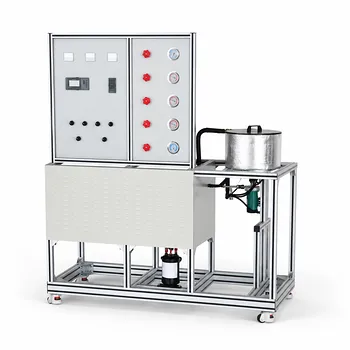
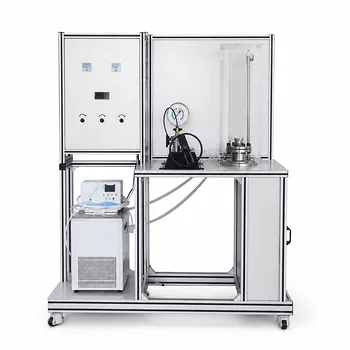
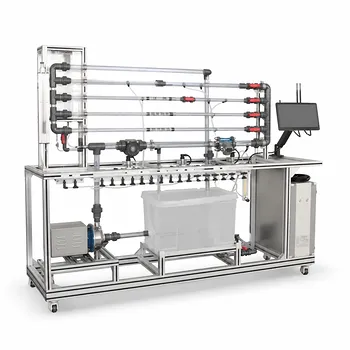
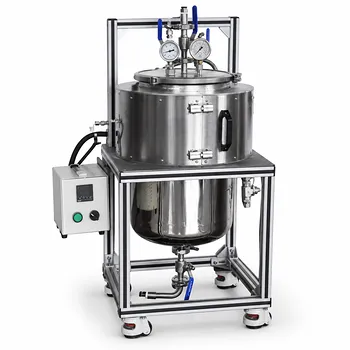
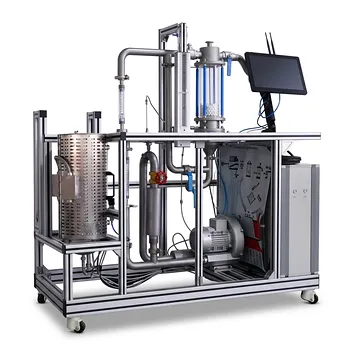
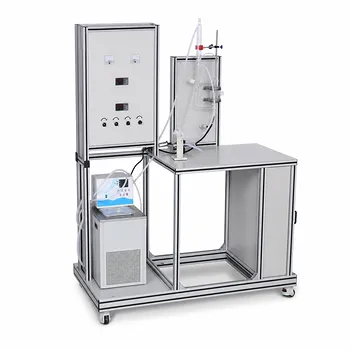
Optimize your water treatment and chemical engineering research with high-precision systems. LABPARK provides state-of-the-art Educational and Vocational Unit Operations Pilot Plants in chemical engineering, bioprocess & biotech, and environmental & water treatment. Designed specifically for universities, research institutes, and enterprises, our pilot plants ensure reliable, repeatable scale and mass-balance analysis.
Ready to elevate your laboratory's capabilities? Contact LABPARK today to find the perfect pilot plant solution for your educational or research needs!
Related Products
- Constant Pressure Filtration Educational Unit Operations Pilot Plant
- Educational Compression Refrigeration Performance Determination Unit Operations Pilot Plant
- Gas-Solid Heterogeneous Separation Demonstration Educational Unit Operations Pilot Plant
- Carbon Dioxide PVT Curve Determination Educational Unit Operations Pilot Plant
- Fluid Friction Resistance Determination Educational Unit Operations Pilot Plant
People Also Ask
- How do educational unit operations pilot plants bridge theory and design? Bridge the Engineering Gap
- How do educational unit operations pilot plants address safety and waste management when scaling up?
- Why splitting a filtration batch doesn't always reduce cycle time? Pilot Plant Insights
- Why Demo Constant-Rate to Constant-Pressure Filtration on a Pilot Plant? Key Practical Insights
- How to select solid-liquid separation equipment for pilot plants? A Step-by-Step Guide