Modeling temperature-dependent oxygen solubility isn't a theoretical exercise—it's the groundwork for sizing aeration hardware, setting agitation speeds, and programming dissolved oxygen control loops. By leveraging thermodynamic models built on standard state properties (standard enthalpy of solution, entropy, and heat capacity), engineers can predict how a seemingly small temperature swing will throttle oxygen transfer. That insight lets them proactively adjust airflow, modify impeller speed, or reconfigure sparger placement before a pilot run fails, turning a volatile design constraint into a predictable, manageable parameter.
The central challenge in gas‑liquid mass transfer is that oxygen solubility drops sharply as temperature rises, directly threatening microbial metabolism and chemical oxidation. Accurate thermodynamic modeling transforms this vulnerability into a design lever, enabling precise control of gas flow, mechanical mixing, and DO setpoints to maintain consistent oxygen transfer rates across the full thermal operating envelope of a pilot plant.
Why Temperature‑Driven Solubility Changes Break Pilot Plant Performance
Oxygen: The Master Limiting Nutrient
In aerobic bioprocesses and activated sludge systems, dissolved oxygen is nearly always the first factor to become growth‑limiting. Oxygen’s inherently low solubility means that even at 20 °C, saturated water holds only about 9 mg/L—a tiny reservoir that microorganisms can deplete in seconds. Because oxygen is sparingly soluble, mass transfer resistance is concentrated in the liquid film (Kₗ ≈ kₗ). This makes the liquid‑side volumetric mass transfer coefficient, kₗa, and the saturation concentration, C*, the dominant handles for any design. When temperature rises, C* shrinks, directly reducing the driving force for transfer, and the entire pilot plant can enter an oxygen‑starved regime without changing a single pump setting.
The Thermodynamic Cliff: Why a Few Degrees Matter
The solubility of oxygen in water decreases monotonically as temperature increases—there is no minimum or upturn in the ordinary pilot‑plant operating range. The Henry’s law constant rises with temperature, so equilibrium saturation concentration drops. A shift from 20 °C to 30 °C can cut oxygen solubility by roughly 15–20 %. In a biological pilot reactor, that loss can lower the maximum achievable cell density or force the culture into fermentative metabolism. Thermodynamic modeling using standard‑state properties (dissolution enthalpy, entropy, and heat capacity) allows engineers to quantify exactly how much C* will decline for any anticipated temperature fluctuation. Armed with that prediction, the design can be hardened to operate safely at the hottest expected condition.
From Model to Design: How Thermodynamic Insights Reshape Pilot Plant Hardware
Sizing and Selecting the Aeration System
A pilot plant’s blower, compressor, or oxygen generator must be sized to deliver enough gas at the highest process temperature—the moment when solubility is lowest and the oxygen demand is often highest. Without a reliable solubility‑temperature model, engineers may undersize the aeration train, leading to chronic DO starvation in summer runs. Conversely, over‑sizing wastes capital and energy. The model directly governs the specification of air flow rate, sparger surface area, and even the choice between air and pure oxygen sparging.
Agitation and Mixing Intensity
In stirred bioreactors, the volumetric mass transfer coefficient kₗa is a strong function of impeller speed and power input. Because oxygen transfer is liquid‑film controlled, increasing turbulence on the liquid side is the most effective way to raise kₗa. When the model signals that summer conditions will slash C* by 25 %, the design must compensate by delivering a proportionally higher kₗa to maintain the same oxygen transfer rate. This translates into higher tip speeds, optimized impeller geometry, or the addition of draft tubes—all decisions that start with a thermodynamic solubility forecast.
Dissolved Oxygen Control Systems
A fixed DO setpoint can become unreachable as temperature rises, causing cascade controllers to push aeration and agitation to their limits while still falling short. Embedding the temperature‑solubility relationship into the control philosophy prevents this. For example, if the model shows that at 32 °C the maximum achievable DO is 6.2 mg/L, the control system can either adjust the setpoint downward in a controlled manner or shift to a more aggressive agitation profile the moment the temperature sensor signals a threshold. Thermodynamic modeling thus enables feed‑forward, rather than purely reactive, DO control.
Confronting the Hidden Complexity: Modeling Beyond Simple Henry’s Law
The Standard State Approach
Simple two‑parameter correlations work well over narrow temperature bands, but a pilot plant that must handle seasonal swings—or that runs exothermic fermentations with local hot spots—needs a more robust construct. The standard state thermodynamic approach from the primary reference integrates dissolution enthalpy, entropy, and heat capacity to predict solubility across a wide span. It captures the non‑linear curvature that empirical fits often miss, giving designers a true “worst case” rather than an optimistic average.
Correcting for Real Fluids: The kₗa Translation
Temperature changes also alter the diffusion coefficient of oxygen in water, which in turn affects kₗa. The supplementary references show that kₗa for any system can be scaled from a baseline oxygen‑water measurement using (kₗa) = (kₗa)ₒ₂⁻water × (D/Dₒ₂⁻water)⁰·⁵. By coupling this scaling law with a thermodynamic solubility curve, a complete temperature‑dependent mass transfer map emerges, allowing engineers to predict kₗa and the achievable oxygen transfer rate at any temperature without running a new experiment.
Integrating with CFD and Tracer Studies
When a pilot reactor has significant temperature gradients—due to cooling jacket inefficiencies or exothermic zones—the solubility model must be combined with CFD or tracer‑derived residence time distributions. This spatial modeling highlights dead zones where low local C* combines with poor mixing to create micro‑aerobic pockets. By georeferencing solubility predictions onto a CFD grid, the design can optimize sparger placement and baffle configuration to eliminate these vulnerabilities.
Understanding the Trade‑offs
Accuracy vs. Experimental Effort
Obtaining high‑precision standard‑state parameters (especially the heat capacity change of dissolution) for oxygen‑water is non‑trivial and often requires calorimetric data from literature or dedicated experiments. For many pilot plants, a simple Van’t Hoff model with a single constant ΔH solves the problem adequately. Over‑modeling with a full thermodynamic treatment can add complexity without proportionate design benefit, particularly when the operating temperature range is narrow.
Model Validity Across Scale
A solubility model validated in a well‑mixed bench‑scale vessel can mislead at pilot scale. Macro‑mixing times, gas holdup inhomogeneity, and surface aeration effects all modulate the apparent driving force. The thermodynamic prediction must be embedded in a reactor‑scale mass transfer model; otherwise, the impact of temperature on solubility may be masked by poor hydraulics, leading to false confidence in the aeration design.
The Risk of Ignoring Biological Kinetics
Designing solely around oxygen solubility can lead to excessive aeration at low temperatures, when biological activity is naturally suppressed. The Q10 effect means microbial oxygen uptake rate can double with a 10 °C rise. The best designs couple a thermodynamic solubility model with a temperature‑dependent kinetic model, ensuring that the oxygen delivery system is neither starved in the heat nor wasteful in the cold.
Making the Right Choice for Your Pilot Plant Goal
- If your primary focus is scaling up a bioprocess: Embed a standard‑state solubility model into your scale‑down criteria. Design the pilot to operate at the maximum anticipated temperature—then verify that agitation and aeration can sustain the target kₗa well beyond the theoretical requirement, building in a safety margin for mixing inhomogeneities.
- If your primary focus is wastewater treatment compliance: Use the solubility‑temperature curve to set the worst‑case air flow requirement for the hottest seasonal effluent temperature. Pair this with DO cascade logic that adjusts blower output and, where possible, stages additional aerators as temperature crosses defined thresholds.
- If your primary focus is a research or educational pilot plant: Leverage the ability to manipulate inlet solvent temperature with heat exchangers (as described in absorption pilot‑plant protocols) to demonstrate the solubility‑stripping relationship directly. Use the oxygen‑water baseline and the diffusion coefficient ratio to extend students’ understanding to other gas‑liquid systems, reinforcing how thermodynamics and transport phenomena intertwine.
When temperature‑dependent solubility is treated as a design input rather than an afterthought, pilot plants become truly predictive tools that de‑risk scale‑up and keep your biological cultures breathing easy, no matter how high the mercury climbs.
Summary Table:
| Design Parameter | Temperature Impact | Engineering Strategy |
|---|---|---|
| Aeration Sizing | High temp reduces O₂ solubility (C*) | Size blowers for worst-case high-temp demand |
| Agitation & Mixing | Low C* reduces mass transfer driving force | Increase tip speed/kLa to compensate |
| DO Control Loop | Standard DO setpoints become unreachable | Implement temperature-dependent feed-forward DO controls |
| Spatial Gradients | Localized hot spots and dead zones | Couple solubility models with CFD for sparger placement |
Optimize Your Mass Transfer Systems with LABPARK
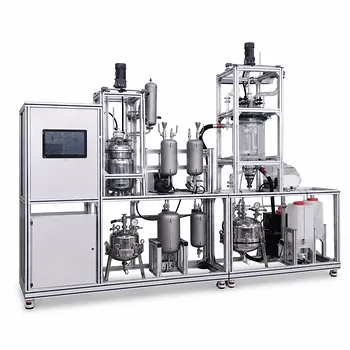
At LABPARK, we provide state-of-the-art Educational and Vocational Unit Operations Pilot Plants in chemical engineering, bioprocess & biotech, and environmental & water treatment. Designed specifically for universities, research institutes, and enterprises, our systems ensure precise control over complex mass transfer and thermodynamic parameters.
Ready to elevate your research, training, or process scale-up capabilities? Contact us today to discover the ideal pilot plant solution for your needs!
Related Products
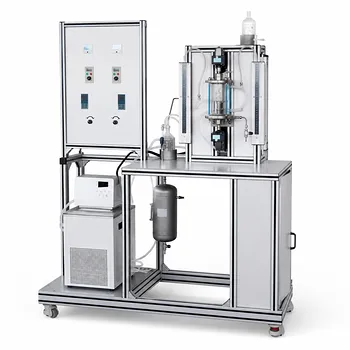
- Dual-Drive Stirred Gas-Liquid Mass Transfer Coefficient Determination Pilot Plant
- Liquid-Liquid Mass Transfer Coefficient Determination Educational Pilot Plant
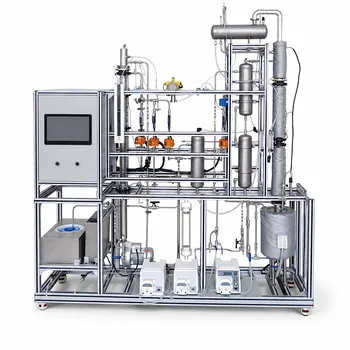
- Absorption and Desorption Educational Unit Operations Pilot Plant
- Carbon Dioxide Absorption and Desorption Educational Pilot Plant for Carbon Capture Studies
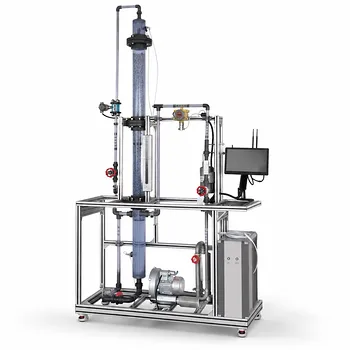
- Packed Bed Absorption Educational Unit Operations Pilot Plant
People Also Ask
- How does temperature affect mass transfer rates in chemical engineering educational pilot plants?
- How do pilot plants study gas solubility in polymer melts at high pressures? Key Mass Transfer Insights
- How does column packing affect absorption intensification, and how is it evaluated experimentally?
- Why Compare Membrane-Reservoir Models with Pilot Plant Data? Ensure Successful Process Scale-Up
- How does k_La affect hydrogenation scale-up? Critical insights for pilot reactors.