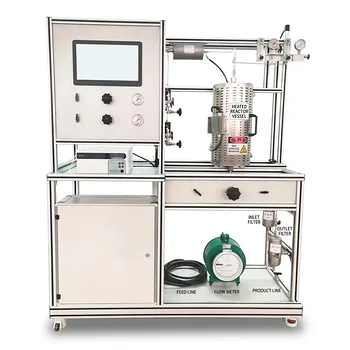
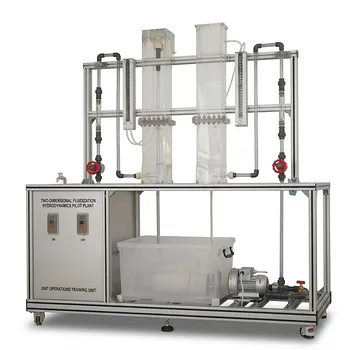
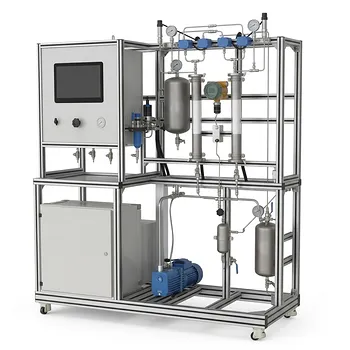
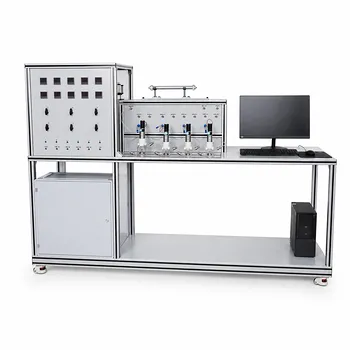
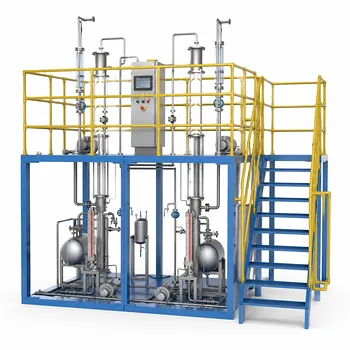
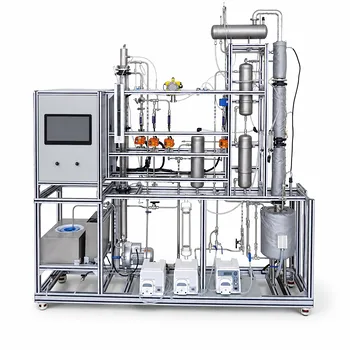
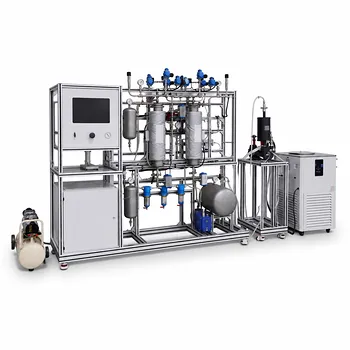
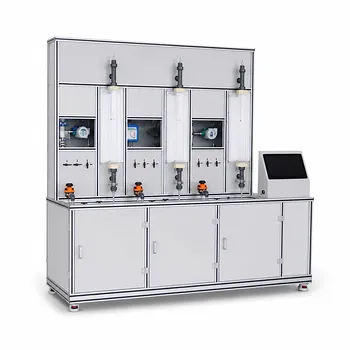
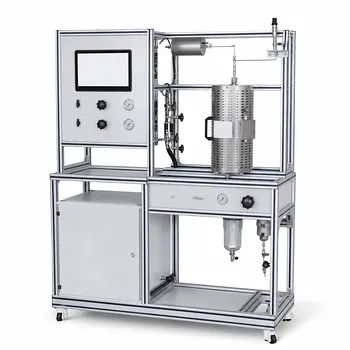
Pilot plants are the essential experimental bridge that transforms abstract theories of pore plugging and sintering into observable, quantifiable phenomena. By providing a rigorously controlled, scaled-down version of an industrial gas-solid reactor, these systems allow you to systematically manipulate conditions, extract solid samples at precise moments during a reaction, and correlate those physical changes with real-time gas analysis. This integrated approach directly reveals how structural evolution in the solid creates internal diffusion limitations that throttle the overall reaction rate.
The true power of a gas-solid reaction pilot plant lies in its ability to decouple time, sampling, and analysis. It’s not merely a simulator—it's a time-resolved characterization tool that makes the invisible progression of porosity loss and grain growth visible, enabling you to validate complex noncatalytic reaction models with empirical confidence.
The Core Challenge: Why Structural Changes Are Hard to Study
The surface chemistry of a gas-solid reaction is only half the story. The physical integrity of the solid reactant dictates how the reaction actually unfolds.
Reactions Create Their Own Roadblocks
In processes like calcination or ore reduction, the solid doesn't just disappear. It shrinks, cracks, sinters, or gets clogged with product layers that block gas from reaching unreacted material. These structural changes are dynamic, non-linear, and tightly coupled to the reaction temperature and gas environment.
The Diffusion Bottleneck Is an Experimental Blind Spot
Once pores begin to close, the reaction shifts from being chemical-kinetics-controlled to diffusion-controlled. Without the ability to "see" inside the solid at different times, you’re left with only a bulk measurement of conversion. You cannot separate what fraction of the slowdown was caused by pore plugging versus sintering-induced crystal growth.
How Pilot Plants Create the Necessary Controlled Environment
A unit operations pilot plant lets you fix every variable that matters, eliminating the noise that obscures structural evolution.
Mastery of Temperature and Gas Atmosphere
Sintering is exponentially accelerated by temperature, while pore plugging is a function of the reactant gas concentration and flow pattern. A well-instrumented pilot plant gives you clamp-like control over both the high-temperature heating profile and the precise composition of the feed gas. You can, for instance, hold all conditions constant and vary a single parameter to isolate its effect on the solid’s morphology.
Ensuring Isothermal and Defined Flow Regimes
Fluidized bed or fixed bed pilot reactors are designed with precise temperature sensors and pressure transducers. This ensures you aren’t fooled by hot spots or bypassing, both of which would artificially alter the rate of sintering and create a false picture of structural change.
The Power of Time-Resolved Solid Sampling
This is the most direct way a pilot plant facilitates the study of pore plugging and sintering. The ability to physically extract small solid aliquots without shutting down the entire process is what turns speculation into data.
A Physical Timeline of Porosity Loss
By taking solid samples at low, medium, and high conversion intervals, you create a fossil record of the particle’s life. You can then analyze these samples offline using porosimetry or microscopy. That sequence of samples shows you exactly when pore mouths began to plug, or when grains started to fuse together due to sintering.
Correlating Structure with Diffusion Limitations
These sampled solids can be tested in subsequent experiments or modeled mathematically. When you overlay the measured decrease in surface area and pore volume against the observed drop in the global reaction rate, you get a direct, empirical link between the evolving pore structure and the onset of internal diffusion limitations.
Decoding the Gas Phase to See the Solid’s Interior
You don’t have to wait for a solid sample to know something has changed. The outlet gas tells the story in real time.
Gas Analyzers as Instant Probes of Structural Health
Integrated online analyzers continuously monitor the concentration of a product gas (like CO₂ from calcination). A sudden, unexpected dip in the production rate, despite constant operating conditions, is often the first alarm that a diffusion barrier has formed. This real-time data prompts you to take a corresponding solid sample, directly connecting the macroscopic signal with the microscopic physical change.
Validating Models Like the Grain Model
Advanced noncatalytic reaction models, such as the grain model, mathematically predict how a reaction front moves inward and how the solid’s internal structure changes. By feeding a pilot plant’s time-resolved outlet gas composition data into these models, you can test whether the model correctly accounts for the diffusion resistance caused by the product layer plugging the pores.
Understanding the Trade-offs of Pilot Plant Studies
For all their power, these experiments have inherent limitations that you must navigate to draw sound conclusions.
The Intrusiveness of Sampling
Extracting solid samples can momentarily disturb the bed hydrodynamics or temperature profile, potentially altering the very sintering behavior you’re trying to quantify. The act of measurement must be as minimally invasive as possible, and you must always check whether the sampled material is truly representative of the bulk.
The Scale Gap and Wall Effects
A pilot plant is deliberately small. Wall effects, which are negligible in an industrial kiln, can alter gas-solid contact patterns and heat distribution. This can lead to uneven sintering that is an artifact of the laboratory setup, not a property of the reaction itself.
The Challenge of In-Situ Measurement
Most pilot plants rely on ex-situ analysis of the extracted solid samples. A sample cooled and exposed to air may partially rehydrate or see its crystal structure relax, subtly altering the evidence of sintering that occurred at high temperature. The data must always be interpreted knowing that what you see in the microscope is not 100% identical to what existed in the reactor.
Making the Right Choice for Your Goal
How you leverage a gas-solid pilot plant to study structural changes depends entirely on whether you prioritize scientific understanding or engineering scale-up.
- If your primary focus is researching the fundamental mechanism of pore plugging: Maximize your solid sampling frequency and invest in high-resolution microscopy. Design experiments that intentionally drive the reaction into the diffusion-limited regime so you can capture the exact porosity threshold where the rate collapses.
- If your primary focus is validating a mathematical model for sintering: Prioritize precise temperature control and high-fidelity outlet gas analysis. The model needs perfect boundary conditions; compare the predicted solid surface area over time (from sampling) against the model’s output to calibrate its sintering parameters.
- If your primary focus is predicting durability for industrial scale-up: You must combine this with elutriation and particle size distribution measurements. A sintered particle may be less reactive, but it might also be mechanically fragile, producing fines that are lost out the top. The pilot plant helps you balance chemical reactivity with physical longevity.
By acting as a controlled time machine that freezes the solid’s evolution at will, a well-operated unit operations pilot plant reveals the hidden structural clockwork driving every gas-solid reaction.
Summary Table:
| Study Method | How It Works | Key Benefit |
|---|---|---|
| Controlled Environment | Precise temp & gas flow control | Isolates sintering from chemical kinetics |
| Time-Resolved Sampling | Extracting solid samples mid-reaction | Maps the physical timeline of pore plugging |
| Gas Phase Analysis | Real-time monitoring of outlet gas | Detects diffusion barriers instantly |
Optimize Your Gas-Solid Reaction Research with LABPARK
Are you looking to bridge the gap between theory and industrial application? LABPARK provides premium Educational and Vocational Unit Operations Pilot Plants in chemical engineering, bioprocess & biotech, and environmental & water treatment. Designed specifically for universities, research institutes, and enterprises, our pilot plants deliver the precise control, reliable sampling, and real-time analysis you need to master complex reaction kinetics.
Contact LABPARK today to discover how our custom pilot plant solutions can elevate your laboratory's research and training capabilities!
Related Products
- Fixed Bed Gas Solid Catalytic Reaction Educational Pilot Plant
- Fluidized Bed Gas Solid Catalytic Reaction Educational Pilot Plant
- Micro-Scale Gas-Solid Catalytic Reaction Educational Pilot Plant
- Fixed-Bed Chemical Reaction and Gas Dust Tar Removal Unit Operations Pilot Plant
- Educational Unit Operations Pilot Plant for Intraparticle Diffusion Effective Factor Measurement
People Also Ask
- How do reactor pilot plants safely study gas-solid reactions? Master kinetics with thermal & flow control.
- How does the Mears criterion evaluate transport resistance? Key Guide to Intrinsic Kinetics
- Fluidized vs. Fixed Bed Reactors: Comparing Heat & Complexity in Pilot Plants
- Why is a multibed configuration necessary for exothermic reactions? Optimize your pilot plant trajectory.
- How is the friction factor determined for fixed-bed pilot plants? Select the best pressure drop correlation.