To optimize selectivity in a gas separation pilot plant, you must precisely engineer the permeability mismatch between the polymer matrix and the molecular sieve filler.
Theoretical transport modeling, specifically the Maxwell model for mixed-matrix membranes (MMMs), reveals a clear optimum: the highest overall membrane selectivity is achieved when the permeability of the continuous polymer phase is approximately three times lower than that of the dispersed inorganic filler. If this ratio is not maintained—particularly if the polymer is too permeable—the separation benefits of the costly molecular sieve phase are effectively lost, and the membrane performs no better than a pure polymer film.
Optimizing MMM selectivity is not about maximizing the filler loading or its individual selectivity. It is fundamentally a matching problem governed by transport physics: target a polymer permeability that is one-third of the filler permeability, and you will extract the maximum separation power from the hybrid material.
The Transport Modeling Foundation: Why Permeability Matching Matters
The surface-level question is about using a model to improve selectivity. The deeper need is to avoid wasting expensive materials and pilot-plant time on membranes that underperform due to a fundamental mismatch in transport properties.
The Maxwell Model and the 3:1 Rule
The classic analytical tool for predicting MMM permeability is the Maxwell model, originally developed for electrical conductivity but adapted for gas transport. It treats the membrane as a continuous polymer phase containing perfectly dispersed, spherical filler particles.
Applying this model yields a non-intuitive result. To maximize the overall selectivity of the composite membrane, the permeability of the polymer (P_c) and the filler (P_d) must be coupled in a specific way.
The theoretical optimum occurs when the polymer permeability is approximately three times lower than the dispersed filler permeability (P_d ≈ 3 P_c). At this sweet spot, the gas molecules experience the ideal balance between the fast, selective pathways of the filler and the moderating transport of the polymer.
The Counterintuitive Danger of High Polymer Permeability
The most common mistake in MMM design is using a highly permeable polymer to try and boost overall flux. Transport modeling shows this is catastrophic for selectivity.
If the polymer's permeability is too high—approaching or exceeding the filler's—the model predicts a steep decline in composite selectivity. The gas flow becomes dominated by the non-selective polymer phase.
In this regime, the membrane's performance collapses toward that of the pure polymer, nullifying every advantage you sought from the molecular sieve. You are left with an expensive film that separates no better than a cheap, unfilled one.
Moving from Theory to the Pilot Plant Floor
The Maxwell model provides the theoretical pillar, but a pilot plant introduces real-world complexities that modify how you apply—and benefit from—that optimized selectivity.
The Critical Influence of the Pressure Ratio
Even a perfectly optimized MMM will fail to deliver its theoretical enrichment if operating conditions are ignored. A key concept here is the pressure-ratio-limited regime.
The degree of separation you actually measure depends not only on the membrane's selectivity but also on the ratio of feed to permeate pressure. When this pressure ratio is much smaller than the membrane’s selectivity, the system becomes pressure-ratio-limited.
In this regime, the outlet concentration becomes insensitive to further improvements in membrane selectivity. For example, at a pressure ratio of 10, increasing the membrane's intrinsic selectivity beyond 40 will yield almost zero additional enrichment benefit.
Fouling and Long-Term Selectivity Decay
A pilot plant is a perfect platform to observe how quickly theoretical selectivity can degrade. Progressive membrane fouling from impurities or plasticizing gases will reduce both permeability and selectivity over time.
Your transport model, based on clean materials, gives the optimistic upper limit. Real-world selectivity optimization must include a strategy for pretreatment or periodic cleaning, verifying that the polymer-filler permeability ratio remains intact under actual feed conditions.
Exploiting Controlled Free Volume Changes
You can actively use the 3:1 rule as a design target by modifying the polymer matrix. Research shows that incorporating nanosized particles like fumed silica into glassy polymers (e.g., PTMSP) disrupts chain packing and increases free volume elements.
This is a powerful knob to turn. If your base polymer is a barrier with very low permeability, you can add such nanoparticles to raise its permeability until it reaches the sweet spot where it is roughly one-third that of your chosen zeolite or silica molecular sieve filler.
Understanding the Trade-offs
An objective optimization strategy must confront the inherent conflict in membrane science.
The Permeability-Selectivity Upper Bound
The empirical Robeson upper bound defines the historic trade-off for pure polymers: higher selectivity inevitably means lower permeability. Mixed-matrix membranes are specifically designed to break through this barrier.
However, the Maxwell optimization reveals a local trade-off. While the 3:1 ratio maximizes selectivity, it does so by anchoring the polymer's permeability at a relatively low, specific value. You cannot independently maximize both flux and selectivity.
When to Sacrifice Peak Selectivity
There are pilot-plant scenarios where chasing the theoretical selectivity maximum is detrimental. If the system is pressure-ratio-limited, a membrane with slightly lower selectivity but significantly higher permeability (a different polymer-filler ratio) will process more gas and achieve nearly the same product purity in less time. The economic optimum often sits just below the selectivity peak.
Making the Right Choice for Your Pilot Plant Study
Your optimization strategy must align with the specific goal of your research or scale-up campaign. Use the following guidelines to implement transport-model insights effectively.
- If your primary focus is demonstrating a new record-breaking selectivity: Use the Maxwell model to back-calculate the required polymer permeability and select or modify a matrix material to meet the 3:1 ratio. Characterize your filler's permeability first, then engineer the polymer to match it.
- If your primary focus is evaluating a process under a fixed, low pressure ratio: Do not over-invest in membrane selectivity. First, plot your operating point on the selectivity-versus-enrichment curve. Identify the selectivity threshold beyond which the system becomes pressure-ratio-limited, and only apply the 3:1 rule if your target is below that ceiling.
- If your primary focus is scaling up for maximum throughput: Prioritize membranes where the polymer-filler optimization provides the best flux at an acceptable selectivity, not the ultimate selectivity. Experiment with nanoparticles that increase free volume to simultaneously push both permeability and selectivity upward, breaking the trade-off entirely.
The path to a successful MMM pilot plant campaign is not simply adding more zeolite; it is using transport physics to match the continuous and dispersed phases perfectly, then aligning that material's peak performance with the real constraints of your process.
Summary Table:
| Optimization Parameter | Target / Strategy | Key Practical Insight |
|---|---|---|
| Permeability Ratio | $P_d \approx 3 P_c$ (Filler $\approx$ 3x Polymer) | Maximizes composite selectivity; prevents performance collapse toward pure polymer. |
| Pressure Ratio Limit | Feed/Permeate Ratio > Membrane Selectivity | Avoids the pressure-ratio-limited regime where selectivity improvements yield no benefit. |
| Free Volume Control | Add nanoparticles (e.g., fumed silica) | Dynamically adjusts polymer permeability to hit the target 3:1 transport ratio. |
| Process Economic Target | Balance throughput and purity | The economic optimum often lies slightly below peak selectivity for higher overall flux. |
Optimize Your Membrane Separation Research with LABPARK
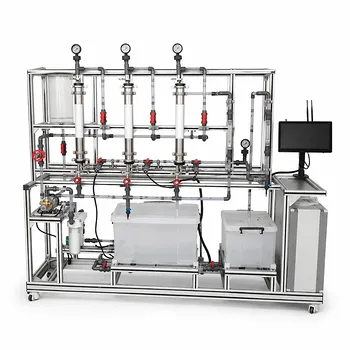
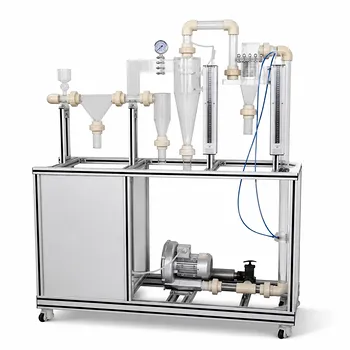
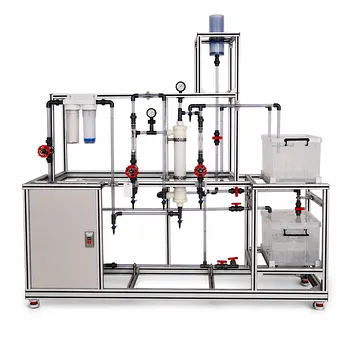
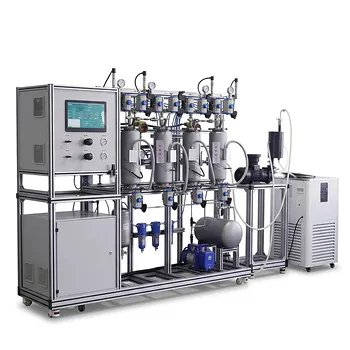
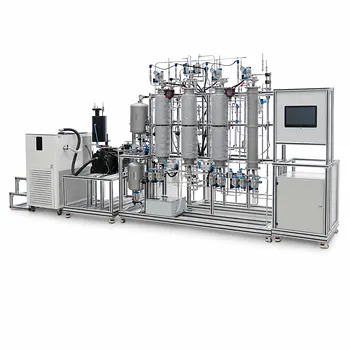
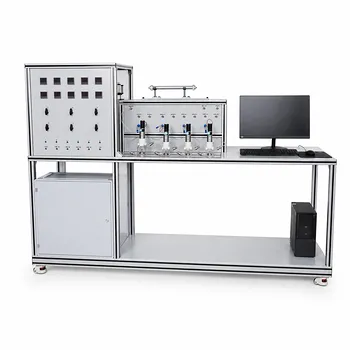
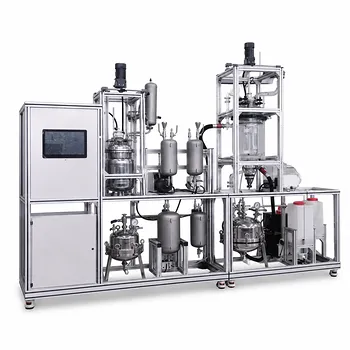
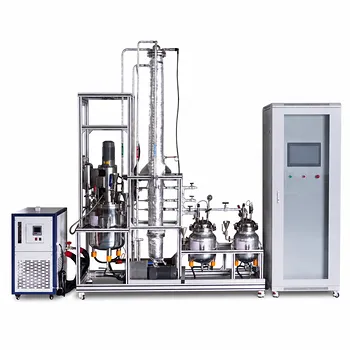
Are you looking to scale up your gas separation or chemical engineering research? LABPARK provides state-of-the-art Educational and Vocational Unit Operations Pilot Plants tailored for universities, research institutes, and enterprises.
Whether you are focusing on chemical engineering, bioprocess & biotech, or environmental & water treatment, our robust pilot systems help you validate transport models and optimize membrane selectivity under real-world operating conditions.
Contact our technical team today to find the perfect pilot plant solution for your lab!
Related Products
- Multifunctional Membrane Separation Educational Pilot Plant with Ultrafiltration, Nanofiltration, Reverse Osmosis
- Multi-Functional Membrane Separation Educational Pilot Plant for Unit Operations Lab
- Gas-Solid Heterogeneous Separation Demonstration Educational Unit Operations Pilot Plant
- Ultrafiltration Membrane Separation Educational Pilot Plant
- Multi-Component Gas Pressure Swing Adsorption Pilot Plant for Unit Operations Education
People Also Ask
- How do PEI, PVDF, and PSU membranes compare in pilot plants? Find the best fit.
- Pervaporation vs. Vapor Permeation: Handling Suspended Solids in Membrane Pilot Plants
- What are the trade-offs of polymer vs inorganic membranes in teaching pilot plants? Key laboratory comparison.
- What are the advantages of membrane separation in pilot plants? Efficient Organic Vapor Recovery
- How can operators optimize operating conditions and cleaning protocols in membrane separation pilot plants to mitigate fouling?