Knowledge Chemical Engineering Education How do PEI, PVDF, and PSU membranes compare in pilot plants? Find the best fit.
Author avatar

Tech Team · LABPARK

Updated 1 week ago

How do PEI, PVDF, and PSU membranes compare in pilot plants? Find the best fit.


Temperature resistance meets chemical vulnerability. When configuring membrane separation pilot plants, polyetherimide (PEI) stands apart as a high‑temperature specialist with superior mechanical strength and exceptional gas‑selectivity, while PVDF and polysulfone (PSU) remain the go‑to choices where chemical resilience is the critical factor. PEI’s glass transition temperature near 200 °C enables operation well above the typical 100 °C ceiling of many polymer membranes, and its dense top‑layer structure makes it ideal for gas‑separation studies like helium recovery. However, that thermal edge comes at a price: PEI is chemically fragile in the presence of chlorinated solvents, tetrahydrofuran, or strongly alkaline media, territories where PVDF and PSU perform without failure.

The core tension is thermal‑mechanical performance versus chemical robustness. PEI excels in pilot‑plant scenarios that demand both high temperatures and gas‑phase selectivity, but PVDF and PSU become indispensable when the feed stream carries harsh solvents or extreme pH. The right membrane is not “better” in isolation; it is the one that matches the dominant stress in your experiment.

The Thermal Advantage: Why Temperature Matters in Pilot Plants

Pushing Past the 100 °C Barrier

Most polymer‑based gas separation membranes must operate below 100 °C to avoid thermal degradation. PEI breaks through that ceiling. Its amorphous structure and high glass transition temperature (~200 °C) allow sustained operation at temperatures that would permanently damage PVDF or PSU, making high‑temperature gas‑separation studies feasible in a pilot plant setting.

Mechanical Integrity Under Stress

Elevated temperatures tend to soften or weaken standard membrane polymers. PEI’s inherent mechanical strength preserves structural stability and pore architecture even when heat and pressure rise. For a pilot‑plant operator, this means fewer membrane collapses and more consistent data across thermal ramps.

Performance in Gas Separation Applications

Dense Skins and Selective Transport

Gas separations, such as helium recovery from natural gas, rely on a membrane’s dense top layer to regulate permeation through solubility and diffusivity differences. PEI can form these defect‑free skins with high intrinsic selectivity, a direct outcome of its molecular rigidity. The primary reference specifically highlights PEI’s effectiveness in helium recovery studies, placing it ahead of PVDF and PSU for such tasks.

Porosity Advantages in Ultrafiltration

When the same pilot plant is used for liquid ultrafiltration, PEI supports often offer higher porosity with smaller average pore sizes than PVDF. This combination can yield sharper molecular weight cut‑offs and higher pure‑water flux—benefits that directly improve separation resolution in certain biotech or fine‑chemical processes.

The Chemical Achilles’ Heel

Solvent and pH Sensitivity

PEI’s weakness is chemical stability. It cannot be used with chloroform, dichloromethane, or tetrahydrofuran—solvents that frequently appear in cleaning protocols or mixed‑waste streams. Its tolerance to high‑pH, alkaline conditions is also markedly lower than that of PVDF, PSU, or polyacrylonitrile (PAN). In any pilot run where caustic cleaning or pH‑swings are routine, PEI is a risky choice.

When Chemical Stability Is Non‑Negotiable

For liquid‑waste treatment or experiments involving strong bases, acids, or aggressive organic solvents, PVDF and PSU are the safer, longer‑lived alternatives. PVDF in particular brings broad chemical inertness, while PSU balances decent thermal resistance with far superior chemical endurance compared to PEI. In these environments, selecting PEI would lead to premature membrane failure and corrupted results.

Understanding the Trade‑offs

Temperature Range vs. Chemical Latitude

Every degree of extra thermal freedom you gain with PEI must be paid for with tighter chemical boundaries. You cannot run PEI modules in streams that contain even trace amounts of dichloromethane or high‑pH cleaning agents. PVDF and PSU sacrifice some high‑temperature capability but unlock a much wider solvent and pH operating window.

Mechanical Strength vs. Process Flexibility

PEI’s strength allows thinner, higher‑porosity supports that improve flux and selectivity. Yet that same membrane may fail when a process demands aggressive chemical cleaning. In contrast, a PVDF or PSU membrane can handle repeated chemical sanitization cycles, making it the pragmatic choice for multipurpose pilot plants where the feed composition varies.

The Gas‑Separation Frontier

For gas‑phase studies, the thermal and selectivity attributes of PEI often outweigh its chemical limitations because the feed gas stream is generally clean and dry. This is where PEI shines—offering a true differentiator in research that pushes into temperature zones where other polymers simply cannot go.

Making the Right Choice for Your Goal

The decision hinges on the primary stress your pilot plant will face. Use the goals below to map your priority to the recommended material.

  • If your primary focus is high‑temperature gas separation or helium recovery: Choose PEI for its unmatched thermal endurance and dense‑layer selectivity.
  • If your primary focus is liquid‑phase filtration in chemically aggressive or alkaline environments: Select PVDF or PSU to ensure membrane longevity and data integrity.
  • If your primary focus is educational flexibility across multiple scenarios: Equip the plant with both PEI and PVDF/PSU modules to demonstrate the temperature‑versus‑chemical‑resilience trade‑off firsthand.

By aligning the membrane chemistry with the dominant process stress—be it heat, harsh solvents, or extreme pH—you build a pilot plant that delivers reliable, reproducible results while teaching the real‑world balance every membrane engineer must master.

Summary Table:

Membrane Material Max Temperature Gas Selectivity Chemical Resistance Best Suited For
PEI (Polyetherimide) High (up to ~200°C) High (Defect-free skins) Low (Vulnerable to THF, chlorinated solvents, high pH) High-temperature gas separation & helium recovery
PVDF Standard (<100°C) Low to Moderate High (Excellent resistance to acids, bases, solvents) Liquid filtration & harsh chemical environments
PSU (Polysulfone) Standard to Moderate Moderate Moderate (Better than PEI, less than PVDF) General ultrafiltration & versatile pilot operations

Optimize Your Research with LABPARK Pilot Plants

Choosing the right membrane is critical to achieving reliable experimental data. LABPARK provides state-of-the-art Educational and Vocational Unit Operations Pilot Plants in chemical engineering, bioprocess & biotech, and environmental & water treatment designed for universities, research institutes, and enterprises.

Whether you need high-temperature gas separation configurations using PEI or chemically resilient systems with PVDF/PSU, our experts are here to help you design the perfect setup.

Contact LABPARK today to discuss your pilot plant requirements and get a tailored solution!

Related Products

People Also Ask

Related Products

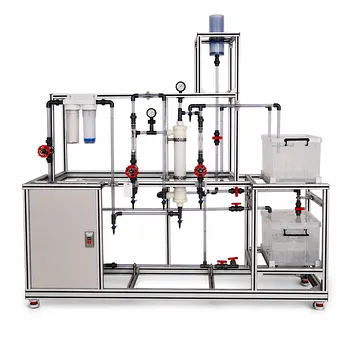
Multifunctional Membrane Separation Educational Pilot Plant with Ultrafiltration, Nanofiltration, Reverse Osmosis

Multifunctional Membrane Separation Educational Pilot Plant with Ultrafiltration, Nanofiltration, Reverse Osmosis

An integrated laboratory bench-scale membrane separation system for higher education engineering labs combining Ultrafiltration, Nanofiltration, and Reverse Osmosis processes. Features industrial PLC control with touch-screen HMI, transparent piping, and academic assessment software. Ideal for chemical and environmental engineering curricula.

Ultrafiltration Membrane Separation Educational Pilot Plant

Ultrafiltration Membrane Separation Educational Pilot Plant

This ultrafiltration membrane separation educational pilot plant enables undergraduate students to process PVA solutions, study hollow fiber membrane dynamics, and perform quantitative analysis with spectrophotometry for hands-on learning of unit operations and industrial maintenance and membrane cleaning protocols.

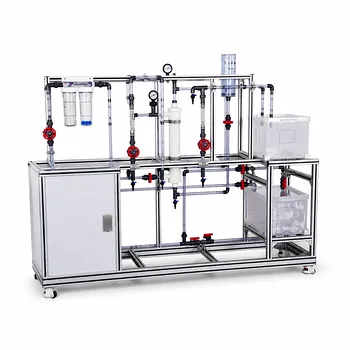
Multi-Functional Membrane Separation Educational Pilot Plant for Unit Operations Lab

Multi-Functional Membrane Separation Educational Pilot Plant for Unit Operations Lab

The Multi-functional Membrane Separation Educational Unit Operations Pilot Plant is an integrated bench-scale laboratory system designed for teaching undergraduate engineering education. It features Ultrafiltration, Nanofiltration, and Reverse Osmosis modules in a compact, mobile unit for practical hands-on learning.

Hollow Fiber Ultrafiltration Membrane Separation Educational Pilot Plant

Hollow Fiber Ultrafiltration Membrane Separation Educational Pilot Plant

Explore our hollow fiber ultrafiltration membrane separation educational pilot plant for hands-on learning of industrial ultrafiltration processes, flux analysis, fouling mitigation, and process control. Compact, customizable, and built for engineering labs.

Photocatalytic Membrane Separation and Degradation Unit Operations Pilot Plant

Photocatalytic Membrane Separation and Degradation Unit Operations Pilot Plant

Bench-scale pilot plant integrating photocatalytic degradation with membrane separation for engineering education. Study advanced oxidation, microfiltration, and hybrid processes using industrial sensors. Features safety light-blocking curtain, low-noise compressor, and durable stainless-steel construction.

Multi Functional Membrane Crystallization Educational Unit Operations Pilot Plant

Multi Functional Membrane Crystallization Educational Unit Operations Pilot Plant

Integrated bench-scale membrane crystallization pilot plant for engineering education. Provides hands-on training in advanced separation technologies, combining membrane distillation crystallization and process intensification. Features variable scaling vessels, industrial-grade flow control, and interactive digital data acquisition. Customizable for university labs.

Alkaline Membrane Water Electrolysis Educational Pilot Plant Unit Operations Training System

Alkaline Membrane Water Electrolysis Educational Pilot Plant Unit Operations Training System

Hands-on educational pilot plant for alkaline membrane water electrolysis hydrogen production, integrating unit operations training with industrial PLC control, real-time data logging, customizable design, durable 316L stainless steel construction, explosion-proof safety, and modern 5G connectivity for university laboratories.

Bench Scale Dual Column Gas Separation and Capture Educational Pilot Plant

Bench Scale Dual Column Gas Separation and Capture Educational Pilot Plant

This dual-column educational pilot plant provides hands-on teaching of gas adsorption, separation, and capture processes. It features stainless steel columns, regeneration up to 400°C, and a 15.6-inch touchscreen PLC for TSA and PSA studies in chemical engineering curricula, process simulation.

Gas-Solid Heterogeneous Separation Demonstration Educational Unit Operations Pilot Plant

Gas-Solid Heterogeneous Separation Demonstration Educational Unit Operations Pilot Plant

Comprehensive visual transparent gas-solid separation pilot plant for chemical engineering labs. Demonstrates gravity settling inertial settling cyclone and bag filter technologies. Enables real-time analysis of fluid-particle mechanics pressure drop and collection efficiency. Ideal for undergraduate unit operations courses.

Carbon Material Thermal Pretreatment Multiphase Separation Educational Pilot Plant

Carbon Material Thermal Pretreatment Multiphase Separation Educational Pilot Plant

Educational pilot plant for carbon material thermal pretreatment and multiphase separation. Features jacketed agitated reactor, separation column, and modern controls for hands-on unit operations training in heat transfer, fluid flow, and process safety with industrial-grade materials and wireless data acquisition.

Multi-Component Gas Pressure Swing Adsorption Pilot Plant for Unit Operations Education

Multi-Component Gas Pressure Swing Adsorption Pilot Plant for Unit Operations Education

Multi-component gas pressure swing adsorption pilot plant designed for unit operations education. Features four-tower configuration, IoT touchscreen control, dual regeneration, and real-time breakthrough curve analysis for engineering training with safety interlocks and mobile frame simulates industrial PSA processes.

Pressure Swing Adsorption Educational Unit Operations Pilot Plant

Pressure Swing Adsorption Educational Unit Operations Pilot Plant

Integrated bench-scale pressure swing adsorption pilot plant for hands-on teaching of gas-solid separation, mass transfer, and process optimization using nitrogen-oxygen model, featuring dual-column design, industrial touchscreen control, digital assessment suite, and customizable hardware and software configurations for educational laboratories.

Educational Pressure Swing Adsorption Ethylene Capture Unit Operations Pilot Plant

Educational Pressure Swing Adsorption Ethylene Capture Unit Operations Pilot Plant

Advanced educational pilot plant for pressure swing adsorption ethylene capture provides comprehensive hands-on training in industrial gas separation processes, featuring an eight-column PSA system, real-time data acquisition, and fully customizable design for chemical engineering unit operations laboratories and research.

Bio-fermentation Ethanol Production Practical Training Unit Operations Pilot Plant

Bio-fermentation Ethanol Production Practical Training Unit Operations Pilot Plant

Bio-fermentation ethanol production pilot plant for hands-on training in unit operations: fermentation, solid-liquid filtration, membrane separation, and distillation. Bridges theory with industrial practice using industrial-grade components, customizable for university labs. Hybrid automated and manual control for comprehensive learning.

Natural Product Extraction Unit Operations Training Pilot Plant

Natural Product Extraction Unit Operations Training Pilot Plant

Integrated natural product extraction pilot plant for chemical engineering training bridges theory and industrial practice with modular extraction and evaporation/concentration units, hybrid touchscreen and manual control, realistic process simulation, and self-contained softened water and vacuum utilities.

Absorption and Desorption Educational Unit Operations Pilot Plant

Absorption and Desorption Educational Unit Operations Pilot Plant

Dual packed column absorption and desorption pilot plant for chemical engineering education, offering real-time mass transfer coefficient measurement, durable mobile frame, industrial touch-screen interface, and customizable design for varied laboratory curricula, enabling hands-on study of gas absorption and stripping.

Fixed-Bed Chemical Reaction and Gas Dust Tar Removal Unit Operations Pilot Plant

Fixed-Bed Chemical Reaction and Gas Dust Tar Removal Unit Operations Pilot Plant

Integrated educational pilot plant for studying catalytic gas-solid reactions and downstream gas purification. Features dual fixed-bed reactor, three-stage heating, and touchscreen control for hands-on engineering training. Ideal for chemical and environmental engineering curricula.

Dual-Mode Rectification Pilot Plant for Practical Training Unit Operations

Dual-Mode Rectification Pilot Plant for Practical Training Unit Operations

Industrial-scale dual-mode rectification pilot plant for chemical engineering practical training. Features real-material and simulated-material operation modes, sieve-plate column with sight glasses for visual observation of hydrodynamics, and customizable SCADA control for safe, hands-on learning of unit operations and mass transfer.

Polymerization Granulation and Pellet Processing Educational Unit Operations Pilot Plant

Polymerization Granulation and Pellet Processing Educational Unit Operations Pilot Plant

Integrated pilot plant for teaching polymer processing from polymerization to pelletizing. Includes 30L reactor, hydrolyzer, extruder-granulator, vibration dryer, crusher, and sieve. Atmospheric pressure operation for safety, corrosion-resistant SS, customizable for chemical and polymer engineering education. Ideal for university labs.

Constant Pressure Filtration Educational Unit Operations Pilot Plant

Constant Pressure Filtration Educational Unit Operations Pilot Plant

Hands-on educational pilot plant for constant pressure filtration. Classic plate and frame filter press allows students to study kinetics, determine specific cake resistance, perform cake washing and evaluate washing rates. Ideal for chemical engineering curriculum. Mobile, customizable, safety-compliant design.


Leave Your Message