The most direct way to optimize catalyst costs in a mass-transfer-limited pilot fluidized bed reactor is to replace a significant portion of the expensive noble metal catalyst with an inert, low-cost support material. Because the reaction rate is controlled by diffusion through the gas-liquid or gas-solid boundary layer, only the outermost surface of a catalyst particle is truly active. Any noble metal buried more than a few microns deep is chemically invisible—it contributes nothing to conversion while inflating your material bill. By substituting that wasted interior with a cheap substrate like alumina, zeolite, or activated carbon, you can slash precious metal inventory by 30 to 70 percent without touching reactor performance.
The core principle is simple: in a mass-transfer-limited system, the chemical reaction is not the bottleneck; the physical transport of reactants to the particle surface is. This means the expensive active component only needs to exist on that exterior surface. By designing catalysts or beds where the active metal is concentrated exactly where it works—and nowhere else—you decouple reaction rate from catalyst cost.
Understanding Mass Transfer Limitation and Catalyst Utilization
The Boundary Layer Bottleneck
In any multiphase reaction, the overall rate is governed by the slowest step. When the system is mass-transfer-limited, that step is the diffusion of reactants across the stagnant film surrounding a particle. The liquid or gas immediately adjacent to the particle surface becomes depleted, and fresh reactant can only creep in by molecular diffusion.
Because this transport step is so sluggish, the chemical kinetics at the surface are underfed. The true reaction potential of the catalyst—its ability to convert molecules the instant they arrive—is never fully challenged. The surface sits hungry, while the interior of the particle sees an even lower reactant concentration.
Why Active Sites Inside the Particle Are Wasted
The concentration gradient doesn't stop at the outer surface; it decays as you move deeper into the particle’s pores. In a mass-transfer-limited regime, the dimensionless Thiele modulus is high, meaning reactants are consumed almost immediately upon entering the pore mouth. The penetration depth of the reactant is often just a few micrometers.
Any catalytic material beyond that thin active shell is simply dead weight. A noble metal atom sitting 50 microns inside a particle contributes zero reaction rate—it never encounters a reactant molecule during a typical reactor pass. Paying for a fully impregnated catalyst in such a system is like buying a racing engine only to run it at idle.
The Core Strategy: Diluting the Active Catalyst
Egg-Shell Catalysts: Concentrating Metal Where It Matters
The most elegant solution is to manufacture an egg-shell catalyst. This is a particle where the expensive noble metal is deposited exclusively on the outer rim—often just the first 50 µm—while the core is made of an inert, mechanically robust support. Alumina, silica, zeolite, or activated carbon all work beautifully.
The support can be chosen to match the original catalyst’s particle size, density, and attrition resistance. The overall catalyst inventory in the reactor shrinks dramatically in cost, while every gram of active metal remains fully accessible to the boundary layer. This is the approach highlighted in the primary reference: you’re replacing the inner core of each particle with an equivalent, inexpensive material that does not degrade the film-controlled rate.
Physical Blending with Inert Support Particles
An alternative, simpler tactic for pilot-scale experiments is to physically mix inert support particles with whole active catalyst particles. For example, you might take the original fully impregnated catalyst and dilute it 1:1 by volume with plain alumina spheres of the same diameter. This effectively reduces the total metal loading in the bed by 50 percent.
The mass transfer rate is determined by the external solid surface area and the fluid dynamics, not by the internal metal content. As long as the inert particles are hydrodynamically identical—same size, shape, and density—they simply act as passive spacers. The active particles still see the same boundary layer conditions and deliver the same per-particle reaction flux. The overall conversion stays identical because the system is not limited by the number of active sites.
Adapting the Strategy to Fluidized Bed Reactors (Pilot Scale)
Particle Attrition and Mechanical Integrity
Fluidized beds are notoriously abusive to particles. Constant collisions and rubbing generate fines that can be lost or clog downstream equipment. An egg-shell catalyst must be engineered so the active shell does not delaminate under mechanical stress. If abrasion grinds off the thin metal-containing outer layer, activity will plummet, and the expensive metal may end up in the filter bag.
In pilot-scale development, you must measure attrition resistance of both the egg-shell catalyst and any inert diluent particles. Use standard jet cup or ASTM attrition tests. The inert core material should be just as hard and tough as the original catalyst to avoid preferential breakage that could shift particle size distribution and fluidization behavior.
Fluidization Behavior and Segregation
When you blend inert support particles with active catalyst, you must avoid particle segregation. If the inert particles differ in diameter or density from the active ones, they can stratify within the bed—heavier particles sinking to the distributor, lighter ones floating to the top. This would create an inhomogeneous distribution of active mass and potentially cause hot spots or poor conversion, even in a mass-transfer-limited system.
At pilot scale, always match the physical properties of the inert material to the active catalyst. Identical particle size distribution and envelope density are critical. Alumina or zeolite supports can often be tailored to mimic a typical Pt/Al₂O₃ or Pd/C catalyst. A quick test in a cold-flow model with the actual gas velocity will confirm that the blend fluidizes uniformly without segregation.
Experimental Validation in the Pilot Plant
The theory is compelling, but pilot facilities exist to de-risk scale-up. The definitive validation involves running the reactor with the original fully loaded catalyst, then switching to the diluted bed or egg-shell particles while keeping all hydrodynamic conditions—gas velocity, temperature, pressure, feed composition—constant. If the conversion, selectivity, and pressure drop stay unchanged, you’ve proven the mass-transfer limitation.
This demonstration itself is a powerful cost-optimization tool. It not only justifies the catalyst redesign but also provides data to push the dilution factor aggressively. You might find that even a 90:10 inert-to-active ratio works, provided the fluidized bed maintains sufficient active particle mixing to deliver uniform contact with the gas.
Understanding the Trade-offs and Pitfalls
Reduced Overall Metal Loading vs. Active Metal per Particle
While global conversion doesn’t change in a purely mass-transfer-limited regime, the local activity per individual active particle does not increase. You are simply relying on fewer active particles to do the same job. If the reactor experiences a transient upswing in feed rate or a drop in temperature, the boundary layer thickness might change and temporarily expose a kinetic limitation. Having less metal inventory in the bed gives you a slimmer safety margin against such upsets.
In pilot plants, safety factors are often necessary. A 1:1 dilution might be prudent, whereas an aggressive 4:1 dilution could leave you vulnerable if a process excursion pushes the system toward kinetic control. Validate across the expected operating window.
Potential for Bed Dilution and Reactor Volume Constraints
Replacing active catalyst with inert material means the reactor’s total solid inventory now contains a lower density of active mass. If the reactor volume is fixed and you need a certain amount of active surface area to maintain the mass transfer flux, you cannot dilute beyond the point where active particle population becomes too sparse. At some low fraction, there simply aren’t enough active particles to receive the required mass transfer from the entire gas volume, and conversion will slip.
This threshold can be determined experimentally. Monitor conversion as a function of the inert-to-active ratio. The moment you see a small decline, you’ve found the mass transfer floor.
Long-term Stability and Deactivation
Catalysts deactivate over time due to poisoning, sintering, or fouling. A diluted bed means a smaller absolute inventory of active metal, so deactivation may appear to progress faster on a fractional conversion basis, even if the per-particle deactivation rate is the same. You may need more frequent catalyst replacement or regeneration cycles, which could offset some of the initial capital savings. For pilot campaigns that run for weeks, this is rarely a dealbreaker, but it must be factored into the economic assessment of a commercial design.
Making the Right Choice for Your Pilot Reactor
The best approach depends on your specific operational constraints and development objectives.
- If your primary focus is maximizing cost reduction without complicating particle synthesis: Start with a physical blend of inert support particles that exactly match your existing catalyst’s size and density. This requires no new catalyst manufacturing and can be tested immediately in your pilot plant.
- If your primary focus is long-term mechanical integrity and avoiding segregation issues: Invest in an egg-shell catalyst with a robust support core. This keeps the particle inventory uniform, eliminates any blending or stratification risk, and offers a cleaner path to commercial scale-up.
- If your primary focus is understanding the absolute minimum metal loading your process can tolerate: Run a dilution series in the pilot plant, systematically increasing the inert fraction until you detect the first sign of performance loss. This data point becomes your safe economic optimum.
- If your primary focus is preparing for a commercial fluidized bed with online catalyst addition/withdrawal: Validate that your inert material withstands the same handling and attrition as the active catalyst so that continuous makeup strategies remain consistent.
Ultimately, the mass-transfer limitation is a gift for cost optimization. It tells you that the expensive part of your catalyst is being underutilized, and by repositioning the active metal only where the boundary layer can touch it, you capture the full performance at a fraction of the precious metal cost.
Summary Table:
| Strategy | Core Mechanism | Key Advantages | Major Risks / Pitfalls |
|---|---|---|---|
| Egg-Shell Catalyst | Active metal concentrated on the outer rim (e.g., <50 µm) of an inert support. | Direct scale-up path, eliminates segregation risks, highly durable. | Higher initial manufacturing cost; shell attrition risks. |
| Physical Blending | Physically mixing active catalyst with hydrodynamically identical inert particles. | Low-cost, fast validation, highly flexible dilution ratio adjustment. | Risk of particle segregation; potential for uneven reaction zones. |
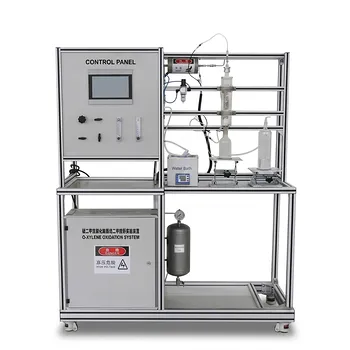
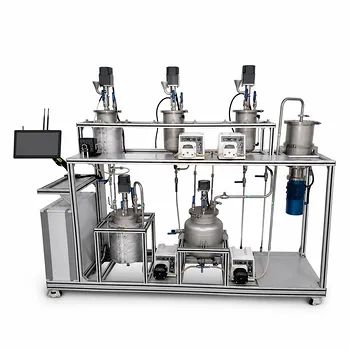
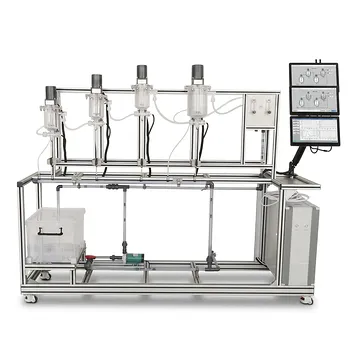
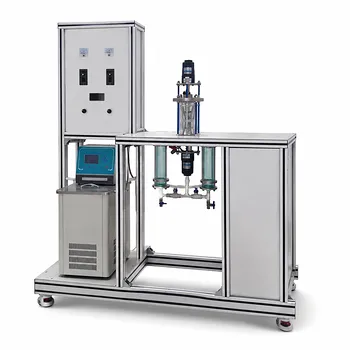
Need to optimize your chemical engineering processes? LABPARK provides state-of-the-art Educational and Vocational Unit Operations Pilot Plants in chemical engineering, bioprocess & biotech, and environmental & water treatment for universities, research institutes, and enterprises.
Whether you are testing catalyst dilution strategies or scaling up fluidized bed reactors, our highly customizable pilot plants offer the precise control and reliability you need to de-risk your processes.
Contact us today to find the perfect pilot-scale solution for your lab!
Related Products
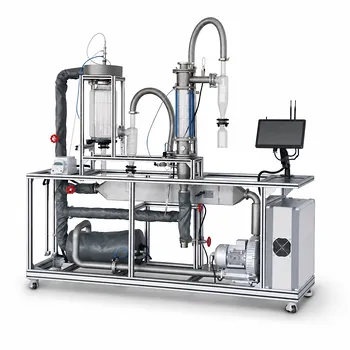
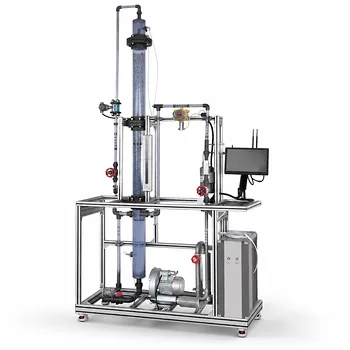
- Fluidized Bed Gas Solid Catalytic Reaction Educational Pilot Plant
- Multi-Reactor Educational Pilot Plant for Reaction Engineering Unit Operations
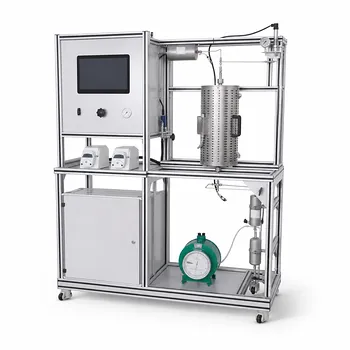
- Multi Functional Catalytic Reaction and Reactor Evaluation Educational Unit Operations Pilot Plant
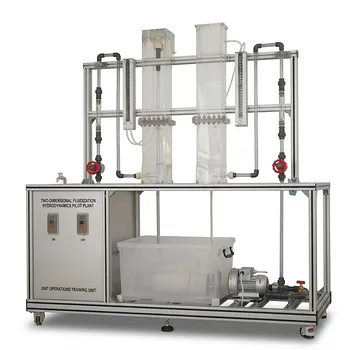
- Two-Dimensional Fluidization Hydrodynamics Educational Pilot Plant for Unit Operations Training
- Multi-Functional Drying Educational Unit Operations Pilot Plant
People Also Ask
- Why is the bed height-to-diameter ratio (L/dt) critical? Fluidized bed pilot plant selection guide.
- How is the minimum fluidization velocity (U_mf) determined and utilized? A Unit Operations Guide
- How does the Mears criterion evaluate transport resistance? Key Guide to Intrinsic Kinetics
- How do reactor pilot plants safely study gas-solid reactions? Master kinetics with thermal & flow control.
- How do pilot plants demonstrate fluidized-bed reactor advantages over fixed-bed? Find Out Now