Lined carbon steel can lower upfront costs, but it introduces a long-term maintenance burden that can disrupt educational workflows. For pressure vessels and storage tanks in tight-budget pilot plants, choosing lined carbon steel over stainless steel is a calculated trade-off—not a clear yes or no. You save money initially, yet you commit to regular inspections, liner repairs, and potential downtime. If your teaching labs demand high reliability and broad chemical compatibility, stainless steel’s modest 30% premium often pays for itself in reduced hassle. The decision hinges on how you balance initial capital against ongoing care and teaching continuity.
The real choice is between a lower purchase price with higher hands-on upkeep, and a slightly higher price that buys corrosion resistance right out of the box. Lined carbon steel can work when you control fluid aggressiveness and plan for maintenance windows, but stainless steel provides the predictable, low-maintenance foundation that academic labs need to avoid schedule-breaking equipment failures.
The Upfront Appeal of Lined Carbon Steel
A Budget-Friendly Starting Point
Carbon steel pressure vessels and tanks cost significantly less than their stainless counterparts. In standard factorial cost estimation, carbon steel serves as the baseline with a material factor ( f_m = 1.0 ), while 304 stainless steel raises that factor to just 1.3. Adding a protective lining—such as glass, epoxy, or PTFE—increases the price, but the final purchase cost still typically undercuts an all-stainless design. For pilot plants operating on strict grants or departmental budgets, that immediate saving can free funds for other critical equipment like pumps, instrumentation, or data acquisition systems.
Adequate Structural Strength for Pressure Service
Carbon steel provides the mechanical strength needed for most pilot-scale pressure vessels without requiring exotic wall thicknesses. The liner simply shields the steel from the process fluid. This lets you meet ASME or local pressure code requirements while keeping the vessel body economical, a combination that feels pragmatic when funds are limited.
The Hidden Costs of a Lined System
Corrosion Susceptibility and Liner Vulnerability
Even a pinhole in the lining exposes the underlying carbon steel to chemicals. Once corrosion starts, it can creep beneath the liner, weakening the vessel wall invisibly. In educational settings, students may inadvertently handle fluids more aggressive than originally planned—mild acids, brines, or cleaning agents—accelerating liner degradation. The primary reference’s warning is clear: carbon steel is highly susceptible to corrosion. The liner is a single point of failure, not a permanent shield.
The Maintenance and Inspection Burden
Protective linings demand periodic inspection, typically requiring the vessel to be drained, opened, and carefully examined by a specialist. Repairs can mean recoating or relining, tasks that take days and demand a clean, controlled environment often missing from busy teaching labs. This recurring expense—both in money and staff time—can erode the initial cost advantage within just a few years. For a university lab operating on tight technician hours, that hidden operational cost is a serious consideration.
Downtime That Disrupts Teaching
Pilot plant experiments in an educational curriculum run on a tight semester schedule. A vessel out of service for liner repair means a whole lab module may be cancelled or rescheduled. Unlike industrial plants that can reroute production, teaching pilot plants often have only one train. Stainless steel eliminates this downtime risk by removing the liner vulnerability entirely, a critical advantage when the goal is uninterrupted hands-on learning.
Where Stainless Steel Shines in a Teaching Plant
Inherent Corrosion Resistance Across a Wide Range of Chemicals
Stainless steel (304 or 316) forms a passive chromium oxide layer that protects itself from many acids, solvents, and biological materials. This passive protection means you can run water, dilute acids, nutrient broths, and cleaning agents through the same vessel without switching materials. The supplementary references confirm that stainless steel’s corrosion resistance is crucial for handling diverse experiments in research and university labs, enabling the plant to grow with the curriculum rather than limit it.
Cleanability and Hygienic Properties
Educational bioprocessing, food engineering, or pharmaceutical modules demand surfaces that can be easily cleaned and sanitized. Stainless steel’s smooth, non-porous finish resists biofilm buildup and withstands steam sterilization—a must for fermenters or downstream processing vessels. Lined carbon steel, with its potential for crevices at flanges or liner seams, makes achieving true cleanliness far more difficult.
Long-Term Cost Efficiency
While stainless vessels command a purchase cost roughly 30% higher (material factor 1.3), this premium often reflects less than the lifetime expense of repeated liner maintenance. Additionally, when estimating total project cost, installation factors for alloy equipment should be corrected downward (dividing by ( f_m )) to avoid inflating piping, civil, and instrumentation expenses. This correction brings the total installed cost of a stainless pilot plant closer to that of a lined carbon steel plant than a simple purchase price comparison would suggest. Over a plant life of 10–15 years, stainless can be the more economical choice.
Understanding the Trade-offs
When Lined Carbon Steel Can Make Sense
Lined carbon steel is a rational choice when four conditions align: the curriculum strictly limits chemical aggressiveness (e.g., water, dilute neutral solutions), you have dedicated maintenance staff who can inspect liners during scheduled breaks, the plant runs only a few cycles per year, and the budget genuinely cannot stretch to the stainless steel premium. In such a narrow, controlled scenario, the lower initial cost delivers adequate function without compromising safety.
When to Avoid Lined Carbon Steel
Avoid it if your teaching lab plans to handle a variety of chemicals—especially acids, bases, or organic solvents at elevated temperatures—or if bioprocess applications require frequent sterilization. Also avoid it if maintenance resources are stretched thin and downtime would jeopardize learning objectives. In those cases, the risk of liner failure and the resultant teaching disruption outweigh any financial gain. The primary reference’s caution that stainless steel “is preferred because its superior corrosion resistance and durability eliminate the need for frequent lining maintenance” points directly to environments where reliability is non-negotiable.
Making the Right Choice for Your Educational Pilot Plant
The decision ultimately rests on your operational priorities and the true cost of downtime. Use the following guide to match your situation to the best material strategy.
- If your primary focus is minimizing upfront capital cost and you can control the chemical inventory: Lined carbon steel may work, provided you budget for annual liner inspections and align maintenance windows with semester breaks.
- If your primary focus is maximizing teaching uptime and running a broad range of experiments: Stainless steel’s 30% premium is a small price for eliminating liner-related shutdowns and expanding your curriculum’s chemical scope.
- If your primary focus is building a plant that can evolve over a decade: Choose stainless steel to avoid the cumulative maintenance costs and restrictions that can turn an initially cheap vessel into a recurring headache.
A tightly budgeted pilot plant can start with lined carbon steel, but only if you fully accept the ongoing vigilance it demands. When teaching continuity and experimental flexibility matter, the long-term confidence of stainless steel is the stronger investment.
Summary Table:
| Feature | Lined Carbon Steel | Stainless Steel (304/316) |
|---|---|---|
| Upfront Cost | Lower (Baseline) | Moderate (~30% premium) |
| Corrosion Resistance | Dependent on liner integrity | High (Inherent passive layer) |
| Maintenance Need | High (Regular inspections & repairs) | Low (Minimal maintenance) |
| Downtime Risk | High (Liner failure halts lab modules) | Low (Highly reliable & continuous) |
| Best For | Limited budgets, mild chemicals | Diverse curricula, bioprocessing |
Build a Reliable, Low-Maintenance Lab with LABPARK
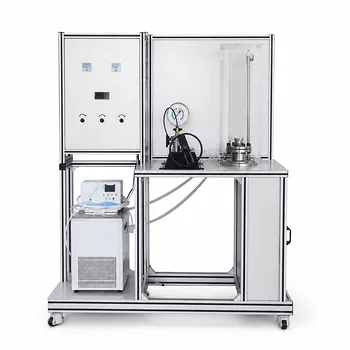
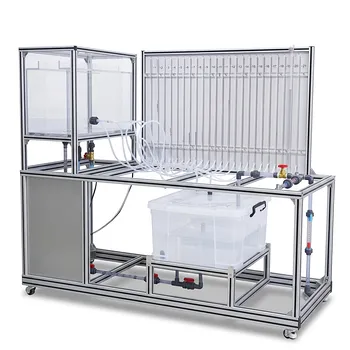
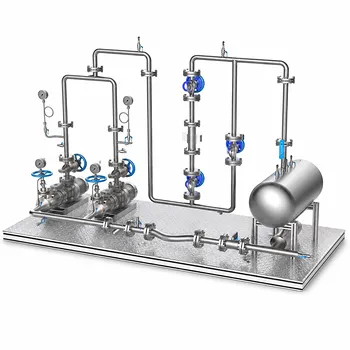
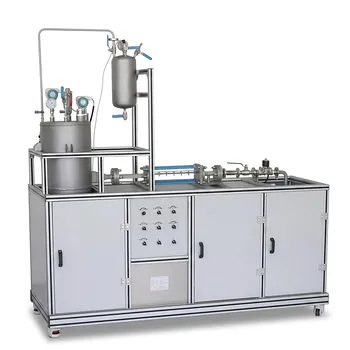
Choosing the right materials is critical to avoiding long-term maintenance headaches and teaching disruptions. LABPARK provides premium Educational and Vocational Unit Operations Pilot Plants across chemical engineering, bioprocess & biotech, and environmental & water treatment.
Specifically engineered for universities, research institutes, and enterprises, our systems prioritize high-quality stainless steel to ensure maximum equipment uptime, superior chemical compatibility, and hassle-free operation.
Ready to design a durable, high-performance teaching lab that fits your budget? Contact our engineering experts today for a tailored consultation.
Related Products
- Carbon Dioxide PVT Curve Determination Educational Unit Operations Pilot Plant
- Bernoulli Equation Demonstration Unit Operations Pilot Plant
- Constant Pressure Filtration Educational Unit Operations Pilot Plant
- Chemical Pipeline Assembly and Fluid Transport Practical Training Unit Operations Pilot Plant
- Cavitation Phenomenon Demonstration and Analysis Educational Unit Operations Pilot Plant
People Also Ask
- How do temperature variations affect CO2 transport models in pilot plants? Model vs Reality
- What unit operations are critical for CCUS training pilot plants? Build hands-on engineering expertise.
- What are the applications and limitations of the Virial EOS? Enhance Your Pilot Plant Lab
- What precautions prevent sample loss when volatilizing silica with HF? Crucial Steps for Safe Lab Training
- Why is selecting the correct EOS critical in pilot plants? PR vs. SRK compared.