The Trommsdorff effect turns a controlled polymerization into a potential thermal runaway—a sudden, explosive acceleration in reaction rate that can overwhelm a laboratory reactor’s cooling capacity. This phenomenon must be carefully managed because it causes a rapid surge in heat generation and viscosity that can lead to dangerous overpressures, compromised operator safety, and irreversible damage to the reactor equipment.
The gel effect is an auto-acceleration born from diffusion-limited termination. In a lab-scale polymerization reactor, it represents the single most critical kinetic event to anticipate and control. Without precise thermal management and real-time monitoring, the resulting exotherm can push the reaction beyond safe limits, making the difference between a successful experimental run and a catastrophic loss of containment.
The Kinetic Root of the Trommsdorff Effect
How Diffusion Shuts Down Termination
In free-radical chain-growth polymerization, the overall rate depends on the balance between propagation (chain growth) and termination (chain deactivation). At high monomer conversions—often starting at 20–40%—the reaction mixture becomes highly viscous and filled with long, entangled polymer chains.
In this environment, the termination rate constant ($k_3$) plummets because the large, active chain ends can no longer diffuse freely through the solution to meet and annihilate each other. The termination reaction becomes diffusion-controlled, while the much smaller monomer molecules continue to diffuse and propagate with relative ease. This selective throttling of termination while propagation continues unabated creates an auto-accelerating kinetic loop.
The Sudden Spike in Rate and Heat
With termination drastically slowed, the concentration of active free radicals spikes. The overall polymerization rate jumps sharply, often described as a gel burst. Because chain-growth polymerization is highly exothermic—releasing approximately 15 to 20 kcal per mole of monomer reacted—this kinetic acceleration translates directly into a massive, nearly instantaneous heat release.
The critical danger is not just the total heat, but the rate at which it is generated. A reaction that was progressing steadily can suddenly double or triple its heat output in minutes, far exceeding the design capacity of a typical laboratory cooling jacket.
Why This Becomes a Reactor Safety Crisis
The Thermal Runaway Feedback Loop
Polymers are excellent thermal insulators. As the reaction mass thickens into a gel-like state, its thermal conductivity drops sharply. The heat generated at the reaction centers cannot be efficiently transferred to the cooled reactor walls. This creates hot spots within the reactor core.
Local temperature increases further accelerate the propagation rate constant, which in turn generates more heat. This self-reinforcing cycle can rapidly spiral into thermal runaway. In a sealed or poorly vented bench-top reactor, the pressure from volatile monomers or solvents can climb until a gasket fails, a sight glass shatters, or a relief disk bursts.
Equipment Damage from Sudden Viscosity Rise
Even if catastrophic overpressure is avoided, the accompanying spike in viscosity can physically damage the reactor. The stirrer motor may stall under the sudden torque demand, burning out the motor or shearing the impeller shaft. The polymerized mass can fuse to internal temperature probes, block drainage valves, and render the entire vessel a single-use loss.
In a teaching or research laboratory, this is not only a financial loss but a sharp lesson in the tangible consequences of ignoring reactor dynamics. Cleanup often requires hours of hazardous solvent work or even mechanical disassembly.
Anchoring the Reaction for Product Quality
Losing Control of Molecular Weight
The gel effect does not only threaten safety—it destroys any attempt to engineer a specific molecular weight distribution. When termination becomes diffusion-controlled, the statistical average chain length grows far beyond what the initial monomer-to-initiator ratio would predict. The resulting polymer will have an uncontrollably broad polydispersity and properties entirely different from the target specification.
For a chemical engineering lab focused on training or research, the central lesson is that safety and product quality are two faces of the same process control problem. Managing the Trommsdorff effect is the only way to reliably reproduce the polymer structure you set out to make.
The Pedagogical Imperative
A pilot-plant reactor is a teaching tool. Letting the gel effect run amok teaches only one lesson: what a runaway reaction looks like. Carefully managing it, by contrast, teaches the full scope of reaction engineering—heat transfer calculations, non-linear kinetics, sensor integration, and the judgment required to intervene before a process becomes unrecoverable.
Common Pitfalls and Nuances
The Cooling Jacket Paradox
A common pitfall is assuming a larger cooling jacket alone can tame the exotherm. When the reactor contents gel, heat transfer becomes the bottleneck, not jacket temperature. Over-chilling the jacket can actually build a thick, insulating polymer skin on the reactor wall, making heat removal worse. Effective management relies on understanding the interplay between fluid viscosity, agitator mixing, and the heat transfer coefficient.
The Agitation Balancing Act
Increasing agitation can improve heat dispersion and delay the onset of the gel effect by disrupting local concentration gradients. However, high-shear mixing can also mechanically degrade long polymer chains or introduce unwanted air entrainment. Furthermore, if the reactor drive is not torque-rated for the eventual viscosity spike, a sudden speed increase can trip the motor. The operator must balance mixing intensity against mechanical limits.
Not to be Confused with Step-Growth Gelation
It is critical to distinguish the Trommsdorff effect in chain-growth systems from the gel point in step-growth polymerization. The latter occurs when branching monomers (functionality $f>2$) create an infinite network at a calculable conversion. That phenomenon solidifies the entire mass as an infusible gel, which also ruins a reactor, but its cause and mitigation strategy are entirely different. Managing the Trommsdorff effect is a problem of heat and viscosity; managing step-growth gelation is a problem of halting the reaction before a network forms.
Making the Right Choice for Your Lab Reactor
Your approach to managing the gel effect must be tailored to your specific experimental goal and scale. Consider the following strategies:
- If your primary focus is demonstrating pilot-plant safety principles: Equip the reactor with real-time torque and temperature sensors and a responsive automated cooling system. Use the gel effect as a controlled case study to show how safety interlocks work when a reaction begins to auto-accelerate.
- If your primary focus is producing a specific polymer architecture: Run the reaction to low or moderate conversion (<30–40%) before quenching or incorporate a chain-transfer agent to limit molecular weight growth. This avoids the high-viscosity regime where termination becomes severely diffusion-limited.
- If your primary focus is studying the kinetics of the effect itself: Use a reactor with high-sensitivity calorimetry and a low thermal inertia design. Carefully scale the monomer amount so that even the maximum possible adiabatic temperature rise stays within the vessel’s safe operating pressure limits.
- If your primary focus is maintaining reproducible temperature control: Reduce the reactor’s aspect ratio to improve wall-contact surface area and use a dilute solution polymerization to lower bulk viscosity. A solvent acts as an internal heat sink and diffusion facilitator, postponing the gel effect to higher conversions.
By treating the Trommsdorff effect not as a nuisance but as an intrinsic kinetic boundary, you can safely explore the limits of your reactor system while building the deep process intuition that defines an expert chemical engineer.
Summary Table:
| Key Aspect | Impact of Gel Effect | Mitigation & Management Strategy |
|---|---|---|
| Reaction Kinetics | Diffusion-limited termination triggers an auto-accelerating radical concentration spike. | Limit monomer conversion (<30-40%) or add chain-transfer agents. |
| Thermal Safety | Rapid exotherm (15-20 kcal/mol) overcomes cooling capacity, risking thermal runaway. | Implement real-time temperature tracking, active cooling, and solvent dilution. |
| Viscosity & Equipment | Extreme viscosity spike stalls agitator motors and blocks drainage valves. | Equip reactors with high-torque agitators and automatic safety interlocks. |
| Product Quality | Broad polydispersity and uncontrollable molecular weight distribution. | Maintain precise temperature profiles and optimized agitation speed. |
Equip Your Laboratory for Safe & Precise Process Control
Successfully managing complex kinetics like the Trommsdorff effect requires reliable, industry-grade equipment designed specifically for educational and research settings.
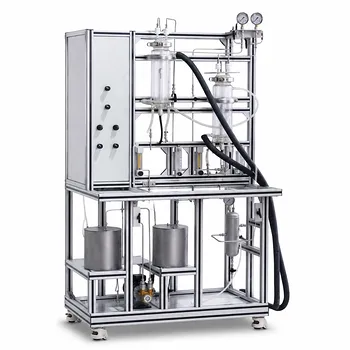
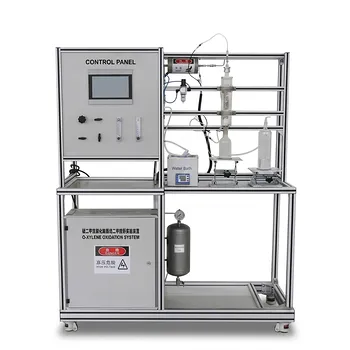
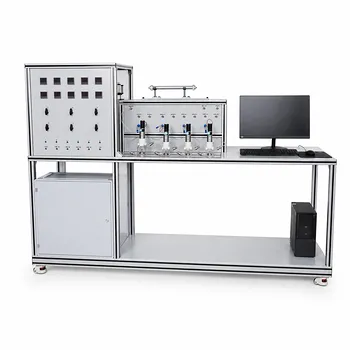
LABPARK provides state-of-the-art Educational and Vocational Unit Operations Pilot Plants in chemical engineering, bioprocess & biotech, and environmental & water treatment. Our advanced pilot plants enable universities, research institutes, and enterprises to safely model runaway reactions, demonstrate real-time control loops, and train the next generation of chemical engineers.
Ready to elevate your lab's capabilities? Contact LABPARK today to discover the ideal pilot plant solution for your institution!
Related Products
- Polymerization Granulation and Pellet Processing Educational Unit Operations Pilot Plant
- Photocatalytic Membrane Separation and Degradation Unit Operations Pilot Plant
- Methanol Synthesis and Catalyst Performance Evaluation Educational Unit Operations Pilot Plant
- Methane Cracking Educational Unit Operations Pilot Plant
- Multi-Stage Stirred Tanks in Series Residence Time Distribution and Mixing Performance Determination Educational Pilot Plant
People Also Ask
- How do educational unit operations pilot plants bridge theory and design? Bridge the Engineering Gap
- How do educational unit operations pilot plants address safety and waste management when scaling up?
- Why Compare Predicted and Experimental Excess Enthalpy? Key to Accurate Pilot Plant Scale-up
- When to transition from PID to adaptive control in pilot plants? Key process indicators.
- How to study gasification in pilot plants? Compare exit gas composition & efficiency