The task of converting methane directly into valuable chemicals like ethylene is a grand challenge, but the reaction itself fights back with an incredible amount of heat—making thermal management the central engineering puzzle in any research pilot plant.
The oxidative coupling of methane (OCM) is highly exothermic, releasing a massive amount of heat that can easily push a reactor past 800°C in seconds. This unchecked temperature spike triggers three immediate problems: it drives complete combustion of methane to useless CO₂ instead of the desired ethylene, it sinters the catalyst into an inert blob, and it creates a dangerous thermal runaway loop. In research-grade pilot plants, engineers address this not by just cooling the reactor harder, but by fundamentally redesigning how oxygen and methane meet and how the energy flows, using strategies like staged oxygen injection, membrane reactors, and autothermal heat coupling with steam reforming.
The core challenge is that the reaction’s own heat destroys its purpose. Research pilot plants solve this by distributing the exotherm across space and time, leveraging staged oxygen feeds, distributed membrane dosing, or by marrying the hot OCM reaction with a cold steam reforming reaction that soaks up the excess energy, enabling safe, selective, and stable operation for meaningful catalyst testing.
The Exothermic Fire: Why Heat is the Enemy of Selectivity
The oxidative coupling of methane isn't just "exothermic"—it's a multi-step combustion cascade where the desired partial oxidation products (ethane and ethylene) are far more reactive than methane itself. This creates a thermal trap that demands precision cooling.
The Unavoidable Thermodynamic Cold Start
The first step, abstracting a hydrogen atom from methane (CH₄ → CH₃•), requires a high energy input. This forces the entire system to operate at extreme temperatures, typically 750–950°C, just to get the reaction going. You start with a furnace already at red heat.
Once that first methyl radical forms, the coupling step is fast, but the competing deep oxidation is even faster and far more exothermic. The heat of reaction for complete combustion (CH₄ + 2O₂ → CO₂ + 2H₂O) is roughly –891 kJ/mol, while the desired coupling to ethylene (2CH₄ + O₂ → C₂H₄ + 2H₂O) is around –280 kJ/mol. This means any local excess of oxygen or temperature will overwhelmingly favor the path that produces more heat—a classic runaway feedback loop.
The Vicious Cycle of Hot Spots
In a traditional packed bed reactor, oxygen is consumed almost instantly at the inlet. This creates a severe, localized hot spot that can exceed the bulk gas temperature by hundreds of degrees.
Inside this hot spot, selectivity plummets. The catalyst surface becomes a combustion engine, burning the newly formed ethylene to CO and CO₂. Simultaneously, the extreme temperature sinters the catalyst’s active sites, permanently reducing surface area. The hot spot then starts to physically move down the catalyst bed as the inlet section deactivates, making the reactor behavior unpredictable and the data useless for scale-up studies.
The Role of Oxygen Partial Pressure
The driving force for over-oxidation isn't just temperature; it's the combination of high temperature and a high local oxygen partial pressure. Methane itself is relatively stable, but the C₂ products are highly vulnerable to electrophilic oxygen species on the catalyst surface. Traditional reactor designs that feed all the oxygen upfront create a zone of maximum hazard where both conditions peak simultaneously.
How Research Pilot Plants Tame the Heat
A research pilot plant’s primary job is to generate reproducible, scalable kinetic data under controlled conditions. This means the reactor must fundamentally break the dangerous link between heat generation and oxygen concentration. Three principal strategies have emerged.
Staged Oxygen Feed Systems
Instead of mixing all the methane and oxygen at the reactor inlet, a staged or distributed feed splits the oxygen stream into multiple injection points along the reactor's length.
Each subsequent stage sees a gas mixture that is rich in methane and C₂ products but low in oxygen, keeping the local O₂ partial pressure tame. The heat released in one stage is partially absorbed by the pre-heated gas in the next stage, creating a more gradual thermal profile. This effectively converts a single, destructive flame front into a series of controlled, cooler mini-reactors. The result is a significantly flatter temperature profile and a measurable increase in C₂ yield before over-oxidation takes over.
Membrane Reactors for Distributed Dosing
A more elegant approach is the use of oxygen-permeable ceramic membranes, such as those made from perovskite-type oxides (e.g., Ba₀.₅Sr₀.₅Co₀.₈Fe₀.₂O₃-δ or "BSCF").
In this configuration, one side of the membrane tube is exposed to air, while the other side is the process stream containing methane. Oxygen is not pumped as a gas but permeates through the solid oxide lattice as an ion, emerging directly onto the catalyst surface at hundreds of microscopic points along the reactor axis. This "sieve-and-react" function achieves the ultimate level of distributed oxygen dosing, eliminating any macroscopic hot spot. Furthermore, some advanced membrane concepts also remove the product ethylene through the membrane wall, preventing it from undergoing secondary oxidation and further simplifying the downstream separation.
Autothermal Operation by Coupling with Steam Reforming
The most powerful thermal management strategy is to turn the reactor's heat output into a useful input for another reaction. By packing a dual-bed reactor or using a dual-function catalyst, research plants can run the highly exothermic OCM reaction in a first zone and the strongly endothermic steam reforming of methane (CH₄ + H₂O → CO + 3H₂, ΔH = +206 kJ/mol) in a second zone or at the same time.
The heat from OCM, which would otherwise cause a runaway, is instantly absorbed to drive the reforming reaction. This creates an autothermal system where the net energy exchange is close to zero. For a researcher, this means the reactor operates under near-isothermal conditions without any external cooling, enabling a direct, safe study of process intensification where the heat integration is inherent to the design, not an added utility.
Understanding the Trade-offs
Every solution in this high-temperature environment introduces new constraints. Acknowledging these is essential for choosing the right research platform.
- Staged injection adds significant mechanical complexity, requiring multiple precision mass flow controllers and severe metallurgical challenges to inject cold oxygen into a 900°C stream without coking or cracking the nozzles.
- Membrane reactors demand near-perfect seal integrity at extreme temperatures, and the membrane material itself can slowly degrade under the chemically aggressive OCM environment, making long-duration studies difficult. The flux of oxygen through the membrane also becomes the new rate-limiting step, which can mask the true kinetics of the catalyst.
- Autothermal reforming coupling sacrifices some of the carbon to CO and CO₂ by design, reducing the maximum possible single-pass yield of ethylene. The product stream becomes diluted with hydrogen and carbon monoxide, requiring a completely different and more energy-intensive separation train.
Making the Right Choice for Your Research Goal
The "best" thermal management strategy is dictated by the specific question your pilot plant is trying to answer.
- If your primary focus is isolating intrinsic catalyst kinetics and maximum single-pass yield: A staged oxygen feed fluidized or multi-tubular packed-bed reactor gives you the most direct control over the gas-phase environment with the fewest mass-transfer limitations.
- If your primary focus is studying process intensification and long-term stability in a "once-through" concept: An oxygen-permeable membrane reactor is ideal, as it inherently prevents hot spots and allows you to explore catalyst-membrane synergy.
- If your primary focus is developing an overall process scheme that minimizes furnace duty and capital cost: The autothermal oxidative coupling-reforming tandem is the most relevant model system, as it directly demonstrates how the OCM heat can power hydrocarbon upgrading.
The challenge of thermal management in methane coupling isn't just an operational hurdle; it’s a kinetic fundamental. The way a researcher chooses to remove heat ultimately defines the chemistry they will observe.
Summary Table:
| Strategy | Mechanism | Key Advantage | Key Trade-off |
|---|---|---|---|
| Staged Oxygen Feed | Splits $O_2$ feed into multiple downstream injection points | Flatter temperature profile, higher C2 yield | High mechanical complexity, potential coking risk |
| Membrane Reactors | Continuous $O_2$ ion dosing through ceramic membranes | Eliminates hot spots entirely | High temperature seal degradation, oxygen flux rate-limiting |
| Autothermal Coupling | Pairs exothermic OCM with endothermic steam reforming | Near-isothermal operation, no external cooling | Diluted product stream, complex downstream separation |
Scale Up Your Chemical Engineering Research with LABPARK
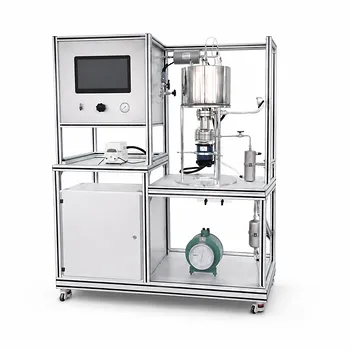
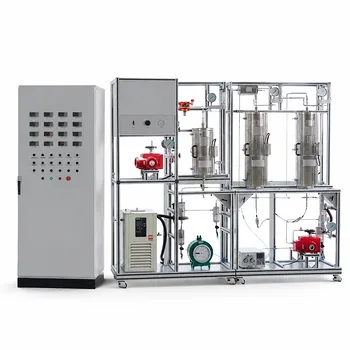
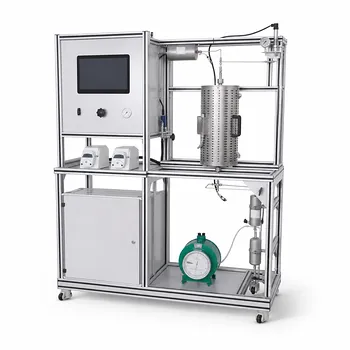
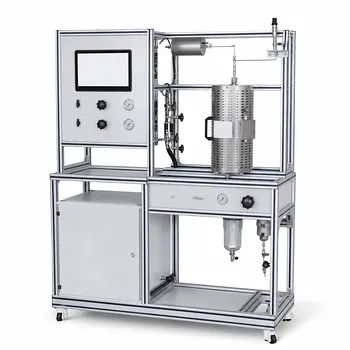
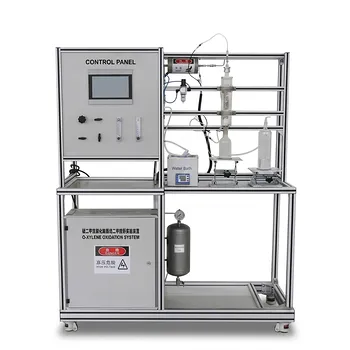
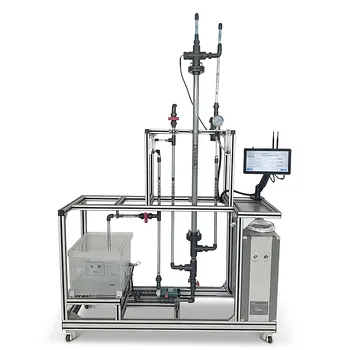
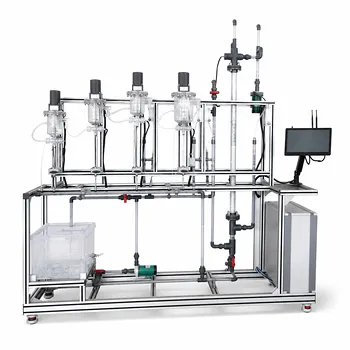
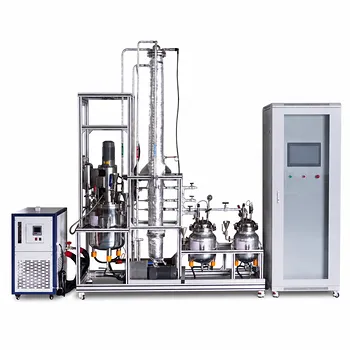
At LABPARK, we empower universities, research institutes, and enterprises with state-of-the-art Educational and Vocational Unit Operations Pilot Plants. Whether you are researching challenging catalytic reactions like methane coupling, developing bioprocess & biotech systems, or optimizing environmental & water treatment solutions, our customized pilot plants deliver the precise thermal control and reliable data your research demands.
Ready to elevate your lab's capabilities? Contact LABPARK today to discuss your pilot plant requirements!
Related Products
- Fixed Bed Gas Solid Catalytic Reaction Educational Pilot Plant
- Micro-Scale Gas-Solid Catalytic Reaction Educational Pilot Plant
- Fluidized Bed Gas Solid Catalytic Reaction Educational Pilot Plant
- Internal Circulation Gradient Free Catalytic Reaction Educational Pilot Plant
- Fixed-Bed Chemical Reaction and Gas Dust Tar Removal Unit Operations Pilot Plant
People Also Ask
- How do reactor pilot plants safely study gas-solid reactions? Master kinetics with thermal & flow control.
- How does the Mears criterion evaluate transport resistance? Key Guide to Intrinsic Kinetics
- Why is a multibed configuration necessary for exothermic reactions? Optimize your pilot plant trajectory.
- Fluidized vs. Fixed Bed Reactors: Comparing Heat & Complexity in Pilot Plants
- What are the differences between pseudohomogeneous and heterogeneous models in pilot plants?