The answer lies in the unique convergence of efficiency, advanced kinetics, and real-world relevance. For chemical and bioprocess engineering students, studying light-initiated chain reactions isn't just an academic exercise—it's a direct gateway to mastering the sustainable, high-precision manufacturing processes that define modern industry. These reactions, including photochlorinations and photopolymerizations, operate at milder conditions than thermal equivalents, slashing energy use and minimizing problematic byproducts while producing essential materials like pharmaceuticals and specialty polymers.
Modern process engineering demands both efficiency and precision. Light-initiated chain reactions deliver both, making them an ideal educational platform to teach radical kinetics, quantum yields, and the synthesis of high-value molecules—all while addressing the industrial shift away from energy-intensive thermal processes.
The Industrial Shift Toward Photochemical Efficiency
The core value for students is understanding why industry is embracing these reactions. Traditional high-temperature thermal processes often suffer from poor selectivity and high energy costs. Light-initiated chain reactions rewrite that equation.
Energy That Works Smarter, Not Harder
These reactions are activated by photons, not heat. This means they can proceed at ambient or near-ambient temperatures, drastically reducing the energy footprint of a plant.
Compared to thermal counterparts, they often achieve higher yields with fewer purification headaches. Minimizing byproduct separation directly translates to lower operational costs and cleaner production streams—a priority for both economics and sustainability.
A Direct Line to High-Value Output
Students who grasp photochemical principles instantly connect their knowledge to market-ready applications. The synthesis of pharmaceuticals like Vitamin D2 and advanced polymers depends on the very chain-reaction mechanisms studied in the pilot plant.
Bioprocess and chemical engineers who understand these routes can directly contribute to the specialty chemicals sector. This knowledge signals a readiness to work on high-margin products, not just commodity chemicals.
Mastering Core Chemical Engineering Principles
Beyond the industrial benefits, these reactions serve as a living laboratory for foundational engineering science. The pilot plant setting transforms abstract theory into tangible insight.
The Kinetic Heartbeat: Free Radicals and Quantum Yield
Light-initiated chain reactions are governed by free radical mechanisms. Studying them forces a deep confrontation with initiation, propagation, and termination steps—the building blocks of reaction engineering.
Students also gain an intuitive feel for quantum yield, a concept that measures how efficiently photons drive chemical change. This metric links photonic input to molecular output, a critical skill for designing any light-driven process from lab to production scale.
From Textbook to Pilot Plant
Running these reactions in a pilot plant bridges the gap between simulation and reality. Students experience the real-world constraints of light distribution, mass transfer, and reactor design.
This hands-on exposure cements a systems-thinking perspective. It trains engineers to anticipate scale-up challenges, work with conversion fluctuations, and optimize a process where the energy source is fundamentally different from a steam jacket.
Understanding the Trade-offs
No technology is a universal solution, and intellectual honesty requires acknowledging the challenges. Photochemical processes come with their own set of design hurdles that students must learn to navigate.
The Penetration Problem
Light attenuates rapidly in dense or optically thick media. This creates steep gradients in reaction rate, making uniform conversion difficult in large reactors without careful engineering of light sources and mixing.
Material and Wavelength Constraints
The choice of reactor materials becomes critical. Vessels must transmit the specific wavelengths needed for activation, often ruling out standard stainless steel and requiring expensive quartz or specialty glass components. Additionally, competing side reactions can be triggered if the light source isn't precisely tuned to the target chromophore.
Making the Right Choice for Your Goal
Whether to dive deep into photochemical unit operations depends on your engineering trajectory. The skills are highly transferable but align with specific career priorities.
- If your primary focus is sustainable and energy-efficient manufacturing: Mastery of light-driven processes gives you a direct toolkit for designing low-carbon-footprint production lines that minimize separation costs.
- If your primary focus is pharmaceutical or biotech process development: Understanding these chain reactions prepares you to work on synthesizing complex, light-sensitive molecules where thermal routes would destroy the product.
- If your primary focus is core reaction engineering fundamentals: These systems are an unmatched teaching tool for radical kinetics and quantum yield, concepts that sharpen your diagnostic skills for any reaction network.
Ultimately, investing in this niche of knowledge equips you to lead in a chemical industry that increasingly values precision, low energy intensity, and the intelligent use of photons over brute heat.
Summary Table:
| Key Aspect | Details & Mechanisms | Educational & Industrial Value |
|---|---|---|
| Energy Efficiency | Operates at ambient/near-ambient temperatures | Lowers energy footprint, reduces byproducts and separation costs |
| Core Kinetics | Governed by free radicals and quantum yield metrics | Deepens understanding of initiation, propagation, and scale-up |
| Design Challenges | Light penetration limitations & wavelength tuning | Teaches students about reactor material constraints (e.g., quartz) |
Bring Advanced Photochemical Engineering to Your Lab
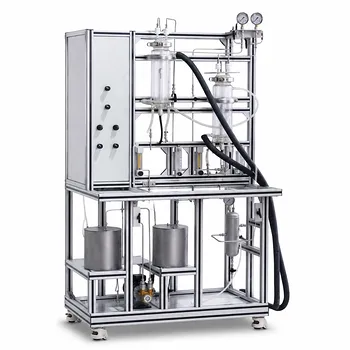
Equip your students and researchers with the tools to master next-generation, sustainable process design. LABPARK provides state-of-the-art Educational and Vocational Unit Operations Pilot Plants in chemical engineering, bioprocess & biotech, and environmental & water treatment tailored for universities, research institutes, and progressive enterprises.
Our hands-on pilot plants bridge the gap between textbook theory and industrial practice, helping future engineers safely master radical kinetics, quantum yield calculations, and real-world reactor scaling challenges.
Ready to elevate your department's educational and research capabilities? Contact LABPARK today to explore our customized pilot plant solutions!
Related Products
- Photocatalytic Membrane Separation and Degradation Unit Operations Pilot Plant
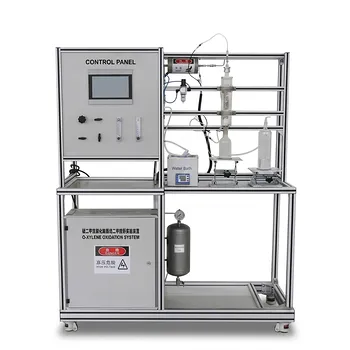
- O-Xylene Oxidation to Phthalic Anhydride Educational Unit Operations Pilot Plant
- Rising and Falling Film Evaporation Educational Unit Operations Pilot Plant
- Multi-Functional Membrane Separation Educational Pilot Plant for Unit Operations Lab
- General Purpose Cosmetics Production Unit Operations Training Pilot Plant
People Also Ask
- What are the key differences in membrane configurations? Choose the Right Unit Operations Pilot Plant
- How Do Pervaporation, Vapor, and Gas Permeation Differ in Pilot Plants? Key Comparison
- What are the structural & performance trade-offs of flat-sheet, spiral-wound, & hollow-fiber membrane modules?
- How do PEI, PVDF, and PSU membranes compare in pilot plants? Find the best fit.
- Pervaporation vs. Vapor Permeation: Handling Suspended Solids in Membrane Pilot Plants