Membrane module geometry dictates your pilot plant’s budget, maintenance intensity, and curriculum scope.
Tubular modules combine minimal pressure drop with maximum fouling resistance, but they demand the highest capital and operating costs per square meter of membrane. Spiral-wound designs offer a low‑cost, moderate‑pressure‑drop sweet spot ideal for standard reverse‑osmosis and microfiltration training. Hollow‑fiber modules pack an enormous membrane area into a tiny footprint and can run at extreme pressures, yet they are acutely sensitive to feed quality, suffer high hydraulic losses, and are nearly impossible to clean once fouled.
The selection of tubular, spiral‑wound, or hollow‑fiber modules for a unit‑operations pilot plant is a direct trade‑off among operating cost, pressure drop, and fouling tolerance. Tubulars forgive messy feeds but penalize your budget; spiral‑wounds deliver the most balanced portfolio for teaching; hollow fibers maximize packing density but require virtually pristine feed and accept no cleaning mistakes.
Operating Costs: More Than Just the Module Price
The true operating cost of a membrane module includes the initial equipment, the energy penalty from pressure drop, the frequency and ease of cleaning, and the module replacement interval.
Tubular Modules: High Upfront Expense, High Ongoing Budget
Tubular systems command the highest equipment cost per unit membrane area because their low specific surface area—typically less than 80 m²/m³—requires large, robust housings and extensive piping.
Operating costs remain high because the same low packing density demands more floor space, more cleaning‑in‑place cycles (due to larger hold‑up volumes), and more pump work per litre of permeate.
The silver lining is that their smooth, open channels dramatically reduce fouling costs, which can lower total cost of ownership when processing high‑solids feeds that would destroy other modules.
Spiral‑Wound Modules: The Economic Workhorse
With a specific surface area of 800–1000 m²/m³ (and up to 1600 m²/m³ in modern designs), spiral‑wound modules slash both the hardware and replacement costs.
Equipment is mass‑produced for the water treatment industry, keeping prices low, and the moderate packing density strikes a balance between footprint and serviceability.
Operating expenses remain friendly because the moderate pressure drop translates to reasonable pumping energy, and the flat‑sheet construction can withstand occasional upset without immediate failure.
Hollow‑Fiber Modules: Lowest Module Cost, Highest Pretreatment Bill
Hollow‑fiber modules offer the lowest equipment cost per square metre of active area—their specific surface area reaches ~10⁴ m²/m³, and some fine‑fiber designs exceed 30,000 m²/m³.
However, this capital advantage is often offset by strict feed water pretreatment requirements. A clogging index (FI) below 3 is mandatory, and the modules cannot be cleaned mechanically once fouled; acceptable operating cost depends entirely on keeping the feed absolutely particulate‑free.
Moreover, the extremely high pressure drop along the thin fiber bores raises pump work significantly, so the “low operating cost” label only holds for clean, low‑pump‑work applications like low‑pressure dialysis.
Pressure Drop: The Hidden Driver of Energy and Design
Pressure drop directly influences the energy needed to push feed through the system and the uniformity of the driving force across the membrane.
Tubular: Minimal Restriction, Maximum Uniformity
The large, cylindrical flow channels (typically 5–25 mm in diameter) present very little resistance, resulting in the lowest pressure drop per unit length of any common configuration.
This low pressure drop means nearly the same transmembrane pressure exists from inlet to outlet, giving consistent flux and making the module exceptionally easy to model in the classroom.
Spiral‑Wound: Moderate Losses, Balanced Performance
Spacer‑filled feed and permeate channels generate a moderate pressure drop that increases with spacer tightness and module length.
Axial flow paths cause a narrowing driving force toward the outlet, a nuance that perfectly illustrates industrial scale‑up trade‑offs—students can quantify how the logarithmic‑mean concentration difference deviates from the simple arithmetic mean.
Hollow‑Fiber: High Hydraulic Resistance, High Inlet Pressures
The fibers’ hair‑thin inner diameters (often 0.5–2 mm) cause a high axial pressure drop, which can make the transmembrane pressure at the permeate end much lower than at the feed inlet.
Because the fibers are self‑supporting, the module can accept a high inlet pressure to compensate, but this simultaneously raises pump energy consumption.
The varying driving force also gives instructors a vivid platform for teaching the difference between ideal counter‑current and co‑current mass‑transfer models, as hollow‑fiber units can be easily oriented in both flow regimes.
Application Fit: Matching the Module to the Feed
Each geometry shines in a different experimental niche, governed by the trade‑off between fouling resilience and packing density.
Tubular: The Choice for High‑Fouling Microfiltration and Ultrafiltration
Tubular modules are the undisputed champion for feeds containing high suspended solids, emulsions, or fibrous material.
Their open‑channel, obstruction‑free flow path resists clogging and allows mechanical cleaning with sponge balls or high‑velocity flushing.
In an educational pilot plant, tubular systems let students run the dirtiest process streams—activated sludge, food slurries, or cell broths—without destroying the module, making them ideal for hands‑on microfiltration and ultrafiltration experiments.
Spiral‑Wound: The Industry Standard for Water Treatment and Reverse Osmosis
Spiral‑wound modules dominate industrial reverse‑osmosis and nanofiltration, and they transfer that realism directly to the lab bench.
They tolerate moderate fouling and can be cleaned with chemical protocols that students will encounter in the field, cementing core competencies in membrane maintenance and system design.
Their balanced pressure drop and cost make them the preferred platform for teaching standard RO desalination, food concentration, or even gas‑separation demonstrations.
Hollow‑Fiber: Precision Tool for Clean‑Water and Dialysis Applications
Hollow‑fiber modules are the go‑to when the objective is demonstrating the maximization of mass transfer in a compact volume, such as reverse‑osmosis polishing of pretreated water or gas‑liquid contacting in membrane bioreactors.
Because they cannot handle even trace suspended solids without blocking, their use in the pilot plant must be limited to clean, filtered feed streams—perfect for dialysis diffusion studies, high‑purity water production, or high‑pressure gas permeation experiments.
The ability to run shell‑fed or bore‑fed flow and to switch between co‑current, counter‑current, and cross‑flow orientations makes them a versatile teaching tool for advanced mass‑transfer theory, provided the feed stays pristine.
Understanding the Trade‑offs: Fouling, Cleaning, and Feed Tolerance
No module geometry wins across all categories, and overlooking the fouling‑cleaning axis is the most frequent misstep in pilot‑plant design.
When Fouling Resistance Must Override Packing Density
Tubular modules punish you with large footprints and high costs, but they pay for themselves the moment a student accidentally feeds a carbon‑fines‑laden slurry into the pilot.
Hollow‑fiber modules, by contrast, are a one‑time event: a single unfiltered batch can permanently blind thousands of fibers, and individual fibers cannot be replaced; the entire module must be discarded.
Spiral‑wound modules sit between these extremes—channel spacers trap particulates but can often be cleaned chemically, though heavy loads can cause irreversible flux decline.
Cleaning Access and Curriculum Flexibility
If your pilot plant will serve multiple courses with wildly different feed fluids, easy cleaning and membrane replacement are non‑negotiable.
Tubular and plate‑and‑frame designs allow manual disassembly and swapping of individual membranes, which is invaluable for student training and for research that iterates on membrane materials.
Hollow‑fiber systems, while excellent for demonstrating high‑efficiency industrial processes, rob students of the chance to inspect and replace individual components—a serious pedagogical limitation.
Pressure Drop as a Teaching Variable, Not Just an Inconvenience
A high pressure drop in hollow fibers is often painted as a drawback, but in a teaching lab it becomes an asset: students can measure the effect of flow configuration on driving force, calculate the real‑world deviation from ideal plug flow, and demonstrate why counter‑current flow yields higher recovery.
Spiral‑wound modules, with their more subtle axial pressure loss, are better suited for illustrating the practical compromises engineers make between spacer design, energy cost, and packing density.
How to Choose the Right Module for Your Pilot Plant
Your final selection must align with the educational objectives, the range of experimental feeds, and your tolerance for student‑caused mishaps.
- If your primary focus is training students in industrial water treatment and standard reverse‑osmosis: Choose spiral‑wound modules. They deliver representative performance, manageable cleaning, and a cost structure that mirrors real plants.
- If your primary focus is demonstrating separation of high‑fouling streams like fermentation broths or activated sludge: Select tubular modules. They are the only configuration that will survive repeated exposure to suspended solids without prohibitive maintenance costs.
- If your primary focus is compact, high‑pressure separation with ultra‑clean feeds and advanced mass‑transfer modeling: Opt for hollow‑fiber modules. They maximize membrane area per unit volume and allow students to explore co‑current, counter‑current, and cross‑flow effects, but they demand a rigid pretreatment protocol.
- If your primary focus is flexibility for research with frequent membrane material changes: Consider adding plate‑and‑frame modules to your pilot plant suite. They allow rapid membrane replacement and manual cleaning, bridging the gap between fouling resistance and easy maintenance.
The most effective educational pilot plants don’t pick one winner—they incorporate interchangeable module types so students can measure the real‑world cost, pressure‑drop, and fouling trade‑offs with their own data, turning abstract design principles into visceral learning.
Summary Table:
| Configuration | Specific Surface Area | Operating Cost | Pressure Drop | Fouling Tolerance | Key Applications |
|---|---|---|---|---|---|
| Tubular | Low (<80 m²/m³) | High | Minimal | Very High | High-fouling feeds, slurries, cell broths |
| Spiral-Wound | Moderate (800-1000 m²/m³) | Balanced / Low | Moderate | Moderate | Standard RO, water desalination, food concentration |
| Hollow-Fiber | Extremely High (~10⁴ m²/m³) | Low (high pretreatment cost) | High | Very Low | Clean-water polishing, gas permeation, dialysis |
Build a High-Performance Membrane Separation Lab with LABPARK
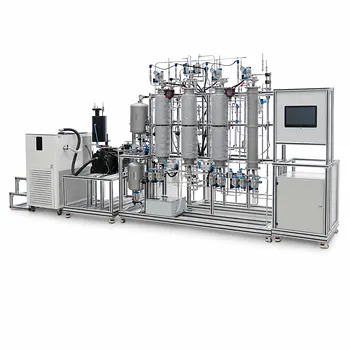
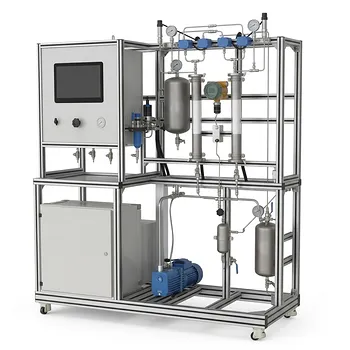
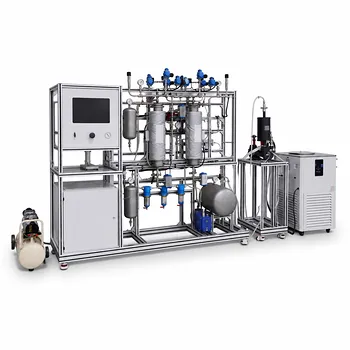
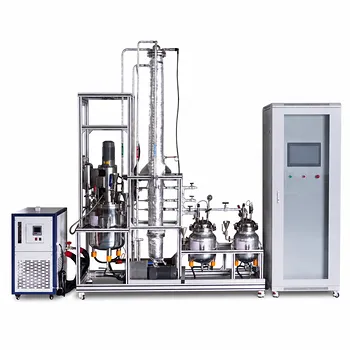
Choosing the right membrane configuration is critical for both student engagement and equipment longevity. LABPARK designs and delivers state-of-the-art Educational and Vocational Unit Operations Pilot Plants in chemical engineering, bioprocess & biotech, and environmental & water treatment.
Whether you represent a university, a research institute, or an enterprise, we can customize a pilot plant featuring interchangeable membrane modules to give your students and researchers hands-on experience with real-world industry trade-offs.
Ready to elevate your engineering lab? Contact LABPARK today to discuss your project requirements!
Related Products
- Multi-Functional Membrane Separation Educational Pilot Plant for Unit Operations Lab
- Photocatalytic Membrane Separation and Degradation Unit Operations Pilot Plant
- Ultrafiltration Membrane Separation Educational Pilot Plant
- Multifunctional Membrane Separation Educational Pilot Plant with Ultrafiltration, Nanofiltration, Reverse Osmosis
- Hollow Fiber Ultrafiltration Membrane Separation Educational Pilot Plant
People Also Ask
- How Do Pervaporation, Vapor, and Gas Permeation Differ in Pilot Plants? Key Comparison
- What are the advantages of membrane separation pilot plants? Energy-saving process intensification.
- Pervaporation vs. Vapor Permeation: Handling Suspended Solids in Membrane Pilot Plants
- How do PEI, PVDF, and PSU membranes compare in pilot plants? Find the best fit.
- What are the trade-offs of polymer vs inorganic membranes in teaching pilot plants? Key laboratory comparison.