Knowledge Chemical Engineering Education What are the advantages of membrane separation pilot plants? Energy-saving process intensification.
Author avatar

Tech Team · LABPARK

Updated 2 weeks ago

What are the advantages of membrane separation pilot plants? Energy-saving process intensification.


The key advantage is a fundamental shift from energy-intensive thermal processes to highly selective, isothermal mass transfer. Integrating membrane separation into unit operations pilot plants gives students and researchers hands-on access to a technology that offers unparalleled energy efficiency, operational simplicity, and a direct path to compact, modular process design—all without the thermal degradation risks of conventional methods like distillation or drying.

The core takeaway is this: While traditional separation methods often rely on brute-force energy input to drive phase changes, membrane pilot plants demonstrate a shift toward precision separation at ambient temperatures. This provides the lowest possible energy footprint and the most gentle product handling, though it requires managing new physical constraints like fouling and chemical compatibility.


The End of the Phase-Change Era

The most significant break from tradition is thermal simplicity. Conventional workhorses like distillation columns are fundamentally heat engines, requiring vast energy to vaporize and condense mixtures repeatedly.

The Energy Advantage of Isothermal Operation

Membrane systems excel because they do not rely on thermal phase changes. They can operate efficiently at ambient temperatures, drastically reducing energy consumption. This isn't just an incremental improvement; it’s a step-change that allows for the sustainable purification of heat-sensitive materials.

Replacing Low-Temperature Condensation

A prime example of this shift is seen in off-gas treatment, where membrane stages can replace low-temperature condensers operating at -70°C or below. In conventional setups, water vapor freezes on the condenser surface, causing ice build-up that forces periodic shutdowns for defrosting. A membrane stage achieves continuous operation without freezing issues, eliminating energy-intensive chilling and costly downtime simultaneously.

Process Intensification and Modular Design

Beyond saving energy, membrane pilot plants allow academia to move beyond the bulky, linear "unit after unit" floor plan. They embody modern industrial trends toward smaller footprints and consolidated workflows, a concept known as process intensification.

From Sequential Steps to Single Units

Traditionally, reaction and separation are taught and operated as distinct, sequential steps. Integrating them into a single membrane reactor pilot plant reveals immediate thermodynamic advantages.

  • Increased Reaction Rates: The membrane continuously removes one or more products, shifting the chemical equilibrium according to Le Chatelier's principle and driving the reaction further forward.
  • Reduced Byproducts: Immediate separation of intermediate compounds prevents them from participating in unwanted side reactions, improving overall yield and purity.

The Plug-and-Play Advantage

The modular design of membrane pilot plants is a key differentiator. Unlike the massive civil engineering footprint of a distillation column, membrane stacks are compact and scalable. This allows students and researchers to evaluate high-performance materials, such as thin-film composite membranes with rubbery polymer permselective layers, by simply switching out a module to separate organic vapors like propylene or vinyl chloride monomer from gas streams.

Processing the Unprocessable: Heat-Sensitive Materials

Traditional thermal methods create a fundamental conflict when purifying biological compounds, pharmaceuticals, or specialty foods: the heat required for separation often damages the product itself.

Gentle Fractionation at Moderate Temperatures

Membrane separation is inherently simple and operates at ambient or moderate temperatures, making it the ideal candidate for heat-sensitive materials. In a pilot plant setting, this allows students to fractionate proteins or dairy products without causing thermal or chemical damage, something that is physically impossible in a hot distillation reboiler.

Reducing Chemical Damage

Traditional liquid-liquid extraction often introduces solvents that must later be removed, adding cost and potential product degradation. Membrane contactors can achieve the same mass transfer without dispersing one phase into another, aligning with green chemistry principles by keeping product streams pure and minimizing hazardous waste.

Understanding the Trade-offs

A complete engineering education must look past marketing bullet points. The true value of a membrane pilot plant is equally in teaching its performance limits, as these physical constraints dictate real-world industrial feasibility.

The Fouling Boundary Layer

Polymers and colloids in the feed stream tend to accumulate on the membrane surface, forming a cake layer. Fouling causes a gradual, inevitable decline in permeate flux over time. By monitoring rising pressure drops across the stage, students learn that operational reality includes chemical cleaning protocols and pretreatment strategies to mitigate this performance decay.

Chemical Resistance and Material Stability

It’s critical to manage the assumption that membranes are universal solvents. Many polymeric membranes have limited resistance to extremes of pH or aggressive organic solvents. Pilot plant curricula must emphasize careful feed chemical selection, as a wrong choice of solvent can swell or dissolve the selective layer, rendering the module useless.

The Finite Lifespan

Membrane performance degrades mechanically and chemically with age. Unlike a robust steel distillation tray that can last decades, membranes require regular replacement. Integrating maintenance scheduling and lifecycle cost analysis into the lab session provides a realistic view of operational expenditure that balances the low energy savings.

Making the Right Choice for Your Goal

The decision to integrate membrane pilot plants over traditional methods should be dictated by the specific research or educational objective. The technology is a precision tool, not a universal replacement.

  • If your primary focus is cutting operational costs and energy waste: Choose membrane systems to demonstrate how to eliminate the latent heat "tax" inherent to distillation, and show how to bypass the energy penalties of cryogenic condensation.
  • If your primary focus is teaching green chemistry or bioprocessing: Choose membrane systems for their ability to concentrate and purify heat-sensitive biomolecules without thermal degradation or solvent contamination.
  • If your primary focus is demonstrating the limits of real-world equipment: Choose a membrane pilot plant to make abstract concepts like fouling, chemical incompatibility, and membrane aging tangible and measurable for students.
  • If your primary focus is rethinking physical plant design: Choose integrated membrane reactors and contactors to showcase process intensification, teaching students to design compact, single-unit operations that combine reaction and separation for higher yields.

The integration of membrane pilot plants moves the chemical engineering lab from a demonstration of brute force to a lesson in elegant, thermodynamic precision.

Summary Table:

Feature Membrane Separation Pilot Plants Traditional Separation Methods
Energy Source Isothermal mass transfer (no phase change) Thermal energy (vaporization & condensation)
Product Handling Gentle, ambient temperature operation High thermal degradation risks (reboilers)
Design Footprint Compact, modular, and integrated Bulky, linear, and sequential
Primary Challenge Membrane fouling & chemical compatibility High energy footprint & utility costs

Modernize Your Engineering Lab with LABPARK

Equip your students and researchers with the tools of tomorrow. LABPARK designs and delivers state-of-the-art Educational and Vocational Unit Operations Pilot Plants in chemical engineering, bioprocess & biotech, and environmental & water treatment for universities, research institutes, and enterprises.

Ready to elevate your training and research capabilities? Contact LABPARK today to explore our customizable pilot plant solutions.

Related Products

People Also Ask

Related Products

Multi-Functional Membrane Separation Educational Pilot Plant for Unit Operations Lab

Multi-Functional Membrane Separation Educational Pilot Plant for Unit Operations Lab

The Multi-functional Membrane Separation Educational Unit Operations Pilot Plant is an integrated bench-scale laboratory system designed for teaching undergraduate engineering education. It features Ultrafiltration, Nanofiltration, and Reverse Osmosis modules in a compact, mobile unit for practical hands-on learning.

Photocatalytic Membrane Separation and Degradation Unit Operations Pilot Plant

Photocatalytic Membrane Separation and Degradation Unit Operations Pilot Plant

Bench-scale pilot plant integrating photocatalytic degradation with membrane separation for engineering education. Study advanced oxidation, microfiltration, and hybrid processes using industrial sensors. Features safety light-blocking curtain, low-noise compressor, and durable stainless-steel construction.

Ultrafiltration Membrane Separation Educational Pilot Plant

Ultrafiltration Membrane Separation Educational Pilot Plant

This ultrafiltration membrane separation educational pilot plant enables undergraduate students to process PVA solutions, study hollow fiber membrane dynamics, and perform quantitative analysis with spectrophotometry for hands-on learning of unit operations and industrial maintenance and membrane cleaning protocols.

Multifunctional Membrane Separation Educational Pilot Plant with Ultrafiltration, Nanofiltration, Reverse Osmosis

Multifunctional Membrane Separation Educational Pilot Plant with Ultrafiltration, Nanofiltration, Reverse Osmosis

An integrated laboratory bench-scale membrane separation system for higher education engineering labs combining Ultrafiltration, Nanofiltration, and Reverse Osmosis processes. Features industrial PLC control with touch-screen HMI, transparent piping, and academic assessment software. Ideal for chemical and environmental engineering curricula.

Hollow Fiber Ultrafiltration Membrane Separation Educational Pilot Plant

Hollow Fiber Ultrafiltration Membrane Separation Educational Pilot Plant

Explore our hollow fiber ultrafiltration membrane separation educational pilot plant for hands-on learning of industrial ultrafiltration processes, flux analysis, fouling mitigation, and process control. Compact, customizable, and built for engineering labs.

Multi Functional Membrane Crystallization Educational Unit Operations Pilot Plant

Multi Functional Membrane Crystallization Educational Unit Operations Pilot Plant

Integrated bench-scale membrane crystallization pilot plant for engineering education. Provides hands-on training in advanced separation technologies, combining membrane distillation crystallization and process intensification. Features variable scaling vessels, industrial-grade flow control, and interactive digital data acquisition. Customizable for university labs.

Alkaline Membrane Water Electrolysis Educational Pilot Plant Unit Operations Training System

Alkaline Membrane Water Electrolysis Educational Pilot Plant Unit Operations Training System

Hands-on educational pilot plant for alkaline membrane water electrolysis hydrogen production, integrating unit operations training with industrial PLC control, real-time data logging, customizable design, durable 316L stainless steel construction, explosion-proof safety, and modern 5G connectivity for university laboratories.

Gas-Solid Heterogeneous Separation Demonstration Educational Unit Operations Pilot Plant

Gas-Solid Heterogeneous Separation Demonstration Educational Unit Operations Pilot Plant

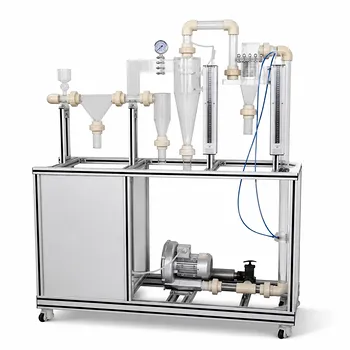
Comprehensive visual transparent gas-solid separation pilot plant for chemical engineering labs. Demonstrates gravity settling inertial settling cyclone and bag filter technologies. Enables real-time analysis of fluid-particle mechanics pressure drop and collection efficiency. Ideal for undergraduate unit operations courses.

Hot Filtration Educational Unit Operations Pilot Plant Laboratory System

Hot Filtration Educational Unit Operations Pilot Plant Laboratory System

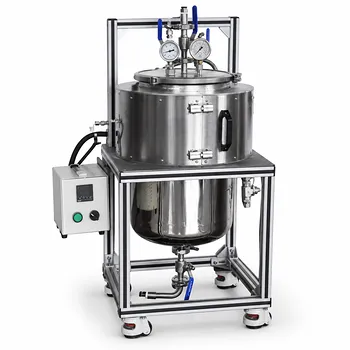
This integrated laboratory bench-scale hot filtration pilot plant enables students to study solid-liquid separation under thermal conditions, featuring a stainless steel vessel, removable heating jacket, and multi-layer filter plates for unit operations education, ideal for chemical engineering laboratory curriculum.

Multi-Component Gas Pressure Swing Adsorption Pilot Plant for Unit Operations Education

Multi-Component Gas Pressure Swing Adsorption Pilot Plant for Unit Operations Education

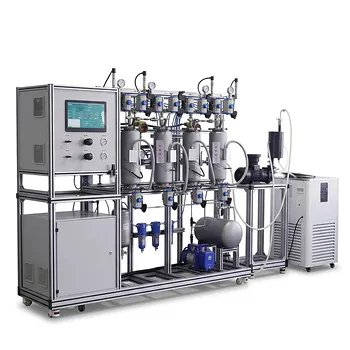
Multi-component gas pressure swing adsorption pilot plant designed for unit operations education. Features four-tower configuration, IoT touchscreen control, dual regeneration, and real-time breakthrough curve analysis for engineering training with safety interlocks and mobile frame simulates industrial PSA processes.

Pressure Swing Adsorption Educational Unit Operations Pilot Plant

Pressure Swing Adsorption Educational Unit Operations Pilot Plant

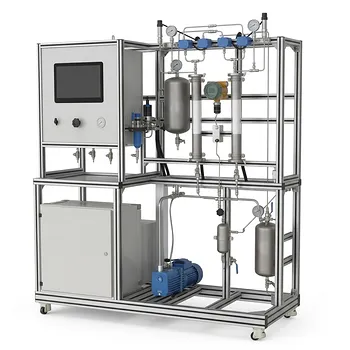
Integrated bench-scale pressure swing adsorption pilot plant for hands-on teaching of gas-solid separation, mass transfer, and process optimization using nitrogen-oxygen model, featuring dual-column design, industrial touchscreen control, digital assessment suite, and customizable hardware and software configurations for educational laboratories.

Educational Pressure Swing Adsorption Ethylene Capture Unit Operations Pilot Plant

Educational Pressure Swing Adsorption Ethylene Capture Unit Operations Pilot Plant

Advanced educational pilot plant for pressure swing adsorption ethylene capture provides comprehensive hands-on training in industrial gas separation processes, featuring an eight-column PSA system, real-time data acquisition, and fully customizable design for chemical engineering unit operations laboratories and research.

Multimodal Absorption and Desorption Pilot Plant for Unit Operations Training

Multimodal Absorption and Desorption Pilot Plant for Unit Operations Training

Multimodal absorption and desorption pilot plant for higher education labs. Bridges theory and industrial practice with transparent packed columns, three operational modes (real-material, simulated, semi-physical), and SCADA control. Students explore mass transfer, column hydraulics, and process control. Customizable.

Bio-fermentation Ethanol Production Practical Training Unit Operations Pilot Plant

Bio-fermentation Ethanol Production Practical Training Unit Operations Pilot Plant

Bio-fermentation ethanol production pilot plant for hands-on training in unit operations: fermentation, solid-liquid filtration, membrane separation, and distillation. Bridges theory with industrial practice using industrial-grade components, customizable for university labs. Hybrid automated and manual control for comprehensive learning.

Natural Product Extraction Unit Operations Training Pilot Plant

Natural Product Extraction Unit Operations Training Pilot Plant

Integrated natural product extraction pilot plant for chemical engineering training bridges theory and industrial practice with modular extraction and evaporation/concentration units, hybrid touchscreen and manual control, realistic process simulation, and self-contained softened water and vacuum utilities.

Carbon Material Thermal Pretreatment Multiphase Separation Educational Pilot Plant

Carbon Material Thermal Pretreatment Multiphase Separation Educational Pilot Plant

Educational pilot plant for carbon material thermal pretreatment and multiphase separation. Features jacketed agitated reactor, separation column, and modern controls for hands-on unit operations training in heat transfer, fluid flow, and process safety with industrial-grade materials and wireless data acquisition.

Constant Pressure Filtration Educational Unit Operations Pilot Plant

Constant Pressure Filtration Educational Unit Operations Pilot Plant

Hands-on educational pilot plant for constant pressure filtration. Classic plate and frame filter press allows students to study kinetics, determine specific cake resistance, perform cake washing and evaluate washing rates. Ideal for chemical engineering curriculum. Mobile, customizable, safety-compliant design.

Continuous Sieve-Plate Distillation Pilot Plant for Unit Operations Laboratory Education

Continuous Sieve-Plate Distillation Pilot Plant for Unit Operations Laboratory Education

Integrated pilot-scale teaching system for continuous sieve-plate distillation studies. Visual demonstration of tray hydraulics, flexible feed positions, and automatic reflux control for hands-on unit operations education in engineering labs. Designed for higher education engineering laboratories.

Bench Scale Dual Column Gas Separation and Capture Educational Pilot Plant

Bench Scale Dual Column Gas Separation and Capture Educational Pilot Plant

This dual-column educational pilot plant provides hands-on teaching of gas adsorption, separation, and capture processes. It features stainless steel columns, regeneration up to 400°C, and a 15.6-inch touchscreen PLC for TSA and PSA studies in chemical engineering curricula, process simulation.

Supercritical High-Gravity Flash Evaporation Educational Unit Operations Pilot Plant

Supercritical High-Gravity Flash Evaporation Educational Unit Operations Pilot Plant

Bench-scale integrated teaching system for advanced separation and mass transfer, combining supercritical high-gravity flash evaporation with heating, chemical reaction, and material collection, featuring modular design, Stainless Steel 316L construction, transparent visualization, touchscreen control, and safety systems for chemical engineering education.


Leave Your Message