It’s all about signal strength. For large biomolecules like proteins, the osmotic pressure method is overwhelmingly preferred because it translates the tiny number of dissolved particles into a large, easily measurable pressure signal. In contrast, colligative thermal methods—freezing point depression and boiling point elevation—produce vanishingly small temperature changes that are drowned out by noise and interference in a real-world bioprocess sample.
Thermal methods struggle with macromolecules because high molar mass means extremely few moles of solute per gram of material. The resulting temperature shifts are often less than a thousandth of a degree, while the same solution generates a robust osmotic pressure of several kilopascals. Moreover, in practical bioprocess streams, the presence of salts and buffer ions completely swamps the tiny thermal signal from the protein—a problem that membrane osmometry elegantly sidesteps.
The Signal Problem: Why Macro-Molecules Disappear in Thermal Measurements
The fundamental issue is not the physics but the math of concentration. Colligative properties depend on the number of dissolved particles, not their mass. When you switch from small molecules (hundreds of g/mol) to proteins (tens of thousands of g/mol), you dramatically reduce the number of moles for any given mass concentration.
The Mole-Weight Paradox
A 1% solution is 10 g of solute per liter. If that solute is glucose (180 g/mol), you have about 0.056 moles per liter—a healthy population of particles. For a protein of 12,000 g/mol, that same 1% yields only 0.00083 moles per liter.
All colligative effects scale with molality (moles of solute per kg of solvent). The tiny molality of a protein solution pushes the temperature changes close to the detection limits of routine instruments.
Pressure vs. Temperature: The Scale of the Difference
Water’s freezing point depression constant (Kf) is 1.86 °C·kg/mol. For the protein solution above, the expected freezing point drop is a mere 0.0015 °C. The boiling point elevation would be even smaller (Kb = 0.512, ΔTb ≈ 0.0004 °C).
Now consider osmotic pressure (Π = iMRT). For the same 0.00083 M solution at 20 °C, the pressure is about 2.02 kPa (0.02 atm). This is a large, stable signal that a simple pressure transducer can read with high precision—no sub-millikelvin thermometry required.
The Dirty Reality of Process Samples: Selectivity Matters
The signal-size argument alone is compelling, but the selectivity of the measurement is what truly cements osmometry as the go‑to method in bioprocess pilot plants.
Buffer Ions Swamp the Thermal Signal
A real fermentation broth or downstream sample never contains protein alone; it is a cocktail of salts, sugars, metabolites, and buffer ions. Freezing point depression measures the total osmolality from all dissolved particles. For a typical process sample, the contribution of the small solutes is orders of magnitude larger than that of the protein, making it impossible to extract the macromolecule’s molar mass from the thermometer reading.
The Membrane’s Selective Gate
Osmometry uses a semipermeable membrane that is permeable to water and small ions but impermeable to the macromolecule of interest. When such a membrane separates the sample from pure solvent, only the macromolecule generates an osmotic pressure. Buffer ions equilibrate across the membrane and contribute no net pressure (after accounting for simple Donnan corrections). You get a signal that is uniquely tied to the protein concentration and molar mass, perfectly aligned with the analytical goal.
Practical Robustness in a Pilot Plant Environment
A bioprocess pilot plant is not a thermodynamics teaching laboratory. Reliability, ease of use, and tolerance for harsh samples matter enormously.
Instrumentation & Maintenance
A high-precision thermometer capable of measuring 0.0001 °C changes is delicate, requires vibration-free mounting, and is sensitive to ambient temperature fluctuations. Membrane osmometers, by contrast, use rugged pressure transducers and simple fluidic paths. They tolerate the typical noise of a process environment and are easier to maintain and calibrate.
Speed and Throughput
Thermal methods often require slow equilibration and precise thermal isolation. Modern osmometers can be automated for multiple samples, delivering a molar mass estimate in minutes. This speed is critical for monitoring processes where decisions on harvesting, concentration, or formulation must be made quickly.
Understanding the Trade-offs
No method is universally superior, and osmometry has its own constraints.
- Membrane Limitations: The measurement relies on a defect‑free membrane that truly retains the protein. Cuts, fouling, or an incorrect molecular weight cut‑off lead to leaks and underestimation of osmotic pressure.
- Protein Aggregation: Large aggregates can block the membrane or alter the effective molar mass distribution. Membrane osmometry sees aggregates as impermeant, potentially skewing average molar mass values.
- Donnan Effects: Charged proteins can create an unequal distribution of small ions across the membrane, generating an extra pressure component. High salt concentrations (>>0.1 M) are usually required to suppress this artifact, which must be factored into sample preparation.
- Sample Volume: Membrane osmometers typically need larger sample volumes than the microliters used in a research-grade cryoscopic setup. For small-scale development, this can be limiting.
In principle, a pure protein solution in a highly controlled lab with state‑of‑the‑art thermometry could yield a reliable molar mass from freezing point depression. However, bioprocess applications rarely meet those pristine conditions, and the membrane osmometer’s built‑in selectivity for macromolecules offers a decisive practical advantage.
Making the Right Choice for Your Pilot Plant
The best method depends on the predominant challenge you face.
- If your primary focus is determining the molar mass of a target protein in a process sample: Choose membrane osmometry. Its combination of a strong, specific signal and tolerance for complex matrices makes it the standard in bioprocess development.
- If your primary focus is measuring total osmolality for cell‑culture optimization: Use a freezing point osmometer. It excels at quantifying the combined effect of all small solutes on cell metabolism and stress.
- If your primary focus is a high‑precision educational lab with carefully purified biomolecules: Highly sensitive thermometers can work, but you must be prepared for rigorous thermal control and sample purity. Even here, the membrane method often provides a more satisfying experimental experience with a direct pressure readout.
Ultimately, the osmotic pressure method endures in bioprocessing because it solves the signal‑to‑noise problem at its source—by turning tiny numbers of particles into a measurable force and by listening only to the molecules you care about.
Summary Table:
| Feature / Parameter | Osmotic Pressure Method | Thermal Methods (Freezing/Boiling Point) |
|---|---|---|
| Signal Strength | High & stable signal (kilopascals) | Vanishingly small temperature shifts (< 0.001 °C) |
| Selectivity | High (semipermeable membrane excludes buffer ions) | Low (swamped by background salts and metabolites) |
| Instrumentation | Rugged pressure transducers, easy maintenance | Delicate high-precision thermometry, sensitive to noise |
| Best Used For | Molar mass of large biomolecules (proteins) | Total osmolality in cell-culture optimization |
Enhance Your Bioprocess Research & Training with LABPARK
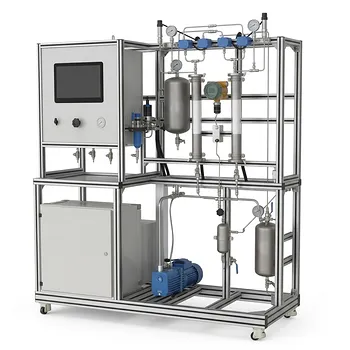
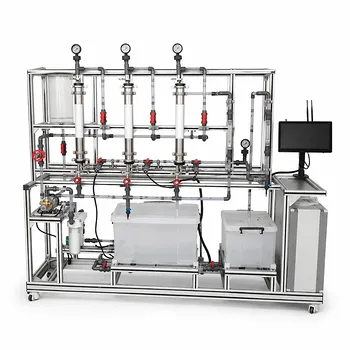
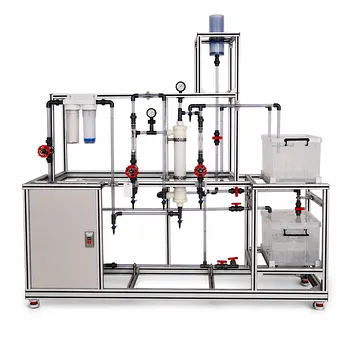
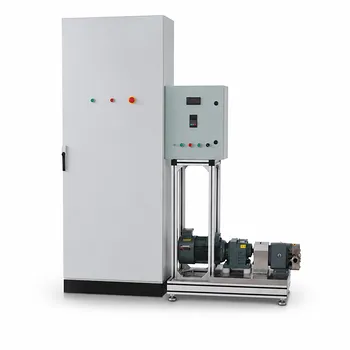
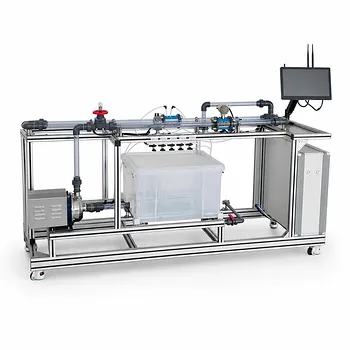
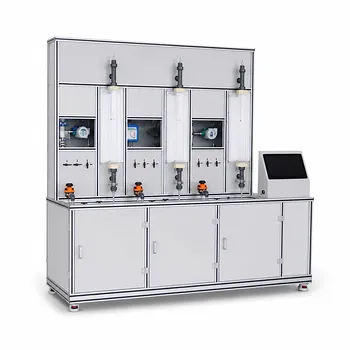
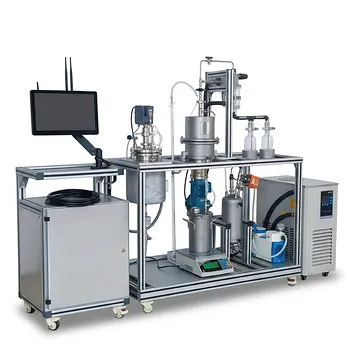
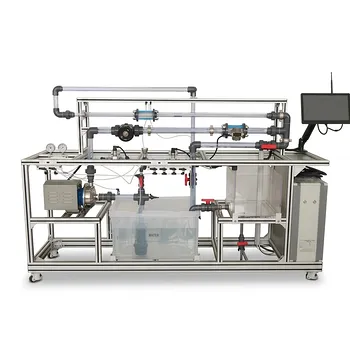
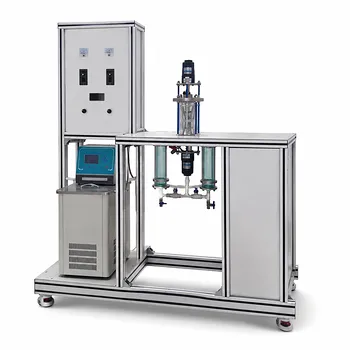
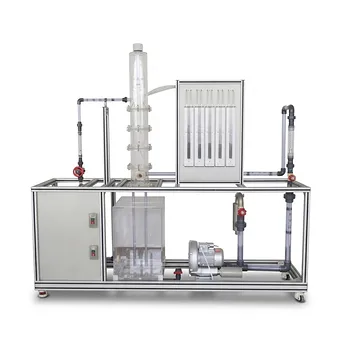
Are you looking to optimize your bioprocess workflows or train the next generation of engineers? LABPARK provides state-of-the-art Educational and Vocational Unit Operations Pilot Plants in chemical engineering, bioprocess & biotech, and environmental & water treatment. Designed specifically for universities, research institutes, and enterprises, our systems deliver real-world learning and reliable process scale-up.
Contact LABPARK today to find the perfect pilot plant solution for your facility!
Related Products
- Pressure Swing Adsorption Educational Unit Operations Pilot Plant
- Constant Pressure Filtration Educational Unit Operations Pilot Plant
- Multifunctional Membrane Separation Educational Pilot Plant with Ultrafiltration, Nanofiltration, Reverse Osmosis
- Multi-Functional Membrane Separation Educational Pilot Plant for Unit Operations Lab
- Educational Unit Operations Pilot Plant for Intraparticle Diffusion Effective Factor Measurement
People Also Ask
- How does Pressure Swing Adsorption (PSA) technology operate? Optimize gas separation with pilot plants.
- How to demonstrate physical vs chemical absorption using a pilot plant? A practical lab guide.
- What are the key differences between PSA and TSA? Choosing the Right Adsorption Pilot Plant
- How do physical vs chemical adsorption impact pilot plant design? Key operational & regeneration strategies.
- How is moisture removal managed in an adsorption unit operations pilot plant? Dew Point Control Guide