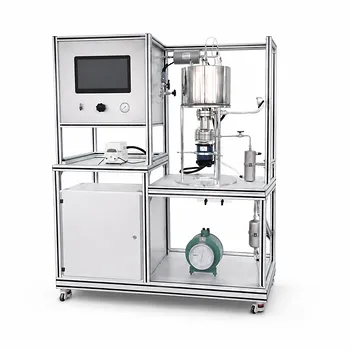
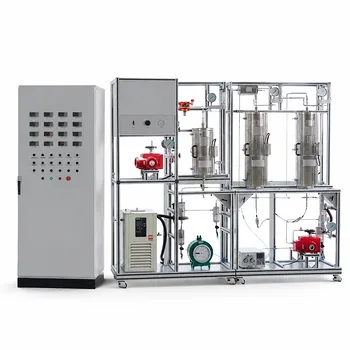
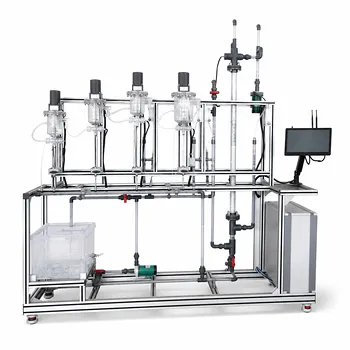
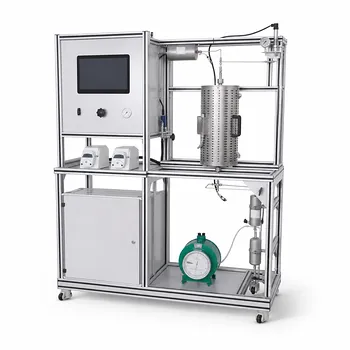
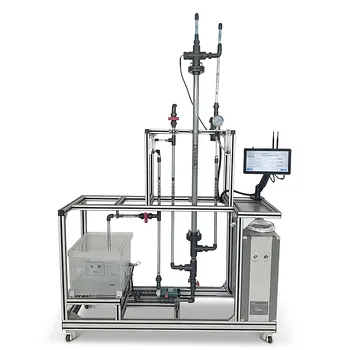
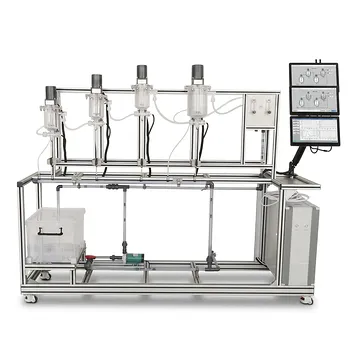
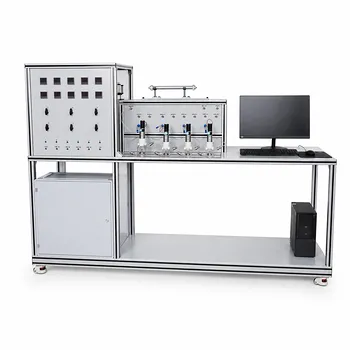
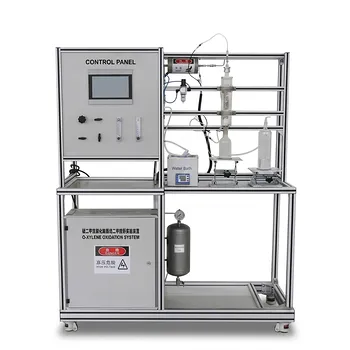
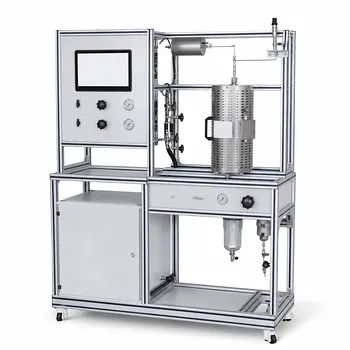
Catalyst selectivity and reactor design are not just performance metrics—they are the twin pillars that determine whether a chemical process can safely and economically transition from the laboratory to commercial production. Selectivity directly dictates product purity, hazardous waste generation, and the cost of downstream separations. Simultaneously, reactor design governs the heat and mass transfer conditions that maintain that selectivity at scale. Evaluating both in a pilot plant—under realistic fluid dynamics, impurity levels, and thermal stresses—is the only way to avoid catastrophic scale-up failures.
The interplay between catalyst selectivity and reactor hydrodynamics cannot be predicted from textbook kinetics alone. Pilot plants expose the hidden deactivation rates, thermal runaway risks, and mass-transfer bottlenecks that turn a perfect lab recipe into an industrial disaster. Overlooking either element during scale-up guarantees wasted capital, safety incidents, and non-viable processes.
The Illusion of Laboratory-Perfect Selectivity
The True Cost of Low Selectivity in Production
A catalyst that yields 98% product in a bench-scale flask can bankrupt a plant once impurities and recycling effects kick in. High selectivity directly reduces downstream separation costs—the single largest operating expense in many chemical plants.
Every percent of unwanted byproduct must be purged or purified. If that byproduct is hazardous, disposal and compliance costs multiply exponentially. Pilot plants allow you to quantify the economic and environmental penalty of selectivity losses before committing to a commercial reactor.
How Real-World Impurities Poison Ideal Catalysts
Lab tests often use pristine feedstocks, but real production streams carry sulfur, nitrogen, or metal compounds that slowly poison active sites. Pilot studies replicate feed impurity accumulation and recycling effects that are impossible to simulate in a batch reactor.
For example, transition metal sulfide catalysts like NiMo/γ-Al₂O₃ might show excellent hydrodesulfurization activity in the lab. A pilot plant reveals how that activity decays over hundreds of hours under continuous exposure to contaminated feed, providing reliable regeneration cycle data.
The Lifetime Factor: Selectivity Decay Over Time
Catalyst cost is a minor fraction of operating expenses—replacement downtime and selectivity drift are the real killers. A pilot plant subjects catalyst particles to mechanical attrition, thermal cycling, and pressure drops that mimic years of industrial service.
Measuring selectivity not just at initial activation but after multiple stress cycles reveals whether a catalyst retains its high-performance structure. This lifetime data is non-negotiable for calculating true production economics.
Why Reactor Design Dictates Scale-Up Success
The Danger of Runaway Reactions
Many catalytic reactions—selective oxidations, hydrogenations—are highly exothermic. At commercial volumes, insufficient heat removal can spike temperatures within seconds, destroying the catalyst and breaching safety limits.
Pilot reactors force engineers to address temperature control in real-time. You cannot assume lab-scale cooling jackets will scale linearly; the reactor geometry, coolant flow distribution, and mixing patterns must be verified experimentally to prevent hot spots.
Mass Transfer Limitations: When the Catalyst Can't Breathe
In a laboratory flask, stirring is often ideal. In a fixed-bed pilot reactor, pore diffusion resistance and external mass transfer limitations dominate. A catalyst with perfect intrinsic kinetics can appear dead if reactants cannot reach the active surface.
Pilot plants allow measurement of performance under controlled space velocities and fluid dynamics that reflect the true hydrodynamics of a scaled bed. This directly informs carrier choice—porous silica, alumina, or zeolite supports—and pellet sizing to optimize diffusion paths.
Bridging Models and Reality: The Iterative Scale-Up Process
Reactor dimensioning starts with kinetic models and equilibrium balances, but commercial size cannot be determined by theoretical equations alone. Pilot-plant data provide the self-adjusting parameters—hydrodynamics, effective thermal conductivities, and mass-transfer coefficients—that turn a mathematical guess into a reliable design.
The experimental approach closes the loop: run the pilot, feed data back into stagewise nonisothermal models, and iterate. No chemical engineer trusts a scale-up factor of 100 without that empirical anchor.
Understanding the Trade-offs
Perfect selectivity often requires a complex catalyst with a shorter lifetime or higher cost. A noble metal catalyst like Pt on amorphous silica-alumina might deliver exceptional deep desulfurization, but its sensitivity to sulfur slip and higher price must be weighed against the savings in separation columns.
Reactor design faces a similar tension. A sophisticated multi-tubular reactor with precise temperature control increases capital cost but reduces runaway risk. The pilot plant provides the data to justify that investment—or to prove that a simpler adiabatic bed with careful dilution can suffice.
The biggest false economy is skipping pilot studies altogether. Rushing to commercial scale based on lab selectivity data has caused countless startups to miss yield targets, violate environmental permits, or suffer catalyst bed plugging from unanticipated mechanical degradation.
Making the Right Choice for Your Scale-Up Program
Use your pilot-plant data to align your catalyst and reactor strategy with your business priorities:
- If your primary focus is minimizing purification costs: Select a catalyst with ultra-high selectivity, even if it means higher catalyst spend, and rigorously verify that selectivity under pilot-plant recycle conditions.
- If your primary focus is process safety: Invest in reactor designs that decouple residence time from temperature control—multi-tubular arrangements, fluidized beds, or quench-cooled stages—and stress-test them with the candidate catalyst in the pilot plant.
- If your primary focus is rapid commercialization: Use the pilot plant to map the operating window where selectivity and conversion are robust against unavoidable feed variability, then scale conservatively within those boundaries.
- If your primary focus is catalyst longevity: Run extended pilot campaigns with real feedstock, measuring not just activity but particle strength and attrition, to define regeneration protocols and expected replacement intervals.
Your pilot plant is not a glorified lab test—it is the crucible where chemistry becomes a viable business. Invest the time there, and commercial success becomes a predictable outcome rather than a gamble.
Summary Table:
| Scale-Up Challenge | Industrial Impact | Pilot Plant Evaluation Solution |
|---|---|---|
| Selectivity Loss | Higher downstream separation costs & hazardous waste | Quantifies economic penalties & recycling effects under real conditions |
| Catalyst Poisoning | Rapid deactivation & unplanned downtime | Simulates long-term exposure to feed impurities and recycle accumulation |
| Thermal Runaway | Safety hazards & destroyed catalyst beds | Tests real-time heat removal and reactor geometries under exothermic stress |
| Mass Transfer Limits | Poor reactant diffusion and low conversion | Measures performance under controlled space velocities & fluid dynamics |
Scale Up with Confidence with LABPARK Pilot Plants
Transitioning from bench-scale chemistry to commercial production requires reliable, real-world data. LABPARK provides state-of-the-art Educational and Vocational Unit Operations Pilot Plants in chemical engineering, bioprocess & biotech, and environmental & water treatment.
Designed for universities, research institutes, and enterprises, our advanced pilot systems enable you to accurately evaluate catalyst selectivity, test reactor geometries, and mitigate thermal runaway risks under realistic operating conditions.
Don't let scale-up challenges compromise your process viability. Contact our engineering experts today to find the perfect pilot plant solution for your facility!
Related Products
- Methanol Synthesis and Catalyst Performance Evaluation Educational Unit Operations Pilot Plant
- Multi Functional Catalytic Reaction and Reactor Evaluation Educational Unit Operations Pilot Plant
- Educational Unit Operations Pilot Plant for Intraparticle Diffusion Effective Factor Measurement
- Micro-Scale Gas-Solid Catalytic Reaction Educational Pilot Plant
- Internal Circulation Gradient Free Catalytic Reaction Educational Pilot Plant
People Also Ask
- Why is a purge system necessary when operating a gas recirculation loop in a methanol synthesis pilot plant? (Guide)
- How do temp & pressure affect methanol synthesis pilot plants? Optimize equilibrium and catalyst performance.
- Why do modern methanol pilot plants operate at lower pressures? Catalyst & Feed Requirements Explained
- What are the operational requirements for catalyst activation? Safe Methanol Pilot Plant Operation
- Why Compare Predicted and Experimental Excess Enthalpy? Key to Accurate Pilot Plant Scale-up