Knowledge Chemical Engineering Education Why do modern methanol pilot plants operate at lower pressures? Catalyst & Feed Requirements Explained
Author avatar

Tech Team · LABPARK

Updated 1 month ago

Why do modern methanol pilot plants operate at lower pressures? Catalyst & Feed Requirements Explained


Modern methanol pilot plants operate at dramatically lower pressures than their classical predecessors—a shift from the 250–350 bar range down to a gentle 50–100 bar. This evolution is driven by the use of highly active copper-based catalysts that function efficiently at low temperatures, where methanol synthesis is thermodynamically favored. As a direct consequence, the syngas feed to these modern plants must be rigorously purified to remove all sulfur compounds, because even trace amounts will permanently poison the copper catalyst.

The move to low-pressure methanol synthesis is a triumph of catalyst innovation over thermodynamic reality. Classical processes used brute-force pressure to compensate for sluggish, high-temperature catalysts. Modern copper catalysts unlock high productivity at mild conditions, but they demand a sulfur-free feedstock—transforming the purification step from a luxury into a non-negotiable prerequisite.

The Thermodynamic and Catalytic Shift

Thermodynamics: Why Low Temperature is Preferred

Methanol formation from syngas (CO + 2H₂ ⇌ CH₃OH) releases heat and reduces the total number of molecules. By Le Chatelier’s principle, lower temperatures and higher pressures both push the equilibrium toward more methanol.

However, low temperature is the more potent lever—at 200–250°C, the equilibrium constant is already large, so extreme pressure isn't needed if the catalyst can work quickly enough.

The Catalyst Bottleneck of Classical Processes

Classical plants used zinc chromite catalysts. These materials had very low activity, forcing operation at 300–400°C just to break the chemical bonds at a viable rate.

At those high temperatures, equilibrium conversion plummets. To counteract this, engineers had to jack up pressure to 250–350 bar, achieving acceptable per-pass yields through brute physical force.

The Copper Catalyst Revolution

Modern synthesis relies on copper/zinc oxide/alumina catalysts. Copper is intrinsically far more active for methanol formation, enabling operation at a leisurely 200–280°C.

At these low temperatures, the equilibrium is so favorable that a modest 50–100 bar delivers the same or better conversion. The result is a drastic reduction in compression costs, thinner reactor walls, and safer operation—perfect for pilot-scale testing and industrial plants alike.

The Critical Feed Condition: Sulfur-Free Syngas

Sulfur as a Catalyst Poison

Copper catalysts are exceptionally sensitive to sulfur. Hydrogen sulfide (H₂S) and organic sulfides chemisorb irreversibly onto copper active sites, forming stable copper sulfides.

Even parts-per-billion levels accumulate over time, causing a rapid, permanent loss of activity. Unlike high-temperature catalysts that could sometimes regenerate, poisoned copper catalysts require complete replacement.

Implication for Pilot Plant Design

Every modern methanol pilot plant must therefore place a gas purification train ahead of the reactor. Typical specifications demand total sulfur below 10 ppb—far stricter than for older zinc chromite systems.

This means deploying zinc oxide guard beds, acid gas removal, or even catalytic hydrogenation of organic sulfur compounds. The feed gas must now be essentially sulfur-free before it ever touches the catalyst.

Understanding the Trade-offs

The Cost of Purity

The low-pressure advantage doesn’t come for free. Building and operating a robust sulfur removal system adds capital and operating expense. Pilot plants must invest in high-performance adsorbents and regular breakthrough monitoring.

Additionally, any upset in upstream coal gasification, reforming, or biomass gasification can release a sulfur spike that “kills” a catalyst batch in hours. Risk management becomes integral to piloting.

Catalyst Sensitivity vs. Robustness

Older zinc chromite catalysts could tolerate impurities such as sulfur and chlorine to some degree, making them simpler to run. Modern copper catalysts demand a level of feedstock cleanliness that was unheard of in early plants.

This shifts the operational discipline from reactor control to feedstock integrity. For a pilot facility, it means that a single bad syngas source can ruin an entire experimental campaign.

Making the Right Choice for Your Goal

When designing or evaluating a methanol synthesis pilot plant, align your approach with your end goal.

  • If your primary focus is maximum energy efficiency and low compression cost: Lean into the 50–100 bar copper catalyst route, but commit fully to a sulfur removal system with sub-10 ppb polishing.
  • If your primary focus is flexibility with dirty feedstocks or rapid field deployment: Consider whether you can tolerate a higher-pressure environment, possibly even a hybrid system, because the copper catalyst’s sensitivity will limit your syngas source.
  • If your primary focus is catalyst longevity and reproducible pilot data: Build an ultra-clean feed system from day one. No shortcut here—sulfur is the only variable you cannot fix after it has passed through the reactor.

The modern low-pressure methanol pilot plant is a beautiful synergy of thermodynamics and catalyst science, but its success hinges entirely on the invisible purity of the gas you feed it.

Summary Table:

Feature Classical Process Modern Process
Operating Pressure 250–350 bar 50–100 bar
Operating Temperature 300–400°C 200–280°C
Catalyst Type Zinc chromite Copper/Zinc Oxide/Alumina
Sulfur Tolerance Moderately tolerant Ultra-sensitive (< 10 ppb)
Key Advantage Robust to feed impurities High energy efficiency & safety

Optimize Your Chemical Engineering Lab with LABPARK

Are you looking to equip your facility with state-of-the-art pilot systems? LABPARK provides premium Educational and Vocational Unit Operations Pilot Plants in chemical engineering, bioprocess & biotech, and environmental & water treatment.

Designed specifically for universities, research institutes, and enterprises, our pilot plants ensure safe, reliable, and highly accurate experimental data to accelerate your research and training programs.

Ready to elevate your engineering capabilities? Contact LABPARK today to discuss your custom pilot plant requirements!

Related Products

People Also Ask

Related Products

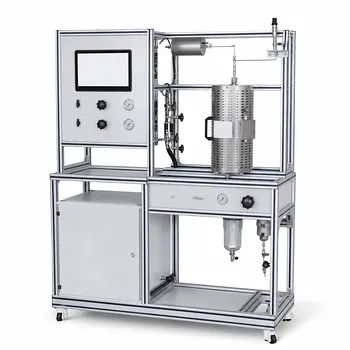
Methanol Synthesis and Catalyst Performance Evaluation Educational Unit Operations Pilot Plant

Methanol Synthesis and Catalyst Performance Evaluation Educational Unit Operations Pilot Plant

Bench-scale methanol synthesis and catalyst evaluation educational pilot plant for chemical engineering labs to study catalytic kinetics, high-pressure operations, process control, and unit operations under realistic conditions with industrial safety features, precision gas delivery, data acquisition, and intelligent monitoring.

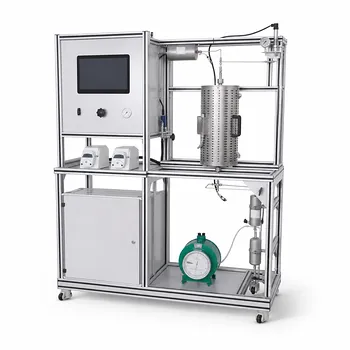
Carbon Dioxide Hydrogen Methanol Synthesis Educational Unit Operations Pilot Plant

Carbon Dioxide Hydrogen Methanol Synthesis Educational Unit Operations Pilot Plant

Hands-on educational pilot plant for methanol synthesis from carbon dioxide and hydrogen. Enables practical study of high-pressure catalysis, unit operations, and process control. Features real-time data acquisition, safety systems, and customizable experiment modules for undergraduate and graduate chemical engineering laboratories.

Carbon Dioxide Hydrogenation Methanol Synthesis Educational Unit Operations Pilot Plant

Carbon Dioxide Hydrogenation Methanol Synthesis Educational Unit Operations Pilot Plant

Pilot-scale educational system for carbon dioxide hydrogenation to methanol. Designed for unit operations teaching, it features a fixed-bed reactor, three-stage heating, dual mass flow controllers, and a 15.6-inch touchscreen with data acquisition. Perfect for chemical engineering and sustainable energy courses.

Methane Cracking Educational Unit Operations Pilot Plant

Methane Cracking Educational Unit Operations Pilot Plant

This bench-scale methane cracking educational pilot plant provides hands-on catalytic conversion training with a 1000°C furnace, seven mass flow controllers, and real-time automation for safe, curriculum-aligned experiments. Designed for university teaching of unit operations and reaction engineering.

Steam Methane Reforming Hydrogen Production and Purification Educational Pilot Plant

Steam Methane Reforming Hydrogen Production and Purification Educational Pilot Plant

This bench-scale educational pilot plant combines steam methane reforming with hydrogen purification, offering safe, hands-on unit operations training for university engineering laboratories. Its customizable design and high-precision monitoring enable real-time study of catalysis, phase separation, and process dynamics.

Ethyl Acetate Synthesis Unit Operations Pilot Plant for Practical Training

Ethyl Acetate Synthesis Unit Operations Pilot Plant for Practical Training

Modular and customizable pilot plant for ethyl acetate synthesis practical training. Integrates esterification reaction, liquid-liquid extraction, neutralization, and sieve-plate distillation unit operations. Bridging theory and real-world industrial processes. Designed for university chemical engineering labs

Bio-fermentation Ethanol Production Practical Training Unit Operations Pilot Plant

Bio-fermentation Ethanol Production Practical Training Unit Operations Pilot Plant

Bio-fermentation ethanol production pilot plant for hands-on training in unit operations: fermentation, solid-liquid filtration, membrane separation, and distillation. Bridges theory with industrial practice using industrial-grade components, customizable for university labs. Hybrid automated and manual control for comprehensive learning.

Green Anhydrous Ethanol Refining Practical Training Pilot Plant

Green Anhydrous Ethanol Refining Practical Training Pilot Plant

Advanced integrated pilot plant for university labs demonstrating extractive distillation to produce high-purity absolute ethanol from crude feedstock, featuring multi-column continuous operation, closed-loop solvent recycling, and customizable controls for hands-on engineering education, ideal for chemical engineering training and research.

Green Anhydrous Ethanol Purification Extractive Distillation Unit Operations Training Pilot Plant

Green Anhydrous Ethanol Purification Extractive Distillation Unit Operations Training Pilot Plant

Modular pilot plant produces high-purity anhydrous ethanol from crude ethanol via extractive distillation in a zero-emission closed-loop process providing hands-on training in unit operations with PLC-based control SCADA software and digitalized process management focusing on green engineering principles

Crude Benzene Hydrogenation Educational Unit Operations Pilot Plant

Crude Benzene Hydrogenation Educational Unit Operations Pilot Plant

Advanced pilot plant for higher education, enabling hands-on study of crude benzene hydrogenation and gas-liquid catalytic reactions. Triple-stage reactor system with precision flow and temperature control, AI-driven PID, remote monitoring, and comprehensive safety interlocks. Customizable for curriculum integration.

Ethylbenzene Dehydrogenation Educational Unit Operations Pilot Plant

Ethylbenzene Dehydrogenation Educational Unit Operations Pilot Plant

Ethylbenzene dehydrogenation educational pilot plant replicates industrial styrene production, offering hands-on experience with fixed-bed reactors, catalyst activation, regeneration, automated process control. Designed for university chemical engineering labs, it enables study of gas-solid catalysis, catalyst deactivation, steam regeneration, and safety interlocks.

Aspirin API Synthesis Unit Operations Training Pilot Plant

Aspirin API Synthesis Unit Operations Training Pilot Plant

An integrated pilot plant for aspirin API synthesis training, featuring batch reaction, recrystallization, and packed distillation modules. Offers dual-control operation, transparent vessels, and public utility simulation for safe, hands-on chemical engineering unit operations education. Ideal for university labs.

Continuous Batch Extractive Distillation Educational Pilot Plant

Continuous Batch Extractive Distillation Educational Pilot Plant

Versatile pilot plant for continuous, batch, and extractive distillation training. High-borosilicate glass column for visualizing hydraulics, 15.6-inch touchscreen with data logging, precise reflux ratio control 1-99, and durable corrosion-resistant frame. Ideal for chemical engineering education and process research.

Multi-Functional Special Distillation Educational Pilot Plant

Multi-Functional Special Distillation Educational Pilot Plant

Versatile multi-functional special distillation pilot plant for chemical engineering education. Supports continuous, vacuum, azeotropic, reactive, extractive distillation. Transparent glass columns enable real-time visual observation of hydrodynamics and separation processes.

Electrolytic Hydrogen Production Educational Unit Operations Pilot Plant

Electrolytic Hydrogen Production Educational Unit Operations Pilot Plant

Bench-scale electrolytic hydrogen production pilot plant designed for university engineering labs. Provides hands-on training in water electrolysis, gas-liquid separation, and process safety. Fully customizable system with digital PID control, corrosion-resistant components, and hydrogen gas detector. Ideal for chemical engineering curricula.

Natural Product Extraction Unit Operations Training Pilot Plant

Natural Product Extraction Unit Operations Training Pilot Plant

Integrated natural product extraction pilot plant for chemical engineering training bridges theory and industrial practice with modular extraction and evaporation/concentration units, hybrid touchscreen and manual control, realistic process simulation, and self-contained softened water and vacuum utilities.

Polymerization Granulation and Pellet Processing Educational Unit Operations Pilot Plant

Polymerization Granulation and Pellet Processing Educational Unit Operations Pilot Plant

Integrated pilot plant for teaching polymer processing from polymerization to pelletizing. Includes 30L reactor, hydrolyzer, extruder-granulator, vibration dryer, crusher, and sieve. Atmospheric pressure operation for safety, corrosion-resistant SS, customizable for chemical and polymer engineering education. Ideal for university labs.

Electrolyte Distillation Purification and Formulation Educational Pilot Plant

Electrolyte Distillation Purification and Formulation Educational Pilot Plant

Integrated bench-to-pilot scale educational pilot plant for electrolyte distillation, purification, and formulation with borosilicate glass construction, PLC automation, touchscreen HMI, and advanced industrial safety features for hands-on chemical process training, ideal for chemical engineering and materials science curricula.

Multi-Reactor Educational Pilot Plant for Reaction Engineering Unit Operations

Multi-Reactor Educational Pilot Plant for Reaction Engineering Unit Operations

Integrated bench-scale educational pilot plant for chemical engineering teaching featuring fixed bed fluidized bed and stirred tank reactors with web-based digital twin controls and safety interlocks for hands-on unit operations and reaction engineering comparative studies in one compact system.

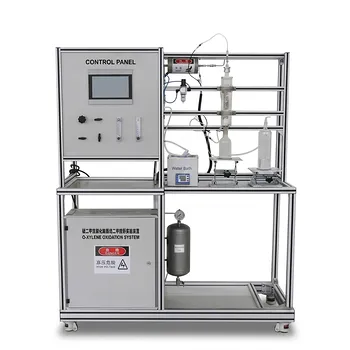
O-Xylene Oxidation to Phthalic Anhydride Educational Unit Operations Pilot Plant

O-Xylene Oxidation to Phthalic Anhydride Educational Unit Operations Pilot Plant

Explore our bench-scale educational pilot plant for o-xylene oxidation to phthalic anhydride, featuring a fixed-bed tubular reactor with visual observation, precise temperature control, and safety systems, ideal for chemical engineering hands-on training and industrial simulation, designed for university unit operations.


Leave Your Message