Perchloric acid fuming is the gatekeeper of analytical accuracy in unit operation redox analysis. It serves one non-negotiable purpose: eliminating nitric acid before a Jones reductor is used. If nitric acid remains in solution, the reductor converts it to hydroxylamine, a side product that consumes permanganate titrant and produces falsely high readings for target metals like iron or vanadium. Fuming with perchloric acid wet-oxidizes that interference, clearing the way for a true titration result.
Before a Jones reductor can accurately reduce target ions, all nitric acid must be driven off. Any residual nitric acid is reduced to hydroxylamine in the zinc‑amalgam column, and that hydroxylamine guzzles permanganate, inflating the apparent analyte concentration. Perchloric acid fuming oxidizes and volatilizes the nitric interference, preserving the integrity of the permanganate titration.
The Hidden Interference of Nitric Acid in Redox Workflows
Why Nitric Acid Must Be Removed
In many unit operation samples—especially those involving dissolution of alloys or process residues—nitric acid is a common component. It excels at putting metals into solution, but it becomes a liability during subsequent redox manipulation. Even trace amounts left after standard digestion will derail a Jones reductor‑permanganate scheme.
The Chemistry of Interference in the Jones Reductor
The Jones reductor is a column packed with amalgamated zinc, optimized to reduce species like Fe³⁺ → Fe²⁺ or VO₃⁻ → VO²⁺. Unfortunately, it also attacks nitrate (NO₃⁻), reducing it stepwise. The key problematic intermediate is hydroxylamine (NH₂OH). Once formed, hydroxylamine reacts rapidly with the potassium permanganate titrant used later in the analysis, oxidizing to nitrous oxide or nitrate. Each mole of hydroxylamine consumes permanganate in a stoichiometric demand that has nothing to do with the analyte, creating a positive systematic error.
How Perchloric Acid Fuming Rescues the Analysis
Wet‑Oxidation: Clearing Organics and NOx
Perchloric acid (HClO₄) at its boiling‑fuming temperature (around 203 °C) acts as a powerful liquid‑phase oxidant. It digests residual organic matter that could otherwise reduce permanganate non‑specifically. More critically, it oxidizes nitric acid and its lower nitrogen‑oxide reduction products (NO₂, NO, etc.) into volatile species. When copious white fumes of perchloric acid are evolved, the nitric‑derived interferences are effectively volatilized and swept from the solution.
Ensuring Selective Reduction of Target Ions
Once nitric acid is removed, the Jones reductor performs exactly as intended. It reduces only the target metal ions – the iron, vanadium, or other species that will later be titrated. The permanganate consumed in the titration then corresponds exactly to the amount of analyte present, eliminating the hydroxylamine‑induced bias. For unit operations where process adjustments depend on these numbers, this step transforms an untrustworthy measurement into a reliable process‑control metric.
Balancing Accuracy and Practical Risk
Safety Hazards and Operational Demands
Perchloric acid fuming is not without trade‑offs. If performed on samples containing significant organic material without pre‑digestion, explosive perchlorate esters can form. The procedure demands a dedicated, wash‑down‑capable perchloric acid fume hood, meticulous glassware cleanliness, and strict adherence to heating protocols. It also adds time to the analytical workflow.
When the Trade‑Offs Are Justified
The extra care is warranted whenever the nitrate interference cannot be removed by a gentler method (like evaporation with sulfuric acid) and the accuracy of the redox result directly impacts process decisions. In unit operations where feed‑forward or feed‑back adjustments hinge on the iron or vanadium concentration, a falsified high reading could trigger unnecessary chemical additions, off‑spec product, or cascade equipment fouling. The risk of the perchloric step is dwarfed by the cost of operating on bad data.
Making the Right Choice for Your Unit Operation
Integrating perchloric acid fuming is a decision grounded in the nature of your sample and the criticality of your measurement.
- If your primary focus is eliminating nitrate‑induced hydroxylamine interference: Fume with perchloric acid—this is the only reliable way to volatilize the interference before a Jones reductor step.
- If your primary focus is wet‑oxidizing a recalcitrant organic matrix: Pre‑digest with nitric acid, then finish with perchloric acid fuming, following all safety precautions to avoid perchloric‑ester hazards.
- If your primary focus is process control precision in iron or vanadium determination: Adopt the fuming step as a standard‑operating‑procedure; it guarantees that your permanganate titer reflects only the target ion, giving you the true basis for unit adjustments.
When you fume with perchloric acid, you’re not just cleaning a sample—you’re building a foundation of trust in every titration result that guides your process decisions.
Summary Table:
| Aspect | Without Perchloric Fuming | With Perchloric Fuming |
|---|---|---|
| Nitric Acid Status | Remains in solution | Volatilized and removed |
| Jones Reductor Output | Reduces nitrate to hydroxylamine | Reduces target metal ions only |
| Titration Accuracy | Falsely high (positive bias) | Highly accurate and reliable |
| Process Impact | Bad data, off-spec product | Precise process control |
Master Unit Operations with LABPARK
Accurate chemical analysis is the foundation of successful process engineering. LABPARK provides premium Educational and Vocational Unit Operations Pilot Plants in chemical engineering, bioprocess & biotech, and environmental & water treatment for universities, research institutes, and enterprises.
Want to enhance your laboratory’s experimental capabilities and teach real-world analytical precision? Contact us today to discover how our pilot plants can elevate your training and research programs!
Related Products
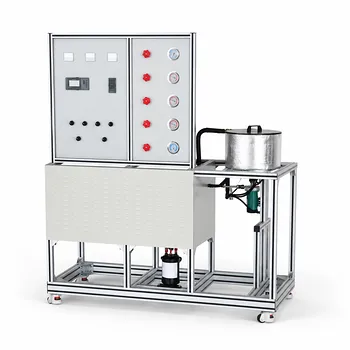
- Rising and Falling Film Evaporation Educational Unit Operations Pilot Plant
- Educational Compression Refrigeration Performance Determination Unit Operations Pilot Plant
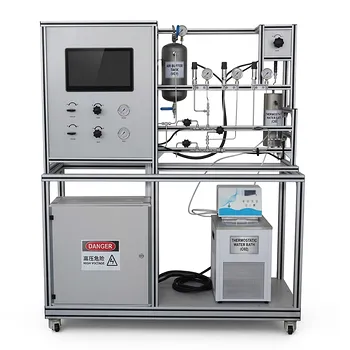
- 100L Continuous Loop Hydrogenation Educational Unit Operations Pilot Plant
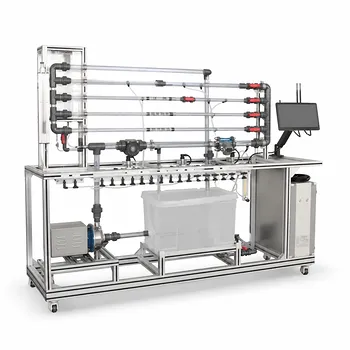
- Fluid Friction Resistance Determination Educational Unit Operations Pilot Plant
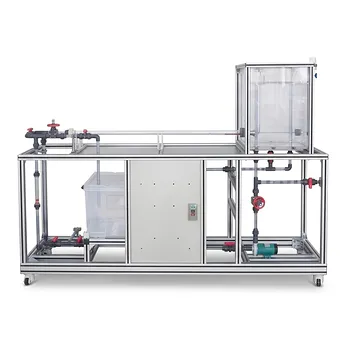
- Throttling Effect Determination Educational Unit Operations Pilot Plant
People Also Ask
- How to Select Natural vs. Forced Circulation Evaporators by Feed Type
- How do educational unit operations pilot plants bridge theory and design? Bridge the Engineering Gap
- How do educational unit operations pilot plants address safety and waste management when scaling up?
- How is the heat transfer area calculated for an evaporation unit operations pilot plant during experimental design? Guide
- What role do educational pilot plants play in scaling green chemistry? Bridging the Lab-to-Industry Gap