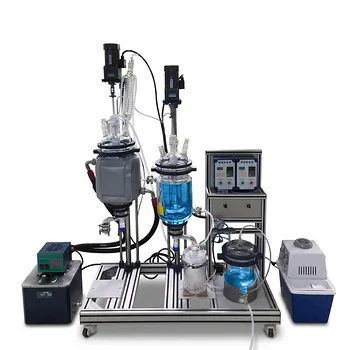
Isothermal operation is non-negotiable for maximizing yield in an exothermic equilibrium-limited reaction like CO shift conversion. It directly tackles the core thermodynamic conflict: the reaction’s forward rate and equilibrium conversion favor lower temperatures, but the rapid heat release would naturally push the catalyst bed hotter, shifting equilibrium backward and potentially destroying the catalyst. Maintaining a constant, uniform temperature profile through active heat removal keeps the reaction at its thermodynamic sweet spot, prevents hot spots, and unlocks the highest possible conversion in a stable, safe process.
CO shift conversion faces a fundamental tug-of-war: heat is generated as the reaction proceeds, yet equilibrium demands a cool, controlled environment. Isothermal operation resolves this by continuously removing heat exactly where it is produced, enabling high conversion without sacrificing catalyst integrity or process safety. Pilot plants demonstrate this principle hands-on, letting engineers map the precise cooling requirements needed for real-world scale-up.
The Thermodynamic Bottleneck
CO shift conversion (CO + H₂O ⇌ CO₂ + H₂) is highly exothermic. As the catalyst drives the reaction forward, the temperature naturally climbs. However, Le Chatelier’s principle dictates that for this exothermic equilibrium, lower temperatures shift the equilibrium toward more products.
Without deliberate cooling, the bed simply gets too hot, and the reaction stalls at a lower equilibrium conversion. This inherent conflict means you cannot run the reactor adiabatically and expect high conversion—you must intervene with active heat removal.
Why Cooler Conditions Are Non-Negotiable
As the primary reference highlights, keeping temperatures below 250°C is vital. Above that threshold, two things happen simultaneously: the equilibrium moves in the wrong direction, and the catalyst itself can start to degrade (sintering, phase changes).
Degraded catalyst loses activity, accelerating the drop in conversion. Isothermal operation therefore protects both the thermodynamic driving force and the catalyst lifespan, making it a cornerstone of industrially relevant CO shift processes.
The Danger of Thermal Runaway and Hotspots
The supplementary references explain why temperature control in larger systems is so much harder than in a lab flask. At the laboratory scale, the high surface-area-to-volume ratio allows heat to escape almost passively. But as you scale up to pilot-plant dimensions, the ratio drops dramatically, and heat accumulates rapidly.
If an exothermic reaction is not actively managed, you get thermal runaway—a self-accelerating cycle where rising temperature increases the reaction rate, which generates more heat, leading to a catastrophic loss of control. Even before runaway, localized hot spots can form, creating uneven catalyst aging and unpredictable product quality.
The Pilot Plant as a Safe Sandbox
Educational and industrial pilot plants incorporate cooling jackets, internal coils, and cascade control loops precisely to prevent this. They enable you to see how real-time energy balances are calculated and how heat transfer rates must be continuously adjusted. These systems deliberately shrink the gap between academic understanding and the thermal hazards of full-scale reactors.
The Isothermal Solution: Continuous Heat Removal
Isothermal operation means you are removing heat at the same rate it is being generated, right at the catalyst site. The primary reference points to internal cooling tubes as a typical method, where a coolant circulates directly through the bed. This maintains a nearly flat temperature profile across the reactor, ensuring every particle of catalyst operates at the optimal temperature.
In CO shift conversion, this direct heat removal directly optimizes reaction yield while also enabling efficient energy recovery. The extracted heat can be fed into other parts of the plant, improving overall thermal efficiency.
How It Manages Equilibrium and Yield
When you hold the bed at a constant low temperature, you freeze the equilibrium at a product-rich condition that would be impossible in a hot adiabatic reactor. You can then push the conversion to near the thermodynamic limit for that temperature, something that simply cannot happen if you let the bed heat up naturally.
Studying Isothermal Control in Pilot Plants
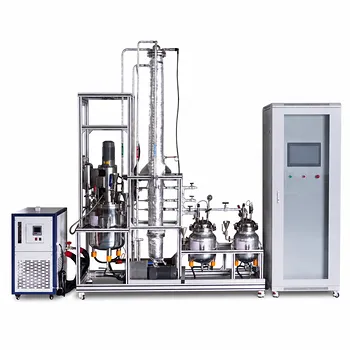
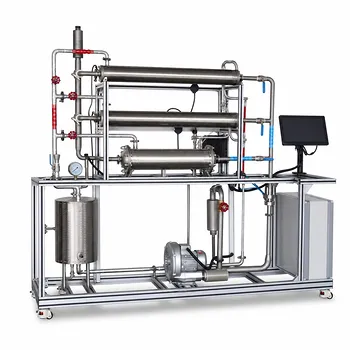
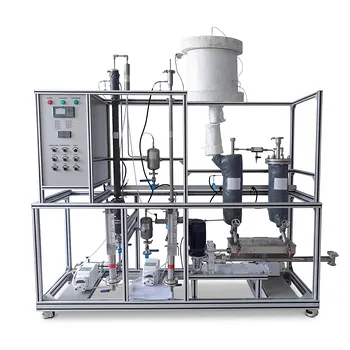
Pilot plants are where isothermal principles become tangible. They are built to demonstrate how direct heat removal from a gas-solid fixed bed works in practice and what control strategies keep a reactor on target.
Direct Heat Removal Through Internal Cooling Coils
The primary reference describes configurations where cooling tubes run inside the catalyst bed. These pilots allow students or engineers to vary coolant flow rate and inlet temperature while monitoring the axial temperature profile. The goal is to show that by adjusting coolant, you can maintain a bed temperature profile that is nearly flat—mimicking true isothermal conditions, even when the reaction rate varies along the bed.
The Role of Agitation and Jacket Cooling
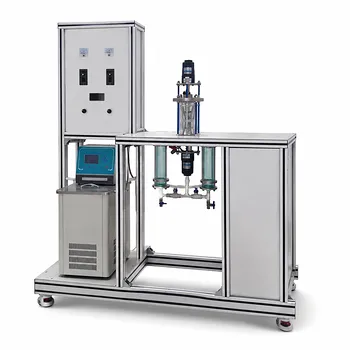
In other reactor types (like batch slurry reactors used for liquid-phase shift catalysts), the supplementary references stress that a mechanical stirring system is essential to avoid temperature gradients and local hotspots. Paired with a jacketed vessel, this setup lets you study the “three transfers and one reaction” (mass, heat, momentum transfer plus kinetics) by showing how agitation speed and jacket coolant flow directly affect temperature stability. In a pilot plant, you can deliberately induce a gradient by turning off the stirrer and then see how quickly a hotspot forms—an unforgettable lesson in the importance of mixing.
Mapping Radial and Axial Temperature Profiles
In fixed-bed pilots, you can insert multiple thermocouples to monitor radial and axial temperature profiles. The supplementary references note that these profiles help calculate the effective thermal conductivity of the solid bed—a parameter that is critical to designing larger-scale reactors. By studying how the bed responds to different feed rates and coolant conditions, you develop the data needed to size industrial cooling systems and choose appropriate pellet sizes that balance pressure drop against heat transfer.
Understanding the Trade-offs
Isothermal operation is powerful, but it comes with practical challenges that a pilot plant makes visible.
First, internal cooling tubes or coils consume space inside the reactor, reducing the catalyst volume and potentially increasing pressure drop. You’re trading some reactor productivity for thermal control. Second, constructing and maintaining a multi-tubular isothermal reactor is more complex and capital-intensive than a simple adiabatic vessel. But for highly exothermic equilibrium-limited systems, this trade-off is unavoidable if high conversion is the target.
Pilot plants also show that achieving a perfectly flat temperature profile is an idealization; in reality, a small temperature rise near the inlet is often tolerated. The key lesson is that you don’t need perfection—you need to prevent the massive, uncontrollable temperature spikes that collapse equilibrium and degrade catalyst.
Making the Right Choice for Your Reactor Goal
When you design or study a CO shift pilot plant, your approach to isothermal control should align with the specific process goal.
- If your primary focus is maximizing single-pass conversion: Prioritize aggressive cooling with internal tubes or coils to hold the bed as close to the lowest feasible temperature as possible. Accept a slightly larger reactor or lower space velocity if needed to keep temperatures in the sweet spot.
- If your primary focus is understanding heat transfer limitations: Use your pilot plant to deliberately map the radial and axial temperature profiles at various coolant rates. Build a dataset for effective thermal conductivity and use it to validate reactor models before scale-up.
- If your primary focus is training teams on safe exothermic operation: Run controlled experiments where you turn off the coolant momentarily (within fail-safe limits) to demonstrate how fast runaway can start. Use cascade control loops to practice real-time heat removal adjustments.
Isothermal operation is the bridge that connects fundamental thermodynamics to industrial high-yield reactors—and pilot plants turn that bridge into a repeatable, safe learning experience.
Summary Table:
| Key Aspect | Process Challenge | Pilot Plant / Isothermal Solution |
|---|---|---|
| Thermodynamics | Exothermic reaction shifts equilibrium backward at high heat | Internal cooling tubes/jackets maintain flat temperature profile |
| Safety & Stability | Thermal runaway and hotspots degrade catalyst activity | Real-time energy balance & cascade control loops prevent spikes |
| Scale-up Study | Low surface-to-volume ratio in large reactors | Thermocouples map radial/axial profiles for heat transfer data |
Optimize your research and teaching with LABPARK. We provide high-quality Educational and Vocational Unit Operations Pilot Plants in chemical engineering, bioprocess & biotech, and environmental & water treatment for universities, research institutes, and enterprises. Our systems allow you to safely study exothermic reaction kinetics, heat transfer profiles, and control strategies. Contact LABPARK today to find the perfect pilot plant solution for your lab!
Related Products
- Carbon Material Thermal Pretreatment Multiphase Separation Educational Pilot Plant
- Carbon Dioxide Hydrogenation Methanol Synthesis Educational Unit Operations Pilot Plant
- Carbon Dioxide Hydrogen Methanol Synthesis Educational Unit Operations Pilot Plant
- Comprehensive Heat Transfer Coefficient Determination Educational Unit Operations Pilot Plant
- Three-Tube Heat Transfer Educational Pilot Plant for Unit Operations Training
People Also Ask
- What challenges do gravity transitions present for pressure control in multiphase separation pilot plants?
- How does steady-state multiplicity affect the operation and safety of exothermic reactions within a CSTR pilot plant? - Guide
- Why is temperature regulation via a cooling jacket a critical feature in CSTR pilot plants used for laboratory training?
- What parameters to monitor transitioning from Batch to CSTR? Master Pilot Plant Setup
- How to select the right unit operations pilot plant for liquid separation? A complete guide.