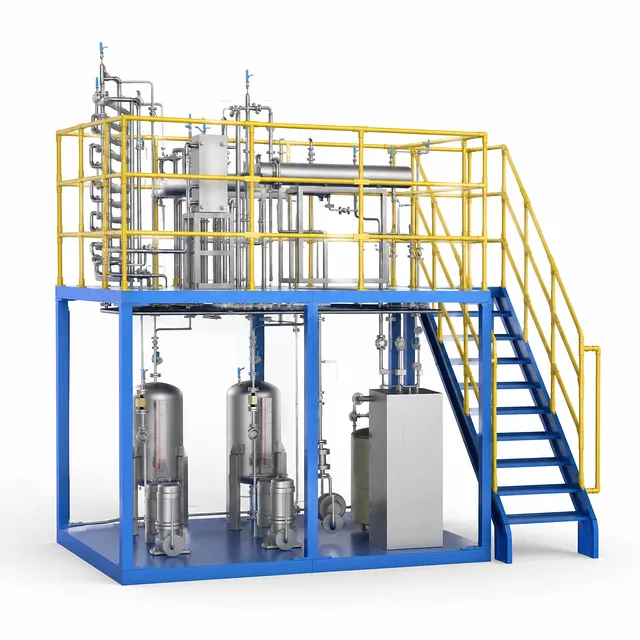
Vocational Chemical Engineering Pilot Plants
Comprehensive Multi-Modal Heat Transfer Unit Operations Pilot Plant for Engineering Training
Item Number : LPK-DMTCR
Price varies based on specs and customizations
- Overall Dimensions
- 3930 mm × 2560 mm × 3900 mm (adjustable)
- Heat Exchanger Types
- 4 partition-wall heat exchangers (Plate and Tubular)
- Operating Modes
- Physical Material, Simulated Material, Semi-Physical Simulation

Shipping:
Contact us to get shipping details Enjoy On-time Dispatch Guarantee.
Why Choose Us
Easy ordering process, quality products, and dedicated support for your business success.
Introduction
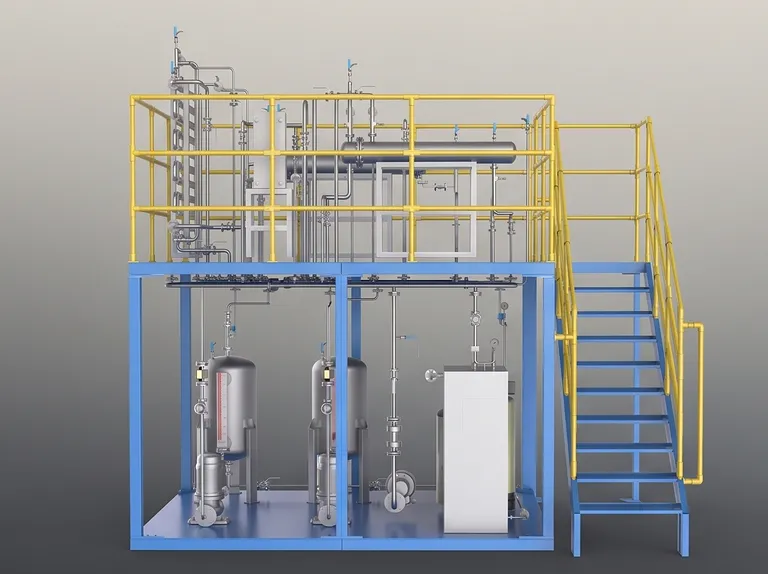
The Multi-modal Comprehensive Heat Transfer Practical Training Unit Operations Pilot Plant is an advanced, industrial-scale educational platform designed for university engineering laboratories. This integrated pilot plant provides engineering students with hands-on experience in fundamental thermal processes, allowing them to explore heat transfer mechanisms, study the mechanical design of industrial heat exchangers, and master complex unit operations. By bridging theoretical classroom concepts with real-world process plant operations, this unit enhances practical engineering competencies in safety, system optimization, and process control.
Tailored Customization to Meet Academic Requirements
Recognizing that every university laboratory has unique spatial constraints and specific curricular focus areas, this pilot plant offers comprehensive customization. Both the hardware configurations—such as piping layouts, structural frame dimensions, and selected auxiliary components—and the software control systems can be tailored to align precisely with your institution’s training objectives and facility parameters.
Key Pedagogical Features and Engineering Advantages
- Comprehensive Heat Exchanger Training: The unit integrates four common types of partition-wall heat exchangers, including plate and tubular designs. Students can directly compare structural variations, flow patterns, and thermal efficiencies.
- Multi-Media Operation and Switching: Supports the generation, routing, and switching operations of two distinct heating media and two cooling media, teaching students the principles of utility selection and thermal fluid management.
- Three Distinct Operating Modes (Multi-Modal System):
- Physical Material Mode: Operates with real process fluids. The host computer software collects live sensor data and directly controls dynamic components such as pumps and electric heaters.
- Simulated Material Mode: Utilizes safe, utility-grade fluids (water or air) as the operating medium. Built-in mathematical models assess physical valve positions to simulate complex thermal behavior and data trends, offering realistic practice without chemical hazards.
- Semi-Physical Simulation Mode: Runs completely dry without any process fluids. The software detects manual valve positions and drives physical indicators (temperature, pressure, flow, and level meters) via embedded models, facilitating safe pre-operational dry runs and troubleshooting drills.
- Industrial-Grade Safety and Structure: Features a robust two-story steel framework with an anti-slip checkered plate floor. It includes a 1.2-meter-high safety handrail on the upper deck and a secure safety inclined ladder, giving students authentic experience working on elevated industrial process platforms.
Technical Specifications and Curricular Alignment
| Parameter / Module | Specification / Operational Capability | Associated Textbook Concepts & Unit Operations |
|---|---|---|
| Physical Dimensions | 3930 mm × 2560 mm × 3900 mm (Length × Width × Height); adjustable based on laboratory space. | Plant Layout, Piping and Instrumentation Diagram (P&ID) design, Scale-up principles. |
| Structural Frame | Two-story carbon steel powder-coated framework, 1.2m yellow safety guardrails, 3mm checkered platform plates. | Industrial Safety Standards, Process Plant Design, Ergonomics in Unit Operations. |
| Heat Exchanger Types | Features 4 distinct partition-wall heat exchangers (including Plate and Tubular types). | Co-current and Counter-current Flow, Logarithmic Mean Temperature Difference (LMTD), Heat Transfer Coefficients. |
| Media Configurations | 2 heating media and 2 cooling media circuits with manual/automated switching control. | Process Utilities, Energy Conservation, Heat Integration, Thermal Energy Balances. |
| Control & Acquisition | Industrial-grade sensors for temperature, pressure, flow, and level; PC-based data acquisition software. | Process Dynamics, Feedback Control Loops, Sensor Calibration, Data Logging and Analysis. |
| Experimental Modules | Determination of overall heat transfer coefficients ($U$); comparison of heat exchanger efficiencies; system startup and emergency shutdown protocols. | Steady-state and Unsteady-state Heat Conduction, Convection Heat Transfer, Fouling Factors, Film Coefficients. |
Curriculum Integration and Textbook Reference
This pilot plant is specifically engineered to align with core curriculum requirements across Chemical Engineering, Environmental Engineering, Food Engineering, and Thermal Power Engineering. The physical components and operational tasks map directly to the fundamental principles detailed in standard engineering reference textbooks:
- Unit Operations of Chemical Engineering: The system serves as a physical counterpart for studying the principles of heat transfer by conduction and convection, the design of shell-and-tube and plate heat exchangers, and the calculation of overall heat transfer coefficients ($U$) under varying flow regimes (turbulent vs. laminar).
- Transport Processes and Unit Operations: Students can practically evaluate the transport of thermal energy, calculate boundary layer resistances, perform comprehensive energy balances, and analyze the thermal properties of different heating and cooling fluids in motion.
- Chemical Engineering Design: The industrial layout, multi-tier platform, real-time instrumentation, and piping arrangements allow professors to teach practical topics in process piping design, control loop implementation, safety interlocks, and system-level utility engineering.
By working on this pilot plant, students transition from solving idealized textbook equations to managing the multi-variable, real-world heat transfer limitations encountered in industrial manufacturing environments.
Comprehensive System Customization
To ensure the pilot plant integrates into your teaching program, our engineering team provides flexible configuration services. We customize hardware features, such as structural footprints, material selections, and specific piping configurations, alongside tailored software dashboards, control limits, and pedagogical modules to match your exact teaching syllabus.
About LABPARK
LABPARK has been a dedicated partner to the global higher education sector for over 20 years, specializing in the design and manufacture of advanced, integrated practical training systems. We focus on delivering high-quality educational equipment across six primary domains: Chemistry, Chemical Engineering, Biotechnology, Food Engineering, Pharmaceutical Engineering, and Environmental Engineering.
With a commitment to engineering excellence and academic utility, LABPARK holds 209 technical patents and has served more than 289 universities and colleges worldwide. Our operations are supported by a state-of-the-art, 49,000-square-meter production and research facility, ensuring that every piece of equipment we build meets rigorous quality, safety, and educational standards.
Trusted by Industry Leaders
REQUEST A QUOTE
Our professional team will reply to you within one business day. Please feel free to contact us!
Related Products

Three-Tube Heat Transfer Educational Pilot Plant for Unit Operations Training
Three-tube heat transfer pilot plant for studying convective heat transfer enhancement and condensation. Allows comparison of smooth, corrugated, turbulent tubes, verifying empirical correlations. Ideal for chemical engineering education with safety and closed-loop steam recovery.
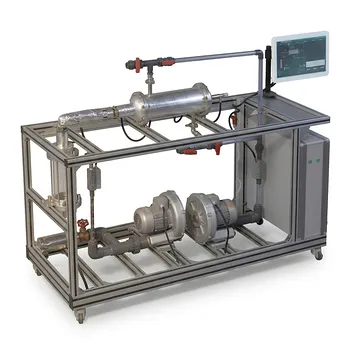
Shell and Tube Heat Exchanger Heat Transfer Coefficient Determination Educational Pilot Plant
LABPARK's shell and tube heat exchanger pilot plant enables students to investigate heat transfer coefficients, LMTD, co-current vs counter-current flow, bridging theory and industrial practice. Customizable for chemical, mechanical, environmental engineering curricula. Ideal for unit operations and process engineering labs.
Comprehensive Heat Transfer Coefficient Determination Educational Unit Operations Pilot Plant
Advanced industrial-grade educational pilot plant for comprehensive heat transfer coefficient determination. Enables quantitative convective heat transfer analysis, evaluates double-pipe and shell-and-tube exchanger configurations, and includes digital data acquisition. Customizable for engineering curriculum. Ideal for engineering unit operations labs.

Multimodal Absorption and Desorption Pilot Plant for Unit Operations Training
Multimodal absorption and desorption pilot plant for higher education labs. Bridges theory and industrial practice with transparent packed columns, three operational modes (real-material, simulated, semi-physical), and SCADA control. Students explore mass transfer, column hydraulics, and process control. Customizable.

Multi-Modal Distillation Unit Operations Training Pilot Plant
Multi-modal distillation pilot plant for practical unit operations training in chemical engineering education. Features real, analog, and semi-physical simulation modes, industrial construction, customizable for university labs. Hands-on fractionation columns, SCADA control, safety systems. Includes sight glasses, sampling ports, closed-loop recycling.

Multi-Reactor Educational Pilot Plant for Reaction Engineering Unit Operations
Integrated bench-scale educational pilot plant for chemical engineering teaching featuring fixed bed fluidized bed and stirred tank reactors with web-based digital twin controls and safety interlocks for hands-on unit operations and reaction engineering comparative studies in one compact system.

Dual Mode Heat Transfer Pilot Plant for Unit Operations Training
Engineering-scale dual-mode heat transfer pilot plant for hands-on unit operations training in chemical engineering. Features real and simulated modes, multiple heat exchanger types, comprehensive coefficient determination, and advanced process control with data acquisition for engineering students and researchers.
Solid Spherical Heat Transfer Coefficient Determination Educational Chemical Engineering Pilot Plant
This educational chemical engineering pilot plant enables students to determine convective heat transfer coefficients and observe transient thermal behavior of solid spheres under natural convection, forced convection, fixed beds, and fluidized bed regimes.

Dual-Mode Rectification Pilot Plant for Practical Training Unit Operations
Industrial-scale dual-mode rectification pilot plant for chemical engineering practical training. Features real-material and simulated-material operation modes, sieve-plate column with sight glasses for visual observation of hydrodynamics, and customizable SCADA control for safe, hands-on learning of unit operations and mass transfer.

Multi Pump Fluid Transport Process Piping Unit Operations Training Pilot Plant
Industrial-scale multi-pump pilot plant for unit operations training in fluid transport and process piping, featuring real-material and semi-physical simulation modes, comprehensive pump and flowmeter calibration, and safety-enhanced two-tier platform, bridging academic theory and industrial practice for chemical engineering education.

Multi Functional Catalytic Reaction and Reactor Evaluation Educational Unit Operations Pilot Plant
Bench-scale educational pilot plant for catalytic reaction and reactor evaluation, integrating fixed bed, fluidized bed, and stirred tank reactors. Students compare reactor designs, evaluate catalysts, and study reaction kinetics and hydrodynamics. Perfect for unit operations labs in chemical engineering curricula.
Hot Filtration Educational Unit Operations Pilot Plant Laboratory System
This integrated laboratory bench-scale hot filtration pilot plant enables students to study solid-liquid separation under thermal conditions, featuring a stainless steel vessel, removable heating jacket, and multi-layer filter plates for unit operations education, ideal for chemical engineering laboratory curriculum.

Rising and Falling Film Evaporation Educational Unit Operations Pilot Plant
Hands-on educational pilot plant for studying rising and falling film evaporation, flow regimes, and heat transfer. Customizable for university labs with industrial instrumentation and data acquisition. Enables comparative evaluation of evaporation modes and energy efficiency.

Natural Product Extraction Unit Operations Training Pilot Plant
Integrated natural product extraction pilot plant for chemical engineering training bridges theory and industrial practice with modular extraction and evaporation/concentration units, hybrid touchscreen and manual control, realistic process simulation, and self-contained softened water and vacuum utilities.

Multi-Functional Drying Educational Unit Operations Pilot Plant
Versatile multi-functional drying educational unit operations pilot plant integrating tunnel, fluidized bed, and spray drying. Enables hands-on study of drying curves, psychrometry, and gas-solid separation for chemical engineering curriculum in higher education labs.

Educational Unit Operations Pilot Plant for Intraparticle Diffusion Effective Factor Measurement
Designed for chemical engineering university labs, this pilot plant allows hands-on determination of catalyst particle intraparticle diffusion effective factors and gas-solid reaction kinetics using a fixed-bed tubular reactor with industrial touchscreen control, bridging theory and practical reactor design.

Methane Cracking Educational Unit Operations Pilot Plant
This bench-scale methane cracking educational pilot plant provides hands-on catalytic conversion training with a 1000°C furnace, seven mass flow controllers, and real-time automation for safe, curriculum-aligned experiments. Designed for university teaching of unit operations and reaction engineering.

Polymerization Granulation and Pellet Processing Educational Unit Operations Pilot Plant
Integrated pilot plant for teaching polymer processing from polymerization to pelletizing. Includes 30L reactor, hydrolyzer, extruder-granulator, vibration dryer, crusher, and sieve. Atmospheric pressure operation for safety, corrosion-resistant SS, customizable for chemical and polymer engineering education. Ideal for university labs.

Tubular Reactor Flow Characteristics Determination Educational Unit Operations Pilot Plant
Educational pilot plant for investigating tubular reactor flow characteristics and residence time distribution Features adjustable recycle for plug flow and backmixing studies industrial touchscreen interface and real-time data acquisition Ideal for chemical engineering unit operations laboratory training and education

Supercritical High-Gravity Flash Evaporation Educational Unit Operations Pilot Plant
Bench-scale integrated teaching system for advanced separation and mass transfer, combining supercritical high-gravity flash evaporation with heating, chemical reaction, and material collection, featuring modular design, Stainless Steel 316L construction, transparent visualization, touchscreen control, and safety systems for chemical engineering education.