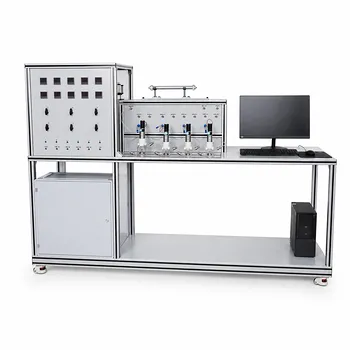
Methanol-laden purge gas will ruin your membrane in minutes—unless you strip it out with water first. In a membrane-based pilot plant processing methanol synthesis loop purge, the feed gas is saturated with methanol vapor. As the membrane preferentially permeates hydrogen and carbon dioxide, the remaining slow-permeating methanol concentrates on the high-pressure side and rapidly condenses into a liquid film. This liquid physically blocks the membrane fibers, degrades separation performance, and causes irreversible damage. A water-scrubbing tower installed immediately upstream physically absorbs the methanol before it reaches the membrane, ensuring stable operation and protecting the valuable membrane elements.
The central problem is not just methanol’s presence, but its concentration behavior inside the membrane module. Because it flows through the membrane much slower than hydrogen or CO₂, methanol accumulates to the point of condensation. Water scrubbing eliminates this risk by selectively removing methanol in a controlled, low-cost step—safeguarding both the pilot plant’s data integrity and its expensive membrane assets.
The Hidden Danger in Loop Purge Gas
Methanol loop purge gas isn’t just a mix of hydrogen, CO₂, and inerts—it’s fully saturated with methanol vapor at process pressure and temperature. This is the crucial detail that makes standard membrane separation dangerous without pretreatment.
Why the Loop Purge Exists at All
In a closed-loop methanol synthesis, inert gases like nitrogen and argon enter with the fresh syngas and accumulate over time. A purge stream must bleed them out to maintain reactant partial pressures and reactor efficiency. The downside: this purge stream also carries away valuable hydrogen and CO₂, creating a perfect target for membrane recovery. But the methanol content changes everything.
What Happens Inside the Membrane Without Pretreatment
Membranes separate based on permeation rate. Fast-permeating species—hydrogen and carbon dioxide—pass through quickly, leaving the slower components behind. Methanol is a large, polar molecule that permeates much slower than hydrogen through most polymer membranes. As the fast gases leave, the methanol mole fraction in the residual, high-pressure stream rises steadily along the fiber length.
Condensation: The Point of No Return
Once the partial pressure of methanol exceeds its saturation pressure locally inside the module, liquid methanol forms directly on the fiber surface. This condensed phase instantly blocks pores, destroys the membrane’s thin active layer, and can permanently wrinkle or crack hollow fibers. In minutes, the module’s selectivity collapses, and the pilot plant produces useless data while a high-cost component is destroyed.
How Water Scrubbing Solves the Problem
The only way to prevent condensation is to remove methanol before it enters the membrane. Water scrubbing is the most effective and practical method for a pilot plant environment because it leverages a fundamental physical property: methanol’s extreme affinity for liquid water.
Selective Absorption in a Single Step
In a packed or trayed scrubbing tower, the methanol-saturated purge gas contacts clean water flowing counter-currently. Methanol vapor transfers rapidly into the liquid phase because of its high water solubility—far higher than H₂, CO₂, or inerts. The outlet gas leaving the top of the tower sees water that is nearly free of methanol, reducing the methanol dew point to a safe level well below any temperature the gas will later encounter.
Why Other Methods Fall Short
Cooling and condensers are common for heavy hydrocarbon removal, but for methanol, condensation alone is thermodynamically limited. Achieving a low enough partial pressure to prevent downstream condensation would require cryogenic temperatures, massive heat exchanger area, and complex defrost cycles—unsuited for a flexible pilot plant. A water scrubber instead removes methanol at ambient temperatures, without chasing extreme dew points.
A Full Pretreatment Chain
The water scrubbing step does not work in isolation. The pilot plant’s pretreatment sequence typically flows:
- Water Scrubbing – removes the bulk of the methanol.
- Demister or knockout drum – catches any entrained water droplets.
- Heater – raises the gas temperature safely above its new (much lower) dew point, giving an operating margin against condensation in the membrane.
This chain ensures the membrane only sees a dry, methanol-free gas with a controlled, stable composition.
Understanding the Trade-offs
Water scrubbing is not a free lunch—it introduces its own set of operational considerations that pilot plant operators must manage.
- Water carryover risk: If the scrubber liquid load is too high or the demister fails, droplets can reach the membrane, causing similar physical damage. A properly designed mist eliminator and dew-point margin heater are mandatory.
- Water saturation of the outlet gas: The scrubbed gas leaves saturated with water vapor. While this is far less damaging than methanol, temperature drops in downstream piping can still cause water condensation. The post-scrub heater must be sized to maintain the gas at least 10–15°C above the water dew point.
- Liquid waste stream: The scrubber produces a water-methanol mixture that requires handling, potential distillation, or safe disposal. In a closed-loop pilot plant, this can be an environmental and logistic burden.
- Pressure drop: A scrubber adds frictional loss, slightly reducing the available driving force for membrane separation. This must be weighed against the gain from recovering permeated hydrogen.
- Startup and shutdown complexity: The scrubber needs steady water flow before gas is introduced, and it must be purged properly during shutdown to avoid freezing or stagnant corrosive mixtures.
Despite these, the alternative—a methanol-poisoned, irreparably damaged membrane module—is almost always a non-starter for serious pilot plant work.
Making the Right Choice for Your Pilot Plant
Ultimately, whether you install a water scrubber comes down to your pilot plant’s core objectives. Methanol-saturated purge gas leaves you no room to gamble.
- If your primary focus is long-term membrane integrity and reproducible data: Include the water scrubber without compromise. It is the only economically viable way to prevent condensation and ensure every test runs under identical, defined feed conditions.
- If you are screening new membrane material candidates for methanol resistance: You might, for a short-duration screening test, operate with a very high heater margin and real-time dew point monitoring. This is high-risk and suitable only for destructive testing where membrane loss is an accepted cost of the experiment.
- If your pilot plant must demonstrate a full commercial-scale flowsheet: Integrate the water scrubbing tower with its supporting heat management and liquid handling. This proves that your membrane recovery step can be operated reliably at scale, a demonstration that has immense value for scale-up decisions.
A water scrubber is not just an add-on—it’s the gatekeeper that turns a methanol-choked liability into a clean, membrane-friendly stream you can trust.
Summary Table:
| Key Aspect | Without Water Scrubbing | With Water Scrubbing |
|---|---|---|
| Methanol Behavior | Concentrates and condenses on membrane fibers | Selectively absorbed upstream by counter-current water |
| Membrane Impact | Blocked pores and irreversible structural damage | Remains dry, clean, and fully protected |
| Data & Integrity | Collapsed selectivity and destroyed assets | Stable performance and reliable research data |
Optimize Your Chemical Engineering Research with LABPARK
Designing reliable gas separation and purification systems requires precise unit operations. LABPARK designs and delivers high-performance Educational and Vocational Unit Operations Pilot Plants in chemical engineering, bioprocess & biotech, and environmental & water treatment. We help universities, research institutes, and enterprises build robust systems that prevent membrane fouling, ensure process safety, and deliver reproducible research data.
Ready to scale up your process or upgrade your lab? Contact LABPARK today to discuss your custom pilot plant needs!
Related Products
- Ultrafiltration Membrane Separation Educational Pilot Plant
- Multifunctional Membrane Separation Educational Pilot Plant with Ultrafiltration, Nanofiltration, Reverse Osmosis
- Multi-Functional Membrane Separation Educational Pilot Plant for Unit Operations Lab
- Photocatalytic Membrane Separation and Degradation Unit Operations Pilot Plant
- Hollow Fiber Ultrafiltration Membrane Separation Educational Pilot Plant
People Also Ask
- How do PEI, PVDF, and PSU membranes compare in pilot plants? Find the best fit.
- Pervaporation vs. Vapor Permeation: Handling Suspended Solids in Membrane Pilot Plants
- Why Use a Membrane Separation Pilot Plant vs. Lab Testing? Avoid Costly Scale-Up Failures
- How do membrane pilot plants demonstrate synthetic vs biological membrane advantages?
- Isotropic vs. Anisotropic Membranes: How to Choose the Best Pilot Plant Modules