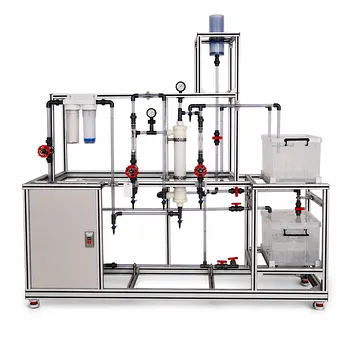
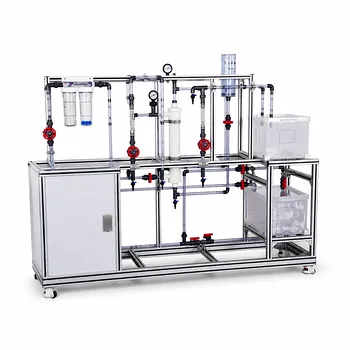
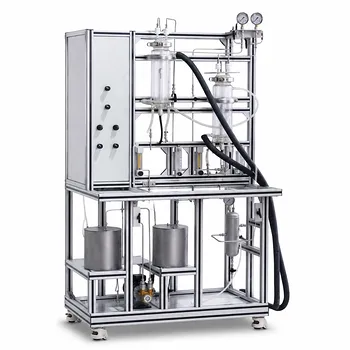
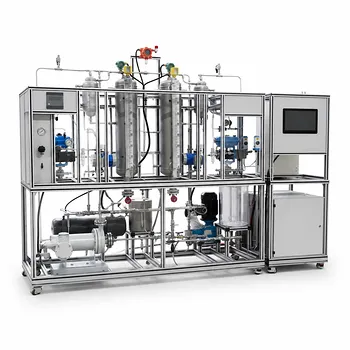
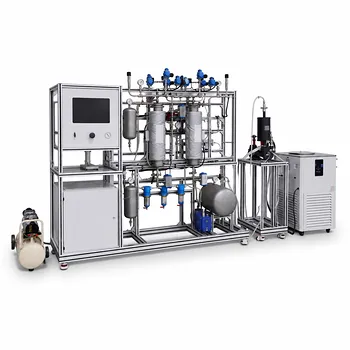
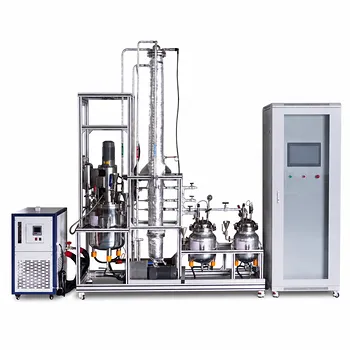
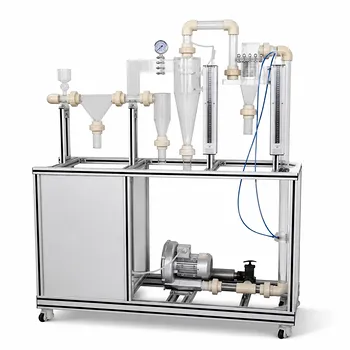
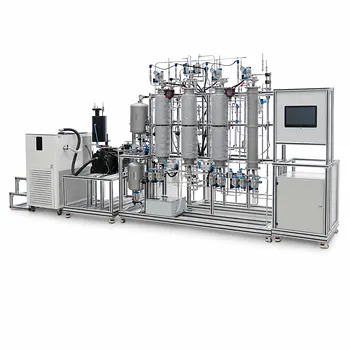
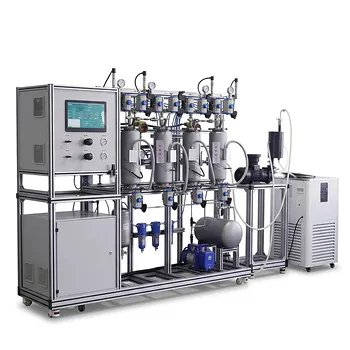
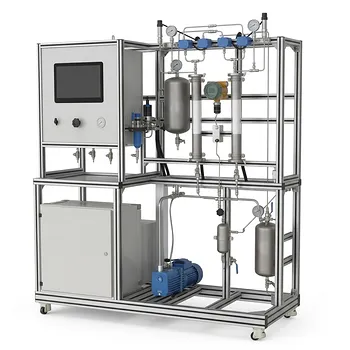
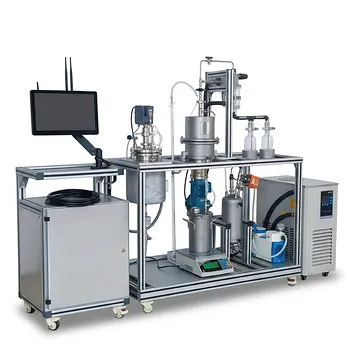
While biological membranes power life with active, self-regulating pumps, membrane separation pilot plants immediately reveal why industrial processes demand something different. These miniaturized systems demonstrate that synthetic membranes trade biological complexity for passive, pressure-driven selectivity and unmatched chemical and mechanical resilience. By subjecting engineered barriers to real process streams under controlled conditions, pilot plants make the advantages of synthetic membranes concrete: repeatable fractionation, stability in harsh cleaning agents, low-energy ambient operation, and the ability to tailor pore architecture for specific molecules—all while showing where biological membranes would simply fail.
Membrane pilot plants act as a decision laboratory. They prove that synthetic membranes’ core industrial value is not in mimicking biology’s active transport, but in offering a rugged, scalable, passive barrier that separates by size or affinity, operates without thermal phase changes, and withstands conditions that would destroy a living cell membrane.
How Pilot Plants Reveal the Core Properties of Synthetic Membranes
A pilot-scale system isn’t just a larger benchtop setup—it’s a controlled yet realistic environment where material properties translate directly into performance data. For synthetic membranes, this means illuminating three critical attributes that define their industrial role.
Passive Transport: A Predictable, Engineered Barrier
Synthetic membranes rely on pressure or concentration gradients to drive permeation, never on metabolic energy. In a pilot plant, you set a transmembrane pressure and watch the flux.
No ATP-driven pumps are involved. This passivity is not a weakness; it’s a design feature. It makes separation rates directly proportional to applied driving force, enabling simple, linear scale-up. Students and researchers can graph flux versus pressure and immediately see the lack of saturation kinetics that complicate biological systems.
Pilot runs isolate the effect of pore size. By swapping membranes fabricated through phase inversion or electrospinning, operators link a specific cutoff to the rejection of model solutes. This teaches a fundamental lesson: synthetic membranes achieve selectivity through static physical/chemical barriers, not dynamic gate proteins.
Superior Chemical and Mechanical Stability Under Process Conditions
Biological membranes denature at extremes of pH, oxidizer exposure, or temperature. A pilot plant intentionally subjects synthetic membranes to aggressive clean-in-place cycles—concentrated sodium hydroxide, hypochlorite, steam—and then resumes operation with the same baseline flux.
This durability is a direct competitive advantage. Over weeks of continuous run in a pharmaceutical or wastewater simulation, the membrane’s polymer matrix (PES, PVDF, ceramic) shows no enzymatic degradation. Pilot data logs confirm unchanged rejection rates even after hundreds of hours, while a lipid bilayer would collapse within minutes under such chemical attack.
Mechanical integrity under pressure cycles is equally telling. Synthetic membranes handle repeated backwashing and vibration without tearing, a resilience biological structures cannot offer outside a protective cellular environment.
Pore Structure and Composition as a Tunable Selective Barrier
With synthetic membranes, the barrier is an engineering variable, not a fixed biological inheritance. Pilot plants showcase this tunability directly.
Through phase inversion or sintering, membranes are fabricated with precisely controlled pore size distributions. In a bioseparation pilot, researchers test an ultrafiltration membrane with a 10 kDa cutoff for enzyme concentration and compare it to a nanofiltration membrane for demineralization. The data demonstrate how the same base polymer, with a different pore architecture, switches the application from fractionation to purification.
Surface chemistry adds another dimension. Coating or blending can create an affinityally selective barrier. Pilot plants validate that a charged membrane rejects multivalent ions while passing monovalents, a static chemical mimicry of ion channels but without the fragility.
Industrial Advantages Demonstrated Through Pilot-Scale Operation
Moving beyond intrinsic properties, pilot plants reveal how synthetic membranes outperform biological membranes and traditional separation methods in the metrics that drive a process engineer’s decision.
Low-Energy, Ambient-Temperature Processing
The most impactful insight from a pilot plant is that no phase change is required. Unlike distillation, which boils and recondenses, synthetic membrane processes operate at the feed’s liquid state, usually at room temperature.
This eliminates the latent heat of vaporization. For a desalination pilot, the energy draw is orders of magnitude below thermal methods. Comparing a biological membrane would be moot: living cells cannot desalinate large volumes, but the pilot plant shows students that even if they could, the energy for active transport would be prohibitive. Synthetic membranes’ passive operation translates directly to cost-effectiveness and a smaller carbon footprint.
Heat-sensitive bioproducts remain intact. In a biotech pilot, an antibody fractionation stream never exceeds 30°C, preserving activity. Biological membranes, while also operating at ambient temperature, cannot be scaled up or sterilized without damage. The synthetic version offers the same thermal gentleness with industrial scalability.
High Removal Capacity and Operational Flexibility
A single pilot skid often demonstrates multi-stage cascades for concentration and diafiltration. The removal capacity—percent of target molecule recovered or contaminant rejected—is remarkably consistent.
Operational flexibility is starkly visible. With synthetic membranes, you can switch from a microfiltration to an ultrafiltration module in minutes, altering the separation goal without rebuilding the plant. Biological membranes, in contrast, are purpose-built by an organism and cannot be repurposed on a production floor.
Pilot runs also highlight how membrane plants integrate continuous processing. Feed-and-bleed or counter-current configurations run 24/7, a norm for synthetic membranes but impossible with living membranes that require nutrition, oxygen, and waste removal.
Direct Comparison to Traditional Methods (Filtration, Extraction)
Placing a membrane pilot next to a traditional filtration or extraction unit clarifies the fundamental difference. Traditional filtration stops at particle size (microns); membranes separate molecules by size or affinity.
The membrane pilot does what extraction cannot without solvents. It isolates a solute from a liquid phase without generating a secondary waste solvent stream. This sustainability benefit is quantifiable in the pilot plant’s mass balance and purity tables. It also outperforms ion exchange by operating continuously without regeneration chemicals, a stark contrast that pilot data makes undeniable.
Understanding the Trade-offs: What Synthetic Membranes Cannot Do
Objectivity requires acknowledging where biological membranes remain superior, and where synthetic membranes introduce their own operational burdens. Pilot plants are as useful for revealing these limitations as they are the strengths.
The Absence of Active Transport and Self-Regulation
A synthetic membrane cannot concentrate a molecule against its concentration gradient without applying an external pressure that overcomes osmotic pressure. Biological membranes use protein pumps and ATP to stockpile minerals inside a cell even when the external concentration is lower.
This limit appears clearly in a pilot plant’s concentration run. As the retentate becomes more concentrated, the osmotic pressure counteracts the applied driving force, and flux drops. The system never reaches the extraordinarily high concentration factors that active transport could theoretically achieve—if it were scalable, which it is not. The pilot plant teaches that you accept a thermodynamic ceiling in exchange for robustness and throughput.
Fouling and Long-Term Performance
Despite outstanding chemical stability, synthetic membranes accumulate a fouling layer that no biological self-cleaning mechanism removes. Pilot plants must incorporate backpulsing, chemical washes, and sometimes enzyme-based cleaners.
The flux decline curve is a standard pilot deliverable. It illustrates that synthetic membranes demand proactive maintenance and consumable cleaning chemicals—an operating expense that biological membranes, in their native context, avoid through metabolic turnover and membrane fluidity. Pilot studies of different pretreatment strategies directly address this weakness, and the data guide industrial mitigation strategies.
Making the Right Choice for Your Goal
Pilot plant tests transform the synthetic-versus-biological membrane question into a clear, data-driven decision. Which combination of properties matters for your process?
- If your primary focus is high-throughput, scalable purification with harsh cleaning needs: Choose synthetic membranes for their chemical/mechanical stability and passive operation. Pilot plants will confirm the specific pore size and chemistry.
- If your primary focus is ultra-gentle, active transport that concentrates without high pressure: Recognize that biological membranes are not industrially deployable. Instead, use pilot plants to optimize synthetic membranes with a highly selective skin layer and consider coupling with a downstream polishing step.
- If your primary focus is education and demonstrating first-principles transport: Run a pilot side-by-side with a biological membrane model. Let the immediate contrast in cleaning tolerance, scalability, and energy source illuminate why industry invests in phase inversion rather than lipid bilayers.
- If your primary focus is sustainable, low-energy processing of heat-sensitive streams: The pilot plant’s ambient-temperature operation and absence of phase change make synthetic membranes the unambiguous choice.
Synthetic membranes do not need to copy biology to excel. A pilot plant demonstrates that when you need a rugged, tunable, and energy-sipping barrier, the engineered polymer wins the day.
Summary Table:
| Feature | Synthetic Membranes (Pilot Scale) | Biological Membranes (Living Cells) |
|---|---|---|
| Transport Mechanism | Passive (pressure-driven, predictable flux) | Active (ATP-driven pumps, self-regulating) |
| Stability & Durability | High (withstands harsh CIP, pH, and temp extremes) | Low (denatures easily outside cellular environment) |
| Tunability | High (engineered pore size & surface chemistry) | Low (fixed biological inheritance) |
| Scalability & Operation | Continuous 24/7 industrial scaling | Limited to micro-scale metabolic processes |
| Fouling & Recovery | Requires physical/chemical cleaning cycles | Natural self-cleaning via cellular turnover |
Bring Real-World Membrane Separation to Your Lab
To effectively teach or validate these advanced separation principles, hands-on experience with industrial-grade systems is essential. LABPARK provides state-of-the-art Educational and Vocational Unit Operations Pilot Plants in chemical engineering, bioprocess & biotech, and environmental & water treatment.
Specially designed for universities, research institutes, and enterprises, our rugged pilot systems enable researchers and students to analyze flux, test cleaning protocols, and optimize real process streams under controlled conditions.
Ready to elevate your engineering curriculum or research capabilities? Contact LABPARK today to discuss your custom pilot plant needs!
Related Products
- Multifunctional Membrane Separation Educational Pilot Plant with Ultrafiltration, Nanofiltration, Reverse Osmosis
- Ultrafiltration Membrane Separation Educational Pilot Plant
- Multi-Functional Membrane Separation Educational Pilot Plant for Unit Operations Lab
- Hollow Fiber Ultrafiltration Membrane Separation Educational Pilot Plant
- Photocatalytic Membrane Separation and Degradation Unit Operations Pilot Plant
People Also Ask
- Pervaporation vs. Vapor Permeation: Handling Suspended Solids in Membrane Pilot Plants
- How do PEI, PVDF, and PSU membranes compare in pilot plants? Find the best fit.
- What are the trade-offs of polymer vs inorganic membranes in teaching pilot plants? Key laboratory comparison.
- How can operators optimize operating conditions and cleaning protocols in membrane separation pilot plants to mitigate fouling?
- What are the advantages of membrane separation in pilot plants? Efficient Organic Vapor Recovery