The blunt answer: a two-dimensional pseudohomogeneous model is preferred because it explicitly resolves the radial temperature and concentration gradients that dominate reactor behavior under high thermal loads—something a one-dimensional model simply cannot do. In fixed-bed catalytic reactor pilot plants where reactions release or absorb large amounts of heat, ignoring these spatial variations leads to inaccurate predictions of hot spots, temperature excursions, and even safety risks. A two-dimensional pseudohomogeneous framework captures the true radial profile using effective transport coefficients, making it the standard for rigorous academic research, safe operation, and reliable scale‑up.
The core advantage is spatial resolution: radial temperature differences are not confined to a thin wall layer but extend throughout the catalyst bed. A 1D model lumps these resistances into a single average and can miss dangerous peaks. A 2D pseudohomogeneous model directly includes radial heat and mass transfer, giving engineers and students the fidelity needed to predict hot spots, prevent catalyst deactivation, and validate experimental data.
The Limits of a One‑Dimensional View
How 1D Models Lump Reality
A one‑dimensional pseudohomogeneous model assumes that temperature and concentration are uniform across any given cross‑section. It condenses all radial transport resistances into a single, radially-averaged heat transfer coefficient. While this simplification keeps calculations light and is perfectly adequate for mild endothermic reactions or narrow tubes, it becomes misleading under more demanding conditions.
The Danger of Missing Hot Spots
When a highly exothermic reaction takes place, the temperature near the tube center can be dramatically higher than at the cooled wall. A 1D model will only show a radially averaged temperature, concealing these hot spots. The result can be an underprediction of the peak temperature by tens of degrees—enough to cause catalyst sintering, runaway, or invalid kinetic data. In a pilot plant, losing this accuracy undermines both safety and the entire purpose of the experiment.
Why Radial Gradients Demand a Second Dimension
Heat Transfer Throughout the Bed Cross‑Section
In wall‑cooled fixed‑bed reactors, heat generated by the reaction must travel laterally through the entire packed bed to reach the cooling surface. This means heat transfer resistance is not localized at the wall; it’s a distributed phenomenon across the radius. A two‑dimensional model explicitly accounts for radial heat conduction through the bed (via an effective radial thermal conductivity) and the transfer at the wall (via a wall heat transfer coefficient), recreating the actual temperature field.
Capturing the True Temperature Profile
With a 2D framework, you can calculate temperature and concentration at every radial position. You see the steep gradients near the wall and the plateau in the center. This directly informs where the hottest spot will be and how severe it is. For academic unit‑operations labs, seeing these profiles helps students connect transport theory to real reactor behavior. For researchers, it means the rate constants extracted from pilot data are not contaminated by misinterpreted temperature effects.
The Pseudohomogeneous Assumption in 2D
What “Pseudohomogeneous” Really Means
Pseudohomogeneous models assume the fluid and solid catalyst are at the same local temperature and concentration (T_gas = T_solid, C_gas = C_solid). They still resolve spatial variations inside the reactor, but they do not model separate phases. In a 2D pseudohomogeneous description, the catalyst bed is treated as a continuous medium with effective transport properties. This strikes a powerful balance: it captures the dominant radial gradients without the complexity of tracking phase‑by‑phase heat and mass transfer.
When You Still Need a Heterogeneous Model
For extremely fast reactions or when internal diffusion is limiting, the pseudohomogeneous simplification may no longer be safe. Large differences can arise between the bulk fluid and the catalyst surface, especially in the solid phase’s contribution to radial heat flux (which can account for ~25% of the total). In such cases, a 2D heterogeneous model becomes necessary. For many pilot‑plant oxidation or dehydrogenation studies, however, the 2D pseudohomogeneous model is the sweet spot—providing essential spatial detail without overwhelming complexity.
Applying the Model in a Pilot Plant Context
Ensuring Safe Operation
In a teaching or research pilot plant, safety is non‑negotiable. A 2D pseudohomogeneous simulation lets you predict where the temperature peak will develop and whether it will exceed catalyst or material limits. You can then adjust feed rates, coolant temperature, or tube diameter before running a potentially destructive experiment. This proactive safety approach is a core reason the model is preferred in educational and vocational unit‑operations settings.
Generating Reliable Scale‑Up Data
Pilot plants exist to gather kinetic and transport data that can be scaled to industrial reactors. If your model ignores radial gradients, the extracted kinetic parameters may be “apparent” rather than intrinsic, and the heat management strategy will be flawed. A 2D pseudohomogeneous model ensures that the temperature used in rate calculations is the one actually seen by the catalyst, producing data that scales predictably.
Understanding the Trade‑offs
Every modeling choice involves compromises. The two‑dimensional pseudohomogeneous model demands more computational effort, accurate effective properties, and careful validation than a 1D approach.
- Increased computational cost: Solving the coupled partial differential equations in both axial and radial directions requires robust numerical methods, though modern tools have made this manageable.
- Uncertain effective parameters: The model relies on empirically determined values like the effective radial thermal conductivity and the wall heat transfer coefficient. These can vary with flow rate, particle size, and bed packing, introducing uncertainty.
- Overkill for mild conditions: If the maximum radial temperature difference is small (e.g., under 30 °C) or the tube diameter is tiny, the added fidelity of 2D adds little value. Under such mild conditions, a 1D model with a well‑chosen heat transfer coefficient can be sufficient and much faster.
- The Mears criterion as a decision aid: A practical filter is the Mears criterion. If the group value evaluated at the predicted hot spot exceeds 0.4, the radially‑averaged reaction rate deviates from the wall‑temperature rate by more than 5%, and switching to a 2D pseudohomogeneous model is necessary.
Making the Right Choice for Your Pilot Reactor Simulation
Your selection should be driven by the thermal severity of the reaction and the information you need from the pilot plant.
- If your primary focus is safe operation under highly exothermic or endothermic conditions: Adopt the two‑dimensional pseudohomogeneous model. It’s the only way to see the full radial temperature profile and prevent hot spots that can damage catalysts or cause a runaway.
- If your primary focus is quick screening of mild reactions or narrow tubes: A one‑dimensional model can be perfectly adequate and will give you results faster with fewer parameters to tune.
- If your primary focus is extracting intrinsic kinetics for scale‑up: Start with a 2D pseudohomogeneous model to eliminate radial temperature bias from your rate equations, and escalate to a heterogeneous model only if internal or interfacial gradients prove significant.
- If you’re teaching reactor engineering principles: The 2D pseudohomogeneous model is an unparalleled tool to demonstrate how heat and mass transfer interplay—students can literally see why a lumped approach fails when radial gradients are large.
In the end, the extra dimension is not an academic luxury—it’s the lens that reveals the true thermal landscape of your pilot reactor, enabling decisions that are both safe and scientifically sound.
Summary Table:
| Feature | 1D Pseudohomogeneous Model | 2D Pseudohomogeneous Model |
|---|---|---|
| Spatial Resolution | Axial only (radially averaged) | Both axial and radial profiles |
| Hot Spot Detection | Misses localized temperature peaks | Accurately identifies peak temperatures |
| Computational Complexity | Low; fast simulation times | Moderate; requires solving PDEs |
| Ideal Application | Mild thermal reactions & narrow tubes | Highly exothermic/endothermic reactions |
Bring Your Chemical Engineering Lab to Life with LABPARK
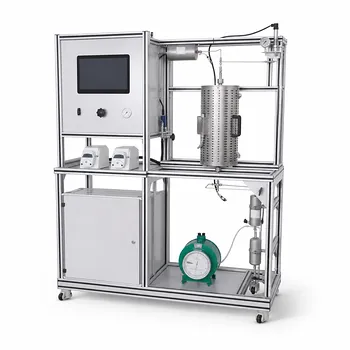
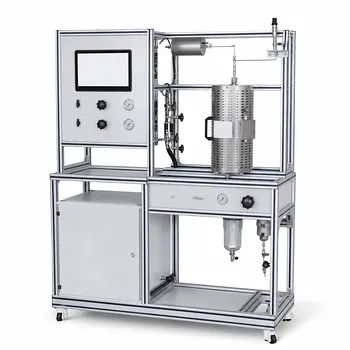
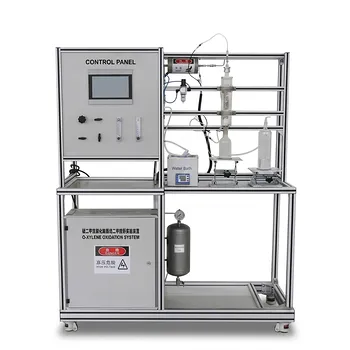
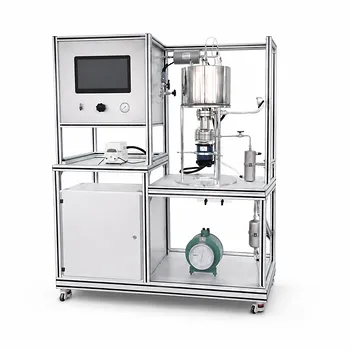
At LABPARK, we provide state-of-the-art Educational and Vocational Unit Operations Pilot Plants across chemical engineering, bioprocess & biotech, and environmental & water treatment. Tailored for universities, research institutes, and enterprises, our systems offer the physical precision and high-fidelity data needed to validate your advanced transport models and prevent reactor runaways.
Ready to elevate your research and teaching capabilities? Contact LABPARK today to find the perfect pilot plant solution for your facility!
Related Products
- Fixed Bed Gas Solid Catalytic Reaction Educational Pilot Plant
- Fixed-Bed Chemical Reaction and Gas Dust Tar Removal Unit Operations Pilot Plant
- Multi Functional Catalytic Reaction and Reactor Evaluation Educational Unit Operations Pilot Plant
- Ethylbenzene Dehydrogenation Educational Unit Operations Pilot Plant
- Educational Unit Operations Pilot Plant for Intraparticle Diffusion Effective Factor Measurement
People Also Ask
- How do reactor pilot plants safely study gas-solid reactions? Master kinetics with thermal & flow control.
- How does the Mears criterion evaluate transport resistance? Key Guide to Intrinsic Kinetics
- Fluidized vs. Fixed Bed Reactors: Comparing Heat & Complexity in Pilot Plants
- Why is a multibed configuration necessary for exothermic reactions? Optimize your pilot plant trajectory.
- How is the friction factor determined for fixed-bed pilot plants? Select the best pressure drop correlation.