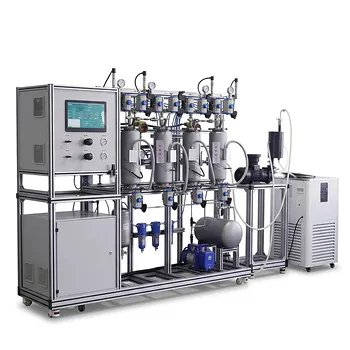
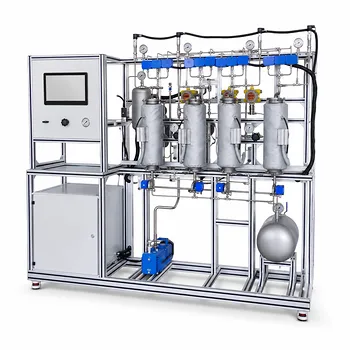
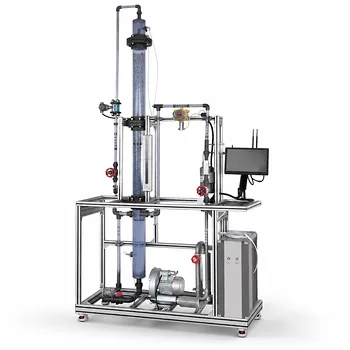
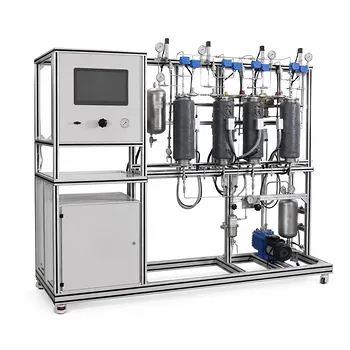
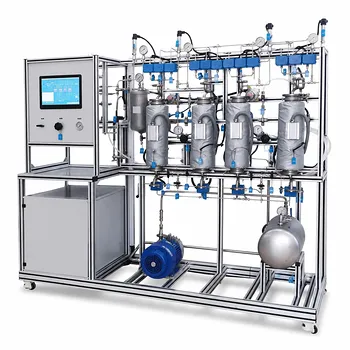
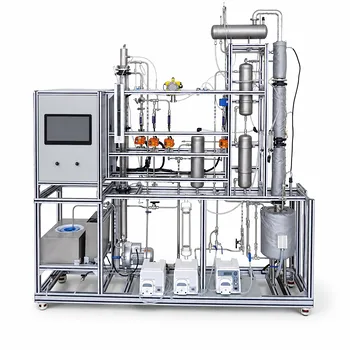
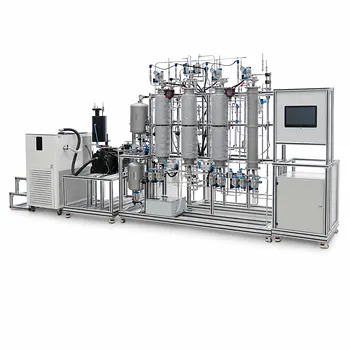
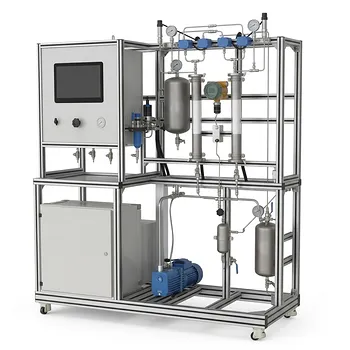
Regeneration is the single biggest operational differentiator between physical and chemical absorption pilot plants. In a physical absorption process, regeneration is typically achieved by simply reducing the system pressure (depressurization) to release dissolved gas from the solvent. In a chemical absorption process, regeneration demands a significant input of thermal energy (heating) to reverse the exothermic chemical reactions that bond the solute to the solvent. This fundamental distinction shapes the entire pilot plant's design, control strategy, energy profile, and safety envelope.
The key operational difference is that physical absorption relies on a pressure-driven regeneration loop (low energy, low temperature), while chemical absorption requires a temperature-driven regeneration loop (high energy, precise thermal control). Choosing the wrong regeneration method for your solvent chemistry leads to incomplete solute stripping, rapid solvent degradation, and a complete loss of process efficiency.
How Regeneration Works in Each Process
Understanding the difference begins with the nature of the solute-solvent interaction. Physical absorption is a pure dissolution event; chemical absorption involves a chemical reaction that must be undone.
Physical Absorption Works Through Henry’s Law Solubility
In physical absorption, the gas dissolves into the liquid phase without any chemical transformation. The equilibrium is governed by Henry’s Law: the partial pressure of the solute above the liquid is directly proportional to its concentration in solution.
Solubility is highly dependent on temperature and pressure. As you drop the system pressure, the equilibrium shifts, and the dissolved gas comes out of solution. This means regeneration is a pressure swing—no external heat source is required beyond maintaining a stable operating temperature.
Chemical Absorption Forms a New Chemical Species
Chemical absorption routes the solute through a reaction with an active solvent component (e.g., an amine or alkaline solution). This reaction consumes the free solute in the liquid film, drastically reducing the equilibrium partial pressure and enhancing the overall mass transfer rate.
To reverse the process, you must supply enough energy to break those chemical bonds. That energy comes almost exclusively from thermal input in a heated stripper column, raising the solvent temperature well above the boiling point of the absorbed gas.
Operational Levers: Pressure vs. Temperature
For a pilot plant operator, the control philosophy splits cleanly along these two regeneration methods.
Physical Absorption: Depressurization and Flash Regeneration
For a physical solvent like water, methanol, or Selexol, the regeneration sequence looks like this:
- The rich solvent leaving the absorber bottom is fed to a flash tank or low-pressure separator.
- Pressure is reduced from typical absorption levels (often 2–5 MPa) to near-atmospheric or vacuum conditions.
- The dissolved gas flashes out, often with minimal temperature change.
The pilot plant must be fitted with pressure control valves, flash vessels, and sometimes a vacuum system. Temperature control is secondary; the primary adjustment is the pressure drop and the residence time in the flash zone. Because no reaction heat is involved, the energy demand is almost entirely for pumping and pressure maintenance.
Chemical Absorption: Thermal Stripping and Reboiler Duty
Chemical solvent regeneration operates through a heated stripper column downstream of the absorber:
- Rich solvent is preheated and fed to the top of a stripper.
- A reboiler at the bottom provides the necessary thermal energy (typically steam or hot oil) to raise the solvent to its regeneration temperature—often above 105°C for amines.
- The chemical bonds break, releasing the solute gas overhead.
The operator must manage precise temperature ramps, reboiler steam flow, and stripper pressure. Overheating causes solvent degradation and corrosion; underheating leaves residual solute, crippling the lean solvent’s absorption capacity. This loop demands continuous monitoring of temperature profiles, solvent concentration, and corrosion indicators.
Key Equipment and Safety Distinctions
These operational differences cascade into the equipment and hazard profile of the pilot plant.
For Physical Absorption: Robust Pressure Vessels, Minimal Thermal Systems
A physical absorption rig requires high-pressure rated equipment (pressure vessels, pumps, and piping), often with refrigeration for cryogenic solvents like methanol. The regeneration section is dominated by flash drums and pressure let-down valves. Thermal insulation is less critical, and there is no need for a reboiler or high-temperature stripper.
For Chemical Absorption: Corrosion-Resistant Materials and High-Temperature Hardware
The regeneration section of a chemical absorption pilot plant demands high-temperature stripper columns, reboilers, and heat exchangers built from corrosion-resistant alloys (e.g., stainless steel or duplex steels). The presence of hot, corrosive amine solutions introduces a serious corrosion risk. Temperature sensors, pH monitors, and corrosion coupons become indispensable. Safety measures must account for the potential release of toxic or flammable gases at elevated temperatures.
Understanding the Trade-offs
Every decision in pilot plant design is a compromise. Here's what you lose and gain with each regeneration strategy.
Energy Consumption and Operating Costs
Chemical absorption’s thermal regeneration is energy-intensive—up to 2–4 GJ per tonne of CO₂ captured in commercial amine systems. For an educational or research pilot plant, this means higher utility bills and more complex thermal management. Physical absorption, with its pressure-swing regeneration, has a dramatically lower thermal energy footprint, though it may consume significant electrical power for compression or refrigeration.
Solvent Stability and Degradation
Thermal regeneration accelerates solvent degradation through side reactions, particularly with amines forming heat-stable salts. Operators must monitor solvent quality and top-up lost inventory. Physical solvents are far more stable under their operating temperature and pressure windows, giving them a longer effective life in a teaching pilot plant.
Operational Simplicity and Control
A pressure-swing regeneration loop is conceptually simpler: you open a valve, pressure drops, gas flashes. Fewer control loops, no reboiler tuning, and less chance of runaway reactions. A thermal stripper, however, is an advanced control challenge—operators must balance heat input, reflux ratios, and stripper pressure. For student labs, this complexity can be a valuable teaching tool or a source of constant frustration.
Pressure and Temperature Safety Envelopes
Physical absorption pilots often operate at high pressures (2–5 MPa), demanding rigorous pressure safety systems. Chemical absorption pilots operate at lower absorber pressures (often near atmospheric), but regeneration occurs at elevated temperatures where hot solvent leaks or oxygen ingress can cause serious hazards. The primary hazard shifts from high-pressure gas release to high-temperature chemical exposure and corrosion.
Making the Right Choice for Your Pilot Plant Goals
Your selection of a regeneration method must align with your experimental or training objectives, available utilities, and safety culture.
-
If your primary focus is demonstrating fundamental principles of solubility with minimal complexity: Choose a physical absorption pilot plant that uses a pressure-swing regeneration loop. It offers clear, visual gas absorption-desorption cycles governed by Henry’s Law, with low thermal risk.
-
If your primary focus is teaching industrial carbon capture or acid gas removal processes: Choose a chemical absorption pilot plant with a heated stripper. It forces students to handle reaction-enhanced mass transfer, solvent degradation, corrosion monitoring, and energy optimization—the exact challenges of real-world amine units.
-
If your primary focus is minimizing utility cost and maximizing uptime in a shared lab environment: A physical system’s low energy demand and stable solvent chemistry reduce operational overhead. You can run more cycles per day without waiting for slow temperature swings.
-
If your primary focus is quantifying reaction-enhanced mass transfer and solvent kinetics: A chemical absorption plant with precise temperature control and liquid-phase sampling ports is essential. It lets you measure enhancement factors and calculate activation energies that a pure physical system cannot provide.
Ultimately, the way you regenerate the solvent defines not just the energy bill, but the depth of learning and the range of industrial scenarios your pilot plant can faithfully replicate. Choose the method that turns your operational constraints into a curriculum, not a compromise.
Summary Table:
| Feature | Physical Absorption Regeneration | Chemical Absorption Regeneration |
|---|---|---|
| Mechanism | Pressure drop (Henry's Law solubility) | Thermal energy (reversing chemical bonds) |
| Primary Control | Pressure swing / Flash vessel regulation | Temperature ramp / Reboiler steam duty |
| Energy Demand | Low (mainly electrical for pumping) | High (thermal heat: 2–4 GJ/tonne CO₂ captured) |
| Key Equipment | Flash drums, pressure let-down valves | Stripper columns, reboilers, heat exchangers |
| Main Hazard | High-pressure gas release | High-temperature chemical leaks and corrosion |
Bring Industrial-Scale Learning to Your Laboratory with LABPARK
To master gas absorption and solvent regeneration processes, students and researchers need hands-on access to realistic equipment. LABPARK designs and manufactures high-quality Educational and Vocational Unit Operations Pilot Plants in chemical engineering, bioprocess & biotech, and environmental & water treatment.
Whether you are a university, research institute, or enterprise, we provide robust systems tailored to your curriculum and research goals, enabling deep insights into energy consumption, system thermodynamics, and process control.
Ready to elevate your engineering department? Contact LABPARK today to discuss your pilot plant requirements!
Related Products
- Dual-Mode Gas Absorption and Desorption Unit Operations Training Pilot Plant
- Multi-Component Gas Pressure Swing Adsorption Pilot Plant for Unit Operations Education
- Carbon Dioxide Adsorption and Capture Educational Unit Operations Pilot Plant
- Packed Bed Absorption Educational Unit Operations Pilot Plant
- Absorption and Desorption Educational Unit Operations Pilot Plant
People Also Ask
- How do two-film & penetration theories apply to gas absorption pilot plant teaching? Key pedagogical insights.
- How is the direction and driving force of mass transfer determined in a gas absorption unit operations pilot plant?
- How does partial pressure behavior influence gas absorption pilot plants? Master Mass Transfer
- Why does increasing flow fail to enhance absorption in fast chemical reactions? Pilot Plant Insights
- What are the limitations of Henry's Law in gas absorption pilot plants? Avoid critical lab errors.