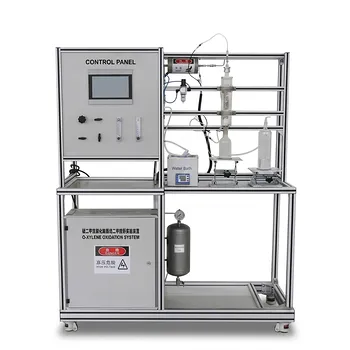
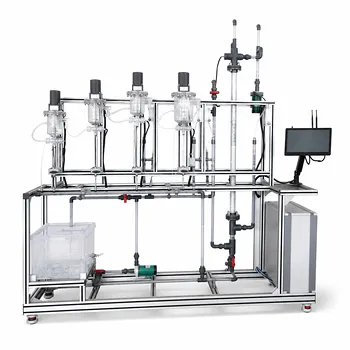
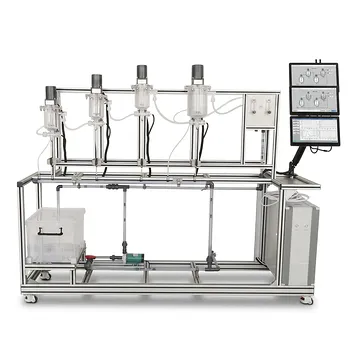
The design of a pilot plant for hydrogen halide synthesis is not a single blueprint; it’s a spectrum dictated by elemental violence. Required safety and control features must scale with the halogen’s innate reactivity: fluorine demands remote, cryogenic, and explosion-proof isolation, chlorine mandates photochemical control and leak-tight dark zones, bromine requires precision heating and vapor containment, and iodine needs high-temperature catalytic beds and advanced materials. Across all, the plant must integrate automatic emergency shutdown, scrubbed effluent handling, and hydrogen-safe construction to manage the extreme corrosivity of the products and the broad flammability of hydrogen.
The core challenge is matching control philosophy to the halogen’s character—from explosive runaway to gentle equilibrium—while building a universal containment backbone that withstands both hydrogen embrittlement and acid attack. Ignoring these trends leads to catastrophic failure, not just poor data.
Understanding the Reactivity Hierarchy: Why One Size Fails
The synthesis of HX via direct union of elements is a perfect demonstration of thermodynamic favorability meeting kinetic reality. The differences between the halogens are stark and non-negotiable. Your pilot plant must treat each as a distinct chemical personality.
The Fluorine Extreme: Remote and Detached Operation
Fluorine reacts with hydrogen explosively, even in the dark at cryogenic temperatures. The reaction has essentially zero activation energy. This means no thermal input is needed—and any accidental mixing is a detonation.
Control here means prevention, not modulation. A fluorine-handling module must be physically isolated, often with a blast-proof barricade and remote actuation. Gas feeds need coaxial, cooled injection nozzles to pre-mix at the point of reaction in a controlled, diluted stream.
Unprocessed fluorine cannot be allowed to accumulate. Continuous flow microreactors are preferred over batch, as they minimize hold-up. The entire reactant delivery line must pass through an automatic, fast-acting shutdown valve that is triggered by any pressure spike or flow anomaly, usually within milliseconds.
The Chlorine Challenge: Photochemistry and Dark Zones
Chlorine’s reactivity sits at a unique tipping point: dormant in the dark but violently explosive under UV or direct sunlight. Your pilot plant must, therefore, become an optical control device. This goes far beyond simply turning off the lights.
The reactor vessel must be completely light-tight, typically constructed from opaque borosilicate glass or metal, with a controlled UV light source for initiation. This allows you to dictate the reaction’s onset precisely. Photochromic sight glasses or embedded UV sensors are critical to ensure no stray light initiates an uncontrolled reaction.
Actinic control—the ability to start, stop, and throttle the reaction by modulating light intensity—becomes your primary process variable. Paired with an immediate quench or nitrogen purge, you must be able to instantly extinguish the radical chain mechanism in the event of a runaway.
Bromine and Iodine: Precision Heat and Catalytic Surfaces
Bromine requires sustained thermal energy, and iodine needs both high temperature and a catalyst, such as spongy platinum, to achieve a practical rate. This makes them more forgiving but introduces a different set of design imperatives.
Precision heating zones are non-negotiable. For bromine, you must homogeneously heat the reactant gases just before they mix without creating hotspots that could trigger decomposition or localized runaway. For iodine, a separate catalytic bed chamber with its own temperature control loop is essential to manage the endothermic activation on the platinum surface.
The catalyst itself presents a control variable. The bed’s activity degrades over time, so built-in bypass loops for online regeneration or replacement become a safety feature, preventing operators from resorting to dangerous, uncontrolled temperature hikes to compensate for lost catalytic performance.
Building the Universal Containment Backbone
No matter the halogen, the products are highly corrosive, water-soluble acids, and the fuel is hydrogen. This convergence of hazards defines the material and safety infrastructure that must underpin everything.
Material Selection: Fighting Acids and Embrittlement
Standard carbon steel is catastrophically unsuitable. At the elevated temperatures required for bromine and iodine, hydrogen attacks carbon in the steel, causing decarbonization, methane formation, and structural failure. You must use chromium-molybdenum (Cr-Mo) alloy steels for all heated hydrogen-wetted parts.
The other relentless enemy is the hydrogen halide product. Hydrofluoric acid (HF) will devour glass and most metals, demanding passivated Inconel, Monel, or dense PTFE lining. Hydrochloric acid (HCl) is similarly aggressive, requiring Hastelloy or borosilicate glass with shielded gaskets. Your material map must be component-specific: a Hastelloy reactor body, PTFE-lined pipes, and borosilicate glass for non-pressurized photochemical zones.
The Hydrogen Safety Triad: Leak, Pressure, and Purge
Hydrogen’s explosion limit in air is terrifyingly broad (4% to 74%). A comprehensive safety layer addresses this directly. Every compartment where hydrogen flows must have a dedicated hydrogen leakage detector interlocked with the main gas supply.
Pressure relief is your mechanical defense. Rupture disks and spring-loaded relief valves sized for a worst-case detonation or thermal runaway must be installed directly on the reactor and all isolated sections. Their outlets must feed into a safe vent system, never into an enclosed space.
An automatic nitrogen purging system is your emergency stop. On any emergency signal—leak detected, high pressure, power failure—the plant must flood all reactant lines and the reactor itself with inert nitrogen, extinguishing the reaction and rendering the atmosphere non-flammable within seconds.
Effluent Scrubbing: Neutralize Before Release
Hydrogen halides are water-soluble but form highly toxic, fuming acids. The back-end of the pilot plant is a safety-critical subsystem. Integrated scrubbers, typically using a packed column with a circulating caustic (NaOH) solution, must be directly connected to the reactor vent and emergency relief lines.
A knock-out drum before the scrubber prevents liquid slugs from damaging the packing. The scrubbing liquor’s pH and level must be continuously monitored, with automatic dosing to ensure complete neutralization before any inert gases are vented through the final exhaust.
Understanding the Trade-offs: Complexity, Cost, and Scientific Value
Designing for the most reactive halogen—fluorine—creates the safest general platform, but it’s a trade-off. A universal fluorine-capable plant is an order of magnitude more expensive and complex than a dedicated iodine-only unit.
Over-specification can kill operational flexibility. A plant built entirely with remote manipulators and blast-proof barriers for fluorine is slow, expensive, and cumbersome for a bromine experiment where hands-on adjustment is safe and scientifically beneficial. You must resist the urge to blindly choose the highest protection level; instead, design modular safety zones where protection scales with the local hazard.
A common pitfall is underestimating the crossover risks, such as trace halogen contamination in shared vent or purge lines. A puff of residual chlorine in a line later used for a fluorine experiment can initiate an unforeseen, violent reaction. Dedicated or fully purgeable individual modules are not a luxury; they are a core design principle that prevents chemical incompatibility.
Making the Right Choice for Your Pilot Plant
The final integration of these features depends entirely on your primary goal. Map your safety investment to your research mission.
- If your primary focus is fundamental kinetics with highly reactive halogens (F₂, Cl₂): Prioritize remote operation, explosion-proof enclosures, automatic nitrogen purging, and a light-tight, UV-modulated reactor zone. Accept the higher cost for absolute containment.
- If your primary focus is catalyst development for iodine or bromine reactions: Invest heavily in precision multi-zone heating, catalytic bed monitoring, and Cr-Mo alloy steel construction to handle sustained high temperatures and hydrogen attack. Full remote operation may be unnecessary.
- If your primary focus is educational demonstration across the entire series: Build a modular, skid-based plant with dedicated, color-coded modules for each halogen, complete with independent scrubbers and interlocked safety systems that prevent operating more than one module at a time.
The safest pilot plant isn’t the one with the most features; it’s the one where every feature is a direct, logical consequence of the halogen’s fundamental chemical character. Design from that principle outward, and you will have a research tool that is both profoundly safe and brilliantly insightful.
Summary Table:
| Halogen | Reactivity Characteristic | Key Safety & Control Requirements | Material Recommendations |
|---|---|---|---|
| Fluorine (F₂) | Explosive even in dark/cold | Remote operation, cryogenic cooling, fast-acting shutdown | Inconel, Monel, PTFE lining |
| Chlorine (Cl₂) | Photochemically explosive | Light-tight reactor, UV control/sensors, nitrogen purge | Hastelloy, Borosilicate glass |
| Bromine (Br₂) | Requires thermal activation | Precision heating zones, vapor containment | Cr-Mo alloy steels, Hastelloy |
| Iodine (I₂) | Endothermic, catalytic | High-temp catalytic bed monitoring, bypass loops | Cr-Mo alloy steels |
Optimize Your Process Engineering Lab with LABPARK
LABPARK provides state-of-the-art Educational and Vocational Unit Operations Pilot Plants in chemical engineering, bioprocess & biotech, and environmental & water treatment for universities, research institutes, and enterprises.
Ensure maximum safety and precision in your catalytic reactor research—contact our technical experts today to customize your pilot plant setup!
Related Products
- Fixed Bed Gas Solid Catalytic Reaction Educational Pilot Plant
- Micro-Scale Gas-Solid Catalytic Reaction Educational Pilot Plant
- Internal Circulation Gradient Free Catalytic Reaction Educational Pilot Plant
- Fluidized Bed Gas Solid Catalytic Reaction Educational Pilot Plant
- Multi Functional Catalytic Reaction and Reactor Evaluation Educational Unit Operations Pilot Plant
People Also Ask
- How do reactor pilot plants safely study gas-solid reactions? Master kinetics with thermal & flow control.
- How does the Mears criterion evaluate transport resistance? Key Guide to Intrinsic Kinetics
- Why is a multibed configuration necessary for exothermic reactions? Optimize your pilot plant trajectory.
- Fluidized vs. Fixed Bed Reactors: Comparing Heat & Complexity in Pilot Plants
- How is the friction factor determined for fixed-bed pilot plants? Select the best pressure drop correlation.