Knowledge Chemical Engineering Education What safety design features are essential in chemical engineering pilot plants? 4 Key Pillars for Safe Oxidation
Author avatar

Tech Team · LABPARK

Updated 1 month ago

What safety design features are essential in chemical engineering pilot plants? 4 Key Pillars for Safe Oxidation


Safely managing inherently explosive gas mixtures is the foundational imperative.
Essential safety design features for pilot plants performing selective catalytic oxidation include four integrated systems: explosion mitigation devices (rupture disks, safety valves, blast vents), precise concentration control (mass flow controllers and feed analyzers to stay outside flammable limits), interlock and alarm networks (online gas detectors, emergency shutdown valves, automatic nitrogen purging), and high-fidelity thermal management (multi‑point temperature monitoring with automated cooling control). These features work together to prevent thermal runaway, confine overpressure events, and eliminate the chance of a flammable atmosphere developing.

The deep challenge of selective oxidation pilot plants is that the exothermic, irreversible reaction must run continuously at the edge of the explosive envelope to achieve productivity. Safety is therefore not a single add‑on but a tightly choreographed control of concentration, heat, and pressure that must fail into a safe state in milliseconds.

The Four Non‑Negotiable Safety Pillars

Explosion Mitigation Systems

Reactor bodies must be protected with explosion‑proof rupture disks and spring‑loaded safety valves sized for the worst‑case thermal runaway. These are often supplemented by blast vents that direct a pressure wave safely away from operators.
For closed systems, flame arrestors are integrated into vent lines to stop a flame front from propagating back into the process. A permanently available automatic nitrogen purge – triggered by a pressure spike or a gas detection alarm – is the final layer of defense.

Precise Concentration Control

Selective oxidations operate on a razor’s edge: the feed must be both reactive and safe. Mass flow controllers meter the hydrocarbon and oxygen streams with an accuracy of ±0.5% of full scale, keeping the oxygen‑to‑fuel ratio strictly outside the explosion limits.
As illustrated by ethene oxide synthesis, the plant may use a large excess of fuel (20–40 mol% ethene) and limit oxygen to roughly 7 mol%. Often an inert diluent with high heat capacity – such as methane or nitrogen – is blended into the feed, which simultaneously dampens flammability and helps absorb reaction heat.

Interlocks, Alarms, and Fail‑Safe Automation

Online gas chromatographs or process analyzers continuously monitor reactant concentrations. If any reading enters the warned zone, automated emergency shutdown (ESD) valves slam shut, and the system immediately begins an inert purge.
All safety logic follows the fail‑safe principle: if a sensor loses communication, a relay de‑energizes, or power fails, the plant autonomously moves to a pre‑determined safe state – heaters off, feed valves closed, purge open. This guarantees that a component failure cannot lock the plant in a hazardous condition.

High‑Fidelity Thermal Management

Multi‑point thermocouples placed along the catalyst bed detect the earliest sign of a hotspot. These signals feed a multi‑zone cooling jacket controller that ramps up coolant flow instantly, suppressing localized temperature excursions before they cascade into runaway.
Where possible, single‑pass conversion is deliberately kept low (7–15%) to limit the heat release per pass. Combined with a high‑velocity coolant loop, this design maintains near‑isothermal conditions and prevents the complete‑combustion side reactions that can spike temperatures and destroy the catalyst.

Understanding the Trade‑offs

Every safety measure introduces operational constraints that demand careful, context‑specific balancing.

  • Inert diluent volume – high dilution enhances safety and heat removal but increases downstream separation costs and reduces throughput.
  • Overly conservative alarm setpoints – tightening trip limits reduces risk but can cause frequent false shutdowns that frustrate operators and mask real incidents.
  • Complex interlock logic – elaborate ESD chains improve safety integrity but require rigorous testing and maintenance; a missed sensor fault can disable an entire campaign.
  • Material compatibility – while selective oxidations may not be inherently corrosive, any acid by‑products (e.g., acrylic acid) demand stainless steel 316 or higher‑grade wetted parts; choosing carbon steel for cost reasons creates a long‑term corrosion risk.
  • Educational environments – student‑operated plants need safety systems that are transparent enough for learning (e.g., a glass section to observe flooding) yet still guarantee automatic, fail‑safe protection during inevitable operational errors.

Making the Right Choice for Your Goal

The optimum safety architecture depends on the pilot plant’s primary mission.

  • If your primary focus is fundamental catalysis research: Invest first in the thermal stability pillar – high‑resolution bed temperature mapping and ultra‑responsive coolant control – while preserving flexible reactor packing zones to test different catalysts. Keep the concentration control system simple but robust, using ample inert dilution to broaden the safe operating window.
  • If your primary focus is educational training and unit operations demonstration: Prioritize visual transparency (e.g., glass reactor sections where possible) and redundant fail‑safe interlocks that forgive student mistakes. Use a straightforward, over‑designed pressure relief system and pre‑programmed emergency shutdown sequences that students can trace on a P&ID.
  • If your primary focus is process scale‑up for a new oxidation route: Implement advanced online analyzers and a fully integrated ESD network that can be validated against a formal hazard analysis. Combine this with a detailed feed‑concentration envelope study to right‑size explosion protection and avoid carrying unnecessary inert load into future production designs.

A pilot plant that masters these four safety pillars becomes not just a protective shell but a precision instrument that allows you to safely explore the very edge of reaction performance.

Summary Table:

Safety Pillar Key Components Safety Objective
Explosion Mitigation Rupture disks, safety valves, flame arrestors, automatic $N_2$ purge Confine overpressure events and prevent flame propagation back into the process.
Concentration Control Mass flow controllers, inert diluents, feed analyzers Keep reactant and oxygen ratios strictly outside explosive limits.
Fail-Safe Automation Online gas analyzers, ESD valves, fail-safe logic Trigger autonomous shutdown to a pre-determined safe state during component failures.
Thermal Management Multi-point thermocouples, multi-zone cooling jackets Prevent localized hotspots and runaway exothermic reactions in the catalyst bed.

Build a Safer, High-Performance Pilot Plant with LABPARK

Ensuring absolute safety in high-risk chemical processes like selective catalytic oxidation requires precision-engineered equipment. LABPARK provides state-of-the-art Educational and Vocational Unit Operations Pilot Plants in chemical engineering, bioprocess & biotech, and environmental & water treatment. Specifically tailored for universities, research institutes, and enterprises, our systems integrate advanced fail-safe automation, high-fidelity thermal control, and robust explosion mitigation to guarantee a safe learning and research environment.

Ready to upgrade your laboratory or training facility with compliant, high-performance pilot plants? Contact LABPARK today to discuss your specific requirements with our engineering team!

Related Products

People Also Ask

Related Products

Photocatalytic Membrane Separation and Degradation Unit Operations Pilot Plant

Photocatalytic Membrane Separation and Degradation Unit Operations Pilot Plant

Bench-scale pilot plant integrating photocatalytic degradation with membrane separation for engineering education. Study advanced oxidation, microfiltration, and hybrid processes using industrial sensors. Features safety light-blocking curtain, low-noise compressor, and durable stainless-steel construction.

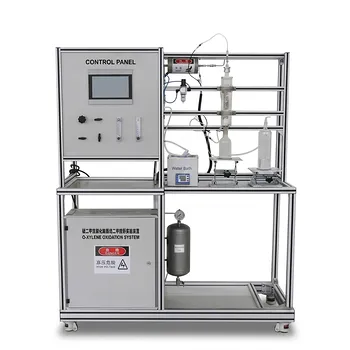
O-Xylene Oxidation to Phthalic Anhydride Educational Unit Operations Pilot Plant

O-Xylene Oxidation to Phthalic Anhydride Educational Unit Operations Pilot Plant

Explore our bench-scale educational pilot plant for o-xylene oxidation to phthalic anhydride, featuring a fixed-bed tubular reactor with visual observation, precise temperature control, and safety systems, ideal for chemical engineering hands-on training and industrial simulation, designed for university unit operations.

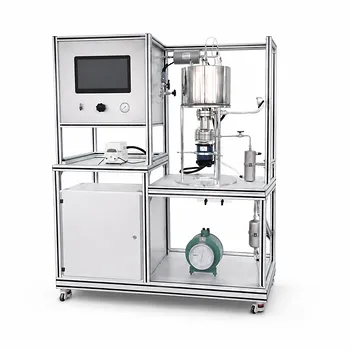
Multi Functional Catalytic Reaction and Reactor Evaluation Educational Unit Operations Pilot Plant

Multi Functional Catalytic Reaction and Reactor Evaluation Educational Unit Operations Pilot Plant

Bench-scale educational pilot plant for catalytic reaction and reactor evaluation, integrating fixed bed, fluidized bed, and stirred tank reactors. Students compare reactor designs, evaluate catalysts, and study reaction kinetics and hydrodynamics. Perfect for unit operations labs in chemical engineering curricula.

Methane Cracking Educational Unit Operations Pilot Plant

Methane Cracking Educational Unit Operations Pilot Plant

This bench-scale methane cracking educational pilot plant provides hands-on catalytic conversion training with a 1000°C furnace, seven mass flow controllers, and real-time automation for safe, curriculum-aligned experiments. Designed for university teaching of unit operations and reaction engineering.

Micro-Scale Gas-Solid Catalytic Reaction Educational Pilot Plant

Micro-Scale Gas-Solid Catalytic Reaction Educational Pilot Plant

Explore heterogeneous catalysis with this micro-scale gas-solid catalytic reaction educational pilot plant. Designed for university labs, it enables hands-on study of reaction kinetics and transport phenomena in a benchtop packed bed reactor with high-precision flow control and touchscreen automation.

Fixed-Bed Chemical Reaction and Gas Dust Tar Removal Unit Operations Pilot Plant

Fixed-Bed Chemical Reaction and Gas Dust Tar Removal Unit Operations Pilot Plant

Integrated educational pilot plant for studying catalytic gas-solid reactions and downstream gas purification. Features dual fixed-bed reactor, three-stage heating, and touchscreen control for hands-on engineering training. Ideal for chemical and environmental engineering curricula.

Methanol Synthesis and Catalyst Performance Evaluation Educational Unit Operations Pilot Plant

Methanol Synthesis and Catalyst Performance Evaluation Educational Unit Operations Pilot Plant

Bench-scale methanol synthesis and catalyst evaluation educational pilot plant for chemical engineering labs to study catalytic kinetics, high-pressure operations, process control, and unit operations under realistic conditions with industrial safety features, precision gas delivery, data acquisition, and intelligent monitoring.

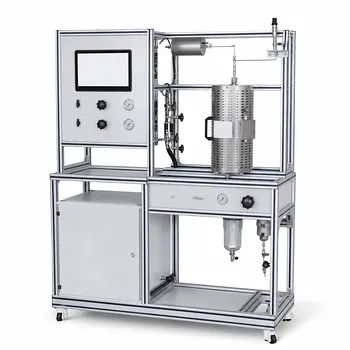
Fixed Bed Gas Solid Catalytic Reaction Educational Pilot Plant

Fixed Bed Gas Solid Catalytic Reaction Educational Pilot Plant

Fixed-bed gas-solid catalytic reaction unit operations pilot plant for chemical engineering education. Features split-furnace, mass flow controllers, PID control, safety interlocks. Ideal for heterogeneous catalysis, reactor dynamics, catalyst evaluation studies. Fully customizable configurations for university laboratories and academic research.

Fluidized Bed Gas Solid Catalytic Reaction Educational Pilot Plant

Fluidized Bed Gas Solid Catalytic Reaction Educational Pilot Plant

Our educational fluidized bed gas-solid catalytic reaction pilot plant is ideal for chemical engineering labs. Students study fluidization dynamics, catalyst evaluation, and process control hands-on. Features include a customizable reactor, touchscreen HMI, and safety interlocks for safe, curriculum-aligned experiments.

Internal Circulation Gradient Free Catalytic Reaction Educational Pilot Plant

Internal Circulation Gradient Free Catalytic Reaction Educational Pilot Plant

Internal circulation gradient free catalytic reaction educational pilot plant for chemical engineering unit operations. Provides isothermal gradient free operation and hands on study of heterogeneous catalysis kinetics and mass transfer with precise control. Ideal for academic labs.

Carbon Dioxide Hydrogen Methanol Synthesis Educational Unit Operations Pilot Plant

Carbon Dioxide Hydrogen Methanol Synthesis Educational Unit Operations Pilot Plant

Hands-on educational pilot plant for methanol synthesis from carbon dioxide and hydrogen. Enables practical study of high-pressure catalysis, unit operations, and process control. Features real-time data acquisition, safety systems, and customizable experiment modules for undergraduate and graduate chemical engineering laboratories.

Crude Benzene Hydrogenation Educational Unit Operations Pilot Plant

Crude Benzene Hydrogenation Educational Unit Operations Pilot Plant

Advanced pilot plant for higher education, enabling hands-on study of crude benzene hydrogenation and gas-liquid catalytic reactions. Triple-stage reactor system with precision flow and temperature control, AI-driven PID, remote monitoring, and comprehensive safety interlocks. Customizable for curriculum integration.

Carbon Dioxide Hydrogenation Methanol Synthesis Educational Unit Operations Pilot Plant

Carbon Dioxide Hydrogenation Methanol Synthesis Educational Unit Operations Pilot Plant

Pilot-scale educational system for carbon dioxide hydrogenation to methanol. Designed for unit operations teaching, it features a fixed-bed reactor, three-stage heating, dual mass flow controllers, and a 15.6-inch touchscreen with data acquisition. Perfect for chemical engineering and sustainable energy courses.

Bench Scale Carbon Dioxide Capture Educational Unit Operations Pilot Plant

Bench Scale Carbon Dioxide Capture Educational Unit Operations Pilot Plant

This bench-scale educational pilot plant simulates industrial CO₂ separation using a multi-tower adsorption system for hands-on engineering training. Students achieve ≥90% CO₂ purity while studying pressure swing adsorption, desorption kinetics, and process control in gas purification experiments.

Carbon Dioxide Absorption and Desorption Educational Pilot Plant for Carbon Capture Studies

Carbon Dioxide Absorption and Desorption Educational Pilot Plant for Carbon Capture Studies

Explore carbon dioxide absorption and desorption with this educational pilot plant. Transparent columns visualize mass transfer; electric heating simulates industrial solvent regeneration; touchscreen interface enables data monitoring. Ideal for chemical engineering, bridging theory and practice.

Multi-Functional Special Distillation Educational Pilot Plant

Multi-Functional Special Distillation Educational Pilot Plant

Versatile multi-functional special distillation pilot plant for chemical engineering education. Supports continuous, vacuum, azeotropic, reactive, extractive distillation. Transparent glass columns enable real-time visual observation of hydrodynamics and separation processes.

Educational Unit Operations Pilot Plant for Intraparticle Diffusion Effective Factor Measurement

Educational Unit Operations Pilot Plant for Intraparticle Diffusion Effective Factor Measurement

Designed for chemical engineering university labs, this pilot plant allows hands-on determination of catalyst particle intraparticle diffusion effective factors and gas-solid reaction kinetics using a fixed-bed tubular reactor with industrial touchscreen control, bridging theory and practical reactor design.

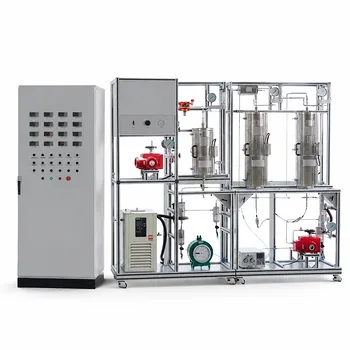
Multi-Reactor Educational Pilot Plant for Reaction Engineering Unit Operations

Multi-Reactor Educational Pilot Plant for Reaction Engineering Unit Operations

Integrated bench-scale educational pilot plant for chemical engineering teaching featuring fixed bed fluidized bed and stirred tank reactors with web-based digital twin controls and safety interlocks for hands-on unit operations and reaction engineering comparative studies in one compact system.

Residence Time Distribution and Reactor Flow Characteristics Determination Educational Pilot Plant

Residence Time Distribution and Reactor Flow Characteristics Determination Educational Pilot Plant

This versatile educational pilot plant is designed for comprehensive study of residence time distribution and reactor flow characteristics, featuring multiple CSTRs in series, a tubular reactor, variable recycle loop, and automated real-time data acquisition, perfect for hands-on chemical engineering education.

Continuous Batch Extractive Distillation Educational Pilot Plant

Continuous Batch Extractive Distillation Educational Pilot Plant

Versatile pilot plant for continuous, batch, and extractive distillation training. High-borosilicate glass column for visualizing hydraulics, 15.6-inch touchscreen with data logging, precise reflux ratio control 1-99, and durable corrosion-resistant frame. Ideal for chemical engineering education and process research.


Leave Your Message