The Stokes hypothesis simplifies gas-flow modeling by setting bulk viscosity to zero. It imposes the relationship ( \lambda = -\frac{2}{3}\mu ), where (\lambda) is the second viscosity coefficient and (\mu) is dynamic viscosity. In pilot-plant models for gas compression and expansion, this reduces the viscous-property data required by the compressible Navier–Stokes equations to the dynamic viscosity alone.
The hypothesis is mainly a constitutive simplification for viscous stresses, not a replacement for the thermodynamic analysis of compression or expansion. It is often adequate for low-density gases with rapid molecular relaxation, but it should be treated as an assumption that requires validation for real process gases and strongly non-equilibrium flows.
Why the Stokes Hypothesis Matters in Pilot-Plant Modeling
Reducing Required Fluid Properties
The compressible Navier–Stokes equations require a description of how viscous stresses respond to velocity gradients. In general, this involves both shear viscosity and bulk viscosity.
The Stokes hypothesis sets the bulk viscosity contribution to zero:
[ \mu' = \lambda + \frac{2}{3}\mu = 0 ]
Therefore:
[ \lambda = -\frac{2}{3}\mu ]
This means a laboratory pilot-plant model can often use measured or tabulated dynamic viscosity as its primary viscous transport property.
Simplifying the Stress Equations
Gas compression and expansion involve changes in volume, so the gas experiences dilatational motion in addition to shear. Bulk viscosity represents the additional resistance and energy dissipation associated with that volumetric deformation.
Under the Stokes assumption, the normal viscous stresses are expressed using the dynamic viscosity and velocity divergence without requiring an independently measured bulk-viscosity value.
Supporting Practical Pilot-Plant Calculations
Pilot plants are used to connect process simulations with physical equipment. Applying the hypothesis makes it easier to estimate pressure losses, velocity profiles, wall shear, and viscous dissipation in compressors, expanders, pipes, valves, and interstage heat exchangers.
This is especially useful in teaching and research environments where direct bulk-viscosity measurements are unavailable or are beyond the intended scope of the experiment.
How It Relates to Compression and Expansion
It Does Not Determine Compression Work by Itself
The work required to compress a gas is primarily determined by the pressure-volume path, gas properties, compressor efficiency, heat transfer, and operating conditions. The Stokes hypothesis does not define whether compression is isothermal, adiabatic, or polytropic.
Instead, it helps describe the viscous stress and dissipation terms that accompany the gas motion and may influence pressure and temperature distributions in detailed flow models.
It Helps Close the Momentum and Energy Equations
In a compressible-flow simulation, the hypothesis supplies a relationship needed to close the viscous constitutive equations. The resulting model can then be coupled with the continuity, momentum, energy, and equation-of-state relations.
For a multistage compressor pilot plant, this supports analysis of gas flow through successive stages, connecting predicted pressure and temperature fields with measured compressor performance.
It Supports Analysis of Interstage Equipment
Intercoolers reduce the temperature of compressed gas between stages, affecting the work required in later stages. A flow model using the Stokes hypothesis can help evaluate pressure drop and viscous effects through interstage heat exchangers and connecting pipework.
Measured pressure losses, heat duties, and stage efficiencies can then be compared with model predictions. This provides a practical bridge between process simulation and physical unit operations.
When the Assumption Is Reasonable
Low-Density, Near-Equilibrium Gases
The hypothesis is commonly reasonable for gases whose molecular energy modes relax rapidly toward equilibrium. For simple, low-density gases under ordinary flow conditions, bulk-viscosity dissipation may be small compared with shear-viscosity effects.
Monatomic gases are often favorable examples because they have fewer internal molecular energy modes capable of storing and slowly releasing energy.
Flows Without Strong Relaxation Effects
The assumption is more defensible when compression and expansion occur slowly enough for molecular internal energy modes to remain close to equilibrium. Many conventional pilot-plant calculations operate within this regime.
The validity still depends on the gas composition, pressure, temperature, frequency of deformation, and flow regime.
Preliminary Engineering Models
The Stokes hypothesis is particularly useful for preliminary design, educational experiments, and simulations where the dominant objective is understanding overall compression, expansion, or heat-exchanger behavior.
It provides a manageable model while retaining the principal effects of dynamic viscosity.
Understanding the Trade-offs
Bulk Viscosity May Be Significant
The hypothesis is not universally valid. Polyatomic gases can have rotational and vibrational energy modes that relax slowly, producing appreciable bulk viscosity and additional dissipation during rapid compression or expansion.
Gas mixtures containing complex molecules may therefore require measured, correlated, or experimentally validated bulk-viscosity data.
Rapid and Non-Equilibrium Flows Need More Care
Strong shocks, high-frequency pressure oscillations, acoustic waves, very rapid valve events, and other non-equilibrium flows can make the zero-bulk-viscosity assumption unreliable.
In such cases, ignoring bulk viscosity may lead to errors in predicted damping, temperature rise, shock structure, or pressure distribution.
Thermodynamic Pressure Is Not Always the Complete Stress Description
The hypothesis is associated with treating the isotropic normal stress consistently with thermodynamic pressure under the chosen constitutive model. However, this does not mean that pressure is unaffected by viscous or non-equilibrium phenomena in every real flow.
The distinction matters when interpreting detailed measurements from pilot equipment rather than only calculating bulk process quantities.
Process Measurements Still Matter
A simplified viscosity model does not eliminate the need to measure compressor power, suction and discharge conditions, interstage pressure drops, heat duty, and gas composition.
These measurements are essential for identifying mechanical losses, heat-transfer effects, leakage, non-ideal gas behavior, and deviations from the assumed compression path.
Making the Right Choice for Your Goal
Use the hypothesis as a modeling decision tied to the purpose and operating regime of the pilot plant.
- If your primary focus is overall compression work: Use the Stokes hypothesis to simplify viscous-flow modeling, but determine compression work from the measured or modeled thermodynamic path and compressor efficiency.
- If your primary focus is pressure drop and flow distribution: Use dynamic viscosity with the Stokes relation for initial momentum and energy calculations, then compare predicted losses with pilot-plant measurements.
- If your primary focus is rapid expansion, shocks, or acoustic behavior: Do not assume zero bulk viscosity without validation; investigate relaxation effects and obtain appropriate bulk-viscosity data.
- If your primary focus is multistage compression experiments: Combine the simplified flow model with measurements of intercooler heat duty, interstage pressure drop, and stage efficiency to assess the full process performance.
The Stokes hypothesis is most valuable as a transparent, practical approximation whose validity is checked against the gas, equipment, and operating conditions being studied.
Summary Table:
| Key aspect | Practical implication |
|---|---|
| Core assumption | Sets bulk viscosity to zero using lambda = -2/3 mu |
| Main benefit | Reduces required viscous-property data to dynamic viscosity |
| Supports | Modeling pressure loss, velocity profiles, wall shear, and viscous dissipation |
| Does not determine | Compression work or whether a process is isothermal, adiabatic, or polytropic |
| Usually suitable for | Low-density, near-equilibrium gases and preliminary engineering models |
| Requires validation for | Polyatomic gases, rapid valve events, shocks, acoustic flows, and non-equilibrium conditions |
| Recommended measurements | Compressor power, suction and discharge conditions, pressure drops, heat duty, and gas composition |
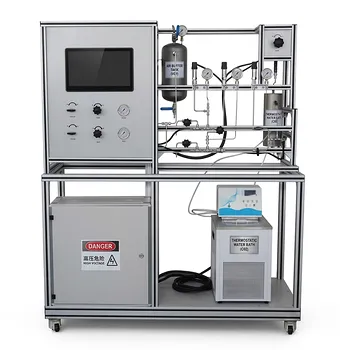
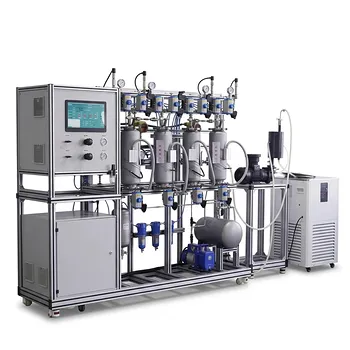
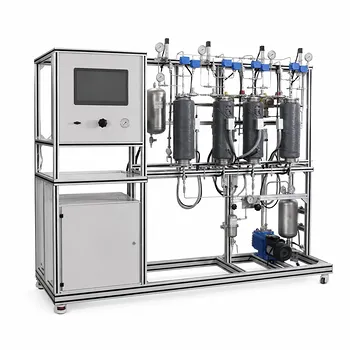
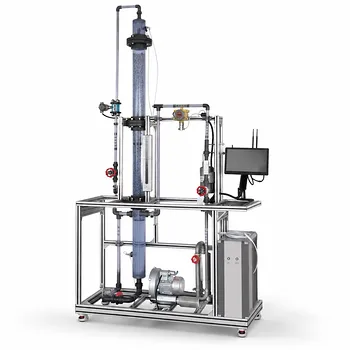
Develop reliable gas compression and expansion experiments with LABPARK Educational and Vocational Unit Operations Pilot Plants. Our chemical engineering pilot plants help universities, research institutes, and enterprises study compressor performance, interstage heat exchange, pressure losses, viscous effects, and process efficiency using practical, measurable equipment. Contact LABPARK today to discuss your gas-processing, bioprocess and biotech, or environmental and water-treatment training and research needs, and identify a pilot-plant solution matched to your gas, operating conditions, and learning or production objectives.
Related Products
- Throttling Effect Determination Educational Unit Operations Pilot Plant
- Multi-Component Gas Pressure Swing Adsorption Pilot Plant for Unit Operations Education
- Fixed-Bed Chemical Reaction and Gas Dust Tar Removal Unit Operations Pilot Plant
- Dual-Mode Gas Absorption and Desorption Unit Operations Training Pilot Plant
- Gas Phase Mixing and Residence Time Distribution Determination Educational Unit Operations Pilot Plant
People Also Ask
- How does kinetic theory explain ideal vs real gas energy differences? Key Pilot Plant Insights
- How are open and closed system boundaries defined when evaluating material balances across educational pilot plant equipment?
- How can selective solvent dissolution and physical property differentials improve pilot-plant recovery?
- How do educational pilot plants integrate conductivity measurement technologies to teach process control and solution analysis?
- How does nuclear yield inefficiency translate to chemical engineering education? Optimize kinetics with pilot plants.