The success of a DNA-based biosensing assay in a pilot plant environment hinges on the contaminant’s molecular architecture. At the most immediate level, the target molecule must possess at least two fused rings, a compact ring arrangement, and a specific degree of saturation and planarity. These three characteristics collectively dictate whether the molecule can effectively intercalate into DNA and displace a pre-loaded indicator dye, defining the assay’s limit of detection and selectivity.
While many environmental and biotech contaminants are aromatic, not all are built to trigger a DNA biosensor. The assay demands a molecular “key” that fits precisely into the DNA base-pair “lock” — and that key must be polycyclic, compact, and appropriately planar. Missing even one of these structural features can render the sensor blind, regardless of the contaminant’s concentration.
Why DNA Intercalation Drives the Assay’s Core Logic
The biosensor architecture described here relies on the competitive displacement of a fluorescent indicator dye already intercalated between DNA base pairs. When a target contaminant enters the system, it must physically wedge itself into the DNA helix and eject that dye. The strength of this interaction — and thus the sensor signal — is not merely a function of concentration; it is a direct consequence of the molecule’s shape, size, and electronic environment.
The Energetic Threshold of Intercalation
Intercalation is not a simple hydrophobic collapse. It requires a precise spatial fit between the contaminant’s π-electron system and the aromatic rings of the DNA bases. If the molecule cannot stack effectively against the base pairs, the binding energy remains below the threshold needed to displace the indicator. This is why structural nuance matters far more than generic hydrophobicity.
The Role of the Indicator Dye in Amplifying Structural Demands
The pre-bound dye acts as a gatekeeper. Weak intercalators cannot compete with a dye that already enjoys a stabilized position within the helix. Therefore, small structural flaws in the contaminant — a missing ring, a bent conformation — become magnified in the displacement assay, leading to poor sensitivity or complete non-response.
The Essential Triad: Fused Rings, Compactness, and Planarity
Three molecular descriptors form the non-negotiable checklist when evaluating a target analyte for this assay format.
The Two-Ring Minimum: Why Single-Benzene Molecules Fail
A single benzene ring, as found in aniline or nitrobenzene, lacks the necessary interaction surface area. The π-stacking energy generated by one isolated ring is simply too low to overcome the dye’s binding affinity. The result is a flat baseline — the sensor reports no signal, not because the molecule isn’t present, but because it cannot trigger the displacement mechanism. This sets a hard structural floor: target molecules must contain at least two fused rings.
Compactness: When Shape Trumps Size
Not all multi-ring systems are equal. A compact arrangement of rings, such as phenanthrene, provides a better fit within the DNA pocket than a linear arrangement like anthracene, even though both contain three fused rings. Compactness reduces the molecular footprint exposed to the surrounding aqueous environment, shielding the intercalated molecule from energetically unfavorable desolvation penalties. The practical outcome is a significantly lower limit of detection for compact isomers because more binding energy is channeled into DNA interaction.
Saturation and Planarity: The Bent vs. Flat Divide
The degree of saturation directly controls molecular conformation. A fully aromatic, planar molecule like naphthalene can slide deeply between base pairs with minimal steric hindrance. In contrast, its saturated counterpart, octahydronaphthalene, adopts a bent, non-planar geometry. This puckered shape increases the effective interaction volume, reduces hydrophobic overlap with the bases, and dramatically raises the limit of detection. Planarity is therefore a proxy for steric compatibility — a bent molecule must pay an energetic penalty to wedge into a flat intercalation site.
Understanding the Trade-offs and Blind Spots
While these structural rules provide powerful design guidance, they also define the assay’s inherent limitations. Ignoring them leads to false negatives and wasted development effort.
The Exclusion of Single-Ring and Highly Flexible Targets
The two-ring requirement automatically excludes an entire class of small aromatic pollutants. Analytes like phenol, toluene, or chlorinated benzenes will not register on this sensor platform. For pilot plants handling mixed waste streams, this means the biosensor cannot serve as a universal contaminant monitor; it must be deployed as part of a targeted detection suite for polycyclic aromatic hydrocarbons (PAHs) and related multiring species.
The Sensitivity Gap Between Planar and Non-Planar Analogs
Even within the acceptable two-ring category, the sensitivity can vary by orders of magnitude depending on saturation. A pilot plant monitoring both naphthalene and a hydrogenated byproduct like tetralin must calibrate separately for each, because the planar and partially saturated forms exhibit drastically different intercalation strengths. This structural sensitivity is a double-edged sword: it grants high specificity but complicates quantification in multi-component samples.
Compactness Can Overshadow Concentration
Extremely compact PAHs, like pyrene or benzo[a]pyrene, intercalate so aggressively that they may saturate the sensor at low concentrations, compressing the dynamic range. In a pilot plant where concentrations fluctuate, a sensor tuned for a moderately compact standard may become non-linear when a highly compact contaminant appears. Calibration curves must account for the worst-case compactness scenario in the expected analyte panel.
Making the Right Choice for Your Target Analyte
Whether you are screening process water, bioreactor effluent, or soil extracts, these structural filters will guide your sensor design.
- If your primary focus is detecting legacy PAHs (e.g., naphthalene, phenanthrene, pyrene): Prioritize sensor calibration with the most compact PAH expected, as it will set the lower limit of detection; then verify linearity with less compact analogs.
- If your primary focus is differentiating between parent PAHs and their partially hydrogenated derivatives: Design a multi-dye array, because a single displacement indicator cannot easily deconvolve the overlapping signals of planar and bent species.
- If your primary focus is screening for unknown fused-ring contaminants: Use the two-ring rule as a first-pass filter. Only peaks from molecules with ≥2 fused rings are likely to be sensor-active; single-ring peaks can be safely disregarded.
- If your primary focus is monitoring bioremediation where ring cleavage breaks fused systems: Recognize that the sensor signal will drop not only because concentration falls, but because the structural requirement is destroyed. Pair the biosensor with a total organic carbon monitor for a complete picture.
The molecular architecture of your contaminant is not just a chemical curiosity — it is the on/off switch for your biosensor. By screening targets for the mandatory fused-ring core, selecting for compactness, and calibrating for planarity, you transform a simple dye-displacement test into a reliable, pilot-plant-ready analytical tool.
Summary Table:
| Molecular Feature | Key Requirement | Impact on Biosensing Assay | Example Analytes |
|---|---|---|---|
| Fused Rings | Minimum of 2 fused rings | Generates enough energy to displace indicator dye | Naphthalene (Detects) vs. Benzene (Fails) |
| Compactness | Compact ring arrangement | Minimizes water exposure, lowering detection limits | Phenanthrene (Higher sensitivity) vs. Anthracene |
| Planarity | Flat geometry (unsaturation) | Minimizes steric hindrance, allowing deep DNA intercalation | Naphthalene (Planar) vs. Tetralin (Bent/Saturated) |
Optimize Your Biotech and Environmental Pilot Plants with LABPARK
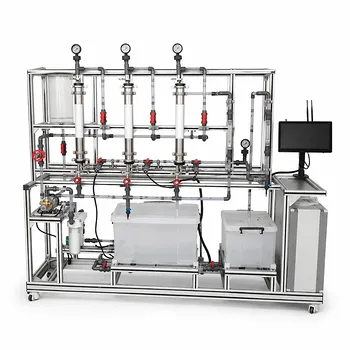
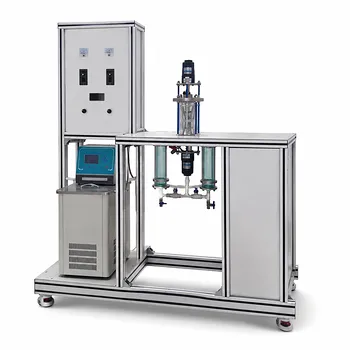
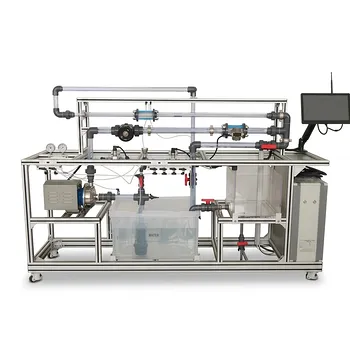
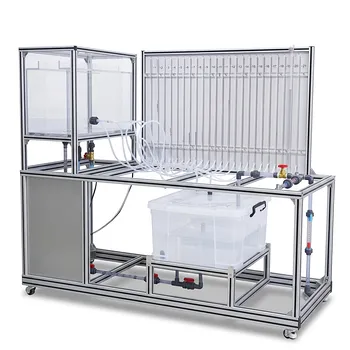
Are you looking to scale up biosensing assays or analyze complex environmental processes? LABPARK provides state-of-the-art Educational and Vocational Unit Operations Pilot Plants in chemical engineering, bioprocess & biotech, and environmental & water treatment. Designed specifically for universities, research institutes, and enterprises, our pilot plants ensure precise control, reliability, and real-world training capabilities.
Contact LABPARK today to find the perfect pilot plant solution for your facility!
Related Products
- Multifunctional Membrane Separation Educational Pilot Plant with Ultrafiltration, Nanofiltration, Reverse Osmosis
- Multi-Functional Membrane Separation Educational Pilot Plant for Unit Operations Lab
- Multi Functional Catalytic Reaction and Reactor Evaluation Educational Unit Operations Pilot Plant
- Hot Filtration Educational Unit Operations Pilot Plant Laboratory System
- Liquid-Liquid Mass Transfer Coefficient Determination Educational Pilot Plant
People Also Ask
- Pervaporation vs. Vapor Permeation: Handling Suspended Solids in Membrane Pilot Plants
- How do PEI, PVDF, and PSU membranes compare in pilot plants? Find the best fit.
- What are the trade-offs of polymer vs inorganic membranes in teaching pilot plants? Key laboratory comparison.
- How can operators optimize operating conditions and cleaning protocols in membrane separation pilot plants to mitigate fouling?
- What are the advantages of membrane separation in pilot plants? Efficient Organic Vapor Recovery