Maintaining a Raman analyzer in an automated pilot plant is surprisingly straightforward but demands unwavering attention to a few critical routines: regular optical window cleaning and a strict, multi-axis calibration schedule. These deliberate actions, layered with proactive hardware redundancy and intelligent software diagnostics, form a system that can run virtually uninterrupted for extended, unattended campaigns.
While Raman analyzers are inherently low-maintenance instruments, ensuring their reliability in a 24/7 pilot plant requires more than periodic check-ups. The critical difference between consistent performance and costly downtime lies in an integrated strategy—one that combines automated fault detection, redundant laser systems, and robust safety interlocks to eliminate every single point of failure that could halt your experiments.
The Non-Negotiable Calibration Triad
A Raman analyzer delivers actionable chemical insight only when its spectral data remains accurate over time. Three interdependent calibrations must be performed periodically to lock in that precision.
Wavelength Axis Calibration
This calibration aligns the spectrometer’s pixel-to-wavenumber mapping using a well-characterized emission source, such as a neon lamp or an atomic line standard. Even subtle mechanical shifts or temperature swings in a pilot plant can cause spectral peaks to drift.
Without it, a peak you trust to represent ethanol at one shift might silently creep to a different value. Regular wavelength axis calibration ensures every spectrum remains chemically interpretable and comparable to historical models.
Laser Wavelength Verification
The exact laser excitation wavelength anchors the entire Raman shift calculation. A drift here—common as diode lasers age or operate across varying ambient temperatures—corrupts the fundamental x-axis of your data.
By verifying the laser wavelength against a known standard, you eliminate a silent, systemic error that could degrade every process control decision. This step is critical before any quantitative analysis or model transfer.
Intensity Axis Response Normalization
Detector sensitivity changes with temperature, humidity, and component aging. In automated process control, this can masquerade as a false concentration trend or mask a genuine process upset.
Normalizing the intensity axis with a calibrated broadband source or a stable intensity reference corrects for these drifts. It ensures that a peak area truly reflects the chemical quantity in your process stream, not just fluctuations in instrument response.
Maintenance Workflows That Prevent Downtime
Beyond calibration, physical maintenance routines directly address the most common failure modes in a dusty, humid pilot plant environment.
Optical Window Cleaning: The First Line of Defense
The sampling probe’s optical window is the only physical interface between the laser, process fluid, and sensitive internal optics. Any fouling—from polymer buildup, salt precipitation, or particulate deposits—attenuates the signal and degrades quantitative accuracy.
Frequent visual inspection and non-invasive cleaning techniques, such as solvent flushes or gentle mechanical wiping (if the probe design allows), keep the window clear. A clean window translates directly to stable baseline signals and reproducible detection limits.
Fiber-Optic and Connection Integrity
In a hard-piped pilot plant, fiber-optic cables can be subject to vibration, kinking, or accidental disconnection. A routine check that all connectors are secure and that fibers show no signs of physical damage is a low-effort, high-impact defense against mysterious signal loss.
Many systems include built-in diagnostics that monitor fiber background levels, but a simple visual walk-down during a shift turnover prevents the most preventable causes of measurement failures.
Building Resilience with Automated Oversight
In automated environments, the analyzer cannot rely on a spectral expert standing by. Reliability must be engineered into the system itself.
Intelligent Software Self-Checks
Modern Raman instrument software continuously performs robust fault-detection routines in the background. These checks monitor laser power stability, spectrometer temperature, detector noise, and even the shape of dark scans.
When any parameter drifts outside a validated tolerance, the software can trigger a warning, suspend analysis, and instruct the operator on the precise corrective action—whether that means running a new calibration, cleaning the probe, or retraining the chemometric model.
The Case for a Backup Laser for Continuous Control
If the Raman analyzer serves as the linchpin sensor in a closed-loop control strategy, a single laser failure can bring the entire pilot plant to a halt. Integrating a system with an automatic backup laser that engages the instant the primary laser fails is not a luxury—it is an insurance policy for maximum uptime.
This redundancy ensures that critical process monitoring continues without interruption, avoiding the batch losses and unsafe conditions that can arise from a sudden loss of feedback control.
Integrating Safety Interlocks for Operational Continuity
While protection of personnel is the primary goal, thoughtful laser safety design also preserves analyzer reliability. Automatic safety interlocks that shut off the laser when enclosures are opened prevent accidental exposure, but they can also cause unexpected process interruptions if triggered by operator inattention or inadequate training.
Robust interlock systems combined with back-up enclosure designs (like beam-path covers that are rarely opened) and clear lock-out/tag-out protocols minimize spurious shutdowns. Comprehensive, regular laser safety training for all pilot plant personnel ensures the safety system protects both people and process continuity, never becoming a nuisance trip source.
Understanding the Trade-offs
Even the best maintenance routine involves difficult choices that can impact overall plant reliability.
The Hidden Cost of Neglecting Window Condition
It is tempting to push window cleaning intervals to align with scheduled maintenance turnarounds. However, a slowly fouling window can cause an unrecognized downward drift in concentration readings for weeks, triggering incorrect control actions that waste raw materials or produce off-spec product.
The trade-off is clear: more frequent inspection adds small labor cost, but prevents much larger financial losses from silent model failures.
The Calibration Frequency Debate
Calibrating too frequently consumes valuable pilot plant run time and ties up a skilled technician. Calibrating too infrequently risks an unnoticed calibration shift that could invalidate an entire experimental data set.
The optimal frequency is process-dependent. Often, the instrument’s own diagnostic logs will reveal the drift rates. Rely on that data, not a fixed calendar, to set verification intervals. For truly critical loops, run a quick wavelength check between batches or shifts using an automated validation protocol.
Making the Right Choice for Your Goal
Your specific operational constraints will dictate which of these routines you prioritize. Tailor your approach based on what matters most in your pilot plant.
- If your primary focus is maximum uptime for continuous campaigns: Then invest in a system with an automatic backup laser and prioritize optical window inspection with every shift turnover. Run automated self-check sequences daily to catch anomalies before they become failures.
- If your primary focus is maintaining the highest analytical accuracy for regulatory or data-integrity reasons: Then tighten the frequency of the full calibration triad—especially intensity axis normalization—and implement a strict log that correlates any model performance drop to a hardware check.
- If your primary focus is operating with limited on-site spectroscopy expertise: Then lean heavily on the instrument’s built-in self-check and fault-detection software. Configure it to guide operators through maintenance steps and pre-define clear alarm thresholds that trigger on-demand remote expert support.
Reliability is not an inherent trait of a Raman analyzer; it is the reward of designing a self-aware, proactively maintained measurement system.
Summary Table:
| Routine Type | Core Action | Key Benefit |
|---|---|---|
| Wavelength Axis Calibration | Align pixel-to-wavenumber mapping | Prevents peak drift from temp/mechanical shifts |
| Laser Wavelength Verification | Verify against known standard | Eliminates systemic error in Raman shift calculation |
| Intensity Axis Normalization | Correct detector sensitivity | Ensures accurate concentration trends over time |
| Optical Window Cleaning | Remove fouling from the probe | Prevents signal attenuation and false drift readings |
| Software Self-Checks | Automated background diagnostics | Detects laser and detector faults before failure |
Optimize Your Process Engineering with LABPARK
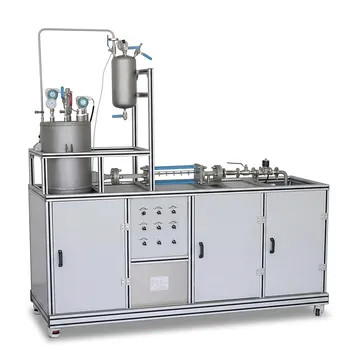
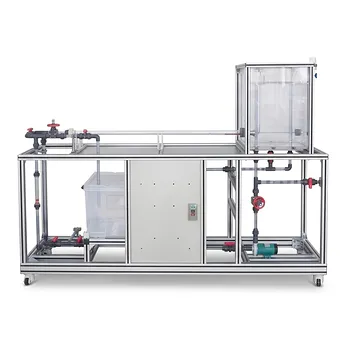
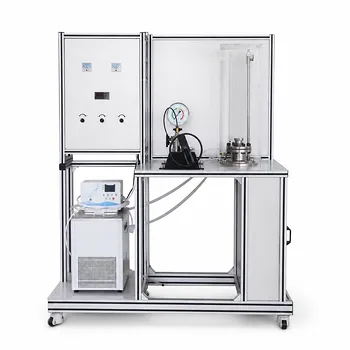
Ready to build a resilient, high-performance pilot plant? LABPARK provides state-of-the-art Educational and Vocational Unit Operations Pilot Plants in chemical engineering, bioprocess & biotech, and environmental & water treatment. Designed specifically for universities, research institutes, and enterprises, our pilot plants feature industry-grade automation and seamless instrumentation integration to ensure your research and training campaigns run uninterrupted.
Contact LABPARK today to discuss your custom pilot plant configuration!
Related Products
- Multi Functional Catalytic Reaction and Reactor Evaluation Educational Unit Operations Pilot Plant
- Tubular Reactor Flow Characteristics Determination Educational Unit Operations Pilot Plant
- Educational Unit Operations Pilot Plant for Intraparticle Diffusion Effective Factor Measurement
- Cavitation Phenomenon Demonstration and Analysis Educational Unit Operations Pilot Plant
- Multi-Functional Special Distillation Educational Pilot Plant
People Also Ask
- What reaction engineering principles are shown in a catalytic reactor pilot plant? SO2 Oxidation Guide
- How does feed gas flow rate affect catalytic RFR yields? Optimize Pilot Plant Performance
- Why is FTIR integration in catalytic pilot plants important? Real-Time Student Insights
- How to analyze active metal distribution & identify catalyst poisoning in pilot plants? Expert Diagnostic Guide
- How to study catalyst poisoning & regeneration? Master catalytic reaction life cycles.