Knowledge Chemical Engineering Education What is the difference between absorption and adsorption pilot plants? Key Mechanisms
Author avatar

Tech Team · LABPARK

Updated 3 weeks ago

What is the difference between absorption and adsorption pilot plants? Key Mechanisms


The core distinction lies in where the separation actually happens. Absorption pilot plants rely on bulk phase transfer—gas molecules dissolve directly into the liquid solvent’s volume. Adsorption pilot plants, by contrast, are a surface phenomenon where molecules adhere to a solid material’s outer and inner pore surfaces, without entering its bulk structure.

In educational labs, the separation mechanism is the critical starting point: absorption transfers components into the volume of a liquid, while adsorption concentrates them onto the surface of a solid. Grasping this fundamental difference helps students select the right unit operation—bulk scrubbing versus trace polishing—and correctly interpret pilot plant data.

Understanding the Two Separation Mechanisms

Absorption: Dissolving into the Volume

In an absorption pilot plant, a gas mixture contacts a liquid solvent inside a column. The target component (absorbate) physically dissolves into the liquid, distributing itself throughout the solvent’s bulk phase.

This is a mass transfer operation driven by concentration gradients. Molecules move from the gas phase, across the interface, and into the liquid’s interior—not just to the surface, but deep into the liquid body. Common educational examples include using water to scrub ammonia or CO₂ from an air stream in a packed column.

Adsorption: Sticking to the Surface

Adsorption stays entirely at the solid-fluid boundary. In a pilot plant, a fluid (liquid or gas) flows through a bed of porous solid adsorbent—such as activated carbon or zeolite. Target molecules (adsorbates) attach to the solid’s surface via physical or chemical forces, without penetrating the solid’s crystal lattice.

This surface specificity makes adsorption extraordinarily effective for removing trace contaminants. The adsorbent’s internal surface area—often hundreds of square meters per gram—provides immense capacity, but the mechanism is always interfacial, never a bulk dissolution.

From Mechanism to Practical Demonstration

Why Educational Labs Use Pilot Plants

Pilot-scale units let students move beyond textbook diagrams. With absorption columns, they observe bulk transfer performance under varying liquid-to-gas ratios and measure how concentration profiles evolve down the column. With adsorption beds, they follow breakthrough curves, learning how surface saturation progresses and when bed regeneration must occur.

These hands-on experiences cement the difference: an absorption tower’s performance depends on solvent flow and column packing, while an adsorption column’s efficiency hinges on specific surface area, pore structure, and surface chemistry.

Leveraging Thermodynamics to Teach Adsorption Nuances

Even within adsorption, the mechanism splits further. Students can analyze the mode of attachment by varying process temperature and measuring concentration changes. Physical adsorption, dominated by van der Waals forces, is reversible, multi-layer, and occurs with a low heat of adsorption. This makes it ideal for demonstrating regeneration cycles—temperature or pressure swing cycles—without breaking the adsorbent.

Chemical adsorption (chemisorption), however, forms strong, often irreversible bonds. It requires activation energy and shows high selectivity. In an educational pilot plant, students may notice that raising the bed temperature actually accelerates chemisorption, a direct contrast to physical adsorption’s exothermic equilibrium. By measuring these behaviors, they can calculate thermodynamic parameters like Gibbs free energy, enthalpy, and entropy changes—turning the pilot plant into a quantitative teaching tool.

Common Pitfalls and Trade-offs

When Absorption Underperforms

Absorption is less effective for very low contaminant concentrations. A bulk liquid can clean a gas stream efficiently, but if the target component is present in trace amounts, the required solvent volume becomes impractical, and equilibrium driving forces drop sharply. Students also learn that distillation-like solvent regeneration can be energy intensive, making absorption less attractive when the target isn’t easily concentrated.

The Limitations of Adsorption

Adsorption is constrained by surface area and saturation. Once surface sites are filled, the bed must be regenerated or replaced. In a pilot plant, a student may observe a sharp rise in outlet concentration—the breakthrough point—and realize that scaling up requires careful cycle management. Additionally, not all solids are universal adsorbents; selectivity is highly specific, and strong chemisorption can make irreversible binding a waste of valuable adsorbent and adsorbate.

Making the Right Choice for Your Goal

Your selection depends entirely on what the separation needs to accomplish—and what phase constraints exist.

  • If your primary focus is bulk removal of a high-concentration gas: Absorption pilot plants are the natural match. They handle large throughputs by dissolving the component into a liquid solvent, and mass transfer is limited by column hydrodynamics, not solid surface exhaustion.
  • If your primary focus is trace contaminant polishing or catalytic reactions: Adsorption pilot plants excel. The immense internal surface area captures molecules even at extremely low concentrations, and the ability to study physical versus chemical bonding provides deeper thermodynamic insight.
  • If your educational goal is to compare regeneration and sustainability: Use both. Absorption teaches distillation-like solvent recovery, while adsorption illustrates pressure and temperature swing cycles—two fundamentally different approaches to returning the separating agent to a useful state.

By grounding every observation in the fundamental mechanism—bulk phase transfer versus surface adhesion—students can move from rote operation to genuine understanding, selecting and optimizing the right pilot plant for any separation challenge.

Summary Table:

Feature Absorption Pilot Plants Adsorption Pilot Plants
Mechanism Bulk phase transfer (dissolves into liquid volume) Surface phenomenon (adheres to solid surface)
Driving Force Concentration gradients & solubility Physical (van der Waals) or chemical bonding
Best Suited For Bulk removal of high-concentration gas Trace contaminant polishing & catalytic reactions
Regeneration Solvent recovery (distillation-like) Temperature/pressure swing cycles (desorption)

Bring Advanced Unit Operations into Your Lab with LABPARK

LABPARK provides state-of-the-art Educational and Vocational Unit Operations Pilot Plants in chemical engineering, bioprocess & biotech, and environmental & water treatment. Designed specifically for universities, research institutes, and enterprises, our custom systems offer students and researchers hands-on experience to master complex separation processes like absorption and adsorption.

Ready to enhance your curriculum and training programs? Contact LABPARK today to discuss your laboratory pilot plant needs!

Related Products

People Also Ask

Related Products

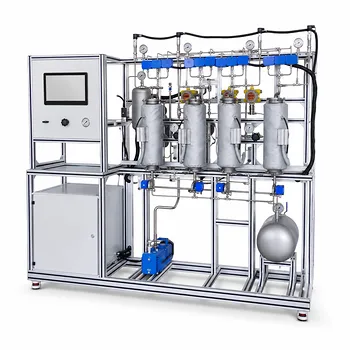
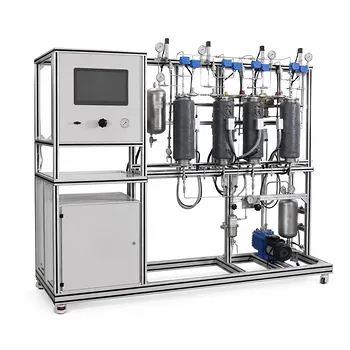
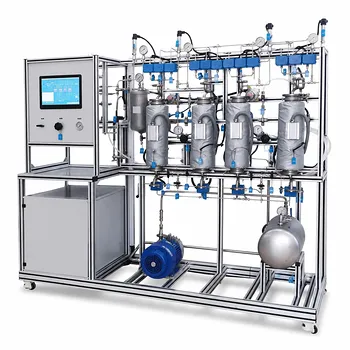
Carbon Dioxide Adsorption and Capture Educational Unit Operations Pilot Plant

Carbon Dioxide Adsorption and Capture Educational Unit Operations Pilot Plant

Advanced laboratory pilot plant for teaching carbon dioxide adsorption and capture unit operations. Features four-tower adsorption system with 400°C heating jackets, high-precision CO2 and O2 sensors, and 15.6-inch touchscreen with wireless data logging. Ideal for chemical engineering education.

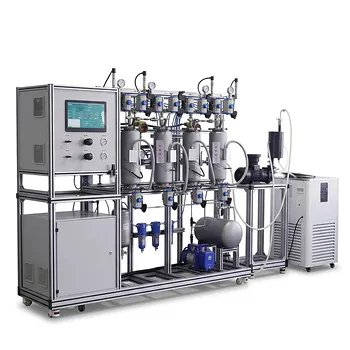
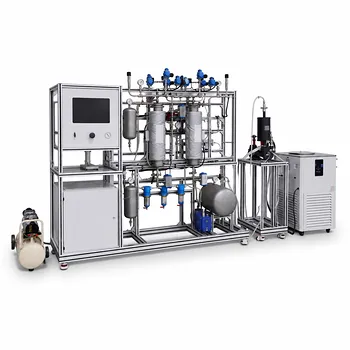
Multi-Component Gas Pressure Swing Adsorption Pilot Plant for Unit Operations Education

Multi-Component Gas Pressure Swing Adsorption Pilot Plant for Unit Operations Education

Multi-component gas pressure swing adsorption pilot plant designed for unit operations education. Features four-tower configuration, IoT touchscreen control, dual regeneration, and real-time breakthrough curve analysis for engineering training with safety interlocks and mobile frame simulates industrial PSA processes.

Low Concentration Carbon Dioxide Capture Pressure Swing Adsorption Educational Pilot Plant

Low Concentration Carbon Dioxide Capture Pressure Swing Adsorption Educational Pilot Plant

Low-concentration CO2 capture pilot plant using Pressure Swing Adsorption for engineering education. Students gain practical experience in breakthrough curve measurement, adsorption dynamics, and variable analysis in a hands-on lab setting. Ideal for unit operations, mass transfer, and chemical engineering labs.

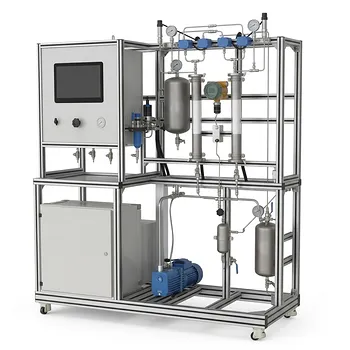
Pressure Swing Adsorption Educational Unit Operations Pilot Plant

Pressure Swing Adsorption Educational Unit Operations Pilot Plant

Integrated bench-scale pressure swing adsorption pilot plant for hands-on teaching of gas-solid separation, mass transfer, and process optimization using nitrogen-oxygen model, featuring dual-column design, industrial touchscreen control, digital assessment suite, and customizable hardware and software configurations for educational laboratories.

Bench Scale Carbon Dioxide Capture Educational Unit Operations Pilot Plant

Bench Scale Carbon Dioxide Capture Educational Unit Operations Pilot Plant

This bench-scale educational pilot plant simulates industrial CO₂ separation using a multi-tower adsorption system for hands-on engineering training. Students achieve ≥90% CO₂ purity while studying pressure swing adsorption, desorption kinetics, and process control in gas purification experiments.

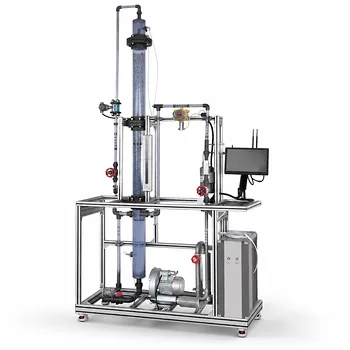
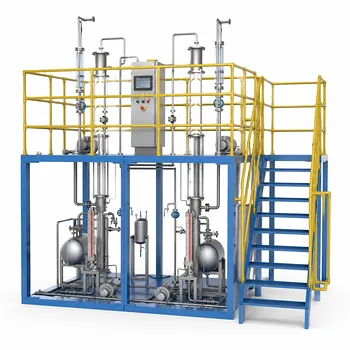
Packed Bed Absorption Educational Unit Operations Pilot Plant

Packed Bed Absorption Educational Unit Operations Pilot Plant

Study gas-liquid absorption, pressure drop, flooding, and mass transfer coefficients with this pilot plant. Transparent packed column, industrial touchscreen, real-time sensor data, automated analysis. Investigate two-phase flow, loading points, column efficiency. Comprehensive data logging and assessment software included.

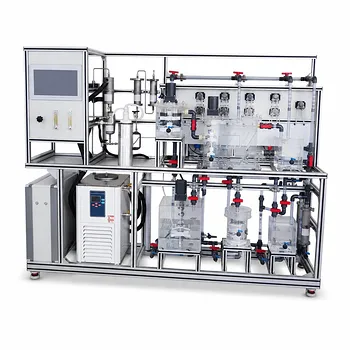
Carbon Dioxide Absorption and Desorption Educational Pilot Plant for Carbon Capture Studies

Carbon Dioxide Absorption and Desorption Educational Pilot Plant for Carbon Capture Studies

Explore carbon dioxide absorption and desorption with this educational pilot plant. Transparent columns visualize mass transfer; electric heating simulates industrial solvent regeneration; touchscreen interface enables data monitoring. Ideal for chemical engineering, bridging theory and practice.

Educational Pressure Swing Adsorption Ethylene Capture Unit Operations Pilot Plant

Educational Pressure Swing Adsorption Ethylene Capture Unit Operations Pilot Plant

Advanced educational pilot plant for pressure swing adsorption ethylene capture provides comprehensive hands-on training in industrial gas separation processes, featuring an eight-column PSA system, real-time data acquisition, and fully customizable design for chemical engineering unit operations laboratories and research.

Carbon Dioxide Capture and Utilization Educational Pilot Plant for Unit Operations

Carbon Dioxide Capture and Utilization Educational Pilot Plant for Unit Operations

Educational pilot plant for carbon dioxide capture and utilization featuring four-tower adsorption, high-temperature regeneration, precise CO2 analysis, modern touchscreen control, real-time data, and robust construction for hands-on unit operations training in university labs with curriculum alignment and safe operation.

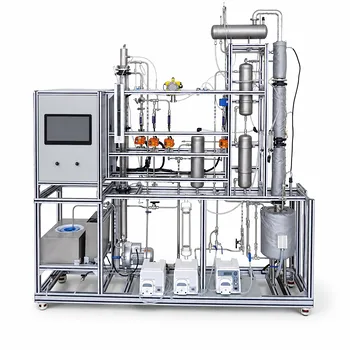
Multimodal Absorption and Desorption Pilot Plant for Unit Operations Training

Multimodal Absorption and Desorption Pilot Plant for Unit Operations Training

Multimodal absorption and desorption pilot plant for higher education labs. Bridges theory and industrial practice with transparent packed columns, three operational modes (real-material, simulated, semi-physical), and SCADA control. Students explore mass transfer, column hydraulics, and process control. Customizable.

Absorption and Desorption Educational Unit Operations Pilot Plant

Absorption and Desorption Educational Unit Operations Pilot Plant

Dual packed column absorption and desorption pilot plant for chemical engineering education, offering real-time mass transfer coefficient measurement, durable mobile frame, industrial touch-screen interface, and customizable design for varied laboratory curricula, enabling hands-on study of gas absorption and stripping.

Dual-Mode Gas Absorption and Desorption Unit Operations Training Pilot Plant

Dual-Mode Gas Absorption and Desorption Unit Operations Training Pilot Plant

Industrial-scale pilot plant for gas absorption and desorption training in chemical engineering. Features dual-mode operation with real and simulated materials, transparent columns for flow visualization, and customizable design. Supports independent or combined loops for hands-on unit operations experiments.

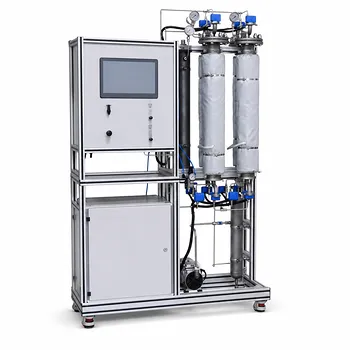
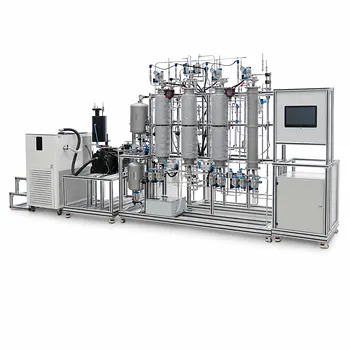
Bench Scale Dual Column Gas Separation and Capture Educational Pilot Plant

Bench Scale Dual Column Gas Separation and Capture Educational Pilot Plant

This dual-column educational pilot plant provides hands-on teaching of gas adsorption, separation, and capture processes. It features stainless steel columns, regeneration up to 400°C, and a 15.6-inch touchscreen PLC for TSA and PSA studies in chemical engineering curricula, process simulation.

Thermal Desorption Exhaust Gas and Tail Water Treatment Educational Pilot Plant

Thermal Desorption Exhaust Gas and Tail Water Treatment Educational Pilot Plant

Bench-scale educational pilot plant for treating thermal desorption exhaust gas and tail water integrates condensation, Fenton oxidation, precipitation, filtration, and carbon adsorption. Ideal for chemical engineering and environmental labs, teaching unit operations, process control, and real-time data analysis.

Natural Product Extraction Unit Operations Training Pilot Plant

Natural Product Extraction Unit Operations Training Pilot Plant

Integrated natural product extraction pilot plant for chemical engineering training bridges theory and industrial practice with modular extraction and evaporation/concentration units, hybrid touchscreen and manual control, realistic process simulation, and self-contained softened water and vacuum utilities.

Ethyl Acetate Synthesis Unit Operations Pilot Plant for Practical Training

Ethyl Acetate Synthesis Unit Operations Pilot Plant for Practical Training

Modular and customizable pilot plant for ethyl acetate synthesis practical training. Integrates esterification reaction, liquid-liquid extraction, neutralization, and sieve-plate distillation unit operations. Bridging theory and real-world industrial processes. Designed for university chemical engineering labs

High-Gravity Emulsification and Mass Transfer Educational Pilot Plant

High-Gravity Emulsification and Mass Transfer Educational Pilot Plant

This integrated educational pilot plant utilizes rotating packed bed technology to demonstrate high-gravity emulsification and mass transfer, providing engineering students with hands-on experience in process intensification and unit operations through a modular, customizable design with digital monitoring.

Educational Unit Operations Pilot Plant for Intraparticle Diffusion Effective Factor Measurement

Educational Unit Operations Pilot Plant for Intraparticle Diffusion Effective Factor Measurement

Designed for chemical engineering university labs, this pilot plant allows hands-on determination of catalyst particle intraparticle diffusion effective factors and gas-solid reaction kinetics using a fixed-bed tubular reactor with industrial touchscreen control, bridging theory and practical reactor design.

Ion Exchange Water Purification Educational Pilot Plant for Engineering Unit Operations

Ion Exchange Water Purification Educational Pilot Plant for Engineering Unit Operations

This bench-scale ion exchange pilot plant trains engineering students in water purification. Dual transparent columns simulate industrial softening and demineralization. Students observe fluid dynamics, perform resin regeneration, and analyze breakthrough curves. The corrosion-resistant frame ensures durability in unit operations experiments.

Multi Functional Membrane Crystallization Educational Unit Operations Pilot Plant

Multi Functional Membrane Crystallization Educational Unit Operations Pilot Plant

Integrated bench-scale membrane crystallization pilot plant for engineering education. Provides hands-on training in advanced separation technologies, combining membrane distillation crystallization and process intensification. Features variable scaling vessels, industrial-grade flow control, and interactive digital data acquisition. Customizable for university labs.


Leave Your Message