The core chemical identity of the feedstock dictates everything.
For a hydrocarbon cracking pilot plant, feedstock selection hinges first on the hydrogen-to-carbon (H/C) ratio and the intended product distribution, then on the specific experimental objective—whether that is to demonstrate fundamental kinetics, study diverse co-product recovery, or investigate coking mitigation. A gaseous paraffin like ethane (high H/C) will deliver a clean, high-yield stream of ethylene with minimal coking, while a liquid naphtha or diesel (lower H/C) produces a broader slate of olefins plus aromatics, but introduces severe coking challenges that demand careful steam dilution and equipment capability.
Selecting a feedstock for a cracking pilot protocol is not merely about the compounds you feed in; it is a balancing act between the chemical propensity to form your target molecules and the operational reality of keeping the reactor tubes free from coke. The most decisive factors are the feedstock’s H/C ratio, its molecular structure (paraffinic vs. aromatic), and how those properties align with your experimental goal—pure kinetics or complex industrial realism.
The Chemical Foundation: H/C Ratio and Molecular Structure
Your feedstock’s chemical makeup determines both its cracking behavior and its coking risk. Two interlinked properties matter most.
The Hydrogen-to-Carbon Ratio as a Compass
The H/C ratio is a reliable predictor of olefin yield. Feedstocks with a high H/C ratio, such as ethane (H/C = 3:1) or propane, contain more hydrogen per carbon atom. When thermally cracked, they preferentially form hydrogen-rich products like ethylene and propylene, with little carbon left over to form coke. In contrast, a heavy naphtha or gas oil has a much lower H/C ratio (roughly 1.8:1), so cracking it inevitably leaves surplus carbon that can polymerize into coke. This simple ratio tells you whether the feedstock is optimized for maximum olefin output or will force you to manage heavy carbon deposition.
Paraffins vs. Aromatics: The Coke Conundrum
The H/C ratio is expressed through molecular structure. Straight-chain paraffins (alkanes) are the most favorable feedstocks for producing target light olefins. Their linear carbon-carbon bonds cleave readily under heat, giving high selectivity to ethylene and propylene. Branched alkanes still crack, but with slightly lower ethylene yields because branching hinders some chain-scission pathways.
Aromatic compounds are the antithesis of a desirable cracking feedstock. The six-carbon ring is remarkably stable and resists ring-opening scission. Instead, aromatics undergo dehydrogenation condensation—they link together, shed hydrogen, and grow into polycyclic heavy aromatics that eventually form solid coke. Even a small fraction of aromatics in a liquid feedstock can dramatically accelerate coke deposition in reactor tubes and downstream piping, slashing system run-time and ethylene output. Unless your explicit purpose is to study coking phenomena, start with a feedstock that keeps aromatic content as close to zero as possible.
Defining Your Experimental Objective
Feedstock selection must serve the educational or research goal of the protocol. The same pilot plant can support vastly different experiments simply by changing what enters the furnace.
Targeting High-Yield Olefin Production
If the protocol’s aim is to demonstrate fundamental cracking kinetics or to maximize single-pass olefin yields, gaseous feedstocks are the clear choice. Ethane can yield up to 84% ethylene under optimal conditions, with negligible coking. This clean chemistry lets students isolate the effects of temperature and residence time without the confounding variable of coke formation, making it ideal for validating kinetic models or teaching reactor engineering principles.
Studying Complex Product Distribution and Separation
When the goal shifts to simulating a commercial olefins plant, liquid feedstocks become essential. Naphtha or light diesel cracking produces not only ethylene and propylene but also butadiene, butylenes, and aromatic-rich pyrolysis gasoline. This complexity is precisely what researchers need to study separation trains, co-product valorization, or economic trade-offs. The protocol must then reflect the reality of higher coking tendencies, requiring copious steam dilution and frequent decoding or simulation of quenching systems.
Investigating Coking Mitigation and Run-Length Strategies
If the objective is to understand coking mechanisms or evaluate anti-coking additives, feedstock choice is a deliberate variable. Here you may deliberately select a heavier liquid feedstock or even spike it with known coke precursors. The protocol will then monitor pressure drop across the coil, heat transfer degradation, and effluent composition over time. Such experiments directly tie feedstock properties to the efficacy of mitigation techniques.
The Practical Limits: Pilot Plant Equipment and Steam Dilution
Your elegant experimental plan will fail if the pilot plant cannot physically handle the chosen feedstock. The unit’s capabilities impose hard constraints.
Matching Feedstock to Steam-to-Oil Capability
Steam dilution is your primary defense against coke. The required steam-to-oil ratio scales directly with coking tendency. Lighter feeds like ethane need only 0.25–0.40 kg steam per kg hydrocarbon; propane needs 0.3–0.5 kg/kg. A light diesel, however, demands 0.75–1.0 kg/kg, and crude oil fractions may require 3.5–5.0 kg/kg. If your pilot plant’s steam generation, piping diameters, or quenching system cannot deliver and handle these high ratios, you must select a lighter feedstock or accept severely truncated run times. This is not a theoretical luxury—it is a go/no-go filter for protocol feasibility.
Temperature and Residence Time Adjustments
Heavier feedstocks also crack at slightly lower coil outlet temperatures but need longer residence times to achieve comparable conversion. Pilot protocols must adjust furnace set points and flow rates accordingly. A feedstock with a high coking tendency may force you to limit pyrolysis severity to avoid runaway coke, directly shaping the attainable product distribution. Recognize that temperature, residence time, and steam ratio form an interdependent triangle that shifts with every feedstock.
Understanding the Trade-offs
No feedstock is universally ideal. Clear-eyed awareness of the downsides protects your experimental timeline and equipment.
- Yield purity vs. product diversity: Gaseous feeds give you high-purity ethylene streams but teach little about complex separation trains. Liquid feeds provide that realism at the cost of coke management and potentially lower ethylene selectivity.
- Experimental cleanliness vs. industrial relevance: A clean ethane crack allows precise kinetic measurements but bears little resemblance to a naphtha cracker’s day-to-day challenges. Choose based on whether you are teaching theory or operational practice.
- Operational burden: Heavy liquid feedstocks require rigorous steam dilution, more frequent decoding procedures, and robust waste heat exchanger design. A protocol that looks insightful on paper can become a maintenance nightmare if the plant’s steam system is undersized.
- Safety and pressure ratings: If the protocol mistakenly selects a severely coking feedstock without adequate dilution, localized overheating and tube plugging can create hazardous conditions. Always match the feedstock to the safety envelope of the high-temperature furnace system.
Making the Right Choice for Your Protocol
Your final selection should follow a decision hierarchy rooted in the pilot plant’s purpose and hardware. Use the following goal-based guide:
- If your primary focus is fundamental kinetics and clean olefin yield: Start with ethane or a propane/ethane mix. The near-absence of coking lets you vary temperature and residence time freely, generating data that directly illustrates radical chain mechanisms.
- If your primary focus is co-product recovery, separation, and full plant economics: Use a paraffinic naphtha or a synthetic blend with carefully controlled aromatic content. This yields a realistic product slate while still allowing manageable run lengths if steam dilution is properly set.
- If your primary focus is coking mitigation or decoding technology: Deliberately introduce a moderate level of coking tendency—for example, a light diesel with known aromatic content—and pair it with high steam ratios. Design the protocol around online pressure-drop measurements and post-run tube inspections.
- If your pilot plant has limited steam generation capacity (low maximum dilution): Restrict yourself to gaseous feedstocks or light naphtha cuts. Do not attempt heavier feeds unless you accept very short experimental windows and rigorous shutdown procedures.
Every successful cracking pilot protocol begins with the same question: “Does my feedstock’s H/C ratio and molecular structure align with both my learning objective and my plant’s physical ability to handle the resulting coke?” Answer that, and you have a foundation that turns raw hydrocarbons into clear, publishable insight.
Summary Table:
| Feedstock Type | H/C Ratio | Coking Risk | Primary Experimental Focus |
|---|---|---|---|
| Gaseous (Ethane/Propane) | High (~3:1) | Minimal | Fundamental kinetics & high-yield olefin production |
| Liquid Naphtha | Medium (~1.8:1) | Moderate | Complex product distribution & separation studies |
| Heavy Liquids (Gas Oil) | Low (<1.8:1) | High | Coking mitigation & run-length strategies |
Optimize Your Research & Training with LABPARK
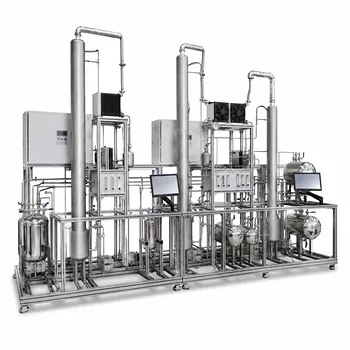
At LABPARK, we design and supply premium Educational and Vocational Unit Operations Pilot Plants for chemical engineering, bioprocess & biotech, and environmental & water treatment. Built for universities, research institutes, and enterprises, our systems deliver the operational flexibility needed to test diverse feedstocks and safely simulate industrial processes.
Ready to elevate your lab's capabilities? Contact LABPARK today to receive a custom pilot plant proposal tailored to your educational and research objectives.
Related Products
- Methane Cracking Educational Unit Operations Pilot Plant
- Crude Benzene Hydrogenation Educational Unit Operations Pilot Plant
- Electrolytic Hydrogen Production Educational Unit Operations Pilot Plant
- Carbon Dioxide Hydrogenation Methanol Synthesis Educational Unit Operations Pilot Plant
- 100L Continuous Loop Hydrogenation Educational Unit Operations Pilot Plant
People Also Ask
- How do ethane vs naphtha cracking influence teaching pilot plant analytical configurations? Key Design Guide
- How can flow-NMR be integrated with pilot plant reactors to monitor kinetics? A Complete Guide
- How do cracking temperature and residence time affect olefin yield? Pilot Plant Guide
- How are utility consumption rates integrated into chemical pilot plant economic evaluations?
- How should OSBL investments be estimated? Key Steps to Avoid Budget Overruns in Pilot Plant Projects