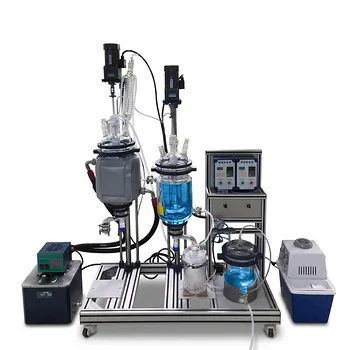
The differing product complexity of ethane versus naphtha cracking forces teaching pilot plants to adopt a fundamentally more versatile analytical backbone. A plant designed to run both feedstocks must combine flexible sample handling with a multi-dimensional online gas chromatography (GC) system. This setup seamlessly switches between the simple, gas-phase ethene-rich effluent of ethane cracking and the two-phase, hydrocarbon-wide spectrum produced by naphtha—aromatic-rich liquids and a complex mix of permanent gases simultaneously analyzed within the same student exercise.
The core insight: ethane’s clean, single-major-product slate demands only a fast, targeted GC; naphtha’s multi-component, severity-dependent output requires a full-range, multi-detector analytical system. An effective teaching pilot plant deliberately integrates both capabilities, allowing students to measure and contrast selectivity, conversion, and mass balances across the two cracking chemistries in a single, unified lab environment.
The Core Cracking Chemistry Difference
Ethane Cracking: A Selective, Single-Product Profile
Ethane cracks through a free-radical chain mechanism that is heavily biased toward ethene production. With high selectivity—often exceeding 70 wt%—the primary product is ethene, accompanied by small quantities of methane and hydrogen. This means the analytical challenge is straightforward: you need to quantify a handful of light, gaseous species with high resolution.
Naphtha Cracking: A Complex, Multi-Product Matrix
Naphtha is a blend of n-alkanes, iso-alkanes, naphthenes, and aromatics. Its cracking yields a much wider distribution: methane, ethene, propene, butenes, butadiene, and a significant liquid fraction known as pyrolysis gasoline. This complexity is severity-dependent, meaning subtle changes in temperature or residence time dramatically shift the product slate. Teaching this requires an analytical system that can separate and quantify everything from permanent gases to C10+ aromatics in a single analytical sequence.
How Feedstock Differences Reshape Analytical Configuration
Feedstock Introduction Flexibility as a Pre-Analytical Requirement
The analytical system’s design begins at the reactor outlet. Ethane leaves the reactor as a single, hot vapor stream that can be directly routed to a gas sampling valve with minimal conditioning. Naphtha, by contrast, yields a two-phase effluent: a gas stream and a liquid hydrocarbon condensate. The teaching pilot plant must therefore incorporate a robust gas-liquid separator and a heated sample transfer line to prevent condensation of heavier components before the GC.
The Necessity of a Multi-Dimensional GC Layout
A single-column GC cannot adequately resolve both light gases from ethane cracking and the heavy aromatics from naphtha cracking. The teaching plant’s analytical core must be a multi-valve, multi-column system. A typical configuration uses:
- A pre-column and backflush to protect the main analytical column from heavy, late-eluting naphtha tar components.
- A Molecular Sieve column (for H₂, O₂, N₂, CH₄, CO) and a Porous Layer Open Tubular (PLOT) column (for C₂–C₅ hydrocarbons), often combined into a single channel with a Thermal Conductivity Detector (TCD) and Flame Ionization Detector (FID) in series.
- A dedicated capillary column (e.g., WCOT, Al₂O₃/KCl or equivalent) with temperature programming to fully resolve the C₆–C₁₀ aromatics present in naphtha’s pyrolysis gasoline, using a second FID.
Handling the Liquid Pyrolysis Gasoline Stream
Naphtha cracking produces a liquid product that cannot be simply vented. The analytical configuration must include an automated liquid sampling valve or a heated injector that can reliably introduce a small, representative aliquot of the condensed pyrolysis gasoline into the GC. This demands a split/splitless inlet with a wide dynamic range, often paired with a mass spectrometer for component identification during advanced teaching modules. For ethane-only runs, this liquid injection path can be isolated, but its presence is essential because the plant is designed for comparative studies.
Trade-offs in Teaching Plant Analytical Design
Versatility vs. System Complexity
A fully flexible system capable of handling both ethane and naphtha comes at a cost: more valves, columns, and detector modules increase maintenance time and potential points of failure. For undergraduate teaching, this complexity can obscure the fundamental concepts if the system is not exceptionally well-integrated and documented. However, without it, the plant cannot demonstrate the most critical lesson—how feedstock complexity drives product distribution.
Analytical Frequency vs. Data Depth
Naphtha cracking product profiles change slowly with severity, allowing for longer GC cycle times (20–40 minutes) while still capturing meaningful data. Ethane cracking, being simpler, can benefit from fast micro-GC solutions with sub-minute analysis. A teaching plant that aims to contrast the two must balance these operational tempos. A common compromise is to use a conventional multi-column GC for naphtha runs and a parallel micro-GC channel for rapid ethane gas monitoring, with students learning how to blend the two datasets.
Coke and Sample Line Blockage
Heavy naphtha-derived liquids and trace coke particles can foul sampling lines and valves over time. The analytical configuration must therefore include heated filters and a strict protocol for line flushing between feedstock switches. Neglecting this leads to cross-contamination that invalidates student mass balance calculations.
Making the Right Choice for Your Teaching Goals
The analytical configuration of your pilot plant should directly reflect the educational objective. Use this guidance to scope the system appropriately.
- If your primary focus is demonstrating fundamental reaction kinetics and ethene selectivity: A rapid-cycle micro-GC with a single TCD/FID channel, capable of analyzing only permanent gases and light olefins, is sufficient. This keeps the system simple and turnaround fast.
- If your primary focus is comparing feedstocks and teaching the impact of chemical complexity: Equip the plant with a full-range, multi-valve GC system that includes both a gas analysis channel and a liquid injection channel with temperature programming. The ability to measure broad hydrocarbon distributions is non-negotiable.
- If your primary focus is preparing students for industrial troubleshooting: Include an online gas chromatograph with a replicate parallel-train design or a backup detector. This builds redundancy and trains students on signal validation and sensor drift—skills directly transferable to plant operations.
A teaching pilot plant that truly captures the contrast between ethane and naphtha cracking does not compromise on its analytical depth; it uses the difference as the driving force behind a flexible, industrial-grade learning tool.
Summary Table:
| Feature / Parameter | Ethane Cracking | Naphtha Cracking |
|---|---|---|
| Product Phase | Single-phase vapor (gaseous) | Two-phase (gas & liquid condensate) |
| Product Complexity | Simple slate (primarily ethene, methane, H₂) | Highly complex (C1 to C10+ aromatics, pyrolysis gasoline) |
| Sample Conditioning | Direct routing to gas sampling valve | Requires gas-liquid separation & heated transfer lines |
| GC Configuration | Fast, targeted single-channel micro-GC | Multi-column, multi-valve system with temperature programming |
| Primary Detectors | TCD / FID in series | Dual FIDs, TCD, and optional MS for liquid stream |
Optimize Your Engineering Curriculum with LABPARK
Designing a process laboratory that effectively contrasts simple and complex cracking chemistries requires highly versatile equipment. LABPARK designs and manufactures premium Educational and Vocational Unit Operations Pilot Plants in chemical engineering, bioprocess & biotech, and environmental & water treatment.
We empower universities, research institutes, and enterprises worldwide with industrial-grade, flexible pilot plants equipped with advanced online analytical systems tailored to your specific teaching and research goals.
Ready to elevate your department's hands-on training capabilities? Contact LABPARK today to consult with our technical experts on your custom pilot plant configuration.
Related Products
- Methane Cracking Educational Unit Operations Pilot Plant
- Rising and Falling Film Evaporation Educational Unit Operations Pilot Plant
- Multi Functional Membrane Crystallization Educational Unit Operations Pilot Plant
- Solid Waste Pyrolysis and Refining Educational Pilot Plant for Unit Operations
- Fluidized Bed Gas Solid Catalytic Reaction Educational Pilot Plant
People Also Ask
- How can flow-NMR be integrated with pilot plant reactors to monitor kinetics? A Complete Guide
- How do cracking temperature and residence time affect olefin yield? Pilot Plant Guide
- How are utility consumption rates integrated into chemical pilot plant economic evaluations?
- How should OSBL investments be estimated? Key Steps to Avoid Budget Overruns in Pilot Plant Projects
- Why use split-plot designs in pilot plants instead of CRD? Optimize process parameters effectively.