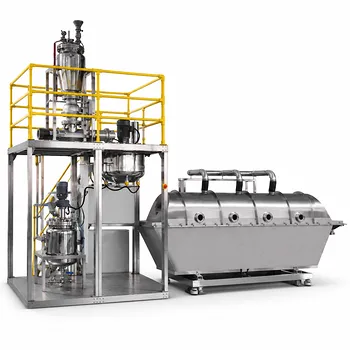
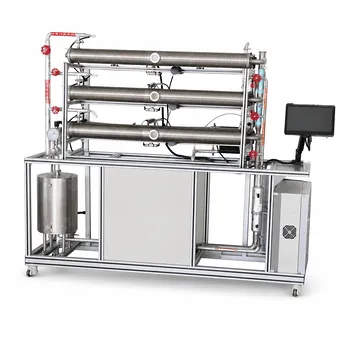
For any new pilot plant in an existing lab, the single biggest budget trap is underestimating the hidden utility modifications. Outside Battery Limits (OSBL) investments are the costs to prepare the laboratory’s infrastructure—its power, water, steam, ventilation, and waste handling—to serve your new process equipment. During early planning, these costs are pragmatically estimated as a percentage of the plant’s core equipment cost (the Inside Battery Limits, or ISBL), with a typical starting range of 30% to 50%.
The 30–50% rule provides a vital first-order figure, but accurate OSBL estimation depends entirely on how well your lab’s existing utility capacity matches the pilot plant’s specific demands. Relying on a fixed percentage without a gap analysis almost guarantees budget overruns. The solution is a staged refinement approach that pairs percentage-based screening with direct infrastructure audits as the design matures.
The Foundation: Defining ISBL and OSBL Boundaries
Before estimating anything, you must draw a clear line through your project. This separation prevents cost duplication and ensures nothing critical is overlooked.
Inside Battery Limits (ISBL) – The Core Equipment
ISBL covers every piece of equipment that directly forms the process line. This includes the reactors, distillation columns, heat exchangers, pumps, and the local piping, instrumentation, and controls that connect them.
Its cost is built from the ground up: you size the major equipment from material and energy balances, price it using a carbon steel baseline, then apply installation factors and material correction factors for alloys like stainless steel.
Outside Battery Limits (OSBL) – The Supporting Infrastructure
OSBL is everything your building must provide to the ISBL boundary. It is the new or upgraded utility services that plug into the pilot plant’s connection points.
Common OSBL scope includes cooling water loops, steam generators, compressed air systems, electrical switchgear upgrades, fume exhaust, wastewater neutralization tanks, and biological containment enhancements. Without these, even the most advanced ISBL plant simply cannot operate.
The Percentage Rule: A Practical Starting Point
In the earliest concept stage, you lack detailed utility drawings and equipment quotes. A factored percentage of the ISBL cost becomes the only viable OSBL estimate.
When 30% Is Sufficient: Leveraging Existing Capacity
Reserve the 30% OSBL allowance for the most favorable scenario. This applies when your lab already has significant, underutilized utility infrastructure.
For example, if you are adding a standard distillation or heat exchanger pilot plant to a facility that was originally designed with excess steam, cooling water, and electrical capacity, the OSBL work may amount to little more than drops and connection runs. In such cases, 30% of ISBL often covers the required minor modifications.
When 40–50% Becomes Necessary: Retrofits and New Infrastructure
Push your allowance to 40% or even 50% when the existing lab is fundamentally unprepared. This occurs under two common conditions:
- Spatial and logistic constraints: The pilot plant must fit into a tight space never intended for process equipment, requiring structural work and extensive routing.
- Completely new utility plants: The pilot plant demands a service your lab lacks entirely—such as plant steam, high-purity water, or biological grade ventilation. You are now paying for a standalone boiler, chiller, or air handling unit, not just a hookup.
A bioprocess pilot plant with mandatory containment often falls squarely into this higher-cost category.
The Danger of Blind Reliance on Rules of Thumb
A wide 30–50% range is a screening tool, not a budget commitment. The single most common mistake is to pick a percentage without examining the lab’s actual condition, then carry that unverified number all the way to project approval. This creates a false sense of precision and masks the real infrastructure gaps that will emerge during construction.
From Guess to Estimate: A Progressive Refinement Approach
Your OSBL estimate must gain accuracy in lockstep with your overall engineering design. A robust project moves through distinct estimate classes.
Stage 1: Concept Screening with Class 5 Accuracy
At the initial feasibility phase, you likely have only a process concept. Apply the 30–50% range to a factored ISBL estimate to get a rough order-of-magnitude OSBL number. Acknowledge that the accuracy here is only ±30% to ±50%. This is sufficient to decide whether to proceed, but not to request capital.
Stage 2: Feasibility and Budgeting with Class 4/3 Accuracy
Once you have a Process Flow Diagram (PFD) and initial equipment sizing, replace the generic percentage with a Class 4 (±30%) or Class 3 (±10% to ±15%) estimate. This requires a direct audit: you list every utility demand (steam tons/hour, cooling water gpm, electrical kW) specified by your pilot plant and compare it against the lab’s available spare capacity. Only the shortfall drives new OSBL scope, which is then priced with factored installation costs.
Stage 3: Pre-Construction Detailed Estimation (Class 2)
Before ordering long-lead equipment, aim for a Class 2 (±5% to ±10%) OSBL estimate. This demands firm vendor quotes for any new utility packages and construction-ready routing plans. By this stage, the OSBL budget should be based on actual physical design, not percentages.
The Critical Step: Performing a Utility Gap Analysis
The progressive refinement method rests on one activity: a rigorous utility gap analysis. This is the bridge between a rough percentage and a defensible cost.
Mapping the Pilot Plant’s Utility Demands
Start with the ISBL design basis. Quantify every utility at the battery limit connection point:
- Electricity: voltage, phase, maximum running load (kW).
- Cooling water: required flow rate, supply temperature, and allowable pressure drop.
- Steam: pressure level and peak flow rate for heating and distillation.
- Process air: flow and required cleanliness.
- Drainage and waste: chemical nature and flow volumes needing capture or treatment.
Auditing the Existing Lab Infrastructure
Next, survey the building’s main utility headers and distribution. Identify the true available spare capacity at the exact point of connection. A building with a large main electrical switchgear may still have zero spare capacity on the specific panel that serves your wing of the lab. The gap between the plant’s demand and the available local capacity defines the OSBL scope.
Special Considerations for Bioprocess Plants
Bioprocess pilot plants introduce OSBL factors that pure chemical plants rarely face. These include biological containment exhaust filtration (HEPA), clean steam for sterilization, purified water loops, and segregated waste kill systems. These requirements frequently tip OSBL costs into the 40–50% range, and the gap analysis must involve both capacity checks and regulatory compliance verification.
Understanding the Trade-offs and Common Pitfalls
Every approach to OSBL estimation carries risk. Addressing these trade-offs head-on builds a realistic budget.
The Cost of Over-Engineering vs. the Risk of Under-Provisioning
Overestimating OSBL by applying a blanket 50% factor wastes capital that could fund additional process capabilities. However, underestimating because of a cursory walk-through inevitably triggers change orders and schedule delays during installation. The progressive refinement approach balances these risks by tying the OSBL margin directly to the maturity of your utility audit.
Ignoring Space Constraints and Physical Integration
OSBL costs are not just about pipes and wires. In an existing lab, the cost of running a new 4-inch cooling water line through occupied corridors, ceilings, or structural columns can exceed the cost of the pipe itself. An accurate OSBL estimate must include civil and structural work for supports, penetrations, and access routes.
Falling into the “Free Real Estate” Trap for Utilities
Never assume an existing utility plant has infinite spare capacity. A boiler rated at 80% utilization during winter may have no ability to serve your new distillation column. Failing to audit based on peak building demand—not just nameplate rating—will lead you to budget zero dollars for a service that actually requires a new, costly utility upgrade.
Making the Right Choice for Your Project
The method you choose to estimate OSBL should be driven by your project’s maturity and the known condition of your laboratory. A tailored approach prevents both fiscal recklessness and embarrassing budget gaps.
- If your primary focus is a rapid feasibility check for a standard chemical pilot plant in a well-equipped lab: Use a 30% OSBL factor on your factored ISBL cost, but explicitly label it as a Class 5 placeholder that requires validation before budget approval.
- If your primary focus is a bioprocess or high-energy pilot plant with unique containment or high-purity utility demands: Immediately plan for a 40–50% OSBL allowance and commission a full utility gap analysis as soon as the PFD is defined, moving swiftly to a Class 3 estimate to secure accurate funding.
- If your primary focus is securing stakeholder confidence and construction-phase cost control: Advance the OSBL estimate to Class 2 accuracy with firm vendor quotes for all new utility packages before final project approval, treating the OSBL portion as a distinct, auditable cost center.
By treating OSBL not as a vague add-on but as a core engineering deliverable that matures with your design, you transform a leading cause of budget overruns into a controlled, predictable element of your pilot plant project.
Summary Table:
| OSBL Estimate Factor | Typical Laboratory Conditions | Suggested Project Stage |
|---|---|---|
| 30% of ISBL | Existing lab has excess utility capacity; standard chemical processes. | Class 5: Initial Concept Screening |
| 40% – 50% of ISBL | Strict spatial constraints; requires clean steam, HEPA filtration, or waste containment. | Class 4/3: Feasibility & Budgeting |
| Direct Utility Audit | Detailed engineering routing is defined; utility shortfalls are quantified. | Class 2: Pre-Construction & Ordering |
Seamlessly Integrate Your Next Pilot Plant with LABPARK
Avoid hidden infrastructure costs and budget traps. LABPARK provides state-of-the-art Educational and Vocational Unit Operations Pilot Plants in chemical engineering, bioprocess & biotech, and environmental & water treatment. Designed specifically for universities, research institutes, and enterprises, our systems ensure precise utility compatibility and seamless integration into your existing laboratory.
Ready to plan your pilot plant project? Contact our engineering experts today for professional layout design and cost-estimation support.
Related Products
- Natural Product Extraction Unit Operations Training Pilot Plant
- Fixed-Bed Chemical Reaction and Gas Dust Tar Removal Unit Operations Pilot Plant
- Electrolytic Hydrogen Production Educational Unit Operations Pilot Plant
- Ethyl Acetate Synthesis Unit Operations Pilot Plant for Practical Training
- 100L Continuous Loop Hydrogenation Educational Unit Operations Pilot Plant
People Also Ask
- How to Demo Solubility Sensitivity in SFE Pilot Plants? Practical Thermodynamics
- How do pilot plants differentiate physical vs chemical extraction? Enhance Chemical Engineering Training
- How are HTU and NTU applied to determine extraction column height? Guide to Pilot Plant Scaling
- Why use split-plot designs in pilot plants instead of CRD? Optimize process parameters effectively.
- What are the limitations of acentric factor models? Avoid pilot plant errors with polar fluids.