Knowledge Chemical Engineering Education What engineering principles govern catalytic reactor debottlenecking? Master Flow & Catalyst Optimization
Author avatar

Tech Team · LABPARK

Updated 1 month ago

What engineering principles govern catalytic reactor debottlenecking? Master Flow & Catalyst Optimization


Catalytic reactor debottlenecking isn’t about brute force; it’s a precise orchestration of residence time, pressure drop, and catalyst performance. The governing engineering principles revolve around manipulating space velocity (LHSV or GHSV) and residence time to increase throughput, while containing the exponential rise in pressure drop that higher flow rates create. Pilot plants turn these abstract trade-offs into hands-on demonstrations—allowing you to test flow configurations, catalyst activities, temperature ramps, and multi-stage designs under safe, controlled conditions.

Debottlenecking a catalytic reactor demands balancing three interdependent variables: throughput (higher space velocity), conversion (requires sufficient residence time), and pressure drop (which limits flow). Pilot plants transform this challenge into a tangible learning experience, revealing how changes in bed geometry, catalyst formulation, and temperature profiles can push throughput without sacrificing product quality or reactor integrity.

The Engineering Bedrock of Debottlenecking

Space Velocity and Residence Time: The Heart of the Matter

The defining relationship is residence time (τ = V/v) and space velocity (SV = v/V_cat).
Increasing throughput means a larger volumetric flow rate v, which directly lowers τ and raises SV.
Without compensation, the reduced contact time between reactants and catalyst causes conversion to plummet.

The Pressure Drop Barrier

In fixed‑bed reactors, pressure drop (ΔP) scales with the square of the flow rate.
Doubling the flow rate can quadruple the ΔP, rapidly approaching the physical limits of the catalyst bed and the mechanical integrity of the vessel.
This exponential penalty is often the first wall you hit when trying to debottleneck a unit.

Compensating with Catalyst Activity and Temperature

Two levers can offset the lost residence time.
A higher‑activity catalyst (for example, with maximized dispersion of noble metals like Pt and Re) maintains reaction rates even at elevated space velocities.
Alternatively, raising the operating temperature speeds up kinetics—though it must stay within bounds to avoid thermodynamic equilibrium reversals or catalyst sintering.

Translating Principles to Practice: Pilot Plant Demonstrations

Visualizing Flow Configurations and Pressure Drop

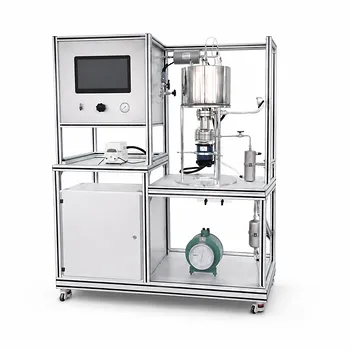
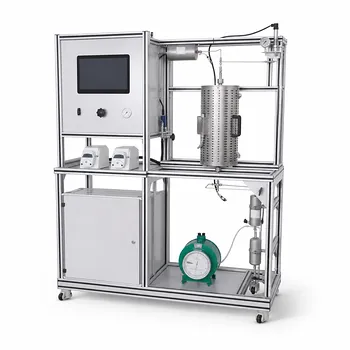
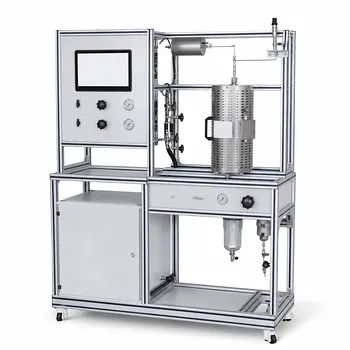
Pilot plants with interchangeable reactor columns let you swap axial beds for radial or cross‑flow geometries.
A radial flow configuration dramatically increases the cross‑sectional area per unit volume, slashing pressure drop while preserving the catalytic surface area needed for high space velocity.
Switching from series to parallel reactors also divides the total flow, cutting the velocity through each bed and giving students a direct measurement of ΔP versus conversion.

Managing Catalyst Deactivation Through Temperature Ramping

The constant‑conversion variable‑temperature operation mode turns deactivation into a teachable moment.
As the catalyst ages, the pilot plant’s controllers gradually raise the reactor inlet temperature to keep conversion constant.
This allows researchers to map the deactivation kinetics and calculate the exact temperature ramp profile required to maintain throughput over an entire production run.

Shifting Equilibrium with Inter‑stage Treatments

Multi‑stage pilot plants demonstrate how to debottleneck equilibrium‑limited reactions.
In the selective oxidation of hydrogen during styrene monomer synthesis, O₂ is injected between catalytic beds.
The exothermic combustion of byproduct hydrogen (H₂ + 0.5 O₂ → H₂O) shifts the equilibrium forward, re‑heats the process gas internally, and dramatically reduces steam consumption—all captured by pilot‑scale sensors.

Material Constraints at High Pressure: Ammonia Synthesis

High‑pressure pilot units (20–30 MPa) for ammonia synthesis expose a critical material lesson.
Hydrogen can penetrate standard steel under these conditions, leading to hydrogen embrittlement.
Students see firsthand that debottlenecking must consider reactor metallurgy; specialized high‑strength alloys are non‑negotiable to prevent catastrophic leaks.

Selecting the Right Catalyst for Long‑Term Stability

The SO₂ oxidation pilot plant contrasts platinum catalysts (highly active but easily poisoned by trace arsenic) with vanadium pentoxide (V₂O₅) catalysts (robust but requiring precise temperature control).
Running both catalyst types in parallel shows that maximizing initial activity is useless if feed impurities cause rapid deactivation—a critical insight for any debottlenecking strategy.

Navigating the Trade‑offs in Debottlenecking

  • Higher space velocity vs. pressure drop: Increasing flow without changing configuration quickly leads to fluidization, channeling, and excessive energy costs.
  • Smaller catalyst particles vs. ΔP: While they boost surface area, they drastically increase the bed pressure drop, often negating throughput gains.
  • Higher temperature vs. equilibrium and sintering: For exothermic reactions, too much heat shifts equilibrium backward and can permanently damage the catalyst.
  • Parallel reactors vs. conversion per pass: While they lower velocity per vessel, you may need additional volume or inter‑stage treatment to keep per‑pass conversion high.
  • Pre‑reactors: Adding a small sacrificial bed can protect the main catalyst from poisons but adds complexity and capital cost.

How to Design a Pilot Program for Debottlenecking

The specific pilot‑plant configuration you choose should map directly to your debottlenecking goal.

  • If your primary focus is throughput maximization: Experiment with radial flow or parallel‑reactor configurations to tame pressure drop while pushing space velocity to its limit.
  • If your primary focus is maintaining conversion and selectivity: Test higher‑activity catalysts and automated temperature ramping to compensate for reduced residence time.
  • If your primary focus is managing catalyst aging: Adopt the constant‑conversion variable‑temperature mode to quantify deactivation kinetics and forecast temperature ramp schedules.
  • If your primary focus is heat management and equilibrium limitations: Explore multi‑stage reactors with inter‑stage cooling or selective oxidation to drive conversion forward without runaway temperatures.
  • If your primary focus is material durability under high pressure: Build pilot reactors with high‑strength alloys and monitor hydrogen embrittlement risks in hydrogen‑rich streams.

A well‑designed pilot plant program doesn’t just teach debottlenecking; it transforms the reactor from a mysterious black box into a fully controlled, optimizable unit operation.

Summary Table:

Debottlenecking Parameter Engineering Challenge Pilot Plant Demonstration / Solution
Space Velocity & Residence Time Higher throughput decreases contact time, dropping conversion. Test higher-activity catalysts or optimize temperature profiles.
Pressure Drop (ΔP) Flow increases cause exponential ΔP rises, risking bed damage. Swap axial beds for radial/parallel configurations to monitor ΔP.
Catalyst Deactivation Higher operating temperatures to boost kinetics accelerate aging. Use constant-conversion variable-temperature ramping to map decay.
Equilibrium Limits Thermodynamic barriers limit per-pass yield for exothermic reactions. Implement multi-stage pilot beds with inter-stage feed/cooling.

Bring Chemical Engineering Principles to Life with LABPARK

Are you looking to equip your students, researchers, or engineers with hands-on reactor optimization and debottlenecking experience?

LABPARK provides state-of-the-art Educational and Vocational Unit Operations Pilot Plants in chemical engineering, bioprocess & biotech, and environmental & water treatment. Designed specifically for universities, research institutes, and enterprises, our modular pilot systems turn complex theoretical kinetics into visual, measurable, and controllable physical processes.

Ready to elevate your training and research capabilities? Contact LABPARK today to request a custom proposal!

Related Products

People Also Ask

Related Products

Fixed Bed Gas Solid Catalytic Reaction Educational Pilot Plant

Fixed Bed Gas Solid Catalytic Reaction Educational Pilot Plant

Fixed-bed gas-solid catalytic reaction unit operations pilot plant for chemical engineering education. Features split-furnace, mass flow controllers, PID control, safety interlocks. Ideal for heterogeneous catalysis, reactor dynamics, catalyst evaluation studies. Fully customizable configurations for university laboratories and academic research.

Micro-Scale Gas-Solid Catalytic Reaction Educational Pilot Plant

Micro-Scale Gas-Solid Catalytic Reaction Educational Pilot Plant

Explore heterogeneous catalysis with this micro-scale gas-solid catalytic reaction educational pilot plant. Designed for university labs, it enables hands-on study of reaction kinetics and transport phenomena in a benchtop packed bed reactor with high-precision flow control and touchscreen automation.

Internal Circulation Gradient Free Catalytic Reaction Educational Pilot Plant

Internal Circulation Gradient Free Catalytic Reaction Educational Pilot Plant

Internal circulation gradient free catalytic reaction educational pilot plant for chemical engineering unit operations. Provides isothermal gradient free operation and hands on study of heterogeneous catalysis kinetics and mass transfer with precise control. Ideal for academic labs.

Fluidized Bed Gas Solid Catalytic Reaction Educational Pilot Plant

Fluidized Bed Gas Solid Catalytic Reaction Educational Pilot Plant

Our educational fluidized bed gas-solid catalytic reaction pilot plant is ideal for chemical engineering labs. Students study fluidization dynamics, catalyst evaluation, and process control hands-on. Features include a customizable reactor, touchscreen HMI, and safety interlocks for safe, curriculum-aligned experiments.

Multi Functional Catalytic Reaction and Reactor Evaluation Educational Unit Operations Pilot Plant

Multi Functional Catalytic Reaction and Reactor Evaluation Educational Unit Operations Pilot Plant

Bench-scale educational pilot plant for catalytic reaction and reactor evaluation, integrating fixed bed, fluidized bed, and stirred tank reactors. Students compare reactor designs, evaluate catalysts, and study reaction kinetics and hydrodynamics. Perfect for unit operations labs in chemical engineering curricula.

Fixed-Bed Chemical Reaction and Gas Dust Tar Removal Unit Operations Pilot Plant

Fixed-Bed Chemical Reaction and Gas Dust Tar Removal Unit Operations Pilot Plant

Integrated educational pilot plant for studying catalytic gas-solid reactions and downstream gas purification. Features dual fixed-bed reactor, three-stage heating, and touchscreen control for hands-on engineering training. Ideal for chemical and environmental engineering curricula.

Crude Benzene Hydrogenation Educational Unit Operations Pilot Plant

Crude Benzene Hydrogenation Educational Unit Operations Pilot Plant

Advanced pilot plant for higher education, enabling hands-on study of crude benzene hydrogenation and gas-liquid catalytic reactions. Triple-stage reactor system with precision flow and temperature control, AI-driven PID, remote monitoring, and comprehensive safety interlocks. Customizable for curriculum integration.

Methanol Synthesis and Catalyst Performance Evaluation Educational Unit Operations Pilot Plant

Methanol Synthesis and Catalyst Performance Evaluation Educational Unit Operations Pilot Plant

Bench-scale methanol synthesis and catalyst evaluation educational pilot plant for chemical engineering labs to study catalytic kinetics, high-pressure operations, process control, and unit operations under realistic conditions with industrial safety features, precision gas delivery, data acquisition, and intelligent monitoring.

Ethylbenzene Dehydrogenation Educational Unit Operations Pilot Plant

Ethylbenzene Dehydrogenation Educational Unit Operations Pilot Plant

Ethylbenzene dehydrogenation educational pilot plant replicates industrial styrene production, offering hands-on experience with fixed-bed reactors, catalyst activation, regeneration, automated process control. Designed for university chemical engineering labs, it enables study of gas-solid catalysis, catalyst deactivation, steam regeneration, and safety interlocks.

Methane Cracking Educational Unit Operations Pilot Plant

Methane Cracking Educational Unit Operations Pilot Plant

This bench-scale methane cracking educational pilot plant provides hands-on catalytic conversion training with a 1000°C furnace, seven mass flow controllers, and real-time automation for safe, curriculum-aligned experiments. Designed for university teaching of unit operations and reaction engineering.

Educational Unit Operations Pilot Plant for Intraparticle Diffusion Effective Factor Measurement

Educational Unit Operations Pilot Plant for Intraparticle Diffusion Effective Factor Measurement

Designed for chemical engineering university labs, this pilot plant allows hands-on determination of catalyst particle intraparticle diffusion effective factors and gas-solid reaction kinetics using a fixed-bed tubular reactor with industrial touchscreen control, bridging theory and practical reactor design.

Multi-Reactor Educational Pilot Plant for Reaction Engineering Unit Operations

Multi-Reactor Educational Pilot Plant for Reaction Engineering Unit Operations

Integrated bench-scale educational pilot plant for chemical engineering teaching featuring fixed bed fluidized bed and stirred tank reactors with web-based digital twin controls and safety interlocks for hands-on unit operations and reaction engineering comparative studies in one compact system.

100L Continuous Loop Hydrogenation Educational Unit Operations Pilot Plant

100L Continuous Loop Hydrogenation Educational Unit Operations Pilot Plant

This 100L continuous loop hydrogenation pilot plant is designed for chemical engineering education, featuring 316 stainless steel construction, advanced gas-liquid mass transfer components, explosion-proof safety systems, and a 15.6-inch touchscreen with 5G connectivity, cloud data logging, bridging theory and industry.

O-Xylene Oxidation to Phthalic Anhydride Educational Unit Operations Pilot Plant

O-Xylene Oxidation to Phthalic Anhydride Educational Unit Operations Pilot Plant

Explore our bench-scale educational pilot plant for o-xylene oxidation to phthalic anhydride, featuring a fixed-bed tubular reactor with visual observation, precise temperature control, and safety systems, ideal for chemical engineering hands-on training and industrial simulation, designed for university unit operations.

Carbon Dioxide Hydrogen Methanol Synthesis Educational Unit Operations Pilot Plant

Carbon Dioxide Hydrogen Methanol Synthesis Educational Unit Operations Pilot Plant

Hands-on educational pilot plant for methanol synthesis from carbon dioxide and hydrogen. Enables practical study of high-pressure catalysis, unit operations, and process control. Features real-time data acquisition, safety systems, and customizable experiment modules for undergraduate and graduate chemical engineering laboratories.

Carbon Dioxide Hydrogenation Methanol Synthesis Educational Unit Operations Pilot Plant

Carbon Dioxide Hydrogenation Methanol Synthesis Educational Unit Operations Pilot Plant

Pilot-scale educational system for carbon dioxide hydrogenation to methanol. Designed for unit operations teaching, it features a fixed-bed reactor, three-stage heating, dual mass flow controllers, and a 15.6-inch touchscreen with data acquisition. Perfect for chemical engineering and sustainable energy courses.

Tubular Reactor Flow Characteristics Determination Educational Unit Operations Pilot Plant

Tubular Reactor Flow Characteristics Determination Educational Unit Operations Pilot Plant

Educational pilot plant for investigating tubular reactor flow characteristics and residence time distribution Features adjustable recycle for plug flow and backmixing studies industrial touchscreen interface and real-time data acquisition Ideal for chemical engineering unit operations laboratory training and education

Residence Time Distribution and Reactor Flow Characteristics Determination Educational Pilot Plant

Residence Time Distribution and Reactor Flow Characteristics Determination Educational Pilot Plant

This versatile educational pilot plant is designed for comprehensive study of residence time distribution and reactor flow characteristics, featuring multiple CSTRs in series, a tubular reactor, variable recycle loop, and automated real-time data acquisition, perfect for hands-on chemical engineering education.

Multi-Stage Stirred Tanks in Series Residence Time Distribution and Mixing Performance Determination Educational Pilot Plant

Multi-Stage Stirred Tanks in Series Residence Time Distribution and Mixing Performance Determination Educational Pilot Plant

Explore residence time distribution and mixing performance in series stirred tanks with this educational pilot plant. Real-time conductivity sensors, interactive 3D simulation, and industrial-grade PC for chemical engineering lab training. Customizable to curricula.

Electrolytic Hydrogen Production Educational Unit Operations Pilot Plant

Electrolytic Hydrogen Production Educational Unit Operations Pilot Plant

Bench-scale electrolytic hydrogen production pilot plant designed for university engineering labs. Provides hands-on training in water electrolysis, gas-liquid separation, and process safety. Fully customizable system with digital PID control, corrosion-resistant components, and hydrogen gas detector. Ideal for chemical engineering curricula.


Leave Your Message