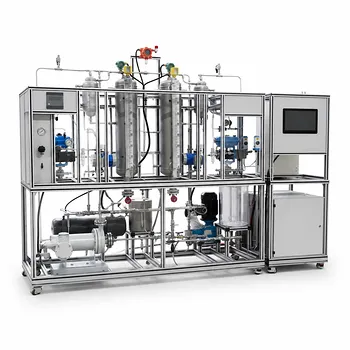
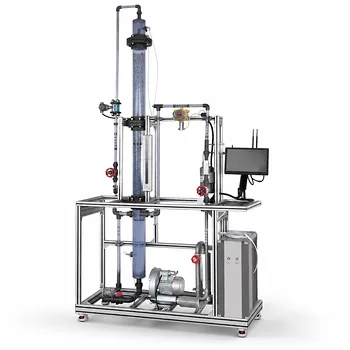
When a membrane gas-separation unit must operate on a pitching vessel or a remote offshore platform, the design conversation shifts from pure process efficiency to survival. The critical considerations are threefold: selecting corrosion-resistant materials that can endure relentless saltwater exposure, engineering the system to withstand ambient temperature extremes and ice loading, and providing structural reinforcement that absorbs the constant shock and vibration from nearby engines and compressors.
Designing a membrane unit for a harsh environment demands more than just picking the right membrane. The physical package must be hardened against corrosion, thermal stress, and vibration. Yet even the most rugged hardware will fail to deliver if the core process parameters—selectivity, pressure ratio, and stage cut—are not actively managed to perform reliably under those same dynamic conditions.
The Unforgiving Nature of Offshore and Mobile Environments
Offshore and mobile installations are worlds apart from a stable, climate-controlled laboratory. The ambient atmosphere routinely assaults equipment with salt spray, extreme temperature swings, and powerful mechanical forces.
Corrosion: The Constant, Silent Threat
Saltwater mist in marine environments accelerates corrosion of standard metallic components exponentially. A failure in a single flange, fitting, or pressure vessel can lead to a dangerous gas leak and total system shutdown.
Temperature Swings and the Risk of Ice Loading
Ambient temperatures can shift from blistering engine-room heat to sub-zero polar winds. In cold climates, moisture can freeze on external surfaces, adding weight and stress while potentially compromising membrane integrity.
Structural Shock and Vibration: A Fatigue Nightmare
Compressors, diesel engines, and wave motion create a continuous spectrum of vibration. Over time, this fatigues metal structures, loosens fittings, and can induce micro-cracks in rigid piping, leading to premature failure.
Critical Design Considerations for Hardware Resilience
Material Selection: Fighting the Saltwater Environment
Every component exposed to the marine atmosphere must be built from corrosion-resistant alloys like 316L or duplex stainless steel. Specialized coatings on pressure vessels and electro-polished surfaces on wetted parts can dramatically reduce the risk of pitting and crevice corrosion.
Thermal Management: Safeguarding the Membrane and Preventing Ice Damage
The membrane’s performance and physical integrity depend on staying within a defined temperature window. Insulate all critical piping and consider trace heating to prevent condensate freezing. In parallel, ensure sufficient cooling capacity exists for hot ambient conditions to avoid thermally degrading the membrane material.
Engineering for a Moving, Vibrating World
Design the entire skid with structural reinforcement far beyond what a land-based plant would require. Use welded frames, heavy-gauge steel supports, and certified shock mounts. All connections—especially high-pressure feed and permeate lines—should incorporate flexible hoses or expansion joints to isolate vibration.
The Hidden Killer: Process Design Must Match the Environment
Hardware robustness alone will not guarantee success. The fundamental membrane process parameters must be controlled with the same rigor as the physical protection. Failing to do so means a hurricane-proof unit can still produce off-spec gas.
Membrane Selectivity Is Not a Silver Bullet
A membrane with a higher intrinsic selectivity can actually underperform a lower-selectivity alternative if the pressure ratio and stage cut are not optimized. In dynamic environments, temperature-dependent permeability shifts can alter the effective selectivity, so control systems must adapt setpoints in real time.
Pressure Ratio and Stage Cut: The Dynamically Interdependent Variables
The pressure ratio (feed versus permeate pressure) and stage cut (permeate flow relative to feed flow) are the levers that determine separation performance. Fluctuating feed conditions or a momentary change in back-pressure can silently ruin product purity. A rugged system needs automated control loops that continuously adjust these parameters based on real-time gas analysis, compensating for the environment’s unpredictability.
Understanding the Trade-offs: Ruggedness vs. Efficiency
Designing for extremes is not free. Structural reinforcements add weight and cost. Heavy corrosion-resistant alloys increase material expenses. Extensive insulation can trap heat in hot climates, requiring more complex thermal management. And a sophisticated control system introduces additional sensors and potential failure points. The art is to balance protection with practicality, never over-engineering to the point where the system becomes unserviceable or economically unviable.
Making the Right Choice for Your Goal
Your specific operational priorities will dictate where to allocate your resources and attention.
- If your primary focus is maximizing uptime on an unmanned platform: Invest in heavy-duty corrosion protection, structural over-design, and passive thermal controls that require minimal intervention.
- If your primary focus is consistent gas purity across wide ambient temperature changes: Prioritize a dynamic process control package that continuously recalibrates pressure ratio and stage cut based on live sensor data.
- If your primary focus is minimizing weight and footprint on a small vessel: Select advanced lightweight composite housings but pair them with the most effective vibration isolation mounts and frequent inspection cycles.
A membrane unit that survives the elements is only half the solution. The other half is a control strategy that keeps the separation process performing impeccably through nature’s unrelenting mood swings.
Summary Table:
| Challenge | Critical Consideration | Recommended Solution |
|---|---|---|
| Corrosion | Material Selection | Use 316L/duplex stainless steel & protective coatings |
| Thermal Stress | Thermal Management | Insulation, trace heating, & active cooling |
| Vibration & Shock | Structural Reinforcement | Welded frames, certified shock mounts, & flexible joints |
| Dynamic Conditions | Dynamic Process Control | Automated control loops adjusting pressure ratio & stage cut |
Bring Real-World Process Engineering into Your Lab
At LABPARK, we help universities, research institutes, and enterprises bridge the gap between theory and industrial reality. We provide high-quality Educational and Vocational Unit Operations Pilot Plants in chemical engineering, bioprocess & biotech, and environmental & water treatment designed to simulate complex processes—even under challenging conditions.
Equip your facility with the ultimate hands-on training and research tools. Contact LABPARK today to discover our range of pilot plant solutions!
Related Products
- Photocatalytic Membrane Separation and Degradation Unit Operations Pilot Plant
- Multifunctional Membrane Separation Educational Pilot Plant with Ultrafiltration, Nanofiltration, Reverse Osmosis
- Ultrafiltration Membrane Separation Educational Pilot Plant
- Multi-Functional Membrane Separation Educational Pilot Plant for Unit Operations Lab
- Gas-Solid Heterogeneous Separation Demonstration Educational Unit Operations Pilot Plant
People Also Ask
- What are the key differences in membrane configurations? Choose the Right Unit Operations Pilot Plant
- How Do Pervaporation, Vapor, and Gas Permeation Differ in Pilot Plants? Key Comparison
- What are the structural & performance trade-offs of flat-sheet, spiral-wound, & hollow-fiber membrane modules?
- How do PEI, PVDF, and PSU membranes compare in pilot plants? Find the best fit.
- Pervaporation vs. Vapor Permeation: Handling Suspended Solids in Membrane Pilot Plants