Knowledge Chemical Engineering Education What are the primary types of membrane fouling? 4 key types for pilot plant research
Author avatar

Tech Team · LABPARK

Updated 2 weeks ago

What are the primary types of membrane fouling? 4 key types for pilot plant research


Understanding the four primary categories of membrane fouling is the starting point for any student or researcher working with a membrane filtration pilot plant. In such a controlled unit operations setting, you can systematically investigate particulate fouling, scaling (inorganic fouling), biofouling, and organic fouling—each governed by distinct mechanisms and requiring tailored mitigation strategies.

Membrane fouling research in pilot plants revolves around four interrelated categories: particulate/colloidal deposition, inorganic salt precipitation (scaling), microbial biofilm formation, and organic adsorption. The ability to isolate and observe these mechanisms in a hands-on environment is what transforms theory into practical expertise in membrane process design and troubleshooting.

A Closer Look at the Four Fouling Categories

Pilot-scale membrane units let you recreate realistic operating conditions while maintaining sufficient instrumentation control. This enables the study of fouling as a dynamic process rather than a static endpoint.

1. Particulate and Colloidal Fouling

This fouling occurs when suspended solids, proteins, fats, or colloidal particles deposit on the membrane surface. The immediate effect is a reduction in flow rate and a corresponding increase in the trans-membrane pressure needed to maintain flux.

In a pilot plant, you can trigger this by adjusting feed turbidity or adding model foulants like silica colloids or latex beads. Monitoring pressure and flux over time reveals how particle size relative to membrane pore size influences the fouling rate and reversibility.

2. Scaling (Inorganic Fouling)

Scaling is the precipitation and deposition of inorganic salts—calcium carbonate, calcium sulfate, silica, or iron compounds—due to supersaturation at the membrane surface. It leads to severe permeability loss and can scratch or degrade membrane active layers during cleaning.

Pilot systems allow students to systematically vary ion concentrations, pH, and temperature. By measuring conductivity and pressure, they can identify the exact saturation threshold that triggers scaling and test antiscalant dosing effectiveness without risking a full-scale plant.

3. Biofouling

Biofouling is the growth and accumulation of microorganisms such as bacteria, algae, or fungi. The defining challenge is the secretion of extracellular polymeric substances (EPS), which forms a protective matrix.

This EPS barrier resists shear forces and shields the microbial community from biocides. In a pilot plant, you can inoculate feed water with innocuous bacterial strains, control nutrient levels, and then study biofilm progression under different crossflow velocities or cleaning-in-place (CIP) regimens. It’s the most demanding fouling type to mitigate because it involves a living, adaptive system.

4. Organic Fouling

Organic fouling involves the adsorption of natural organic matter, proteins, polysaccharides, or fats onto the membrane surface and inside the pore structure. Strong hydrophobic and electrostatic interactions make this fouling particularly resistant to physical cleaning.

By dosing model compounds (e.g., bovine serum albumin, sodium alginate) into the pilot plant’s feed loop, researchers can quantify adsorption kinetics and test the effectiveness of alkaline or enzymatic cleaning cycles. Because adsorption often irreversibly blocks pores, organic fouling highlights the importance of membrane material selection in the earliest design stages.

Understanding the Trade-Offs and Study Design Challenges

While pilot plants offer unparalleled control, several limitations and pitfalls shape how you interpret fouling data.

  • Mixed fouling is the norm. In real water and bioprocess feeds, all four foulants coexist. Synergistic effects—like organic conditioning films accelerating biofouling—are difficult to isolate and require meticulously designed factorial experiments.
  • Accelerated testing can mislead. To get results in a course term or a tight research timeline, you might use high foulant concentrations. This can shift the dominant mechanism from adsorption to cake filtration, yielding cleanability results that don’t scale linearly to real-world conditions.
  • Concentration polarization complicates measurements. The buildup of retained solutes at the membrane surface reduces flux independently of true irreversible fouling. Without careful control (varying crossflow velocity, measuring mass transfer coefficients), students can easily misinterpret a polarization effect as permanent fouling.
  • Sensor and sampling limitations. Real-time biofilm thickness measurement or in-situ crystal morphology tracking often requires specialized imaging or surrogate parameters (like TMP trends), which inject a degree of inference into the analysis. Learning to work within these observational constraints is part of the educational value.

How to Apply This to Your Research or Teaching Objective

The optimal fouling study approach depends entirely on what you need to demonstrate or investigate in your pilot plant.

  • If your primary focus is teaching fundamental fouling mechanisms: Run four separate, controlled experiments each using a single model foulant (silica colloids for particulate, CaSO₄ for scaling, a non-pathogenic Pseudomonas strain for biofouling, and alginate for organic). This isolates cause-and-effect and builds intuition.
  • If your primary focus is developing cleaning-in-place (CIP) protocols: Create a realistic mixed-foulant feed and dedicate several runs to comparing physical cleaning (backwashing, increased shear) with chemical agents (acids, bases, oxidants). Measure flux recovery after each cycle to define the reversibility of the fouling deposit.
  • If your primary focus is membrane material screening: Challenge different membrane chemistries (hydrophilic, hydrophobic, charged) with the same foulant mixture and monitor the adsorption phase carefully. The key metric is how quickly the membrane transitions from initial pore blocking to cake layer formation.
  • If your primary focus is biofouling mitigation: Extend the pilot plant run time to weeks, introduce nutrient/iodine limitation, and vary biocide dosing strategies. Focus your analysis not just on pressure but on EPS extraction and biomass quantification to understand the protective biofilm matrix.

By treating the pilot plant as a living laboratory where each fouling mechanism can be observed in relative isolation and in combination, you transform membrane fouling from a catalogue of failure modes into a structured engineering science.

Summary Table:

Fouling Type Main Cause / Mechanism Pilot Plant Study Method
Particulate / Colloidal Deposition of suspended solids, proteins, or silica Adjust feed turbidity; monitor pressure & flux changes
Scaling (Inorganic) Precipitation of supersaturated salts (CaCO₃, CaSO₄) Vary pH, temp & ion levels; test antiscalants
Biofouling Microorganism growth and EPS biofilm formation Inoculate bacteria; test CIP chemical/shear cleaning
Organic Fouling Adsorption of organic matter (proteins, fats, alginates) Dose model compounds; evaluate membrane materials

Accelerate Your Membrane Research with LABPARK

Are you looking to equip your lab with advanced, hands-on learning tools? LABPARK provides premium Educational and Vocational Unit Operations Pilot Plants in chemical engineering, bioprocess & biotech, and environmental & water treatment for universities, research institutes, and enterprises.

  • Isolate & Study Fouling: Enable students and researchers to analyze particulate, scaling, biofouling, and organic fouling under controlled, realistic conditions.
  • Process Optimization: Help enterprises test CIP protocols, run membrane screenings, and scale up processes efficiently.

Ready to elevate your engineering lab? Contact us today to find the perfect pilot plant solution for your facility!

Related Products

People Also Ask

Related Products

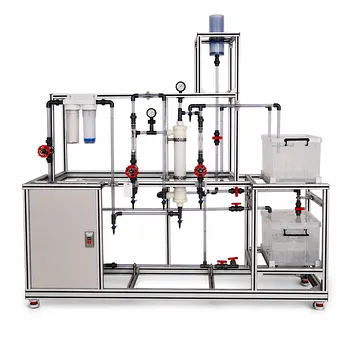
Ultrafiltration Membrane Separation Educational Pilot Plant

Ultrafiltration Membrane Separation Educational Pilot Plant

This ultrafiltration membrane separation educational pilot plant enables undergraduate students to process PVA solutions, study hollow fiber membrane dynamics, and perform quantitative analysis with spectrophotometry for hands-on learning of unit operations and industrial maintenance and membrane cleaning protocols.

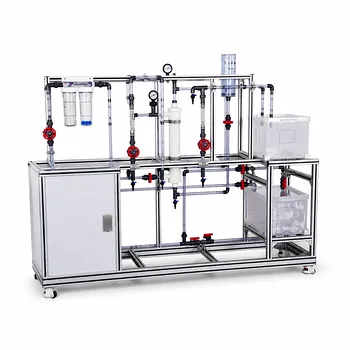
Hollow Fiber Ultrafiltration Membrane Separation Educational Pilot Plant

Hollow Fiber Ultrafiltration Membrane Separation Educational Pilot Plant

Explore our hollow fiber ultrafiltration membrane separation educational pilot plant for hands-on learning of industrial ultrafiltration processes, flux analysis, fouling mitigation, and process control. Compact, customizable, and built for engineering labs.

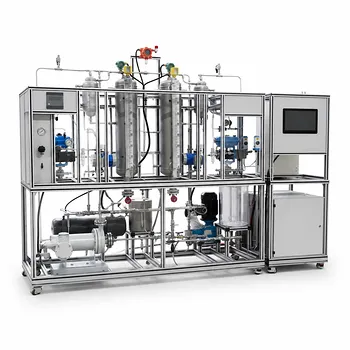
Multifunctional Membrane Separation Educational Pilot Plant with Ultrafiltration, Nanofiltration, Reverse Osmosis

Multifunctional Membrane Separation Educational Pilot Plant with Ultrafiltration, Nanofiltration, Reverse Osmosis

An integrated laboratory bench-scale membrane separation system for higher education engineering labs combining Ultrafiltration, Nanofiltration, and Reverse Osmosis processes. Features industrial PLC control with touch-screen HMI, transparent piping, and academic assessment software. Ideal for chemical and environmental engineering curricula.

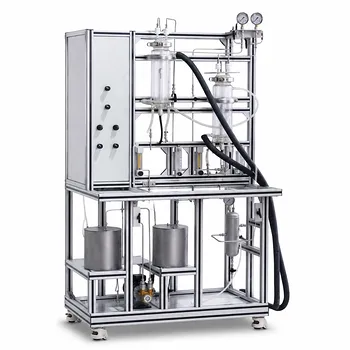
Multi-Functional Membrane Separation Educational Pilot Plant for Unit Operations Lab

Multi-Functional Membrane Separation Educational Pilot Plant for Unit Operations Lab

The Multi-functional Membrane Separation Educational Unit Operations Pilot Plant is an integrated bench-scale laboratory system designed for teaching undergraduate engineering education. It features Ultrafiltration, Nanofiltration, and Reverse Osmosis modules in a compact, mobile unit for practical hands-on learning.

Multi Functional Membrane Crystallization Educational Unit Operations Pilot Plant

Multi Functional Membrane Crystallization Educational Unit Operations Pilot Plant

Integrated bench-scale membrane crystallization pilot plant for engineering education. Provides hands-on training in advanced separation technologies, combining membrane distillation crystallization and process intensification. Features variable scaling vessels, industrial-grade flow control, and interactive digital data acquisition. Customizable for university labs.

Alkaline Membrane Water Electrolysis Educational Pilot Plant Unit Operations Training System

Alkaline Membrane Water Electrolysis Educational Pilot Plant Unit Operations Training System

Hands-on educational pilot plant for alkaline membrane water electrolysis hydrogen production, integrating unit operations training with industrial PLC control, real-time data logging, customizable design, durable 316L stainless steel construction, explosion-proof safety, and modern 5G connectivity for university laboratories.

Photocatalytic Membrane Separation and Degradation Unit Operations Pilot Plant

Photocatalytic Membrane Separation and Degradation Unit Operations Pilot Plant

Bench-scale pilot plant integrating photocatalytic degradation with membrane separation for engineering education. Study advanced oxidation, microfiltration, and hybrid processes using industrial sensors. Features safety light-blocking curtain, low-noise compressor, and durable stainless-steel construction.

Constant Pressure Filtration Educational Unit Operations Pilot Plant

Constant Pressure Filtration Educational Unit Operations Pilot Plant

Hands-on educational pilot plant for constant pressure filtration. Classic plate and frame filter press allows students to study kinetics, determine specific cake resistance, perform cake washing and evaluate washing rates. Ideal for chemical engineering curriculum. Mobile, customizable, safety-compliant design.

Hot Filtration Educational Unit Operations Pilot Plant Laboratory System

Hot Filtration Educational Unit Operations Pilot Plant Laboratory System

This integrated laboratory bench-scale hot filtration pilot plant enables students to study solid-liquid separation under thermal conditions, featuring a stainless steel vessel, removable heating jacket, and multi-layer filter plates for unit operations education, ideal for chemical engineering laboratory curriculum.

Dual-Mode Rectification Pilot Plant for Practical Training Unit Operations

Dual-Mode Rectification Pilot Plant for Practical Training Unit Operations

Industrial-scale dual-mode rectification pilot plant for chemical engineering practical training. Features real-material and simulated-material operation modes, sieve-plate column with sight glasses for visual observation of hydrodynamics, and customizable SCADA control for safe, hands-on learning of unit operations and mass transfer.

Multi-Functional Special Distillation Educational Pilot Plant

Multi-Functional Special Distillation Educational Pilot Plant

Versatile multi-functional special distillation pilot plant for chemical engineering education. Supports continuous, vacuum, azeotropic, reactive, extractive distillation. Transparent glass columns enable real-time visual observation of hydrodynamics and separation processes.

Absorption and Desorption Educational Unit Operations Pilot Plant

Absorption and Desorption Educational Unit Operations Pilot Plant

Dual packed column absorption and desorption pilot plant for chemical engineering education, offering real-time mass transfer coefficient measurement, durable mobile frame, industrial touch-screen interface, and customizable design for varied laboratory curricula, enabling hands-on study of gas absorption and stripping.

Natural Product Extraction Unit Operations Training Pilot Plant

Natural Product Extraction Unit Operations Training Pilot Plant

Integrated natural product extraction pilot plant for chemical engineering training bridges theory and industrial practice with modular extraction and evaporation/concentration units, hybrid touchscreen and manual control, realistic process simulation, and self-contained softened water and vacuum utilities.

Rising and Falling Film Evaporation Educational Unit Operations Pilot Plant

Rising and Falling Film Evaporation Educational Unit Operations Pilot Plant

Hands-on educational pilot plant for studying rising and falling film evaporation, flow regimes, and heat transfer. Customizable for university labs with industrial instrumentation and data acquisition. Enables comparative evaluation of evaporation modes and energy efficiency.

Continuous Batch Extractive Distillation Educational Pilot Plant

Continuous Batch Extractive Distillation Educational Pilot Plant

Versatile pilot plant for continuous, batch, and extractive distillation training. High-borosilicate glass column for visualizing hydraulics, 15.6-inch touchscreen with data logging, precise reflux ratio control 1-99, and durable corrosion-resistant frame. Ideal for chemical engineering education and process research.

Ion Exchange Water Purification Educational Pilot Plant for Engineering Unit Operations

Ion Exchange Water Purification Educational Pilot Plant for Engineering Unit Operations

This bench-scale ion exchange pilot plant trains engineering students in water purification. Dual transparent columns simulate industrial softening and demineralization. Students observe fluid dynamics, perform resin regeneration, and analyze breakthrough curves. The corrosion-resistant frame ensures durability in unit operations experiments.

Gas-Solid Heterogeneous Separation Demonstration Educational Unit Operations Pilot Plant

Gas-Solid Heterogeneous Separation Demonstration Educational Unit Operations Pilot Plant

Comprehensive visual transparent gas-solid separation pilot plant for chemical engineering labs. Demonstrates gravity settling inertial settling cyclone and bag filter technologies. Enables real-time analysis of fluid-particle mechanics pressure drop and collection efficiency. Ideal for undergraduate unit operations courses.

Fixed-Bed Chemical Reaction and Gas Dust Tar Removal Unit Operations Pilot Plant

Fixed-Bed Chemical Reaction and Gas Dust Tar Removal Unit Operations Pilot Plant

Integrated educational pilot plant for studying catalytic gas-solid reactions and downstream gas purification. Features dual fixed-bed reactor, three-stage heating, and touchscreen control for hands-on engineering training. Ideal for chemical and environmental engineering curricula.

Educational Unit Operations Pilot Plant for Intraparticle Diffusion Effective Factor Measurement

Educational Unit Operations Pilot Plant for Intraparticle Diffusion Effective Factor Measurement

Designed for chemical engineering university labs, this pilot plant allows hands-on determination of catalyst particle intraparticle diffusion effective factors and gas-solid reaction kinetics using a fixed-bed tubular reactor with industrial touchscreen control, bridging theory and practical reactor design.

Green Anhydrous Ethanol Refining Practical Training Pilot Plant

Green Anhydrous Ethanol Refining Practical Training Pilot Plant

Advanced integrated pilot plant for university labs demonstrating extractive distillation to produce high-purity absolute ethanol from crude feedstock, featuring multi-column continuous operation, closed-loop solvent recycling, and customizable controls for hands-on engineering education, ideal for chemical engineering training and research.


Leave Your Message