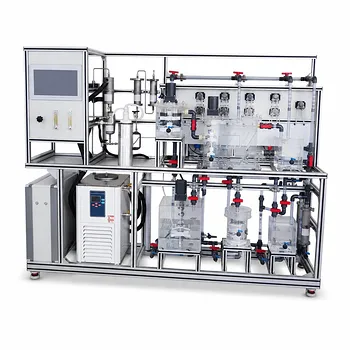
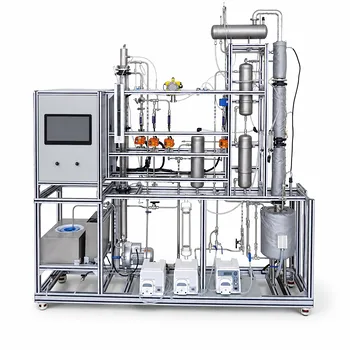
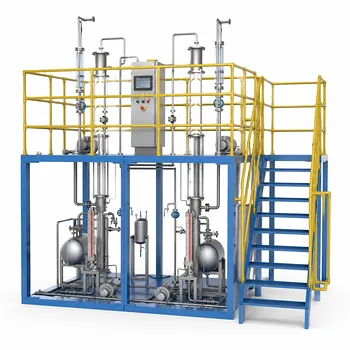
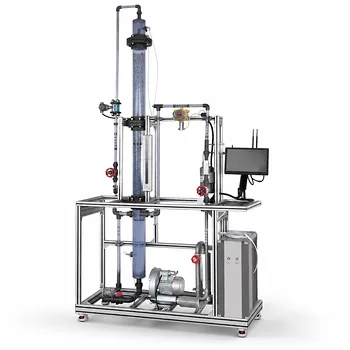
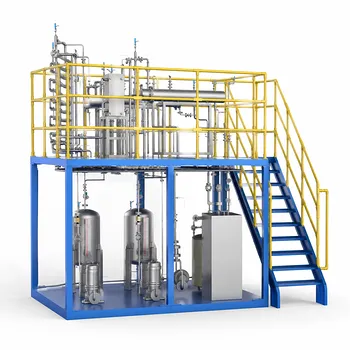
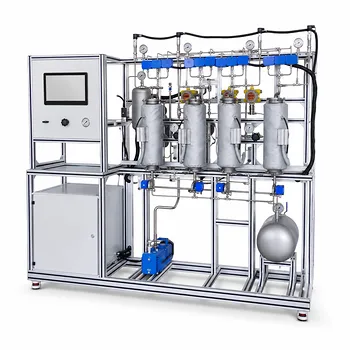
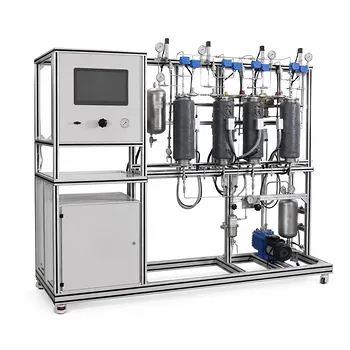
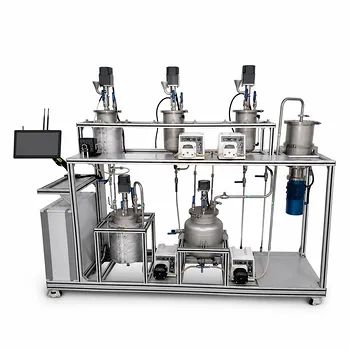
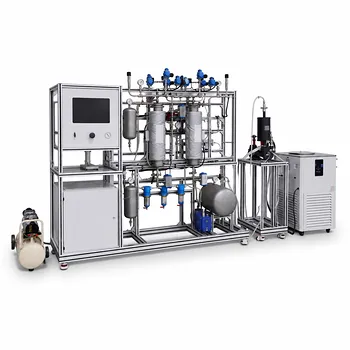
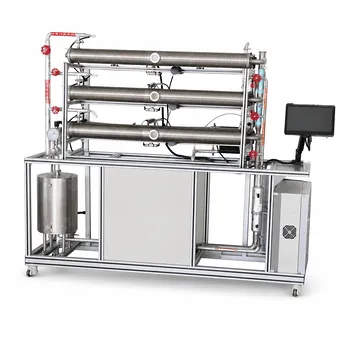
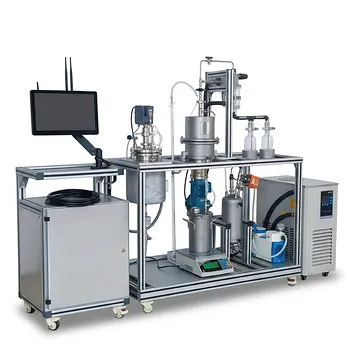
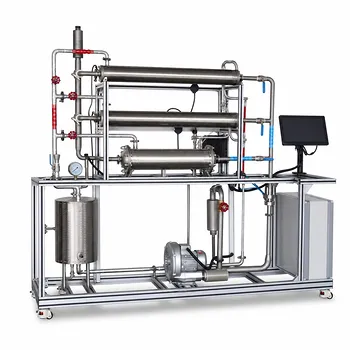
The primary operational trade-off is a calculated gamble between process intensification and asset integrity. Using a high-temperature absorption process (180–230°C) in a pilot plant prevents acid mist formation, cuts cooler surface area requirements, and unlocks low-grade heat recovery. However, this thermal environment catastrophically accelerates corrosion on standard materials, forcing you to adopt specialized, costly alloys or PTFE linings to maintain operational safety.
While high-temperature absorption boosts thermodynamic efficiency in industrial double-contact processes, its successful pilot-scale operation hinges entirely on a material selection strategy that can withstand aggressive high-temperature acid corrosion—a trade-off where process gains are directly offset by increased capital and maintenance complexity.
Parsing the Core Operational Trade-offs
The primary reference establishes a clear dichotomy. You gain significant process efficiencies while introducing a single, critical point of failure that demands a technical solution.
Process Efficiency Gains
Operating absorption columns with inlet gas between 180°C and 230°C eliminates the need for pre-cooling the gas stream. This directly prevents the formation of highly corrosive acid mist, a persistent problem in lower-temperature operations.
Furthermore, bypassing the pre-cooling stage reduces the required heat exchange surface area. This translates to a smaller pilot plant footprint and lower initial capital for cooling infrastructure.
Finally, the high-grade heat exiting the absorber becomes a recoverable asset. You can integrate a waste heat recovery system, improving the overall energy balance of the pilot-scale process.
The Corrosion Penalty
The symmetry is brutal: the same heat that enables these efficiencies exponentially accelerates the corrosion rate of metallic components. Standard stainless steel grades become non-viable in hot, concentrated acid environments.
This breakdown affects the entire absorption circuit. The tower shell, internal distributors, acid piping, and circulation pumps are all subjected to a highly aggressive chemical attack that compromises structural integrity and causes premature failure.
Pilot Plant Verification of Material Constraints
A pilot plant is not just a chemical model; it is a material compatibility testbed. The operational decision to run hot forces you to confront industrial design constraints directly.
Corrosion-Driven Material Selection
To survive this thermal regime, you must observe the shift to niche, high-performance materials. Common engineering choices include low-alloy cast iron, which offers better acid resistance than carbon steel, or silicon-cast iron, which forms a protective passive layer.
For the most aggressive services, a physical barrier is required. Pilot plants demonstrate this by lining vessel shells and piping with polytetrafluoroethylene, decoupling mechanical strength from chemical resistance, albeit often at the cost of thermal conductivity.
Monitoring Mass Transfer Shifts
The pilot environment allows researchers to analyze how the temperature gradient modifies the absorption column's performance. You can trace how the elevated thermal state alters the mass transfer coefficient.
Simultaneously, the high gas temperature shifts the driving force for absorption. Because gas solubility decreases as temperature rises, the thermodynamic impetus for the solute to leave the vapor phase is reduced, requiring you to balance kinetics against equilibrium.
The Hidden Process Complexity Trade-off
Operating at high temperatures introduces secondary thermodynamic and safety trade-offs that the supplementary references make explicit, adding operational hurdles beyond simple material degradation.
The Thermodynamic Solubility Ceiling
A fundamental principle of gas-liquid phase equilibrium dictates that the solubility of a solute gas decreases as the solvent temperature increases. By raising the absorber inlet temperature, you are inherently lowering the equilibrium absorption capacity of the liquid.
This negative effect creates a direct conflict. You are improving mist prevention and heat recovery but fighting against the natural physics that govern mass transfer, demanding more efficient packing or higher liquid flow rates to compensate.
Controlling the Exothermic Runaway Risk
In highly exothermic absorption processes—such as hydrogen chloride absorption—a high starting temperature reduces the thermal safety margin. The process generates additional heat, and if the column cannot dissipate it fast enough, a runaway temperature spike can occur.
This thermal runaway further suppresses gas solubility, creating a self-reinforcing destructive cycle. Hence, hot absorption pilot plants become stringent tests of your heat removal infrastructure, relying on inter-stage cooling loops and high liquid spray densities to carry heat away as sensible gain.
Understanding the Trade-offs
A transparent analysis requires acknowledging that the benefits are never without attached liabilities. By choosing high-temperature absorption, you accept the following matrix of burdens.
- Accelerated Asset Wear: You trade lower upfront cooler costs for significantly higher, recurring material procurement costs due to corrosion-fatigue cycles.
- Thermodynamic Penalty: You accept a reduced chemical driving force for absorption in exchange for an improved physical state of the fluid (no acid mist).
- Exotherm Sensitivity: You commit to sophisticated control systems and in-situ cooling to prevent the process from exceeding the mechanical limits of even corrosion-resistant alloys.
- Insulation and Safety Lag: The high-grade heat recovery requires insulated, high-temperature piping that poses a severe burn hazard and demands strict safety protocols during pilot plant operation.
Making the Right Choice for Your Pilot Plant Goal
Your decision to operate a pilot plant at high-temperature absorption setpoints should be dictated by the primary variable you seek to validate or optimize.
- If your primary focus is preventing acid mist and validating industrial double-absorption techniques: Run the process hot and allocate budget for silicon-cast iron or PTFE-lined internals to prove the corrosion mitigation strategy works at scale.
- If your primary focus is maximizing mass transfer and thermodynamic efficiency: Avoid high-temperature absorption, as the decreased solubility will hamper your separation performance metrics by reducing the equilibrium driving force.
- If your primary focus is evaluating energy integration and heat recovery: The high-temperature route is mandatory to demonstrate the economic feasibility of recovering low-grade heat from the outgoing acid stream.
By approaching the pilot plant as a holistic test of materials, thermodynamics, and energy balance, you move beyond theoretical modeling to master the real, interconnected constraints that define industrial chemical engineering.
Summary Table:
| Operational Parameter | Process Gains (Benefits) | Challenges & Trade-offs |
|---|---|---|
| Thermal Profile | Prevents acid mist; enables waste heat recovery | Accelerates corrosion; increases thermal runaway risks |
| Equipment & Footprint | Reduces cooler surface area and plant footprint | Demands expensive alloys or PTFE lining |
| Mass Transfer Kinetics | Bypasses gas pre-cooling requirements | Lowers gas solubility, reducing absorption driving force |
Scale Up Safely with LABPARK Pilot Plants
Balancing process intensification and material integrity is critical for successful scale-up. LABPARK delivers high-performance Educational and Vocational Unit Operations Pilot Plants in chemical engineering, bioprocess & biotech, and environmental & water treatment.
Specifically designed for universities, research institutes, and enterprises, our systems offer the durability, advanced materials, and control systems needed to safely test extreme parameters.
Ready to optimize your pilot-scale research? Contact us today to discuss your custom project requirements!
Related Products
- Thermal Desorption Exhaust Gas and Tail Water Treatment Educational Pilot Plant
- Absorption and Desorption Educational Unit Operations Pilot Plant
- Carbon Dioxide Absorption and Desorption Educational Pilot Plant for Carbon Capture Studies
- Multimodal Absorption and Desorption Pilot Plant for Unit Operations Training
- Dual-Mode Gas Absorption and Desorption Unit Operations Training Pilot Plant
People Also Ask
- How is P, M, and B alkalinity applied in pilot plants? Prevent Boiler Scaling & Corrosion
- What are inline fluorescence sensor risks, and how can they be managed? Key Strategies
- Lime-Soda vs. Cation Exchange Softening: How Do Effluent Characteristics Compare in Pilot Plants?
- How is iron concentration monitored to evaluate corrosion and filtration efficiency in water treatment pilot plants?
- How do anodic & cathodic inhibitors protect heat exchangers? Optimize Your Water Treatment Pilot Plant