The symbiotic relationship between anodic and cathodic inhibitors is the fundamental mechanism that prevents catastrophic galvanic corrosion in multi-metal heat exchangers. In a pilot plant setting, an anodic inhibitor like sodium chromate passivates the steel by forming a protective oxide film, while cathodic inhibitors such as polyphosphates or zinc ions form a barrier on copper surfaces to stifle the oxygen reduction reaction. When applied in a tightly controlled, synergistic formulation—for instance, 20 ppm chromate with 40 ppm polyphosphate at a pH of 6.0–6.5—they eliminate the electrochemical potential difference that would otherwise cause the anode to dissolve aggressively.
The core challenge in a multi-metal system is not simply stopping a single reaction, but electrically isolating the two metals. Anodic inhibitors block the exit of metal ions at the anode, and cathodic inhibitors block the arrival of electrons at the cathode; adding zinc ions amplifies this protection by precipitating an insulating layer exactly where localized high pH develops, thereby interrupting the corrosion current.
The Electrochemical Battlefield in a Heat Exchanger
You are managing a system where dissimilar metals are in direct electrical contact within a conductive fluid. This is a battery, and your pilot plant is the circuit.
Understanding the Galvanic Threat
In a copper-steel coupled heat exchanger, a potential difference exists immediately upon immersion. The steel becomes the anode, oxidizing and losing mass, while the copper becomes the cathode, facilitating oxygen reduction. The water acts as the electrolyte, completing the circuit.
If you treat this with only an anodic inhibitor, you risk a dangerous failure mode. An insufficient dose of an anodic inhibitor will not fully cover the steel surface, turning the tiny exposed patches into intense, deep pits. This is why a dual-mechanism strategy is a necessity, not an option.
The Role of the Anodic Inhibitor
Anodic inhibitors like sodium chromate function by interposing themselves directly into the metal oxidation reaction. They react with the metal ions at the anode to form an invisible, passivating oxide film. This film acts as a physical and electronic barrier, drastically increasing the overpotential required for metal dissolution and shifting the steel’s electrochemical potential in the noble direction.
By polarizing the steel to a more noble state, chromate closes the potential gap between the steel and the copper. The driving force for galvanic current is reduced at its source.
The Role of the Cathodic Inhibitor
Cathodic inhibitors target the copper surface. They exploit the localized increase in pH that naturally occurs at the cathode due to the reduction of dissolved oxygen. Polyphosphates adsorb onto the copper and form a thin, vitreous layer that acts as a diffusion barrier, physically blocking oxygen molecules from reaching the metal surface to accept electrons.
This makes the cathode inefficient. When you suppress the rate of the cathodic reaction, you throttle the entire electrochemical cell, even if the anode remained active. No electrons accepted means no metal dissolved.
Achieving Synergy: The Zinc Precipitation Mechanism
Simple film formation is often insufficient under dynamic flow conditions. True synergy involves a chemical feedback loop.
How Zinc Ions React to Corrosion
Adding a small concentration of zinc ions to a polyphosphate-chromate mixture creates a targeted, self-healing barrier. The cathodic reaction produces hydroxide ions, raising the pH in a thin boundary layer on the copper surface. Zinc ions entering this high-pH zone instantly precipitate as insoluble zinc phosphate or zinc hydroxide.
This precipitation is naturally site-specific. The insulating deposit forms only where the corrosive attack is most likely to occur, plugging the cathodic sites with a physical, non-conductive scale. This converts the cathodic reaction from a purely chemical inhibition mechanism to a physical blockage mechanism.
The Precision of the Pilot Plant Environment
Research pilot plants provide the unique ability to visualize this interaction through polarization curve monitoring. By precisely controlling the 4 ppm phosphate, 2 ppm chromate, and 4 ppm zinc dose, you can observe the corrosion potential shifting and the mixed potential settling at a stable, low-current value.
The control over pH at 6.0–6.5 is non-negotiable. Too acidic, and the zinc/phosphate precipitate dissolves; too alkaline, and the steel loses its protective chromate film to general passivation breakdown. The pilot plant allows you to hold this narrow window exactly where the synergy peaks.
Understanding the Trade-offs
This elegant chemical system carries inherent constraints that your pilot studies must acknowledge.
- Concentration Dependency and Pit Propensity: An anodic inhibitor is a double-edged sword. Flow velocity changes in a heat exchanger can deplete the inhibitor locally. If chromate concentration drops below the critical threshold, the large cathodic copper surface accelerates pitting on the tiny exposed steel areas faster than if no inhibitor were present.
- Environmental and Health Costs: The synergistic formula described relies on sodium chromate, a hexavalent chromium compound that is highly toxic and regulated. A pilot study using this formula demonstrates the electrochemical principle perfectly, but a real-world application you design later will likely need to replicate this mechanism with non-toxic alternatives based on molybdate or silicate.
- Complexity in Water Chemistry: Any stray reducing agent or contamination can break down the passivating film. The zinc-phosphate precipitation is also highly sensitive to heat flux, and scaling deposits on the copper can sometimes stifle heat transfer efficiency if not perfectly controlled.
Designing Your Pilot Study for Optimal Results
Your research goal will determine your operational parameters. Tailor your approach to the specific failure you are trying to prevent.
- If your primary focus is preventing pitting attack: Prioritize the anodic inhibitor concentration. Use continuous monitoring of the steel's corrosion potential relative to a standard electrode to ensure you stay within the passive region, well above the pitting potential.
- If your primary focus is suppressing uniform wastage on copper: Maximize the cathodic polarization by optimizing polyphosphate and zinc dosage. Use scanning electron microscopy on your test coupons to verify the uniformity of the precipitate layer under flow conditions.
- If your primary focus is long-term system stability: Automate your pilot plant to maintain the pH tightness boundary of 6.0-6.5 using acid or base dosing. A deviation of just 0.5 pH units invalidates the synergistic effect.
The pilot plant transforms these interactions from textbook theory into a controlled, observable science, giving you the quantitative data to balance film formation against water chemistry.
Summary Table:
| Inhibitor Type | Key Example | Primary Mechanism | Target Metal / Role |
|---|---|---|---|
| Anodic | Sodium Chromate | Forms passivating oxide film to block metal dissolution | Steel (Passivates Anode) |
| Cathodic | Polyphosphates | Adsorbs to form a diffusion barrier blocking oxygen | Copper (Blocks Cathode) |
| Synergistic Additive | Zinc Ions | Precipitates at high-pH sites to block corrosion current | Localized Cathodic Sites |
Optimize Your Water Treatment Research with LABPARK
Are you looking to study electrochemical corrosion, heat transfer, or advanced water treatment processes with maximum precision?
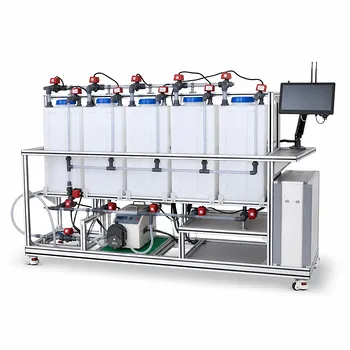
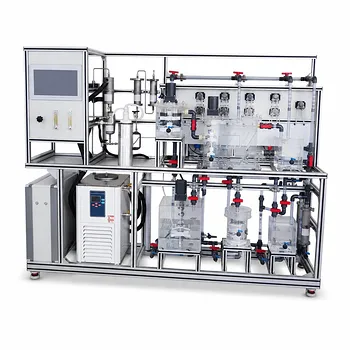
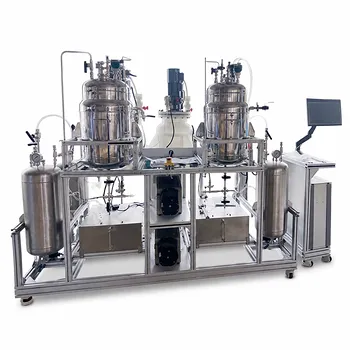
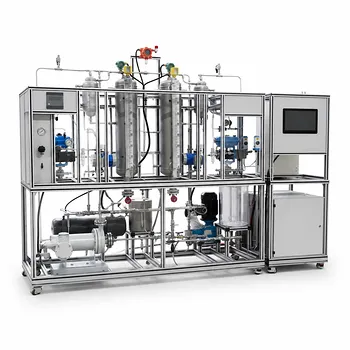
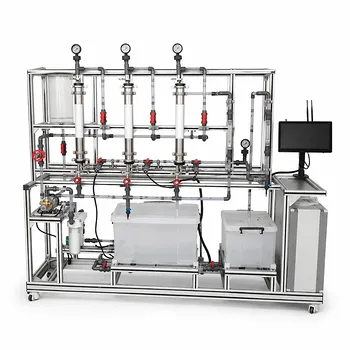
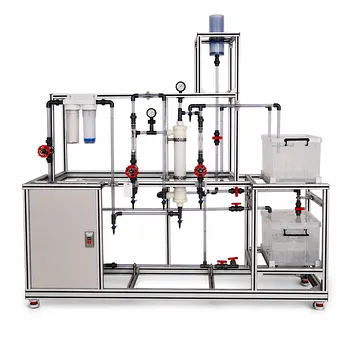
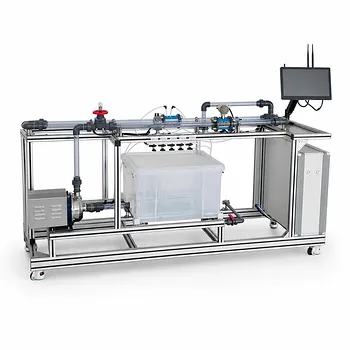
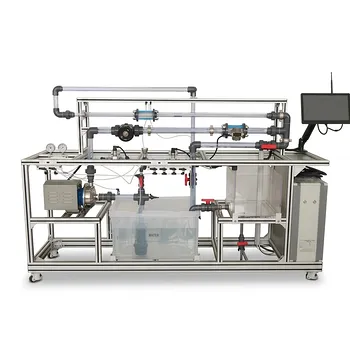
LABPARK provides premium Educational and Vocational Unit Operations Pilot Plants in chemical engineering, bioprocess & biotech, and environmental & water treatment for universities, research institutes, and enterprises. Our systems allow you to precisely control pH, flow, and chemical dosing to study complex synergistic reactions safely and efficiently.
Take your laboratory research to the next level—contact our engineering experts today to discuss your custom pilot plant configuration!
Related Products
- Electrochemical Water Treatment Educational Unit Operations Pilot Plant
- Thermal Desorption Exhaust Gas and Tail Water Treatment Educational Pilot Plant
- Ion Exchange Water Purification Educational Pilot Plant for Engineering Unit Operations
- Water Electrolysis Hydrogen Production and Storage Educational Pilot Plant
- Alkaline Membrane Water Electrolysis Educational Pilot Plant Unit Operations Training System
People Also Ask
- What design features do educational electrochemical pilot plants utilize to manage gas liberation and water loss?
- How can unit operations pilot plants show lead-acid concentration vs state of charge? Real-time monitoring guide.
- How do educational electrochemical pilot plants scale up electrolysis? Master industrial engineering.
- How to Estimate Sulfate in Water Treatment Pilot Plant Deposits: Gravimetric Guide
- How can foaming be managed during steam generation experiments in water treatment unit operations pilot plants? Tips