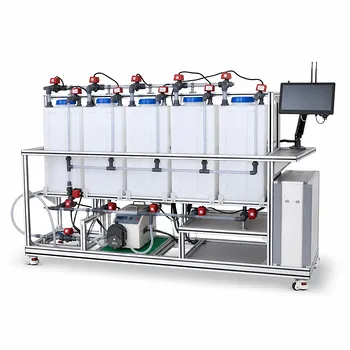
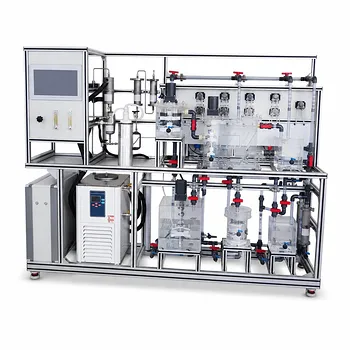
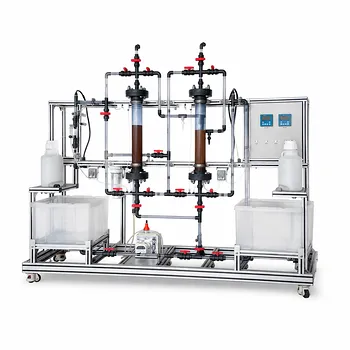
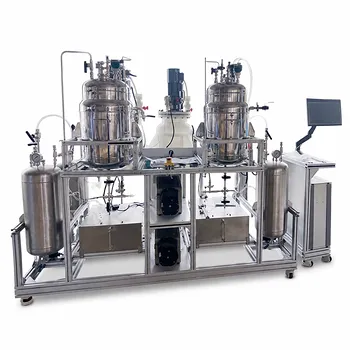
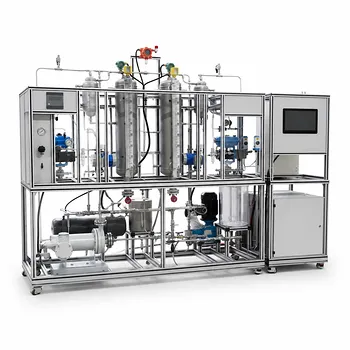
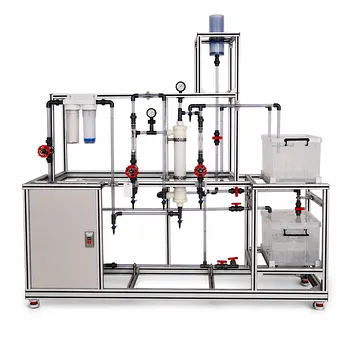
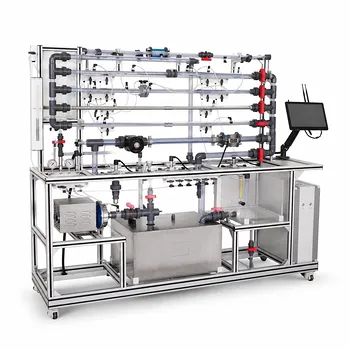
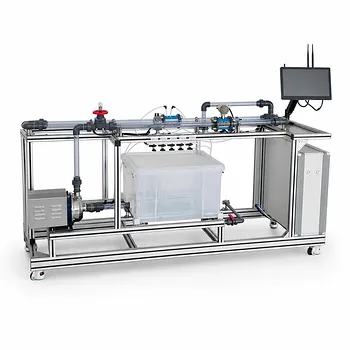
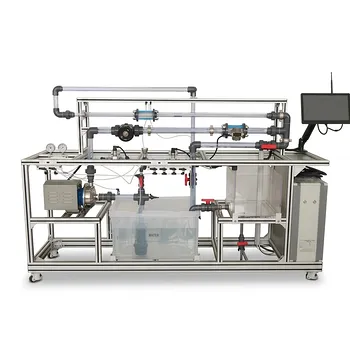
Understanding the effluent differences is non-negotiable when configuring a pilot plant for teaching or research. In a lime‑soda softener, the treated water typically retains 20 to 35 ppm of hardness as CaCO₃—a level that can be driven down to ~2 ppm with post‑phosphate treatment. Cation exchange (zeolite) softening, however, reduces hardness to virtually zero from influent below 100 ppm, but slightly elevates total dissolved solids because each divalent hardness ion is replaced by two sodium ions.
While a cation exchange column delivers water that is “soft” on a molar basis, it actually increases the water’s TDS count. In contrast, lime‑soda softening leaves a deliberate residual but reduces the overall salt load and removes silica—making the side‑by‑side comparison one of the most powerful learning tools a pilot plant can offer.
The Core Differences in Effluent Water Quality
The two processes yield fundamentally different water chemistries, even when both are labeled “softening.” Understanding these differences is critical for designing meaningful experiments.
Hardness Reduction: Near‑Zero vs. Controlled Residuals
Lime‑soda softening precipitates calcium as CaCO₃ and magnesium as Mg(OH)₂, leaving a practical residual of 20 to 35 ppm as CaCO₃. This residual exists because the precipitates have finite solubility; heating reduces it to about 20 ppm, and a small phosphate dose can drive it to as low as 2 ppm.
Cation exchange softening swaps hardness ions for sodium. With fresh resin and influent below 100 ppm CaCO₃, the effluent contains virtually zero hardness. The process is stoichiometric, so the removal is complete until the resin bed is exhausted.
Impact on Total Dissolved Solids (TDS)
This is the often‑overlooked differentiator. Lime‑soda actually lowers the overall mineral content because it removes both calcium/magnesium and a portion of alkalinity. Cation exchange, however, increases TDS—the atomic weight of the replacing sodium (23) is roughly double that of magnesium (12) and slightly above that of calcium (20), causing a net rise in dissolved salts. Pilot plant monitoring should include conductivity or TDS to make this effect visible to students and researchers.
Temperature and Process Variables in Lime‑Soda Softening
Lime‑soda performance is sensitive to operating conditions, which makes it an exceptionally rich teaching tool.
Cold vs. Hot Operation and Residual Hardness
At ambient (cold) temperatures, calcium hardness can be brought down to about 35 ppm as CaCO₃, but roughly 90% of the original magnesium hardness remains in solution. When the process is run hot, the solubility of the precipitated salts drops, taking total hardness down to around 20 ppm. Demonstrating this thermal effect in a pilot plant vividly illustrates solubility product principles.
Using Phosphate for Deep Polishing
One of the most instructive process optimizations is the addition of a small amount of phosphate after settling and filtration. With a residual of 5–8 ppm PO₄, the remaining hardness can be reduced to as little as 2 ppm. This step ties together precipitation chemistry, coagulant aid action, and tertiary treatment—key competencies for any environmental engineering course.
Understanding the Trade‑offs for Pilot Plant Design
Every softening technology comes with operational and educational baggage. A well‑configured pilot plant exploits, rather than hides, these trade‑offs.
When Precision Hardness Control Matters
If your research requires a precisely defined, stable low‑hardness effluent, cation exchange is the more controllable option. You get zero hardness immediately without worrying about temperature, mixing, or sludge recirculation. For studies on membrane fouling or boiler feedwater where any hardness spike is unacceptable, this reliability outweighs the TDS increase.
Educational Value: Visual Precipitation vs. Ion Exchange Theory
Lime‑soda softening provides visible chemical reactions—floc formation, settling, and sludge accumulation—that make abstract water chemistry tangible. In contrast, cation exchange processes are largely invisible and can feel like "black box" operations unless paired with break‑through curves and conductivity logs. Combining both in series (lime softening followed by cation exchange) creates an optimal teaching scenario, showing how residual carbonate can be scrubbed while total solids are managed.
Making the Right Choice for Your Pilot Plant Goals
The final configuration should be driven by what you want your students or researchers to measure and internalize.
- If your primary focus is demonstrating near‑complete hardness removal with minimal operator intervention: Choose cation exchange. It delivers effluent hardness close to zero and simplifies experiments that demand a constant, low‑hardness baseline.
- If your primary focus is teaching chemical precipitation, pH control, and sludge handling: Lead with lime‑soda softening. The visible chemistry and multiple operating levers (temperature, chemical dose, coagulant aid) provide unmatched pedagogical depth.
- If your primary focus is simulating low‑cost, large‑scale municipal softening or exploring total solids reduction: Run both processes side‑by‑side. Lime‑soda lowers TDS and removes silica, while cation exchange shows the hidden cost of sodium addition—turning a simple comparison into a systems‑thinking exercise.
The best pilot plant does not just soften water—it reveals the intimate link between effluent characteristics, operating decisions, and real‑world treatment economics.
Summary Table:
| Parameter | Lime-Soda Softening | Cation Exchange Softening |
|---|---|---|
| Effluent Hardness | 20–35 ppm as CaCO₃ (down to 2 ppm with phosphate) | Virtually zero |
| TDS Impact | Decreases TDS (precipitates hardness & alkalinity) | Increases TDS (sodium replacement) |
| Process Control | Sensitive to temperature, pH, and chemical dosing | Predictable bed exhaustion and flow control |
| Educational Focus | Precipitation chemistry, settling, and sludge handling | Ion exchange kinetics and breakthrough curves |
Ready to elevate your environmental engineering lab? LABPARK provides advanced Educational and Vocational Unit Operations Pilot Plants in chemical engineering, bioprocess & biotech, and environmental & water treatment. We help universities, research institutes, and enterprises build hands-on training systems that bring complex chemical processes to life. Contact us today to configure the perfect pilot plant for your training and research needs!
Related Products
- Electrochemical Water Treatment Educational Unit Operations Pilot Plant
- Thermal Desorption Exhaust Gas and Tail Water Treatment Educational Pilot Plant
- Ion Exchange Water Purification Educational Pilot Plant for Engineering Unit Operations
- Water Electrolysis Hydrogen Production and Storage Educational Pilot Plant
- Alkaline Membrane Water Electrolysis Educational Pilot Plant Unit Operations Training System
People Also Ask
- What design features do educational electrochemical pilot plants utilize to manage gas liberation and water loss?
- How can unit operations pilot plants show lead-acid concentration vs state of charge? Real-time monitoring guide.
- How do educational electrochemical pilot plants scale up electrolysis? Master industrial engineering.
- How to Estimate Sulfate in Water Treatment Pilot Plant Deposits: Gravimetric Guide
- How can foaming be managed during steam generation experiments in water treatment unit operations pilot plants? Tips