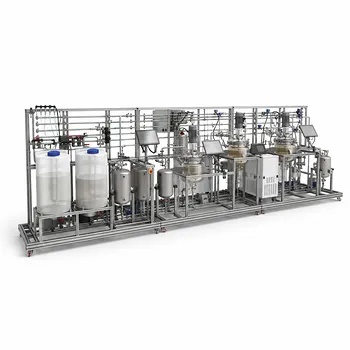
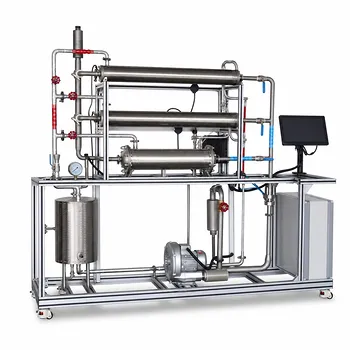
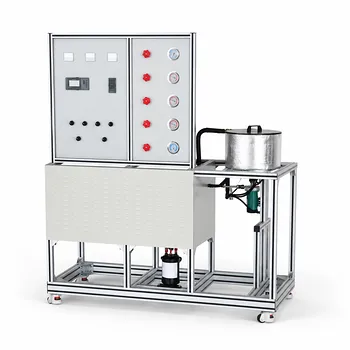
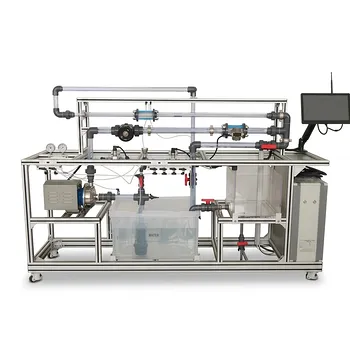
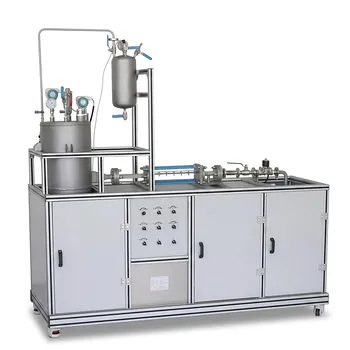
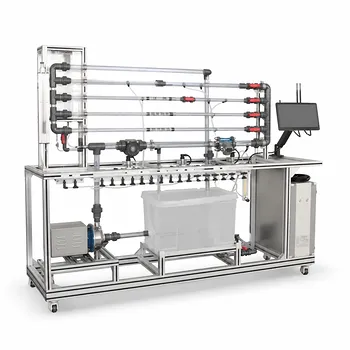
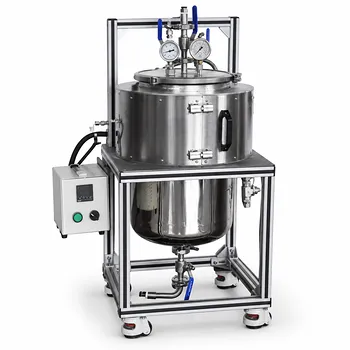
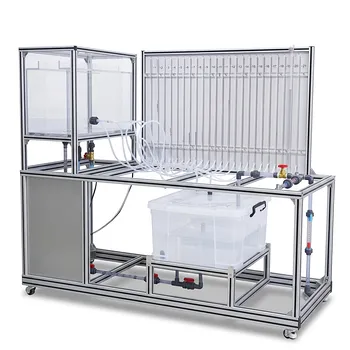
Choosing the right instrumentation for a pilot plant starts with a fundamental hardware decision. Process analyzers are large, rack-mounted systems demanding fixed installations, external utilities, and fiber optic routing, with typical price tags of $50,000 to $200,000. Sensors, by contrast, are compact, self-contained instruments that you can move from skid to skid, integrate directly into a unit operation, and purchase for $20,000 to $100,000. In a training environment, this physical and economic gulf dictates how quickly students can interact with real-time data, how many measurement points you can afford, and how authentically you can simulate modern process control.
The defining difference is integration agility. For bioprocess or chemical engineering teaching pilot plants, sensors remove the barriers of fixed infrastructure, high capital cost, and complex utility hookups. They let you teach distributed monitoring across every stage of a process, while analyzers remain a specialized, high-selectivity solution reserved for advanced research scenarios.
Understanding the Physical and Economic Divide
The most immediate distinction when walking onto a training pilot plant floor is how an instrument occupies space and taps into plant resources.
Footprint, Utilities, and Installation
Process analyzers are 19‑inch rack‑mountable systems that behave like a fixed piece of plant infrastructure. They require dedicated floor space, a conditioned environment, and a stable supply of power, plant air, and often environmental controls. Getting them online means routing expensive fiber optic or electrical cable bundles from the process line back to the rack—a permanent, time‑consuming installation.
Sensors, from handheld photometers to MEMS‑based NIR spectrometers, are designed for simplicity. They pack the detector, electronics, and often the sample interface into a single lightweight unit. You can bolt them directly onto a pilot‑scale bioreactor, distillation column, or heat exchanger skid with minimal disruption and almost no utility footprint.
Capital Cost and Scale
The price differential isn’t trivial. Analyzer systems land in the $50k–$200k range, which for a teaching facility often means one—maybe two—units can be justified. Sensors operate in a $20k–$100k bracket, but their value grows when you replicate them. You can afford a network of sensors, covering multiple unit operations simultaneously and giving every student group a hands‑on measurement interface.
Mobility and Training Flexibility
Sensors are intrinsically mobile. That mobility changes the pedagogy of a pilot plant. You can teach students to reconfigure measurement points for different experiments, demonstrate the impact of sensor location on process control, and run parallel trials on separate skids without buying duplicate capital equipment. Process analyzers, once installed, become a permanent fixture; relocating them is a project, not a curriculum decision.
Maintenance and Operator Skill Level
A simplified user interface is a training necessity. Sensors typically come with onboard data processing and straightforward calibration routines, letting students focus on process principles rather than instrument programming. Process analyzers demand expert operators who understand automated sampling modules, predefined method settings, and automated result calculations. They are built for 24/7 unattended operation in industry—an overkill that can obscure the underlying engineering lesson in a teaching lab.
How the Choice Shapes Your Data and Teaching Strategy
The hardware selection cascades into how you collect, calibrate, and teach data science principles alongside process control.
Inverse vs. Direct Calibration Methods
In a training environment, you often cannot run a pilot plant for months to gather massive calibration datasets. That’s where direct methods—like Classical Least Squares (CLS)—become a practical ally. They allow you to import pre‑existing spectral libraries (e.g., FTIR libraries), sidestepping the exhaustive, time‑consuming data collection that inverse methods (PLS, PCR) demand. Many compact sensors can leverage these direct models, turning a simple instrument into a multi‑component prediction tool without a year‑long commissioning phase.
Laboratory-Like Flexibility vs. Process Reliability
A laboratory instrument gives you open‑ended control and rich, raw data—great for method development but a trap for a pilot plant. Packing a lab spectrometer into an industrial box fails because students need reliability, not complexity. Process analyzers are complete systems with automated sampling and preset methods. In an educational setting, you want to replicate that industrial workflow. Many modern sensors blur the line: they deliver the reliability of a process analyzer in a portable format, teaching students to trust automated data flows while still giving them access to the underlying spectral signals for educational analysis.
The Capability Spectrum: From Univariate Sensors to High-Selectivity Analyzers
Not all sensors are equal, and not all analyzers are overkill. Plotting instruments on a business (cost/complexity) and analytical (selectivity/performance) grid clarifies where each tool belongs.
Low-Cost, Essential Sensors
Univariate sensors—pH, dissolved oxygen, conductivity, turbidity, viscosity—sit at the foundation. They are inexpensive, robust, and critically, teach fundamental feedback control loops that every chemical engineer must master. In water treatment pilot plants, a network of these sensors mirrors exactly what a student will encounter in a municipal SCADA screen.
Mid-Range Smart Sensors
Compact NIR or Raman sensors fall into the next tier. They offer moderate multi‑component capability and real‑time process signatures without the shackles of a fixed installation. Their sweet spot is teaching Quality by Design (QbD) principles: students can build partial least squares models on a single skid, visualize batch trajectories, and understand multivariate statistical process control in a single afternoon.
High-End Analyzers for Research
Mass spectrometers, chromatography units, and high‑resolution Raman analyzers occupy the top‑right corner—high selectivity, high complexity, high cost. These become necessary only when your teaching objective is advanced bioprocess control, such as monitoring multiple metabolite concentrations simultaneously in a mammalian cell culture. In that context, the analyzer’s ability to resolve chemically similar species justifies the infrastructure burden. But this is a niche need in a training plant, not the starting point.
Understanding the Trade-offs
Every instrument choice carries an opportunity cost. Being clear about these pitfalls turns a budget decision into a strategic one.
Sensors Are Not a Panacea for All Measurements
A simple NIR sensor will struggle to resolve low‑concentration impurities or chemically identical isomers. If your curriculum demands mass‑spectrometry‑level identification, a sensor will give you a false sense of capability and frustrate students. Sensors also rely on robust calibration strategies; while you can import libraries, you must still validate them against your specific process matrix—skipping that step teaches bad metrology.
Analyzers Can Stifle Hands-On Learning
A $150,000 mass spectrometer locked in a utility closet doesn’t invite curiosity. Students may never see the sample flow path or understand the signal chain. The result is that they can operate a “black box” but cannot troubleshoot a real plant. If you choose an analyzer, you must complement it with transparent teaching interventions, like dismantling a decommissioned unit or building a visual system model.
The Hidden Cost of Accuracy vs. Precision
In a pilot plant exercise, students often conflate high precision with high accuracy. A sensor might produce perfectly reproducible readings (low RSD) yet be systematically off because of an outdated calibration—a classic teaching moment. Analyzers often mask this through automated, factory‑locked algorithms. To build true analytical competence, the instrumentation must allow students to intentionally explore and correct systematic errors, something simpler sensors facilitate when paired with reference measurements.
Don’t Re‑Package a Lab Instrument
Simply putting a lab spectrometer in an industrial housing is a common budget mistake. It lacks automated sample handling, simplified interfaces, and the continuous‑operation robustness needed to avoid measurement variability caused by operator influence. A true process sensor or analyzer removes the human sampling error, which is exactly what you want students to experience.
Making the Right Choice for Your Training Pilot Plant
The decision should flow from your pedagogical goals, not just a procurement catalog. Use these clarity‑focused directives to align the instrument with your objective.
-
If your primary focus is teaching fundamental unit operations and process control: Build your plant around a network of univariate and smart sensors. They are low‑cost, easy to integrate, mobile, and allow students to reconfigure measurement loops and interact directly with the signal chain, reinforcing core engineering principles.
-
If your pilot plant serves advanced biotech or chemical research alongside teaching: Designate one fixed analyzer station for high‑selectivity needs (e.g., Raman for bioprocess QbD) while equipping the rest of the skids with sensors. This hybrid model teaches both distributed sensing and centralized, complex analysis without overwhelming your budget.
-
If your curriculum must mirror an industrial quality‑by‑design framework: Start with sensors that support direct calibration methods to quickly deploy robust models. This delivers the data‑rich environment required to practice multivariate control without the year‑long data collection campaigns that would stall student learning.
-
If your primary goal is to minimize integration complexity and maximize uptime: Favor process‑grade sensors over laboratory instruments in enclosures. Their automated sampling, simplified user interfaces, and rugged design keep the plant running and the focus on process performance, not instrument troubleshooting.
A training pilot plant is a sandbox for competence. The instrumentation you select either opens the sandbox for exploration or walls it off behind infrastructure and cost. Choose the tool that puts students as close as possible to the process, and you’ll graduate engineers who understand not just how to read a number, but how that number became trustworthy.
Summary Table:
| Feature | Process Analyzers | Process Sensors |
|---|---|---|
| Footprint & Setup | Large, fixed rack-mount; complex utilities | Compact, direct skid integration |
| Typical Cost | $50,000 – $200,000 | $20,000 – $100,000 |
| Mobility | Fixed infrastructure | Highly mobile & reconfigurable |
| Operator Skill | High (demands expert configuration) | Low to Moderate (student-friendly) |
| Primary Use | Advanced research, high selectivity | Hands-on unit operations training |
Optimize Your Training Pilot Plant with LABPARK
Choosing the right balance of sensors and analyzers is key to engineering student success. LABPARK provides state-of-the-art Educational and Vocational Unit Operations Pilot Plants in chemical engineering, bioprocess & biotech, and environmental & water treatment. Tailored for universities, research institutes, and enterprises, our pilot plants are designed to deliver realistic, hands-on industrial training with optimal instrumentation layouts.
Ready to design or upgrade your teaching laboratory? Contact LABPARK today to collaborate with our specialists on a custom pilot plant solution.
Related Products
- Multi Functional Catalytic Reaction and Reactor Evaluation Educational Unit Operations Pilot Plant
- Methanol Synthesis and Catalyst Performance Evaluation Educational Unit Operations Pilot Plant
- Continuous Batch Extractive Distillation Educational Pilot Plant
- General Purpose Cosmetics Production Unit Operations Training Pilot Plant
- Rising and Falling Film Evaporation Educational Unit Operations Pilot Plant
People Also Ask
- What reaction engineering principles are shown in a catalytic reactor pilot plant? SO2 Oxidation Guide
- Why is FTIR integration in catalytic pilot plants important? Real-Time Student Insights
- How to analyze active metal distribution & identify catalyst poisoning in pilot plants? Expert Diagnostic Guide
- How do temperature limits and WHSV influence catalytic reactor optimization? Scale-Up Guide
- Why is XPS Critical for Catalytic Reactor Pilot Plants? Optimize Catalyst Performance