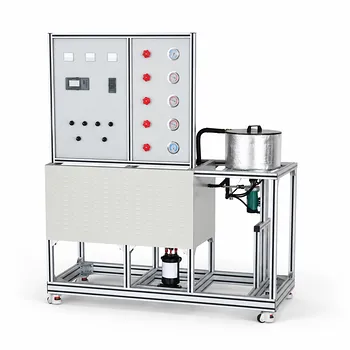
Mid-infrared (Mid-IR) spectroscopy is the cornerstone technique for trace gas analysis in environmental and waste treatment pilot plants. To achieve the parts-per-billion sensitivity required, you must prioritize three hardware essentials: a gas cell with a multi-pass optical path of up to 20 meters, a ruggedized spectrometer designed to reject mechanical vibration and thermal drift, and a Fourier Transform (FTIR) analyzer capable of resolving complex, multi-component mixtures. Your selection will ultimately be defined by how well you conquer the harsh, variable environment outside the laboratory.
Successful integration isn't just about buying a sensitive detector—it's about engineering a system that maintains that sensitivity amid the unpredictable vibrations, humidity, and temperature swings of a pilot plant. The core challenge is achieving a stable, long optical path in a compact footprint while ensuring the spectral data remains reproducible enough to make legally defensible emission decisions.
Why Mid-IR is the Right Foundation for Trace Gas Work
The Power of Fundamental Vibrations
Mid-IR radiation interacts with the strongest, most fundamental stretching and bending vibrations of gas molecules. This generates intense, highly specific absorption fingerprints that NIR or Raman spectroscopy simply cannot match for trace-level detection. For volatile organic compounds (VOCs) and stack emissions, Mid-IR provides the selectivity needed to distinguish between chemically similar species at the parts-per-billion level, which is often a regulatory requirement.
Sensitivity vs. Interference
The high signal strength in the Mid-IR region directly translates to lower detection limits. However, this sensitivity comes with responsibility—water vapor and carbon dioxide also absorb strongly in this range, so your system design must account for effective spectral subtraction or physical drying of the sample gas stream to prevent false positives. The goal is to leverage the fundamental physics of the molecule without letting ubiquitous background gases corrupt the measurement.
The Heart of Detection: Extended Path Gas Cells
Encoding Sensitivity into Physical Length
The concentration of a trace gas is directly proportional to the distance light travels through the sample. Because the absolute absorbance of a single molecule is tiny at ppb concentrations, you cannot rely on a standard 10 cm cell. You must integrate a gas cell with an extended optical path length, typically up to 20 meters, achieved through a series of precisely aligned mirrors inside a compact chamber.
The White Cell and Herriott Cell Trade-off
These long-path cells are not commodities; they are precision optical assemblies. A White cell offers adjustable path length, which provides flexibility for method development, but its multiple mirror adjustments can drift under vibration. A Herriott cell is mechanically simpler and more vibration-resistant, but offers a fixed, non-adjustable path length. Your plant's specific vibration profile will often dictate which design maintains alignment and baseline stability over months of continuous operation.
Conquering the Pilot Plant Environment: Ruggedization
Protecting the Interferometer
A pilot plant is a hostile place for a laboratory-grade spectrometer. Rotational vibration from pumps and fans can create microphonic noise in the detector and misalign the interferometer’s moving mirror. The spectrometer must feature a ruggedized, actively aligned interferometer with protected beam splitters made from moisture-resistant materials like ZnSe, not the hygroscopic KBr commonly used in safe labs.
Thermal Stability Without a Lab Climate
Temperature fluctuations cause the optical bench to expand and contract, shifting the baseline and degrading the signal-to-noise ratio. You need an optical package that is thermally insulated, temperature-stabilized, or constructed with low-expansion materials. Look for systems that use a built-in reference laser for continuous wavelength calibration, ensuring that a peak identified as benzene today is still identified as benzene tomorrow, even after a 15°C ambient shift.
Choosing the Right Analyzer: From Simple Photometry to Full Spectrum
When NDIR is Sufficient
For a defined, simple gas mixture—such as measuring just carbon monoxide, carbon dioxide, and methane in a combustion exhaust—a nondispersive infrared (NDIR) filter photometer can be an economical choice. It uses optical bandpass filters to target specific wavelengths, is mechanically robust, and requires less engineering effort. But its simplicity is its limit: it cannot adapt to an evolving gas matrix or distinguish a target from an unexpected interferent that leaks into the process.
Why Complex Mixtures Demand FTIR
Waste treatment and environmental pilot plants rarely offer simple, predictable streams. They generate a cocktail of unknown byproducts, reaction intermediates, and decomposition gases. A full-spectrum FTIR analyzer collects the entire Mid-IR fingerprint simultaneously, allowing you to deconvolve overlapping peaks and even retro-actively search for an unidentified compound in the saved data. This post-processing capability is invaluable for root-cause analysis of a process upset.
Know Your Blind Spots and Complementary Needs
The Homonuclear Diatomic Gap
A critical, non-negotiable limitation exists: Mid-IR spectroscopy is fundamentally blind to homonuclear diatomic molecules. Gases like oxygen (O₂), nitrogen (N₂), and hydrogen (H₂) do not possess a dipole moment and show zero absorption in the infrared region. If your pilot plant must monitor oxygen as a safety parameter or nitrogen as a tracer, you will need a separate, dedicated sensor such as a paramagnetic or electrochemical oxygen analyzer.
The Qualification Imperative
While the primary reference materials often come from a stable lab, your plant's data integrity depends on rigorous on-site instrument qualification. Using a traceable gas standard, you must verify wavelength accuracy and photometric linearity under flow conditions. Regularly challenging the system with a known concentration spike not only confirms the detection limit but also proves that the entire sampling system—from probe tip to detector—remains intact and free of adsorptive losses.
Understanding the Trade-offs
Sensitivity vs. Mechanical Complexity
A 20-meter path length cell gives you glorious ppb-level detection limits, but it is exquisitely sensitive to mirror fouling and misalignment. A shorter 5-meter cell will be far more tolerant of particulate loading and vibration but may leave you with a limit of detection that’s a full order of magnitude worse. You must balance your regulatory reporting limit with the operational reality of your plant's air quality.
Speed vs. Spectral Quality
Increasing the number of scans for a high-quality, low-noise spectrum takes time—perhaps several minutes. In a fast-moving pilot plant where a reaction runaway is possible, a 30-second scan that provides a reliable safety alarm is more valuable than a 5-minute scan that gives a perfect quantitative answer. Prioritize the analytical speed that meets your process control and safety interlocks, even if it means slightly higher detection limits.
FTIR Capability vs. Operator Expertise
A filter photometer is a "black box" that a shift technician can operate with minimal training; an FTIR system is a powerful scientific instrument that requires an understanding of spectral artifacts, gas-phase subtraction, and chemometric model maintenance. The hidden cost of an FTIR is the continuous human expertise required to avoid the "garbage in, garbage out" trap, where a poorly maintained model silently reports inaccurate concentrations.
Making the Right Choice for Your Environmental Pilot Plant
Before finalizing your instrument specification, map your decision to the primary operational goal of your waste treatment or environmental process.
- If your primary focus is proving regulatory compliance at the ppb level for a suite of VOCs: Commit to a ruggedized FTIR with a 20-meter Herriott cell and dedicate resources to developing a robust chemometric calibration model.
- If your primary focus is fast, continuous emission monitoring of a stable, well-defined combustion process: A rugged NDIR photometer with a shorter path cell provides sufficient sensitivity with dramatically lower capital and maintenance complexity.
- If your primary focus is monitoring oxygen-deficient or explosive atmospheres alongside trace gases: Do not compromise. Integrate the Mid-IR analyzer in parallel with a proven paramagnetic oxygen sensor and treat the two data streams as equally critical.
- If your primary focus is research and method development with an unknown gas matrix: The full-spectrum FTIR is non-negotiable, and you must prioritize a White cell for its adjustable path length to experimentally determine the optimal sensitivity for each new compound.
The definitive integration is one where the optical bench, the sampling interface, and the environmental protection are designed as a single, cohesive measurement loop, ensuring the fundamental sensitivity of Mid-IR physics is not lost in the leap from the laboratory bench to the brutal reality of the pilot plant floor.
Summary Table:
| Consideration | Key Requirement | Main Challenge |
|---|---|---|
| Optical Path | Extended gas cell (up to 20m) | Vibration sensitivity & mirror alignment |
| Ruggedization | Actively aligned ZnSe interferometer | Thermal drift & physical vibrations |
| Analyzer Selection | FTIR for complex mixtures; NDIR for simple | Balancing spectral speed vs. accuracy |
| Limitations | Parallel sensor needed for $O_2$, $N_2$, $H_2$ | Zero infrared absorption (homonuclear) |
Elevate Your Environmental Research with LABPARK
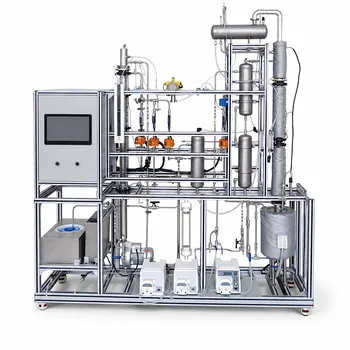
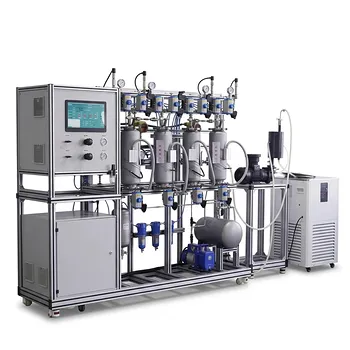
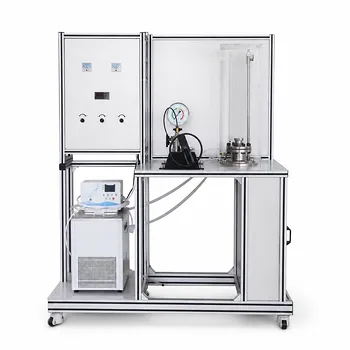
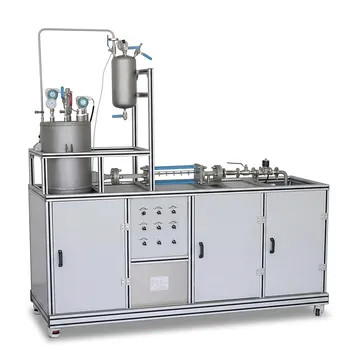
Integrating advanced analytical tools like infrared spectroscopy into your process requires a robust, well-engineered pilot plant. LABPARK provides premium Educational and Vocational Unit Operations Pilot Plants tailored for chemical engineering, bioprocess & biotech, and environmental & water treatment applications.
Whether you are a university, research institute, or enterprise, our pilot plants are designed to withstand harsh operational environments while ensuring precise, reproducible data.
Contact LABPARK today to find the perfect pilot plant solution for your trace gas analysis and environmental monitoring needs!
Related Products
- Gas Phase Mixing and Residence Time Distribution Determination Educational Unit Operations Pilot Plant
- Bench Scale Dual Column Gas Separation and Capture Educational Pilot Plant
- Carbon Dioxide Absorption and Desorption Educational Pilot Plant for Carbon Capture Studies
- Dual-Mode Gas Absorption and Desorption Unit Operations Training Pilot Plant
- Multi-Component Gas Pressure Swing Adsorption Pilot Plant for Unit Operations Education
People Also Ask
- How do gas-phase pilot plants demonstrate limiting reactants, reaction extent, and yield? Measure stoichiometry in action
- Why do gas-flow unit operations pilot plants require an expansion factor? Achieve Precise Flow Calculations
- How does the molar mass of a gas influence its diffusion rate? Optimize Pilot Plant Design
- Why can volumetric percentage be directly equated to mole percentage in gas-phase pilot plant unit operations? A Practical Guide
- Why Open vs. Closed Boundaries Matter in RTD Pilot Plant Experiments