Knowledge Chemical Engineering Education What are the key carrier material considerations for microfibrous entrapped sorbents? Best design choices.
Author avatar

Tech Team · LABPARK

Updated 1 month ago

What are the key carrier material considerations for microfibrous entrapped sorbents? Best design choices.


Regeneration atmosphere is the deciding factor. For high-temperature gas desulfurization pilot systems with cyclic regeneration, the single most critical carrier material consideration is oxidative stability. If your system can only regenerate in reducing environments (e.g., hydrogen), nickel fibers offer adequate structural support. However, if you require regeneration in air at temperatures up to 1200°C, you must use corrosion-resistant ceramic or glass fibers—otherwise the carrier matrix will rapidly degrade, compromising the entire operation.

The core insight is that the carrier fiber dictates your regeneration flexibility. Nickel limits you to expensive and hazardous reducing cycles, while ceramic and glass unlock robust, continuous oxidative regeneration at extreme temperatures. The material choice is, therefore, not a minor detail but the foundation of your pilot plant's long-term viability.

Why the Carrier Fiber is the Foundation of Reliability

The primary reference makes it clear: the carrier’s ability to survive repeated high-temperature regeneration cycles without losing structural integrity is paramount. Everything else—sorbent utilization, pressure drop, reactor footprint—depends on this stability.

The Oxidative Stability Bottleneck

Nickel is structurally sound but chemically vulnerable. While nickel fibers provide good mechanical support for the entrapped sorbent under inert or reducing conditions, they are prone to oxidation and corrosion when exposed to hot air. This forces you to regenerate in a reducing atmosphere like hydrogen, which adds cost, complexity, and a critical safety hazard.

Ceramic and glass fibers eliminate the atmosphere constraint. These materials are inherently corrosion-resistant and can withstand regeneration in air at temperatures up to 1200°C. By preventing carrier degradation, they enable the extended, continuous batch operations that make a pilot plant economically and educationally valuable.

Preserving the Core Advantages of Microfibrous Entrapment

Your choice of carrier directly protects the benefits that led you to microfibrous entrapped sorbents in the first place:

  • High void volume and tailored pore structure are only maintained if the fibers retain their geometry through thermal cycling. Corrosion or sintering would collapse this optimized network, instantly degrading mass and heat transfer.
  • Superior bed utilization efficiency allows significant reductions in reactor weight and volume. A degrading carrier, however, creates channelling, dead zones, and pressure-drop spikes that erase these gains.
  • Manufacturability into thin sheets or pleated forms enables advanced reactor designs, but a brittle or collapsed carrier sheet cannot be handled or loaded reliably. Ceramic and glass fibers, by preserving their architecture, keep these fabrication advantages intact over the life of the pilot plant.

Understanding the Trade-offs

No material is a perfect solution, and an objective view requires examining the limitations of each option.

Nickel: Sacrificing Atmosphere for Simplicity

Nickel fibers are ductile, electrically conductive, and relatively easy to fabricate into robust sheets. In a research or education setting, this may simplify initial reactor construction. However, the hidden costs are severe:

  • Environmental constraint: You must supply, store, and handle reducing gases (e.g., hydrogen), which inflates infrastructure costs and introduces explosion hazards.
  • Cycle limitation: Even slight air leaks during regeneration can cause progressive oxidation, limiting the number of feasible cycles before performance drops.
  • Temperature ceiling: While high-temperature capable in reducing gas, nickel's thermal stability in air is poor, restricting process flexibility.

Ceramic and Glass: A Long-term Bet on Oxidative Regeneration

Ceramic and glass fibers invert this trade-off. They are chemically inert in air at extreme temperatures, so the regeneration environment becomes a controlled variable rather than a limitation. The potential drawbacks—which the reference does not explicitly detail but which logically follow their material nature—include:

  • Mechanical brittleness: The same hardness that gives ceramic fibers their corrosion resistance also makes them less forgiving during assembly and vibration. Careful handling and module design are necessary.
  • Lower thermal conductivity: If joule heating through the carrier is part of the design, a ceramic matrix will not support it as effectively as nickel. This may necessitate external heating or alternate strategies.
  • Cost and supply complexity: Specialty ceramic fibers can be more expensive and less readily available in non-woven forms suitable for entrapment.

Despite these considerations, the primary reference’s emphasis is unambiguous: for oxidative regeneration in air at up to 1200°C, the corrosion resistance of ceramic or glass is not an advantage—it is a requirement.

Making the Right Choice for Your Pilot System

Your decision reduces to a single clear branching point based on the regeneration gas you are willing or able to use. Apply the following recommendations to your design process.

  • If your primary focus is to use oxidative regeneration in air at high temperature: Use ceramic or glass fibers exclusively. This is the only path to achieving continuous batch operations and high bed utilization without carrier failure, as stated in the primary findings.
  • If your primary focus is to leverage nickel’s structural and electrical properties and you can commit to hydrogen regeneration: Nickel fibers remain a technically viable option, but you must rigorously design safety and gas-handling systems to prevent any air ingress during hot cycles.
  • If your primary focus is long-term pilot economics and education: The reduced regeneration complexity and inherent safety of air-based cycles with ceramic or glass fibers provide a more robust platform for iterative experimentation and student training, even if the initial material cost is higher.

Ultimately, the carrier material is not a component you can optimize in isolation—it sets the boundaries of your entire regeneration strategy. By aligning your fiber choice with the reality of your process atmosphere, you transform a potential point of failure into the foundation of a reliable, high-utilization pilot system.

Summary Table:

Carrier Fiber Material Regeneration Atmosphere Max Temperature Key Advantages Major Limitations
Nickel Fibers Reducing (e.g., Hydrogen) Low (prone to oxidation in air) Ductile, conductive, easy to fabricate High explosion hazard, requires expensive reducing gas
Ceramic & Glass Fibers Oxidative (Air) Up to 1200°C Excellent corrosion resistance, allows air regeneration Brittle, lower thermal conductivity

Build Your Next-Generation Pilot System with LABPARK

Choosing the right materials is critical to the longevity and safety of your gas desulfurization and environmental systems. LABPARK provides state-of-the-art Educational and Vocational Unit Operations Pilot Plants in chemical engineering, bioprocess & biotech, and environmental & water treatment.

We empower universities, research institutes, and enterprises with robust, high-performance pilot systems tailored to your research objectives.

Contact our engineering experts today to select the ideal configuration and components for your next project!

Related Products

People Also Ask

Related Products

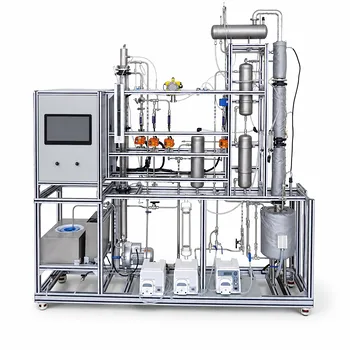
Thermal Desorption Exhaust Gas and Tail Water Treatment Educational Pilot Plant

Thermal Desorption Exhaust Gas and Tail Water Treatment Educational Pilot Plant

Bench-scale educational pilot plant for treating thermal desorption exhaust gas and tail water integrates condensation, Fenton oxidation, precipitation, filtration, and carbon adsorption. Ideal for chemical engineering and environmental labs, teaching unit operations, process control, and real-time data analysis.

Micro-Scale Gas-Solid Catalytic Reaction Educational Pilot Plant

Micro-Scale Gas-Solid Catalytic Reaction Educational Pilot Plant

Explore heterogeneous catalysis with this micro-scale gas-solid catalytic reaction educational pilot plant. Designed for university labs, it enables hands-on study of reaction kinetics and transport phenomena in a benchtop packed bed reactor with high-precision flow control and touchscreen automation.

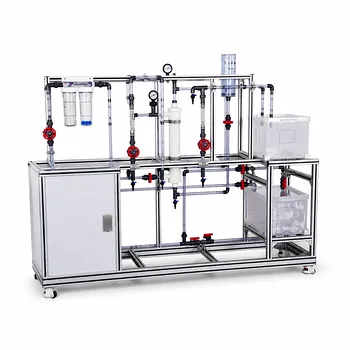
Multifunctional Membrane Separation Educational Pilot Plant with Ultrafiltration, Nanofiltration, Reverse Osmosis

Multifunctional Membrane Separation Educational Pilot Plant with Ultrafiltration, Nanofiltration, Reverse Osmosis

An integrated laboratory bench-scale membrane separation system for higher education engineering labs combining Ultrafiltration, Nanofiltration, and Reverse Osmosis processes. Features industrial PLC control with touch-screen HMI, transparent piping, and academic assessment software. Ideal for chemical and environmental engineering curricula.

Pressure Swing Adsorption Educational Unit Operations Pilot Plant

Pressure Swing Adsorption Educational Unit Operations Pilot Plant

Integrated bench-scale pressure swing adsorption pilot plant for hands-on teaching of gas-solid separation, mass transfer, and process optimization using nitrogen-oxygen model, featuring dual-column design, industrial touchscreen control, digital assessment suite, and customizable hardware and software configurations for educational laboratories.

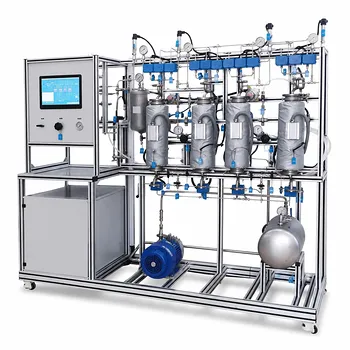
Multi-Component Gas Pressure Swing Adsorption Pilot Plant for Unit Operations Education

Multi-Component Gas Pressure Swing Adsorption Pilot Plant for Unit Operations Education

Multi-component gas pressure swing adsorption pilot plant designed for unit operations education. Features four-tower configuration, IoT touchscreen control, dual regeneration, and real-time breakthrough curve analysis for engineering training with safety interlocks and mobile frame simulates industrial PSA processes.

Ultrafiltration Membrane Separation Educational Pilot Plant

Ultrafiltration Membrane Separation Educational Pilot Plant

This ultrafiltration membrane separation educational pilot plant enables undergraduate students to process PVA solutions, study hollow fiber membrane dynamics, and perform quantitative analysis with spectrophotometry for hands-on learning of unit operations and industrial maintenance and membrane cleaning protocols.

Carbon Dioxide Absorption and Desorption Educational Pilot Plant for Carbon Capture Studies

Carbon Dioxide Absorption and Desorption Educational Pilot Plant for Carbon Capture Studies

Explore carbon dioxide absorption and desorption with this educational pilot plant. Transparent columns visualize mass transfer; electric heating simulates industrial solvent regeneration; touchscreen interface enables data monitoring. Ideal for chemical engineering, bridging theory and practice.

Dual-Mode Gas Absorption and Desorption Unit Operations Training Pilot Plant

Dual-Mode Gas Absorption and Desorption Unit Operations Training Pilot Plant

Industrial-scale pilot plant for gas absorption and desorption training in chemical engineering. Features dual-mode operation with real and simulated materials, transparent columns for flow visualization, and customizable design. Supports independent or combined loops for hands-on unit operations experiments.

Hollow Fiber Ultrafiltration Membrane Separation Educational Pilot Plant

Hollow Fiber Ultrafiltration Membrane Separation Educational Pilot Plant

Explore our hollow fiber ultrafiltration membrane separation educational pilot plant for hands-on learning of industrial ultrafiltration processes, flux analysis, fouling mitigation, and process control. Compact, customizable, and built for engineering labs.

Continuous Batch Extractive Distillation Educational Pilot Plant

Continuous Batch Extractive Distillation Educational Pilot Plant

Versatile pilot plant for continuous, batch, and extractive distillation training. High-borosilicate glass column for visualizing hydraulics, 15.6-inch touchscreen with data logging, precise reflux ratio control 1-99, and durable corrosion-resistant frame. Ideal for chemical engineering education and process research.

Absorption and Desorption Educational Unit Operations Pilot Plant

Absorption and Desorption Educational Unit Operations Pilot Plant

Dual packed column absorption and desorption pilot plant for chemical engineering education, offering real-time mass transfer coefficient measurement, durable mobile frame, industrial touch-screen interface, and customizable design for varied laboratory curricula, enabling hands-on study of gas absorption and stripping.

Gas-Solid Heterogeneous Separation Demonstration Educational Unit Operations Pilot Plant

Gas-Solid Heterogeneous Separation Demonstration Educational Unit Operations Pilot Plant

Comprehensive visual transparent gas-solid separation pilot plant for chemical engineering labs. Demonstrates gravity settling inertial settling cyclone and bag filter technologies. Enables real-time analysis of fluid-particle mechanics pressure drop and collection efficiency. Ideal for undergraduate unit operations courses.

Educational Pressure Swing Adsorption Ethylene Capture Unit Operations Pilot Plant

Educational Pressure Swing Adsorption Ethylene Capture Unit Operations Pilot Plant

Advanced educational pilot plant for pressure swing adsorption ethylene capture provides comprehensive hands-on training in industrial gas separation processes, featuring an eight-column PSA system, real-time data acquisition, and fully customizable design for chemical engineering unit operations laboratories and research.

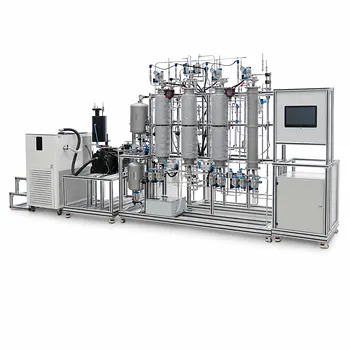
Carbon Dioxide Capture and Utilization Educational Pilot Plant for Unit Operations

Carbon Dioxide Capture and Utilization Educational Pilot Plant for Unit Operations

Educational pilot plant for carbon dioxide capture and utilization featuring four-tower adsorption, high-temperature regeneration, precise CO2 analysis, modern touchscreen control, real-time data, and robust construction for hands-on unit operations training in university labs with curriculum alignment and safe operation.

Carbon Dioxide Adsorption and Capture Educational Unit Operations Pilot Plant

Carbon Dioxide Adsorption and Capture Educational Unit Operations Pilot Plant

Advanced laboratory pilot plant for teaching carbon dioxide adsorption and capture unit operations. Features four-tower adsorption system with 400°C heating jackets, high-precision CO2 and O2 sensors, and 15.6-inch touchscreen with wireless data logging. Ideal for chemical engineering education.

Carbon Material Thermal Pretreatment Multiphase Separation Educational Pilot Plant

Carbon Material Thermal Pretreatment Multiphase Separation Educational Pilot Plant

Educational pilot plant for carbon material thermal pretreatment and multiphase separation. Features jacketed agitated reactor, separation column, and modern controls for hands-on unit operations training in heat transfer, fluid flow, and process safety with industrial-grade materials and wireless data acquisition.

Multi-Functional Membrane Separation Educational Pilot Plant for Unit Operations Lab

Multi-Functional Membrane Separation Educational Pilot Plant for Unit Operations Lab

The Multi-functional Membrane Separation Educational Unit Operations Pilot Plant is an integrated bench-scale laboratory system designed for teaching undergraduate engineering education. It features Ultrafiltration, Nanofiltration, and Reverse Osmosis modules in a compact, mobile unit for practical hands-on learning.

Hot Filtration Educational Unit Operations Pilot Plant Laboratory System

Hot Filtration Educational Unit Operations Pilot Plant Laboratory System

This integrated laboratory bench-scale hot filtration pilot plant enables students to study solid-liquid separation under thermal conditions, featuring a stainless steel vessel, removable heating jacket, and multi-layer filter plates for unit operations education, ideal for chemical engineering laboratory curriculum.

Low Concentration Carbon Dioxide Capture Pressure Swing Adsorption Educational Pilot Plant

Low Concentration Carbon Dioxide Capture Pressure Swing Adsorption Educational Pilot Plant

Low-concentration CO2 capture pilot plant using Pressure Swing Adsorption for engineering education. Students gain practical experience in breakthrough curve measurement, adsorption dynamics, and variable analysis in a hands-on lab setting. Ideal for unit operations, mass transfer, and chemical engineering labs.

Fixed-Bed Chemical Reaction and Gas Dust Tar Removal Unit Operations Pilot Plant

Fixed-Bed Chemical Reaction and Gas Dust Tar Removal Unit Operations Pilot Plant

Integrated educational pilot plant for studying catalytic gas-solid reactions and downstream gas purification. Features dual fixed-bed reactor, three-stage heating, and touchscreen control for hands-on engineering training. Ideal for chemical and environmental engineering curricula.


Leave Your Message