A combination of exceptional hydrogen selectivity and inherent operational safety makes the palladium-zinc oxide (Pd/ZnO) catalyst a uniquely advantageous choice for laboratory-scale methanol steam reforming.
The core technical advantage is that this catalyst maintains the carbon monoxide (CO) concentration in the product stream below 1%, delivering a hydrogen-rich gas without needing a secondary water-gas shift reactor. For a laboratory environment, this is paired with a crucial safety feature: the material is non-pyrophoric and stable in air, drastically reducing the fire and handling risks common with traditional catalysts.
By fundamentally altering the reaction pathway, the Pd/ZnO catalyst solves the two biggest laboratory challenges simultaneously: it simplifies the system by eliminating complex purification stages and de-risks the operation by being inherently safer to handle and start up.
Deconstructing the Performance Advantages
The benefits of the Pd/ZnO catalyst are not just incremental improvements; they represent a fundamental shift in how a laboratory reactor system can be designed and operated.
Unmatched Hydrogen Yield and Purity
The primary goal of methanol steam reforming is to generate hydrogen, ideally with minimal contaminants. The Pd/ZnO catalyst excels here by producing a dry product gas composition of 72–74% hydrogen and 24–26% carbon dioxide.
Crucially, the CO concentration is pinned below 1%. This level of purity eliminates the immediate need for a downstream water-gas shift (WGS) reactor, a bulky and complex component that would otherwise be mandatory to convert CO to CO2.
The Non-Decomposition Reaction Pathway
A conventional copper-based catalyst can decompose methanol, producing high levels of CO. The Pd/ZnO catalyst operates via a non-decomposition pathway that inherently yields lower CO concentrations than thermodynamic equilibrium calculations would predict.
This is a direct result of the unique Pd-Zn alloy formed on the ZnO support. This active site selectively drives the steam reforming reaction (CH₃OH + H₂O → 3H₂ + CO₂) while actively suppressing the methanol decomposition reaction (CH₃OH → 2H₂ + CO).
Operational Advantages for a Laboratory Environment
Beyond the chemical performance, the physical and operational properties of the catalyst are tailored for the constraints of a teaching or research lab.
Pyrophoric Safety and Air Stability
Safety is the non-negotiable priority. Traditional copper-based methanol reforming catalysts are pyrophoric—they can ignite spontaneously upon contact with air.
The Pd/ZnO catalyst is conspicuously non-pyrophoric and is stable in air up to 250 °C. This property transforms standard operating procedures. Catalyst loading, reactor inspection, and unexpected air exposure during startup or shutdown cease to be high-risk events, making the system viable for student training.
High-Temperature Durability and Longevity
Copper catalysts deactivate rapidly at elevated temperatures. In contrast, Pd/ZnO supports operation in a higher temperature window of 300–400 °C to achieve faster reaction kinetics without suffering thermal damage.
The result is a robust catalyst life. It demonstrates high durability, remaining fully active for over 1000 hours of operation without deactivation. Furthermore, it tolerates repeated startup and shutdown cycles in air with excellent stability, a crucial factor for laboratories that don't run continuous 24/7 operations.
Understanding the Trade-offs
A truly objective assessment requires acknowledging the limitations associated with the Pd/ZnO catalyst's advantages.
The Higher Operating Temperature Requirement
The primary trade-off for non-pyrophoric safety is the need for a higher operating temperature (300–400 °C) compared to copper catalysts. While methanol steam reforming itself is already a low-temperature process versus methane reforming, the Pd/ZnO system will consume more energy to reach and maintain its optimal kinetic window than a copper-based unit might.
Initial Material Cost
Palladium is a precious metal with a significantly higher market price than copper. The initial capital cost for the catalyst charge in a reactor will be higher. This must be weighed against the longer operational lifetime, reduced maintenance, and the elimination of secondary hardware like WGS reactors, which together lower the total cost of ownership over time.
Making the Right Choice for Your Project
The decision to use a Pd/ZnO catalyst should be driven by your specific operational priorities and risk tolerance in the lab.
- If your primary focus is operational safety and student training: The Pd/ZnO catalyst is the superior choice. Its non-pyrophoric nature and stability in air remove a major ignition hazard, providing a much safer environment for demonstrating heterogeneous catalysis.
- If your primary focus is system simplicity and producing a clean hydrogen stream: This catalyst is your solution. By generating less than 1% CO, it delivers hydrogen at a purity level that eliminates the complexity and cost of a downstream water-gas shift purification step.
- If your primary focus is long-term research needing stable, repeatable conditions: The proven 1000+ hour stability and resilience to cycling make this the dependable option, ensuring that your data reflects the experiment and not catalyst decay.
By trading a higher purchase price for a dramatic gain in safety, stability, and product purity, the Pd/ZnO catalyst allows the laboratory to focus on the science of steam reforming, not the logistics of managing the catalyst.
Summary Table:
| Feature | Pd/ZnO Catalyst Benefit | Impact on Lab Operations |
|---|---|---|
| Safety | Non-pyrophoric, stable in air up to 250°C | Safe for student training; minimal fire hazard |
| H2 Purity | Low CO concentration (<1%) | Eliminates the need for a water-gas shift reactor |
| Durability | Active for 1000+ hours; thermal tolerance | High reliability and lower replacement costs |
| Kinetics | Operates efficiently at 300–400°C | Achieves faster reactions; requires slightly more energy |
Upgrade Your Chemical Engineering Lab with LABPARK
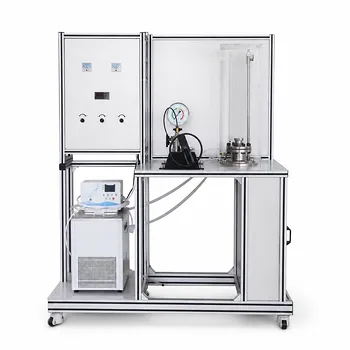
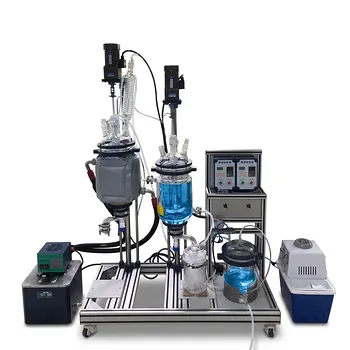
Looking to implement advanced, safe catalytic processes in your curriculum or research? LABPARK designs and manufactures premium Educational and Vocational Unit Operations Pilot Plants in chemical engineering, bioprocess & biotech, and environmental & water treatment.
Whether you represent a university, research institute, or enterprise, we provide the robust, safe, and high-performance reactor systems you need to demonstrate cutting-edge technologies like methanol steam reforming.
Ready to enhance your hands-on training and research capabilities? Contact LABPARK today to discuss your custom pilot plant needs!
Related Products
- Fluidized Bed Gas Solid Catalytic Reaction Educational Pilot Plant
- Fixed Bed Gas Solid Catalytic Reaction Educational Pilot Plant
- Educational Unit Operations Pilot Plant for Intraparticle Diffusion Effective Factor Measurement
- Fixed-Bed Chemical Reaction and Gas Dust Tar Removal Unit Operations Pilot Plant
- Methanol Synthesis and Catalyst Performance Evaluation Educational Unit Operations Pilot Plant
People Also Ask
- Why is the bed height-to-diameter ratio (L/dt) critical? Fluidized bed pilot plant selection guide.
- How do dimensionless numbers guide heat transfer in pilot plants? Optimize Scale-Up
- How is the minimum fluidization velocity (U_mf) determined and utilized? A Unit Operations Guide
- Fixed-Bed vs. Fluidized-Bed Reactor: How to Choose the Right Pilot Plant for Gas-Solid Catalytic Reactions
- How to determine catalyst pore radius & porosity? Optimize your chemical engineering pilot plant.