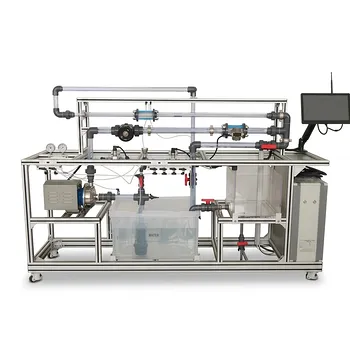
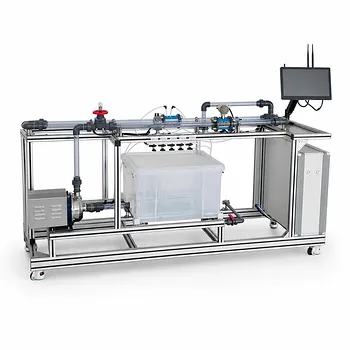
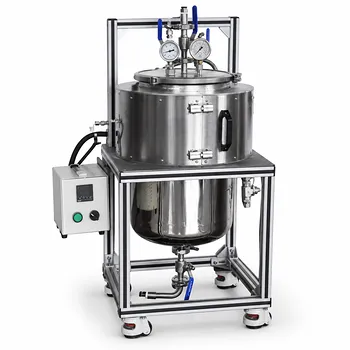
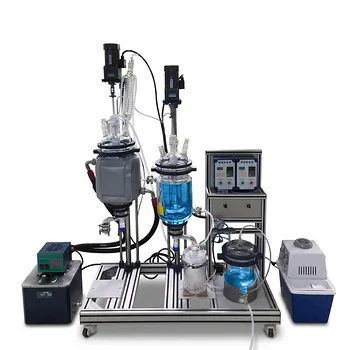
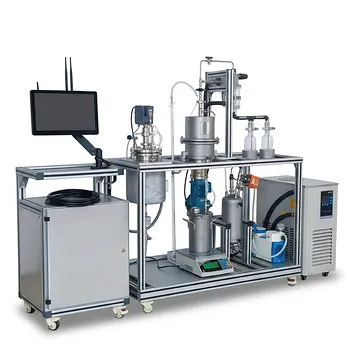
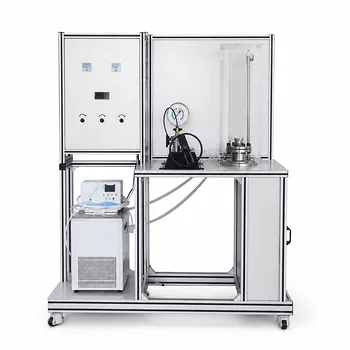
A bridge from the lab to the field. Environmental and water treatment pilot plants do more than just demonstrate a sensor; they use advanced tools like a Quartz Crystal Microbalance (QCM) modified with molecularly imprinted monolayers (MIM) to immerse researchers in the entire lifecycle of real-time, selective contaminant monitoring. By operating these sensors in a flowing, dynamic treatment loop, researchers move beyond theoretical knowledge to master automated sampling, confront matrix interference, and develop the robust calibration protocols required by regulatory standards.
While a QCM sensor in a pristine lab setting proves a concept, integrating it into a pilot plant’s unpredictable water matrix exposes the hidden curriculum of real-world monitoring: managing fouling, calibration drift, and signal interference. This hands-on struggle is precisely what forges a researcher’s ability to deploy reliable, on-line contaminant detection systems.
The Core Technology: QCM with Molecularly Imprinted Monolayers
The sensor at the heart of this training is a QCM modified with a highly specialized coating. This isn’t a generic probe; it’s a precision instrument that translates a mass change on its surface into a measurable electrical signal.
From Batch Sampling to Continuous Insight
Traditional water analysis relies on grab samples sent to a lab for time-consuming chromatography. A QCM-based system flips this paradigm to continuous, on-line monitoring. When integrated into a pilot-scale treatment loop, it allows researchers to observe decontamination kinetics in real time—watching pollutant concentrations drop minute by minute as the treatment process unfolds.
Selectivity Without the Wait
The key is the molecularly imprinted monolayer (MIM). This coating is engineered with nanoscale cavities that are shape- and functionality-specific to a target compound, like a neonicotinoid pesticide. It acts as a synthetic lock for a specific key, providing high sensitivity and selectivity for low-level pollutants almost instantly, without weeks of laboratory turnaround.
Exposing the Hidden Curriculum: Real-World Challenges
Answering the surface need of “what can a sensor do” is easy. The deep need—preparing for real-world contaminant monitoring—is fulfilled when the pilot plant deliberately forces researchers to solve the messy problems that standard textbooks ignore.
Navigating Matrix Interference
A pristine lab sample behaves predictably. Real water does not. In a pilot plant, researchers learn firsthand how fluctuating pH, varying ionic strength, and the presence of toxic co-contaminants can shift a sensor’s baseline or mask a target signal. This forces them to develop pretreatment strategies and signal correction algorithms, building the intuition needed for municipal or industrial wastewater.
Calibration in a Dynamic Environment
A one-time calibration in a beaker is trivial. Maintaining accuracy during in situ, continuous operation is the true test. The pilot plant environment teaches researchers to design multi-point calibration protocols that account for temperature drift and sensor aging, replacing the false security of a static calibration curve with a validated, adaptive measurement system.
Ensuring Long-Term Sensor Reliability
The ultimate goal is a sensor that reports trustworthy data for months, not hours. Pilot plant operation reveals the relentless battle against biofouling, surface precipitation, and electronic drift. Researchers learn to quantify signal decay, define maintenance triggers, and design fault-detection routines—skills essential for any regulatory-compliant monitoring network.
Interfacing with Diverse and Harsh Media
Water treatment isn’t just about clean surface water. A well-designed pilot plant introduces the sensor to challenging media like sludge, high-turbidity backwash water, or soil leachate. This cross-media exposure trains researchers to adapt the sensor’s housing, flow cell, and cleaning cycle, preparing them for the harsh interfaces found in agricultural runoff monitoring, landfill leachate assessment, or industrial discharge recycling.
Understanding the Trade-offs
Trust is built on objectivity. While QCM-MIM systems offer a powerful training tool, they are not a universal solution. Researchers must understand their limitations to apply them wisely.
- One Target, One MIM: The high selectivity of a MIM is also its constraint. A new coating must be developed and validated for each target compound, making broad-spectrum screening slow and expensive in a pilot plant context.
- Surface Fouling Persists: Even with clever engineering, surface conditioning remains a critical failure point. A sensor blinded by a biofilm teaches a valuable lesson in operational maintenance but also reveals a persistent weakness for long-term unattended deployment.
- Complexity versus Operational Simplicity: The electronics and microfluidics required demand skilled operators. There is a constant trade-off between the deep data richness of the QCM and the plug-and-play simplicity that a routine water treatment plant operator desires.
Making the Right Choice for Your Research Goal
To maximize the training value of a QCM-equipped pilot plant, align your experimental design with your specific learning objectives.
- If your primary focus is method development: Force the sensor to fail. Intentionally spike water matrices with known interferences, push calibration intervals beyond their limits, and document the breakpoints. This teaches the critical skill of establishing a sensor’s operational envelope.
- If your primary focus is operational readiness: Integrate the QCM data stream into the plant’s SCADA and HMI systems. Train researchers on the human factors of alarm management, data validation, and standard operating procedure writing, not just the sensor chemistry.
- If your primary focus is regulatory alignment: Design your pilot-scale experiments to mimic the exact sampling frequency and detection limits of EPA or ISO standards for the target contaminant. Treat your on-line QCM data as if you are submitting it to an auditor, forcing rigorous chain-of-custody and data integrity practices.
A pilot plant sensor is never just a sensor. It is a compressed, high-stakes simulator that transforms a researcher’s academic understanding into the hardened, practical judgment needed to protect real-world water resources.
Summary Table:
| Challenge | Pilot Plant Integration | Key Researcher Skill |
|---|---|---|
| Matrix Interference | Flowing dynamic water loops | Pretreatment & signal correction |
| Calibration Drift | In situ, continuous monitoring | Designing adaptive protocols |
| Fouling & Sensor Decay | Exposure to harsh, real-world media | Fault detection & maintenance planning |
Bridge the Gap Between Theory and Real-World Application with LABPARK
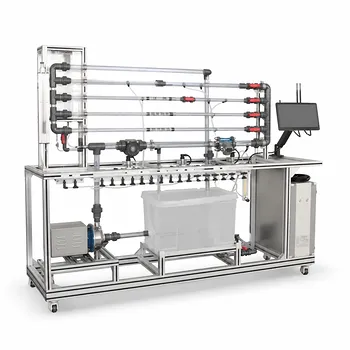
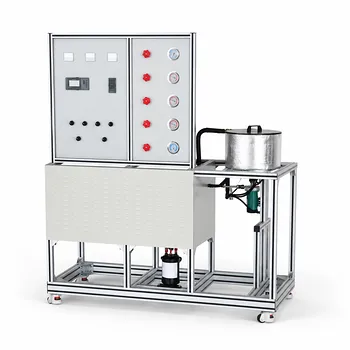
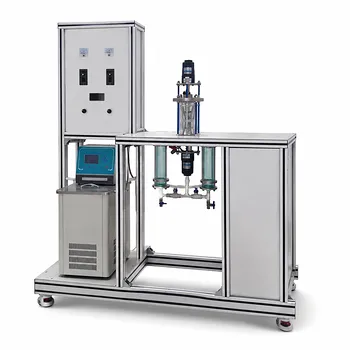
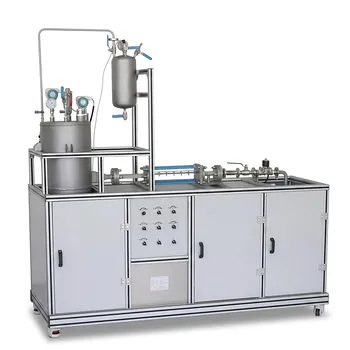
To truly prepare researchers and students for the complexities of modern water treatment and process engineering, hands-on experience with scale-up systems is essential. LABPARK designs and manufactures premium Educational and Vocational Unit Operations Pilot Plants in:
- Environmental & Water Treatment
- Chemical Engineering
- Bioprocess & Biotech
Designed specifically for universities, research institutes, and enterprises, our pilot plants deliver the environmental complexity needed to test advanced sensors, run real-time simulations, and master process operations.
Contact LABPARK today to customize your pilot plant solution.
Related Products
- Centrifugal Pump Performance and Orifice Flowmeter Calibration Educational Pilot Plant
- Constant Pressure Filtration Educational Unit Operations Pilot Plant
- Orifice and Venturi Flowmeter Calibration Educational Pilot Plant for Fluid Mechanics Laboratory
- Multifunctional Membrane Separation Educational Pilot Plant with Ultrafiltration, Nanofiltration, Reverse Osmosis
- Hot Filtration Educational Unit Operations Pilot Plant Laboratory System
People Also Ask
- What features should instructors look for in pump & flowmeter pilot plants? Key Selection Guide
- Why start a centrifugal pump with a closed outlet valve? Protect your pilot plant motors.
- How to update chemometric calibration models in pilot plants? Best practices for process engineers.
- How can cavitation and slurry erosion be studied and mitigated using fluid transport and centrifugal pump pilot plants?
- How do pilot plants demonstrate siphon pressure variations? Visualizing Bernoulli's Energy Balance