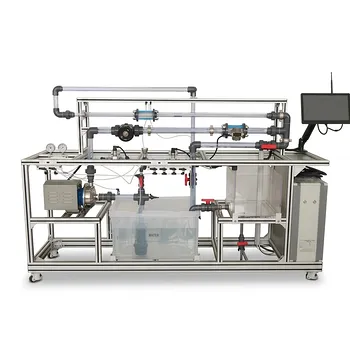
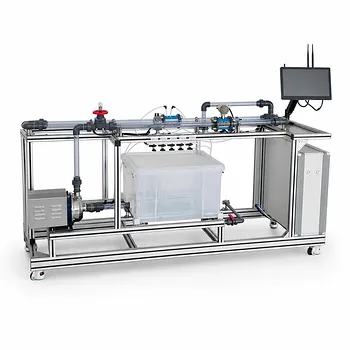
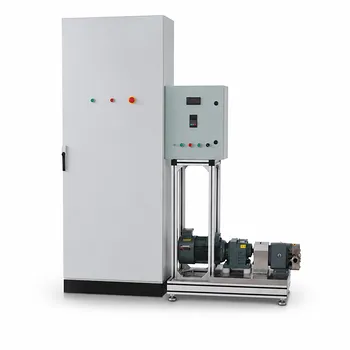
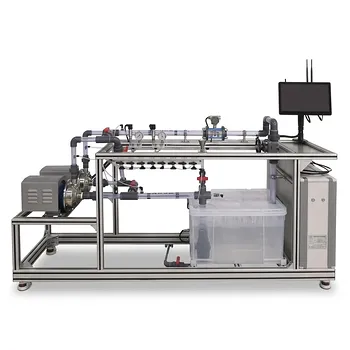
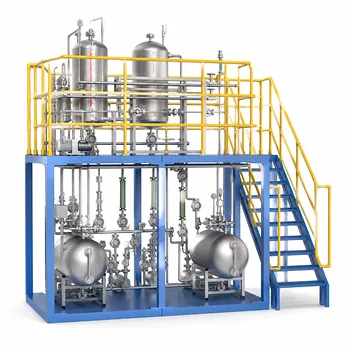
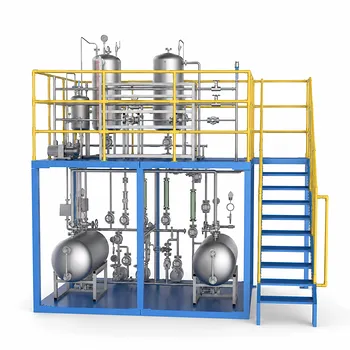
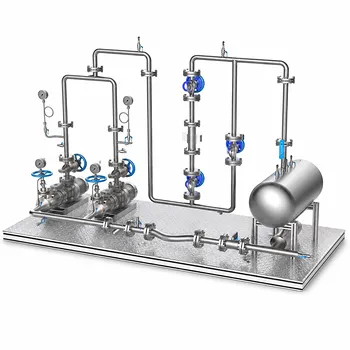
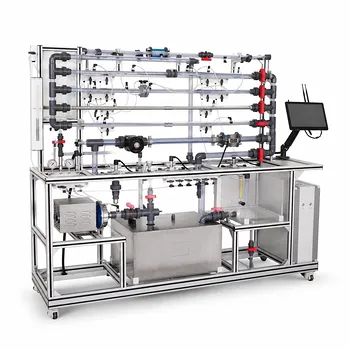
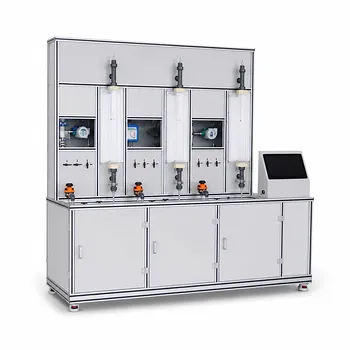
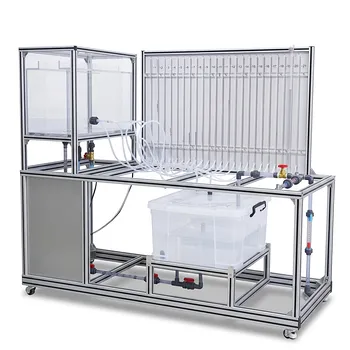
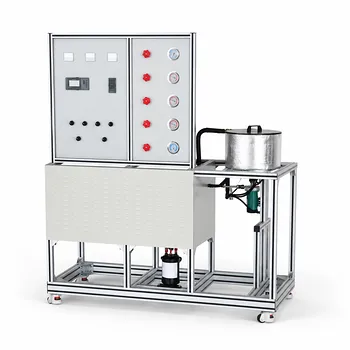
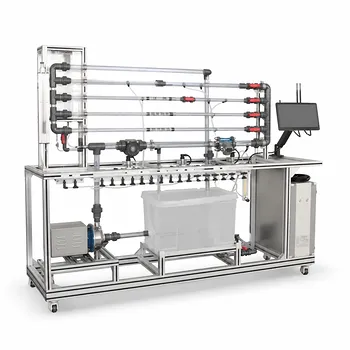
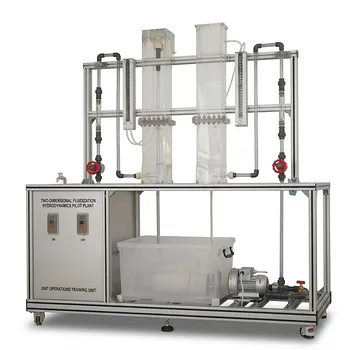
The ideal teaching pilot plant doesn’t just demonstrate pumps and flowmeters—it transforms theoretical equations into tangible experience. For university instructors, the non-negotiable features are variable speed drives on pumps to plot full performance curves, multiple pump arrangements (series and parallel), a series installation of diverse flowmeter types (rotameter, turbine, electromagnetic), differential pressure sensors, and integrated digital data acquisition software. These elements let students calibrate flowmeters against a trusted reference, calculate pump efficiency, and visualize hydraulic energy losses directly.
Selecting a teaching pilot plant is a balancing act between pedagogical depth and everyday operational simplicity. The system must empower students to independently manipulate key variables, capture precise real-time data, and see the causal relationships between pressure, flow, and energy—not merely follow a canned procedure.
Why a Well-Designed Pilot Plant Matters for Engineering Education
Turning Abstract Theory into Physical Intuition
Pump performance curves and flowmeter calibration principles often remain abstract in lectures. A pilot plant makes them visceral. Students can hear the motor change pitch, see the flow adjust, and watch pressure differences shift on a screen.
Fostering Experimental Mindsets
The equipment should invite investigation, not just demonstration. When students can freely adjust pump speed, throttle valves, and pump configurations, they start to ask their own questions. That curiosity drives deeper learning than any pre-set experiment.
The Essential Hardware Features for Pump and Flowmeter Training
Variable Speed Drives and Configurable Pump Layouts
A variable frequency drive (VFD) on the main pump is the single most critical component. It allows students to systematically sweep through a range of speeds, generating a family of pump curves (head vs. flow rate). Without it, they see only one operating point.
The system must also offer series and parallel pump configurations. In series mode, two pumps double the head; in parallel, they double the flow. Students can then experience directly why the combined curve behaves differently than simple addition, confronting the non-linearity of real piping systems.
A Diverse Flowmeter Array Mounted in Series
Place multiple flowmeter types—rotameter, turbine, electromagnetic, and orifice plate—in the same pipeline section. This in-series arrangement ensures identical instantaneous flow through every meter, making comparisons inherently valid.
Each technology has its own uncertainty and response characteristics. Students can then calibrate the less accurate meters (like a rotameter) against a high-accuracy reference (like an electromagnetic meter), learning the concept of traceability firsthand.
The Critical Role of Differential Pressure Measurement
Beyond just a single pressure gauge, dedicated differential pressure transmitters across pumps, filters, and each meter are essential. They let students measure the actual energy added (pump head) or lost (friction, shock) in real time.
Look for transmitters with a known accuracy class and a direct output to the data acquisition system. This eliminates the parallax errors and slow response of analog manometers, keeping the focus on analysis rather than manual reading.
The Software Backbone: Data Acquisition and Analysis
Digital Data Acquisition That Mirrors Industry
The plant should include software that plots pump curves, flowmeter curves, and system curves in real time. Students see live data points appear on a graph as they turn a knob—a powerful feedback loop that reinforces cause and effect.
The interface must export raw data to standard formats (CSV, Excel) so students can perform offline analysis, regression, and uncertainty quantification. This mirrors the workflow they will encounter in industry and research.
Enabling Flowmeter Calibration and Efficiency Analysis
With simultaneous readings from the in-series flowmeter array and differential pressure, the software can auto-calculate pump efficiency (hydraulic power divided by electrical input power) and flowmeter calibration factors. Students can then generate the K-factor curve for a turbine meter or plot the linearity of an electromagnetic meter.
The software’s ability to handle mass flow correction if temperature sensors are included is a strong bonus, though not strictly required for an introductory unit.
Understanding the Trade-Offs and Common Pitfalls
Complexity vs. Maintainability
A plant with a dozen meters, multiple pumps, and bypass lines offers maximum educational flexibility—but also becomes a maintenance headache. Every extra component is a potential leak, clog, or calibration drift point. Choose a design that gives clear access to all wetted parts and uses quick-connect fittings for easy flowmeter swapping.
The Hidden Cost of Simulated Data
Some cheaper systems use “software emulation” where the screen displays pre-loaded curves that don’t reflect the actual hydraulic setup. This completely defeats the purpose. Insist on real-time sensor data from actual physical transducers, even if it means a smaller, more focused plant.
Safety and Long-Term Durability
Since students will operate the plant, it must include run-dry protection, over-temperature cutoff, and transparent guarding around rotating shafts. Look for corrosion-resistant wetted materials (316L stainless steel) and a durable cart or frame that can survive years of student handling.
Making the Right Choice for Your Program
Each teaching goal demands a different emphasis. After evaluating the core features, prioritize according to your main objective.
- If your primary focus is foundational demonstrations (introductory fluid mechanics): Choose a simple, robust system with one pump, a VFD, and two contrasting flowmeters. Minimize plumbing complexity so students can see the physics clearly.
- If your primary focus is advanced laboratory design and student-led investigations: Select a plant with multiple pump configurations, an extended meter array, and open-architecture software that allows students to create their own calibration procedures.
- If your primary focus is large class throughput and low downtime: Prioritize industrial-grade components, tool-free connection points, and a data acquisition system with automatic report generation to streamline setup and tear-down.
- If your primary focus is reinforcing data analysis and uncertainty skills: Ensure the software displays real-time uncertainty bands and exports raw voltage/mA data, not just final flow values, so students can propagate errors from scratch.
A thoughtful choice at the procurement stage turns the pilot plant from a baffling metal maze into a lifelong teaching ally.
Summary Table:
| Key Feature | Description & Purpose | Educational Value |
|---|---|---|
| Variable Frequency Drive (VFD) | Enables variable speed control of pumps. | Allows students to plot complete pump performance curves. |
| Configurable Layouts | Supports series and parallel pump setups. | Demonstrates combined hydraulic behaviors and system curves. |
| In-Series Flowmeter Array | Places different meters in a single line. | Facilitates direct comparison and calibration traceability. |
| Differential Pressure Sensors | Measures pressure drops across components. | Quantifies hydraulic energy losses and pump head accurately. |
| Digital Data Acquisition | Real-time software plotting with CSV export. | Prepares students for industrial data analysis workflows. |
Elevate Your Engineering Lab with LABPARK
Looking to upgrade your department with industry-grade, hands-on training systems? LABPARK provides state-of-the-art Educational and Vocational Unit Operations Pilot Plants in chemical engineering, bioprocess & biotech, and environmental & water treatment for universities, research institutes, and enterprises.
Our systems are designed to transform abstract equations into tangible physical intuition, featuring real-time digital data acquisition, durable industrial components, and open-architecture software.
Ready to enhance your teaching curriculum and minimize lab downtime? Contact us today to request a quote or discuss your custom lab requirements!
Related Products
- Centrifugal Pump Performance and Orifice Flowmeter Calibration Educational Pilot Plant
- Orifice and Venturi Flowmeter Calibration Educational Pilot Plant for Fluid Mechanics Laboratory
- Quantitative Dosing and Liquid Flow Control Educational Unit Operations Pilot Plant
- Centrifugal Pump Performance Determination Educational Unit Operations Pilot Plant
- Fluid Transport and Piping Dynamics Practical Training Unit Operations Pilot Plant
People Also Ask
- Why start a centrifugal pump with a closed outlet valve? Protect your pilot plant motors.
- How to update chemometric calibration models in pilot plants? Best practices for process engineers.
- How can cavitation and slurry erosion be studied and mitigated using fluid transport and centrifugal pump pilot plants?
- How do pilot plants demonstrate siphon pressure variations? Visualizing Bernoulli's Energy Balance
- How can educational pilot plants be used to teach process safety and risk assessment in chemical engineering curricula?