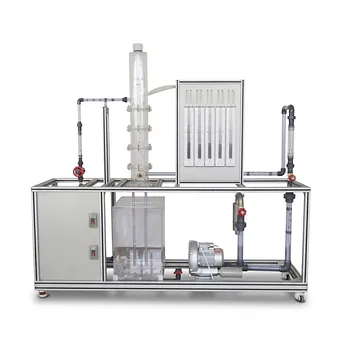
You’re standing in a pilot plant, watching a reaction unfold—and with a single glance at a dashboard, you can pinpoint the exact rate at which molecules are transforming. Continuous measurement of physical properties like pressure or conductivity is preferred over manual chemical sampling because it eliminates the slow, error-prone process of interrupting the reaction, giving you instant, high-density data that mirrors how the chemical world actually behaves.
Traditional manual sampling struggles to capture the fleeting, real-time concentration shifts before equilibrium. By tracking physical properties that correlate directly with composition, inline sensors unlock precise kinetic insights on-the-fly—without ever disturbing the reactor. This transforms kinetics from a tedious approximation into a vivid, data-rich picture of reaction progress.
The Core Problems with Manual Chemical Sampling
Manual sampling feels straightforward in theory: pull a sample, measure concentration, repeat. In practice, it’s a minefield of logistical hurdles and experimental uncertainty, especially in educational settings where students are still building their technique.
Stopping the Clock Is a Destructive Act
Chemical reactions continue until you forcibly quench them. To get a trustworthy concentration reading, you must instantly halt the reaction in your sample—typically by flash cooling or massive dilution. If that quenching isn’t instantaneous or uniform, the concentration you measure no longer represents the reactor at the moment of sampling. The very act of measuring changes the thing you’re trying to measure.
Time Delays Blur the Picture
Every manual sample takes seconds or even a minute to extract and treat. For fast reactions (half-lives under a few minutes), that lag is a dealbreaker. You end up with data points that straddle different reaction times, making it impossible to pin down the instantaneous rate. You’re essentially trying to photograph a sprint with a camera that has a slow shutter.
Human Variability Amplifies Scatter
The manual process multiplies error sources: inconsistent sampling technique, variable quench efficiency, pipetting inaccuracies, and analyzer drift. When several students run the same experiment, these variations produce scattered data that mask the true kinetic trends. Statistical analysis becomes a fight against noise rather than a clear signal.
How Continuous Physical Measurement Solves the Puzzle
Instead of grabbing molecules and wrestling them into submission, you simply observe a physical property that changes in lockstep with composition. The sensor stays inside the reactor, never disturbing the system, and reports a stream of values every second.
Physical Properties as a Proxy for Concentration
Many physical attributes change reliably with the amount of reactant or product present. The primary reference and supporting materials highlight several widely used correlations:
- Gas volume or pressure tracks product generation in reactions like acid-metal systems or catalytic decompositions.
- Electrical conductivity shifts when ions are created or consumed, as in neutralizations or ester hydrolyses.
- Refractive index responds to changes in solution composition, ideal for transparent liquid-phase reactions.
- Color or absorbance (via spectrophotometry) directly ties to the concentration of a colored species according to Beer-Lambert law.
These properties are non-destructive, so the reaction proceeds undisturbed. You get a continuous, real-time trace—not just a handful of discrete points.
From Sparse Data Points to Dense Kinetic Curves
Where manual sampling might yield five or six uncertain concentration values, a pressure sensor logs hundreds of data points in the same interval. This density reveals subtle features: induction periods, rate accelerations, or unexpected decelerations. Students can calculate both average rates over an interval and instantaneous rates as the slope at any moment. That’s a deeper level of kinetic understanding than classic textbook problems allow.
Inline Sensors Bridge Theory and Industrial Practice
Modern chemical plants don’t rely on manual grab samples for routine monitoring; they use online analyzers that feed directly into process control software. Supplementing references emphasize that educational pilot plants equipped with conductivity probes, pressure transmitters, and flowmeters mimic this industrial reality. Students not only verify theoretical rate laws—they learn to interpret real-time process trends, set alarms, and integrate data into digital control loops. The “why” behind the sensor choice becomes as important as the kinetic result itself.
Understanding the Trade-offs
Continuous physical measurement isn’t a flawless silver bullet. Recognizing its limitations is essential for honest science and sound pedagogy.
The Correlation Must Be Validated
A physical property tracks concentration only if you’ve established a calibration curve or a first-principles relationship. For a new or complex system, you still need a few bench-scale chemical analyses to confirm that the property responds linearly and specifically to the component you care about. Side reactions or impurities can break that correlation.
Sensor Selection Matters
The wrong sensor produces beautiful data that’s chemically meaningless. A conductivity probe won’t help if the reaction involves only neutral molecules. A pressure sensor requires a closed, leak-free system and may miss concurrent dissolution effects. Students must learn to match the measurement principle to the reaction’s chemistry—a critical thinking skill that manual methods don’t force as explicitly.
Sensors Can Drift and Fail
Inline probes aren’t immune to calibration drift, fouling, or electronic noise. A grounded educational approach includes routine verification, cleaning, and comparison against a standard. Ignoring these maintenance steps introduces systematic errors that can be harder to spot than a straightforward sampling mistake.
Making the Right Choice for Your Educational Goal
The decision between manual sampling and continuous physical measurement often depends on what you want your students to learn in that particular lab session.
- If your primary focus is teaching classic wet-chemistry skills: Reserve manual sampling for early foundational labs, but pair it with a discussion of its inherent uncertainties and why industry abandoned it for routine monitoring.
- If your primary focus is demonstrating core kinetics principles with clean, dense data: Choose inline physical sensors. The high-resolution curves let students test rate law hypotheses, calculate activation energies across temperature ramps, and see real-time cause-and-effect.
- If your primary focus is preparing students for modern process engineering roles: Integrate the sensors into a pilot plant control system. Have them not only measure rates but also use the real-time data to adjust feed rates or trigger alarms—closing the loop between measurement and action.
- If your primary focus is handling fast or hazardous reactions safely: Physical sensors, especially with continuous-flow microreactors, keep students at a safe distance while still delivering detailed kinetic insight.
Ultimately, the shift from hands-on chemical sampling to continuous physical measurement isn’t about replacing one tool with another—it’s about teaching students to see reaction kinetics as a living, continuous process that can be observed, analyzed, and controlled in real time.
Summary Table:
| Feature | Manual Chemical Sampling | Continuous Physical Measurement |
|---|---|---|
| Data Density | Sparse (few discrete points) | High-density (continuous curves) |
| System Impact | Destructive (requires quenching) | Non-destructive (inline sensing) |
| Time Delay | High (sampling & analysis lag) | Zero (instantaneous feedback) |
| Error Risk | Human technique & pipetting errors | Sensor drift & calibration errors |
| Industrial Relevance | Low (mostly obsolete for routine monitoring) | High (mimics modern process control) |
Elevate Your Engineering Lab with LABPARK
To bridge the gap between academic theory and industrial practice, students need hands-on experience with advanced process control. LABPARK provides state-of-the-art Educational and Vocational Unit Operations Pilot Plants in chemical engineering, bioprocess & biotech, and environmental & water treatment.
Designed specifically for universities, research institutes, and enterprises, our systems integrate precise inline sensors for continuous physical measurement—ensuring your students master real-time data analysis.
Ready to upgrade your laboratory capabilities? Contact LABPARK today to explore our customizable pilot plant solutions!
Related Products
- Multi-Reactor Educational Pilot Plant for Reaction Engineering Unit Operations
- Multi-Functional Special Distillation Educational Pilot Plant
- Multi-Functional Membrane Separation Educational Pilot Plant for Unit Operations Lab
- High-Gravity Emulsification and Mass Transfer Educational Pilot Plant
- Micro-Scale Gas-Solid Catalytic Reaction Educational Pilot Plant
People Also Ask
- How do reactor pilot plants define QbD design space? Master chemical process scale-up.
- When configuring a reactor unit operations pilot plant for highly exothermic reactions, how to prevent thermal runaway?
- How do metal ion-catalyzed reaction mechanisms inform chemical engineering pilot plant design? From kinetics to scale-up
- What role do educational pilot plants play in scaling green chemistry? Bridging the Lab-to-Industry Gap
- What are the barriers to process intensification & how do pilot plants help?