To eliminate oil interference, extract the sample with hexane or ethyl ether before chromium separation. To eliminate iron interference, add a sodium dihydrogen phosphate buffer to sequester the iron prior to colorimetric determination. These two pre-treatment steps are essential for obtaining reliable chromium measurements in complex industrial wastewater matrices, especially during pilot plant operations where process validation demands precise analytical data.
Accurate chromium analysis in pilot plant wastewater hinges on recognizing that oils and dissolved iron are not passive bystanders—they actively sabotage the chemistry of the final measurement step. A solvent extraction for oils and a phosphate masking agent for iron transform an unreliable test into a trustworthy process control tool.
Understanding the Dual Interference Challenge
Industrial wastewater from metal finishing, tanning, or cooling tower blowdown often carries a cocktail of contaminants. Among these, oil and iron are the most common culprits that distort chromium readings.
The Problem with Oil and Grease
Oil coats the reactive surfaces of analytical glassware and forms emulsions that scatter light during colorimetric measurement. Even microscopic oil films can prevent the complete extraction or complexation of chromium species, leading to low recovery and erratic absorbance values.
Oil and grease can also contain organic compounds that reduce Cr(VI) back to Cr(III). This uncontrolled redox activity causes a continuously drifting baseline, making endpoint determination virtually impossible.
Iron’s Disruptive Role in Color Development
The standard colorimetric finish for chromium uses diphenylcarbazide, which forms a red-violet complex with Cr(VI). Iron(III) ions react with the same reagent, producing a similar-colored complex. Without intervention, this positive interference can overestimate chromium concentration by orders of magnitude.
Iron also catalyzes the decomposition of diphenylcarbazide. The resulting false color fades quickly and unpredictably, destroying the accuracy of calibration curves.
Eliminating Oil Interference
Removing oil is not a polishing step—it is a mandatory preparatory action. The principle is to strip hydrophobic contaminants from the aqueous phase before any chemistry is performed.
Solvent Extraction Protocol
Extract the sample with hexane or ethyl ether in a separatory funnel. Add an equal volume of solvent, shake vigorously for two minutes, vent, and let the layers separate. Drain the lower aqueous layer and discard the upper organic layer.
Repeat the extraction twice with fresh solvent. The combined organic extracts carry away the oil, leaving a visually clear aqueous sample. This step must occur before any pH adjustment or oxidation, as solvent efficiency drops dramatically once emulsions form.
Why Hexane or Ethyl Ether Works
Both solvents are non-polar, selectively dissolving hydrocarbons while leaving polar chromium species untouched. Hexane is preferred for routine work due to its lower toxicity and faster phase separation. Ethyl ether offers higher extraction power for emulsified oils but requires stricter ventilation and static discharge precautions.
Performing the extraction prior to chromium separation ensures that no oil residue interferes with subsequent precipitation or oxidation steps. This sequence is critical—if oil remains, the co-precipitation of chromic hydroxide (often needed for low-level samples) will be incomplete and poorly filterable.
Neutralizing Iron Interference
Once the sample is oil-free and chromium is brought into solution (oxidized to Cr(VI)), iron must be chemically masked. The goal is to tie up iron so tightly that it cannot react with diphenylcarbazide.
Role of the Phosphate Buffer
Add a sodium dihydrogen phosphate buffer to the prepared sample. The dihydrogen phosphate ions form a stable, colorless hexafluoro ferric complex that does not oxidize iodide and, more importantly, does not react with the colorimetric reagent.
The buffer works best at a pH around 2.0–3.0. At this acidity, the iron-phosphate complex is kinetically inert, while the Cr(VI)-diphenylcarbazide reaction proceeds quantitatively. Stir the sample gently for one minute after adding the buffer, then proceed immediately to the colorimetric measurement.
Verifying Interference Removal
To confirm iron masking is effective, spike a matrix-matched blank with a known chromium standard and the interfering iron concentration expected in your samples. The measured absorbance should match the chromium spike recovery within ±5%. If the error is larger, increase the phosphate concentration or lower the sample pH slightly before masking.
Understanding the Trade-offs and Special Cases
No method is without limitations. Acknowledging them prevents false confidence in difficult matrices.
When Pre-Concentration Becomes Mandatory
For low concentrations (0.03–0.15 ppm chromium) in brines or high-salt waters, a pre-concentration step is necessary. Co-precipitate chromic hydroxide with aluminum hydroxide by first reducing all chromium to Cr(III) with hydroxylamine, then raising the pH with ammonia. Filter, dissolve the precipitate in acid, and oxidize back to Cr(VI) with potassium permanganate. Only then can the phosphate buffer and diphenylcarbazide finish be applied.
This co-precipitation step also separates chromium from extraneous salts that can alter ionic strength and shift the colorimetric baseline. The trade-off is time: a complete analysis may take over two hours. In pilot plants where rapid feedback is needed, maintain a dedicated set of pre-cleaned, pre-weighed filter crucibles to accelerate throughput.
When Oil and Iron Co-exist with Complexity
If copper is also present, it catalyzes side reactions that deplete the diphenylcarbazide reagent. Copper interference cannot be masked by phosphate alone. In such cases, make the sample alkaline after extraction but before oxidation, warm to coagulate copper hydroxide, filter, and then proceed with the chromium chemistry. While this adds a step, skipping it leads to erratic negative errors that masquerade as low chromium removal efficiency—a dangerous misinterpretation in pilot plant validation.
Potential Downsides of Solvent Extraction
Organic solvents are a fire and health hazard. Ethyl ether is particularly volatile and forms explosive peroxides if stored improperly. Always perform the extraction in a fume hood, away from ignition sources, and dispose of solvent waste as hazardous material. The slight loss of aqueous sample volume during extraction must be accounted for in final calculations.
Making the Right Choice for Your Pilot Plant
The decision tree for interference elimination depends on your sample’s composition and your tolerance for analytical lead time.
- If your primary focus is routine monitoring of treated effluent with visible oil: Always extract with hexane first, then apply the phosphate buffer. This simple sequence prevents the most common source of gross error in colorimetric chromium measurement.
- If your primary focus is verifying chromium removal to regulatory levels (sub‑ppm) in brines: Implement the full co-precipitation protocol. Without it, salt load will obliterate your absorbance signal, regardless of interference masking.
- If your primary focus is rapid screening of multiple pilot streams: Pre‑prepare phosphate‑buffered test kits with pre‑measured solvent syringes. Train operators to recognize that a hazy sample means extraction was skipped and results are invalid.
- If your primary focus is training new operators: Deliberately demonstrate the effect of unchecked iron interference by running a sample with and without phosphate buffer. The dramatically different colors will cement the importance of chemical masking more than any lecture.
Treat interference elimination not as a troubleshooting afterthought, but as a locked‑in step of your standard operating procedure. That discipline is what separates a pilot plant that generates trustworthy mass balances from one that merely circulates water.
Summary Table:
| Interference | Impact on Analysis | Elimination Method | Reagents Used |
|---|---|---|---|
| Oil & Grease | Emulsions scatter light; reduces Cr(VI) to Cr(III) | Solvent extraction before separation | Hexane or ethyl ether |
| Iron (III) | Positive error; false color development with diphenylcarbazide | Chemical masking (pH 2.0–3.0) | Sodium dihydrogen phosphate |
| Salts & Low Cr | Background noise; shifts colorimetric baseline | Co-precipitation & oxidation | Aluminum hydroxide, KMnO4 |
Optimize Your Water Treatment Validation with LABPARK
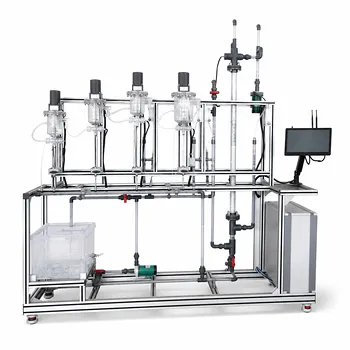
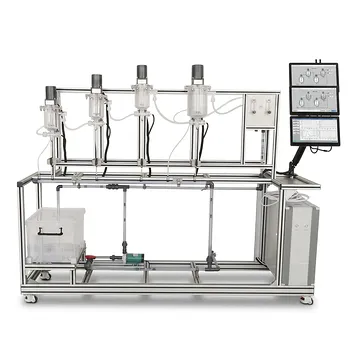
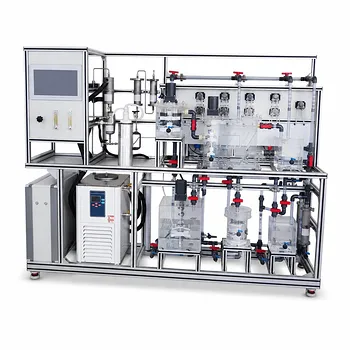
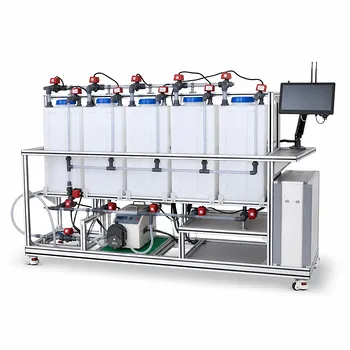
Are you looking to bridge the gap between laboratory analysis and industrial-scale water treatment? LABPARK designs and manufactures state-of-the-art Educational and Vocational Unit Operations Pilot Plants in chemical engineering, bioprocess & biotech, and environmental & water treatment.
Whether you are a university training the next generation of engineers, a research institute validating novel processes, or an enterprise scaling up wastewater treatment technologies, our pilot plants provide the realistic, high-precision environment you need to master complex operations like heavy metal removal and interference management.
Contact LABPARK today to discuss how our customized pilot plant solutions can elevate your research, teaching, and process development.
Related Products
- Ion Exchange Water Purification Educational Pilot Plant for Engineering Unit Operations
- Solid Waste Pyrolysis and Refining Educational Pilot Plant for Unit Operations
- Fixed-Bed Chemical Reaction and Gas Dust Tar Removal Unit Operations Pilot Plant
- Gallium and Indium Selective Extraction Educational Pilot Plant
- Alkaline Membrane Water Electrolysis Educational Pilot Plant Unit Operations Training System
People Also Ask
- How to Prevent Ion Exchange Channeling? Expert Solutions for Pilot Plants
- How does ion exchange work in water treatment pilot plants? Cost & process guide.
- What operational precautions should lab operators take for resin volume changes and air pockets? Key Guide
- How to use ion exchange pilot plants to verify alkalinity? A hands-on guide for engineering students.
- Why does iron degrade cation resin & how to demonstrate capacity recovery? Step-by-Step Lab Guide