The core of the problem lies in an irreversible chemical binding that standard operations cannot break.
While all polyvalent cations are attracted to the resin, ferric iron (Fe³⁺) forms an exceptionally stable bond that standard sodium chloride (brine) regeneration simply cannot break. This leads to a progressive accumulation that not only chemically blocks active sites but also triggers physical fouling, collapsing the bed's hydraulic integrity. Students can demonstrably reverse this by dissolving the iron with a 10% hydrochloric acid (HCl) solution, which chemically strips the iron from the resin, visually restoring its color and quantitatively restoring its capacity.
Standard softening is a reversible equilibrium favoring sodium over hardness. Ferric iron, however, represents an irreversible foulant that standard brine cannot displace. The challenge is not just chemical but mechanical, leading to channeling and pressure drop. The definitive recovery method in a pilot lab is an acid regeneration step using HCl, which forms a stable, non-readsorbing anionic complex with the displaced iron.
The Deceptive Nature of Sodium Chloride Regeneration
The core failure is not the exhaustion phase but the inherent limitation of the regeneration cycle.
The Valence Binding Hierarchy
Cation exchange resins operate on electrostatic attraction, but not all charges are equal in strength. A monovalent ion like sodium (Na⁺) is the weakest binder.
Ferric iron (Fe³⁺), with its triple positive charge, is held with exponentially greater force by the resin's functional groups. The mass-action effect that allows a flood of sodium to push off calcium and magnesium fails against this high-valence contaminant. Each regeneration cycle leaves almost all the ferric iron in place, causing a cumulative reduction in active sites available for the target hardness.
Ferric Iron: A Catalyst for Physical Fouling
The accumulation is not purely a chemical problem. Over time, the concentrated iron within the resin bead can act as a site for mechanical floc formation.
As ferric iron hydrolyzes or reacts, it forms gelatinous hydroxide precipitates directly in the bed. These flocs coat the beads, clogging the interstitial spaces between them. The result is a sharp increase in pressure drop across the column, which eventually forces flow to find the path of least resistance—a phenomenon known as channeling. Once channeling occurs, much of the resin bed is bypassed, and the softener's effective capacity plummets regardless of its remaining chemical potential.
Demonstrating Capacity Recovery in the Lab
The laboratory provides a controlled environment to prove that this damage is reversible. The primary reference method moves students from theory to observable chemical engineering.
The Chemistry of Acid Cleaning
Recovery requires a more aggressive cation—the hydrogen ion (H⁺). A 10% hydrochloric acid (HCl) solution serves a dual function, targeting both the chemical and physical foulants.
First, the high concentration of H⁺ ions directly displaces the ferric ions from the resin matrix. Second, and critically, the abundant chloride ions (Cl⁻) act as a complexing agent. They immediately stabilize the liberated ferric iron into a soluble hexachloroferrate(III) complex (FeCl₆³⁻) . Because this complex is anionic, it carries a negative charge and will not readsorb onto the cation resin, allowing it to be rinsed completely from the bed.
A Step-by-Step Lab Demonstration
A student protocol should focus on quantifying the "before and after" to prove recovery. Begin by exhausting a fresh resin bed with a known hard water solution until breakthrough is achieved, recording the total capacity.
Next, deliberately foul the resin by passing a dilute ferric chloride solution through the column. Observe the visual change—the resin beads will turn a distinct rusty orange-brown. Run a standard brine regeneration and then attempt a second exhaustion cycle. Students will note the capacity has dropped significantly, and the pressure drop has increased dramatically, a direct demonstration of the problem.
The recovery phase involves slowly passing two bed volumes of 10% HCl through the fouled, rust-colored bed. Students should observe the immediate reversal of the fouling as the iron dissolves. After a thorough slow rinse with deionized water to remove all traces of the FeCl₆³⁻ complex, a final brine regeneration converts the resin back to the active sodium form. A final exhaustion test should show a near-complete restoration of the original capacity and a normalized pressure drop.
Key Safety and Procedural Checks
The procedure involves a strong acid, requiring rigorous safety protocols. The supplementary material highlights a critical engineering control: when introducing acid into a metallic vessel, an inhibitor to raise hydrogen overvoltage is often necessary to prevent galvanic corrosion of the tank itself.
In a benchtop glass column, this is less of a concern, but the principle must be taught. Students must also track the waste regenerant volume and pH, acknowledging the environmental management challenges of acidic, iron-laden waste, a core learning outcome of any pilot plant module.
Understanding the Trade-offs and Common Pitfalls
While highly effective, an acid cleaning procedure is not a benign routine operation and carries significant risks that students must learn to manage.
The Risk of Resin Osmotic Shock
A common mistake is using too high an acid concentration or switching solutions too rapidly. Extreme concentration gradients can cause the resin beads to swell and contract violently, leading to osmotic shock and physical fracturing.
The resulting particle attrition creates fines that block flow and permanently reduce bed material. Co-flow regeneration at a controlled, slow flow rate is critical to mitigate this mechanical stress.
The Cost of Chemical Complexity
In an industrial setting, the use of HCl is a calculated risk. It is hazardous to handle, corrosive to infrastructure, and produces a waste stream that is more difficult to neutralize than simple brine.
The resin must also be put through a full double regeneration (acid strip, then brine conversion) to return to service. This extended downtime and chemical cost is the trade-off for restoring an otherwise condemned bed. Contrasting this with a preventative strategy—like removing iron from the feed water before it reaches the softener—is a crucial design lesson for students.
Designing an Effective Educational Protocol
The focus of the student exercise should be tailored to the core learning objective, whether it is fundamental chemistry or applied troubleshooting.
After defining the primary learning goal, use these specific approaches to structure the lab session:
- If your primary focus is demonstrating stoichiometry and capacity: Precisely measure the milliequivalents of hardness leaked during the fouled cycle versus the recovered cycle. Use this to calculate the percentage of resin sites that were blocked by iron and subsequently liberated.
- If your primary focus is mastering industrial maintenance procedures: Use the "before and after" pressure drop readings as the key performance indicator. Visually document the resin color change and emphasize the diagnostic value of inspecting a core sample from a full-scale softener.
- If your primary focus is safety and waste management: Centralize the analysis on the waste stream. Titrate the amount of base required to neutralize the acidic waste, quantify the iron content in the rinse water, and discuss the operational limits of discharging this stream.
- If your primary focus is preventing the problem entirely: Conclude the experiment by having students design a pretreatment system, such as an upstream greensand filter or an oxidation step, to speculatively protect the cation resin and eliminate the need for aggressive acid cleaning.
A well-structured pilot plant experiment on iron fouling transforms a common operational curse into a powerful demonstration of chemical equilibrium, mass transfer, and the practical discipline of industrial process restoration.
Summary Table:
| Stage | Chemical Mechanism | Physical & Visual Impact |
|---|---|---|
| Iron Fouling | Fe³⁺ binds irreversibly; standard brine (NaCl) cannot displace high-valence iron. | Resin turns rusty orange-brown; increased pressure drop and flow channeling. |
| Acid Recovery | 10% HCl (H⁺) displaces Fe³⁺; Cl⁻ forms stable, soluble [FeCl₆]³⁻ complex. | Resin color is restored; bed capacity recovers and pressure drop normalizes. |
Bring Practical Water Treatment Engineering to Your Lab
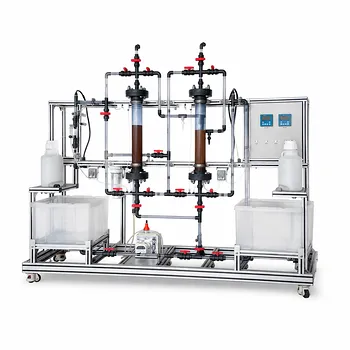
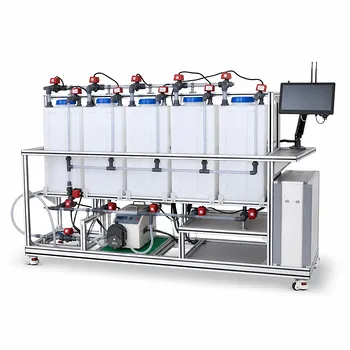
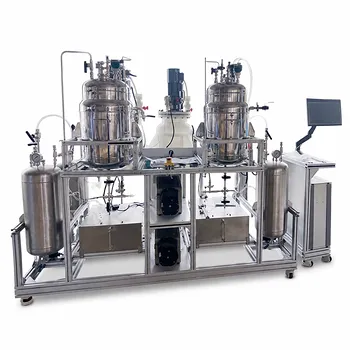
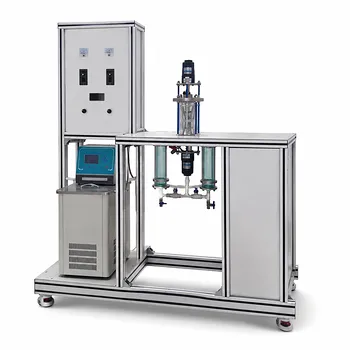
Looking to equip your students with hands-on experience in solving real-world process challenges like resin fouling? LABPARK provides state-of-the-art Educational and Vocational Unit Operations Pilot Plants in chemical engineering, bioprocess & biotech, and environmental & water treatment. Designed specifically for universities, research institutes, and enterprises, our systems offer safe, reliable, and highly visual platforms for advanced learning and research.
Contact LABPARK today to customize your pilot plant!
Related Products
- Ion Exchange Water Purification Educational Pilot Plant for Engineering Unit Operations
- Electrochemical Water Treatment Educational Unit Operations Pilot Plant
- Water Electrolysis Hydrogen Production and Storage Educational Pilot Plant
- Liquid-Liquid Mass Transfer Coefficient Determination Educational Pilot Plant
- Alkaline Membrane Water Electrolysis Educational Pilot Plant Unit Operations Training System
People Also Ask
- How to Prevent Ion Exchange Channeling? Expert Solutions for Pilot Plants
- How does ion exchange work in water treatment pilot plants? Cost & process guide.
- What operational precautions should lab operators take for resin volume changes and air pockets? Key Guide
- How to use ion exchange pilot plants to verify alkalinity? A hands-on guide for engineering students.
- How to perform preliminary cost estimations for pilot plant mixers, centrifuges, and compressors?