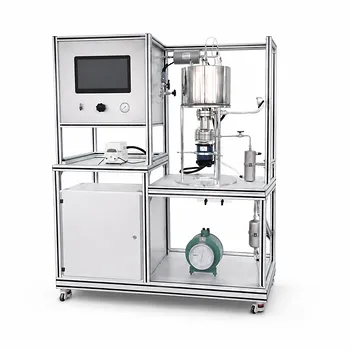
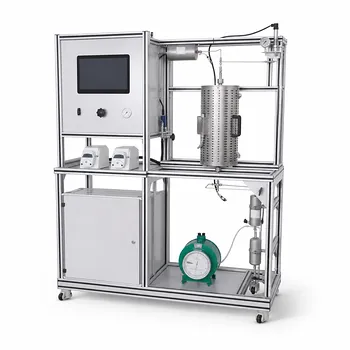
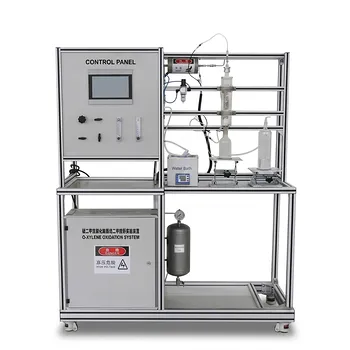
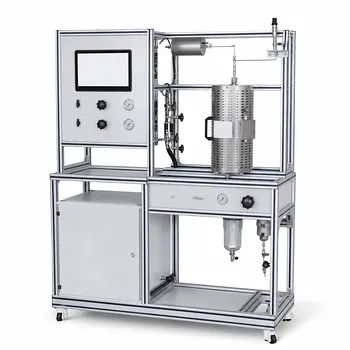
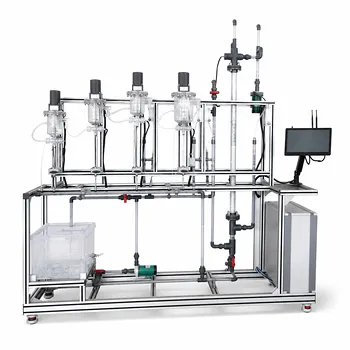
Coking is the silent killer of profitable cracking operations. In vocational training, catalytic reactor pilot plants bridge the gap between theory and plant-floor reality by giving students a controlled environment to directly observe, measure, and mitigate coke formation on cracking catalysts. Students learn to manipulate reaction temperatures up to 650°C, switch between lightened and heavy feedstocks, and apply industrial decoking techniques such as steam or hydrokinetic cleaning—all while linking the resulting yield losses to fundamental deactivation mechanisms.
Mastering coking mitigation is not about memorizing regeneration steps; it’s about building an intuitive, evidence-based feel for how feedstock choice, temperature ramps, and diffusion limitations conspire to choke a catalyst’s active sites. Pilot plants turn this complex interplay into a tangible skill set that saves real plants millions in unplanned downtime.
Simulating the Industrial Reality of Cracking
Hydrocarbon cracking processes live and die by heat management and catalyst surface availability. Pilot plants recreate these stressors at a manageable scale so students can probe the why behind every coked pellet.
Reproducing High-Severity Cracking Conditions
Customizable tubular reactors and multi-zone furnaces let students hold a catalyst bed at precisely 650°C—the kind of temperature where thermal cracking and catalytic cracking overlap, and coke deposition accelerates. By logging temperature profiles along the reactor axis, they learn to spot the hot spots where coking kinetics race ahead and where heat transfer first begins to degrade.
Diversifying Feedstock Under Identical Conditions
The ability to swap from a heavy residual oil to a lightened, paraffinic feed in the same pilot run reveals a critical trade-off. Students can measure ethylene/propylene selectivity and coking rates side by side, building the case that feedstock composition is often the strongest lever for extending run length—before any decoking method is even applied.
Investigating Catalyst Performance Under Attack
Once the pilot plant is running, the real diagnostic work begins. Students don’t just collect product samples; they extract the temporal story of catalyst decay.
Quantifying Coking Kinetics Through Time-Resolved Data
By taking liquid and gas samples at regular intervals and comparing them against fresh-catalyst baselines, students generate deactivation curves that show how quickly activity drops. This hands-on exercise teaches them to distinguish between rapid initial coking (often on external surfaces) and the slower, internal fouling that creeps through pore mouths.
Linking Diffusion Limitations to Uneven Coke Distribution
Here, the pilot plant connects macroscopic data to microscopic reality. Students can vary catalyst particle size and space velocity to alter the Thiele modulus—the ratio of reaction rate to internal diffusion rate. When they later split a coked pellet and see a dark outer ring with a pale interior, the concept of the catalyst effectiveness factor ceases to be an equation and becomes a visible consequence of diffusion-limited coking. This directly informs strategies like using smaller pellets or bimodal pore structures to push reactions deeper into the grain.
From Lab to Maintenance: Hands-On Decoking Methods
Knowing how coke forms is only half the battle. Vocational training demands that students know how to remove it safely and efficiently, restoring catalyst activity without crumbling the support.
Performing Steam and Hydrokinetic Decoking Cycles
Primary pilots allow direct comparison of physical decoking (hydrokinetic cleaning) , which uses high-velocity fluids to shear off surface coke, and chemical decoking (steam injection) , which gasifies carbon deposits at elevated temperatures. Students monitor off-gas composition (CO, CO₂) to track carbon removal efficiency, learning exactly when to end a regeneration cycle to avoid sintering the active metals.
Bridging to Broad Regeneration Concepts
While the primary focus is cracking-related coke, pilot plants often incorporate known industrial poisons—like trace sulfur or nitrogen compounds in the feed—to simulate more complex deactivation. Students then apply controlled oxidation or reduction steps modeled on the regeneration of hydrotreating catalysts, reinforcing that careful temperature ramps during calcination prevent exotherms that could permanently destroy a catalyst bed. This holistic view makes them more adaptable to different refinery units.
Understanding the Trade-offs and Pitfalls
No training tool is perfect. A pilot plant must be approached with the same critical thinking it is designed to teach.
- Scale vs. Lifetime: Pilot runs are measured in hours or days, not the months-long cycles of a commercial cracking furnace. Accelerated coking may exaggerate certain deactivation modes while missing the long-term effects of trace metal accumulation.
- Safety in Coke Deposition: Heavy coking in small-diameter tubes can build pressure drop fast, requiring vigilant monitoring to avoid unsafe blockages. Students must learn to balance investigative depth with operational safety.
- Selectivity in Regeneration: Aggressive steam decoking can leach promoters like alkali metals from the catalyst formulation, improving carbon removal but quietly killing long-term selectivity. Pilot plants reveal this trade-off only if students are taught to re-evaluate performance after every regeneration cycle.
Applying Pilot Plant Training to Your Career Path
The question isn’t just what a pilot plant can do—it’s how you should use it to build the exact expertise you need. Tailor your time on the unit to your professional focus.
- If your primary focus is catalyst deactivation mechanisms: Prioritize experiments that vary feedstock composition and track the rate of loss in conversion. Dig into the spent catalyst pellets with cross-sectional analysis to connect the coking profile back to diffusion limitations and the effectiveness factor.
- If your primary focus is process optimization and run-length extension: Design campaigns that couple feedstock changes with incremental temperature adjustments. Use the data to build a “coking curve” that predicts the economic optimum between yield and decoking frequency.
- If your primary focus is industrial maintenance and unit operations: Spend the most time executing and comparing decoking methods. Measure the pressure drop recovery after hydrokinetic cleaning versus the carbon gasification rate during steam decoking, and document how each affects the catalyst’s surface area post-regeneration.
A pilot plant doesn’t just demonstrate coking—it compresses years of process troubleshooting into a single semester, giving you the evidence-based instinct to protect catalyst investments when it matters most.
Summary Table:
| Key Focus Area | Hands-On Activity | Student Learning Outcome |
|---|---|---|
| Cracking Simulation | Operating reactors up to 650°C and swapping feedstocks | Link feedstock composition and temperature to coking rates |
| Catalyst Diagnostics | Tracking deactivation curves and varying space velocity | Understand diffusion limitations and catalyst effectiveness factors |
| Decoking Maintenance | Performing steam and hydrokinetic cleaning cycles | Master regeneration techniques while preventing active metal sintering |
| Process Trade-offs | Monitoring pressure drops and post-regeneration activity | Balance operational safety with long-term catalyst selectivity |
Bring Industrial Reality to Your Lab with LABPARK
Empower the next generation of engineers and researchers with LABPARK's Educational and Vocational Unit Operations Pilot Plants. Specializing in chemical engineering, bioprocess & biotech, and environmental & water treatment, our custom-built systems help universities, research institutes, and enterprises bridge the gap between textbook theory and plant-floor reality.
Whether you need to teach catalyst deactivation, process optimization, or industrial maintenance, LABPARK provides the robust, safe, and scale-accurate tools your curriculum demands.
Contact LABPARK today to customize your pilot plant solutions!
Related Products
- Fixed Bed Gas Solid Catalytic Reaction Educational Pilot Plant
- Micro-Scale Gas-Solid Catalytic Reaction Educational Pilot Plant
- Internal Circulation Gradient Free Catalytic Reaction Educational Pilot Plant
- Fluidized Bed Gas Solid Catalytic Reaction Educational Pilot Plant
- Multi Functional Catalytic Reaction and Reactor Evaluation Educational Unit Operations Pilot Plant
People Also Ask
- How do reactor pilot plants safely study gas-solid reactions? Master kinetics with thermal & flow control.
- How does the Mears criterion evaluate transport resistance? Key Guide to Intrinsic Kinetics
- Fluidized vs. Fixed Bed Reactors: Comparing Heat & Complexity in Pilot Plants
- Why is a multibed configuration necessary for exothermic reactions? Optimize your pilot plant trajectory.
- What are the differences between pseudohomogeneous and heterogeneous models in pilot plants?