The observed rate of a catalytic reaction is never just about chemistry—it’s the outcome of a fierce, hidden competition inside every catalyst pellet. In a pilot plant, if you model only the chemical kinetics and ignore how molecules diffuse through the porous network, you will fundamentally misjudge the reactor’s performance. You must explicitly couple diffusional transport with intrinsic kinetics to predict conversion, selectivity, and scale‑up behavior with any engineering confidence.
The central takeaway: Diffusion and reaction are locked in a silent race inside each pellet—whichever is slower controls the apparent rate. Modeling both reveals true catalyst effectiveness, guides rational pellet sizing, and prevents scale‑up failures that arise from assuming kinetics alone rule the process.
The Fundamental Interplay: Two Rates, One Fate
A porous catalyst pellet is not a homogeneous soup. Reactant molecules must travel through a tortuous pore network before they ever meet an active site, while at the same time they are being consumed.
A Single Pellet Tells the Whole Story
Diffusional transport replenishes the reactant supply inside the pellet. Intrinsic kinetics dictates how fast those reactants are consumed at the active surface. When the reaction is fast relative to diffusion, a steep concentration gradient forms—the interior starves while the outer shell works hard.
This gradient is the “smoking gun.” Without measuring or modeling it, you cannot know what the catalyst is actually doing under reaction conditions.
The Double Life of Apparent Kinetics
What you measure in the bulk fluid is not the true chemical rate. It is the macroscopic, diffusion‑masked rate—often called macrokinetics. Only by decoupling transport from chemistry can you recover the true kinetic parameters and use them reliably for extrapolation.
The Effectiveness Factor Hides in Plain Sight
Engineers condense this whole story into a single number: the catalyst effectiveness factor. It’s the ratio of the actual observed rate to the rate you would see if the entire pellet interior were bathed in the same concentration as the surface. That number depends entirely on the relative pace of diffusion and reaction—and it can drop to 0.1 for rapid reactions in large pellets.
From Intrinsic Kinetics to What the Reactor Really Sees
When you measure kinetics in a well‑stirred slurry with crushed powder, you eliminate internal gradients. But a packed‑bed pilot plant demands that you translate those intrinsic kinetics into something appropriate for a full‑size pellet.
The Pseudohomogeneous Model Still Requires Both Pieces
Even in the simplified single‑phase pseudohomogeneous models commonly used in pilot‑plant analysis, the effective rate expression must embed the pellet‑scale outcome. This means you still need the diffusion‑reaction coupling—otherwise your “homogeneous” model will carry no memory of the real mass‑transfer limitation.
Scaling Up Without This Coupling Is a Casino Bet
Skip the dual modeling and you are left with a rate constant that only applies to the exact pellet size and flow condition you tested. Change the pellet diameter or the reactant diffusivity (through temperature or pressure), and your predictions will diverge catastrophically.
Why Pilot Plants Are the Crucial Battleground
Pilot plants exist precisely because textbooks can’t capture the messy, coupled reality. Here, you can intentionally introduce diffusion limitations and measure their impact under controlled, scalable conditions.
Deliberate Gradients for Education and Insight
Research‑grade pilot units often run the same chemistry with pellets of varying size. The change in apparent rate reveals the diffusion resistance directly—teaching students and researchers how to diagnose transport limitations long before a full‑scale reactor is built.
Selectivity Is Not Immune
Diffusion can alter which product pathway dominates. If your desired product is an intermediate, a diffusion‑starved interior may over‑convert it to something else. Modeling both phenomena lets you tailor pore architecture to boost selectivity, not just activity.
Understanding the Trade‑offs and Pitfalls
Modeling diffusion and kinetics together is essential, but it brings its own set of challenges that must be faced honestly.
The Computational and Experimental Cost
Solving coupled reaction‑diffusion PDEs for each pellet adds complexity to a reactor model. You need accurate effective diffusivity data, pore‑size distributions, and tortuosity factors—all of which come with experimental uncertainty.
The Danger of Over‑Correcting with Powder
If you only characterize kinetics with fine powder, you risk designing a process that ignores real mass‑transfer resistance. Conversely, if you only use large pellets without isolating kinetics, you can’t distinguish a slow reaction from a diffusion‑limited one—leading to perverse optimization of pellet size instead of catalyst chemistry.
When Pseudohomogeneous Models Break
The pseudohomogeneous assumption works well for moderate diffusion limitations, but for very fast reactions or highly non‑isothermal pellets, you may need a heterogeneous model that resolves the solid‑phase gradients explicitly. Knowing this boundary is part of sound modeling.
Making the Right Choice for Your Pilot Plant Goals
Your specific objective defines how you balance the dual emphasis on transport and kinetics. Use the framework below to guide your experimental and modeling strategy.
- If your primary focus is measuring intrinsic kinetics: Minimize diffusion effects by using extremely fine catalyst particles and high external mass‑transfer rates, but always verify the absence of gradients with a dimensionless diagnostic like the Weisz–Prater criterion.
- If your primary focus is selecting an industrial catalyst: Compare the effectiveness factors of candidate pellets at realistic conditions—this reveals which formulation truly delivers more active volume under your target reactor design.
- If your primary focus is scaling up a reactor: Build a coupled diffusion‑reaction model calibrated on pilot data, and use it to predict the impact of larger pellet diameters, higher temperatures, and altered flow regimes on apparent activity.
- If your primary focus is optimizing product selectivity: Deliberately introduce diffusion limitations in the pilot plant while measuring intermediate profiles, then use the combined model to design pore structures that favour the desired reaction pathway.
When you model both diffusional transport and chemical kinetics inside porous catalyst pellets, you transform a pilot plant from a simple data generator into a true scale‑up compass—one that points unerringly toward reliable reactor design.
Summary Table:
| Feature | Diffusional Transport | Intrinsic Kinetics |
|---|---|---|
| Definition | Movement of molecules through the pellet's pore network | Reaction rate occurring directly at the active catalytic sites |
| Key Parameter | Effective Diffusivity ($D_e$) | Reaction Rate Constant ($k$) |
| Scale-Up Risk | Causes reactant starvation inside larger catalyst pellets | Overestimating performance by assuming zero mass-transfer resistance |
Equip Your Lab for Realistic Scale-Up with LABPARK
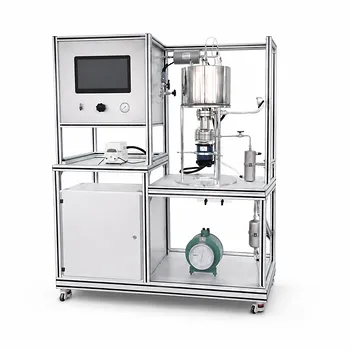
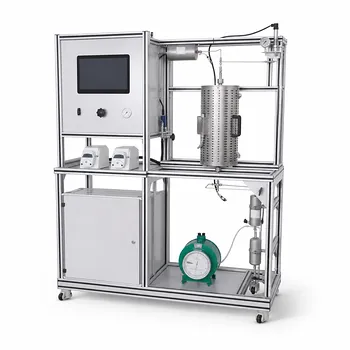
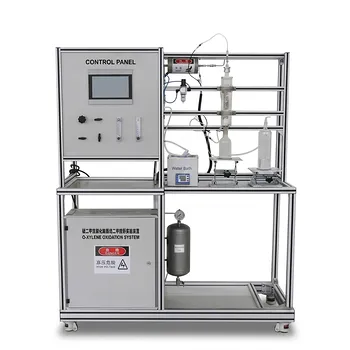
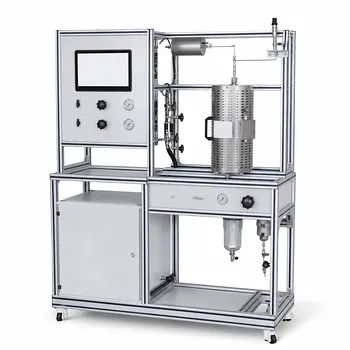
Accurately modeling diffusion and chemical kinetics requires reliable, high-precision experimental equipment. LABPARK provides advanced Educational and Vocational Unit Operations Pilot Plants tailored for chemical engineering, bioprocess & biotech, and environmental & water treatment.
Designed specifically for universities, research institutes, and enterprises, our systems empower you to study real-world transport phenomena and optimize chemical reactions.
Ready to elevate your research and training? Contact us today to discuss your pilot plant requirements!
Related Products
- Fixed Bed Gas Solid Catalytic Reaction Educational Pilot Plant
- Multi Functional Catalytic Reaction and Reactor Evaluation Educational Unit Operations Pilot Plant
- Fluidized Bed Gas Solid Catalytic Reaction Educational Pilot Plant
- Micro-Scale Gas-Solid Catalytic Reaction Educational Pilot Plant
- Internal Circulation Gradient Free Catalytic Reaction Educational Pilot Plant
People Also Ask
- How do reactor pilot plants safely study gas-solid reactions? Master kinetics with thermal & flow control.
- How does the Mears criterion evaluate transport resistance? Key Guide to Intrinsic Kinetics
- Fluidized vs. Fixed Bed Reactors: Comparing Heat & Complexity in Pilot Plants
- Why is a multibed configuration necessary for exothermic reactions? Optimize your pilot plant trajectory.
- How is the friction factor determined for fixed-bed pilot plants? Select the best pressure drop correlation.